Effective tips for bearded dragon enrichment in 2026
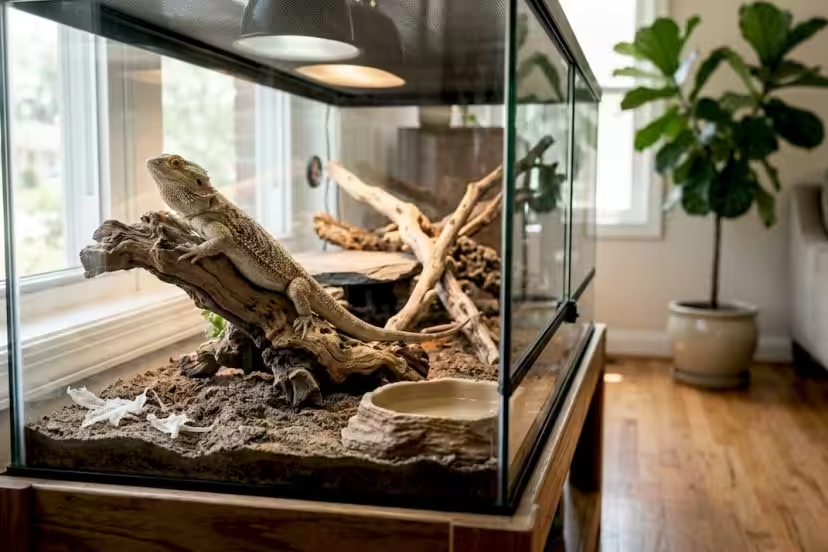
Creating a stimulating environment for your bearded dragon goes beyond basic care. Many owners struggle to provide enrichment that truly engages their pet while maintaining safety standards. Without proper mental and physical stimulation, bearded dragons can develop stress behaviors, reduced activity levels, and diminished quality of life. This guide delivers evidence-based enrichment strategies that promote natural behaviors, enhance welfare, and keep your dragon thriving. You’ll discover practical tips for climbing structures, sensory elements, and behavioral monitoring that transform standard enclosures into dynamic habitats your bearded dragon will love exploring.
Table of Contents
- Key takeaways
- Criteria for effective bearded dragon enrichment
- Climbing structures and digging substrate options
- Sensory enrichment: plants, backgrounds, and decor rotation
- Welfare benefits and behavioral monitoring of enrichment
- Enhance your bearded dragon’s environment with expert resources
- FAQ
Key Takeaways
| Point | Details |
|---|---|
| Safety first | Prioritize non toxic materials and stable construction to prevent injuries and ingestion hazards. |
| Climbing and digging | Provide climbing structures and safe digging substrates to support grip movement and natural digging and thermoregulation behaviors. |
| Rotate enrichment | Regularly rotate items and textures to keep the environment mentally engaging and prevent habituation. |
| Enclosure size matters | Larger spaces allow more complex arrangements and better thermal gradients for enhanced activity and welfare. |
Criteria for effective bearded dragon enrichment
Selecting appropriate enrichment requires understanding what makes items both beneficial and safe. Safety paramount; avoid balls, stuffed animals, toxic or sharp items that could cause injury or ingestion hazards. Your dragon’s enclosure should contain nothing small enough to swallow accidentally or materials that splinter into dangerous fragments.
Effective enrichment promotes natural behaviors your bearded dragon would exhibit in the wild. Climbing, basking at different heights, digging, and exploring varied textures satisfy instinctual needs that captive environments often suppress. When dragons can express these behaviors, you’ll notice reduced stress marks and more confident exploration patterns.
Variety prevents habituation, where your dragon stops responding to familiar stimuli. Rotating items, introducing new textures, and changing spatial arrangements keep the environment mentally engaging. Monitor your dragon’s response to different enrichment types through behavior signs like increased activity, reduced glass surfing, and confident body language.
Enclosure size significantly impacts how well enrichment works. Larger spaces allow for more complex arrangements and better thermal gradients. Even the most thoughtfully selected items lose effectiveness in cramped quarters where your dragon can’t fully utilize them.
Pro Tip: Start with one or two enrichment additions and observe your dragon’s response for several days before introducing more changes. This approach helps you identify which items your specific dragon prefers and prevents overwhelming them with too many simultaneous changes.
Key criteria for enrichment selection:
- Non-toxic materials that won’t harm if accidentally ingested
- Stable construction that prevents tipping or collapse
- Appropriate sizing relative to your dragon’s body dimensions
- Surfaces that support natural grip and movement
- Easy to clean and maintain hygiene standards
Climbing structures and digging substrate options
Bearded dragons are semi-arboreal reptiles that naturally seek elevated positions for basking and surveying territory. Provide climbing structures such as branches, rocks, platforms, and cork bark at varying heights to satisfy this instinct. Natural branches offer irregular surfaces that challenge grip strength and coordination, promoting muscle development and physical fitness.
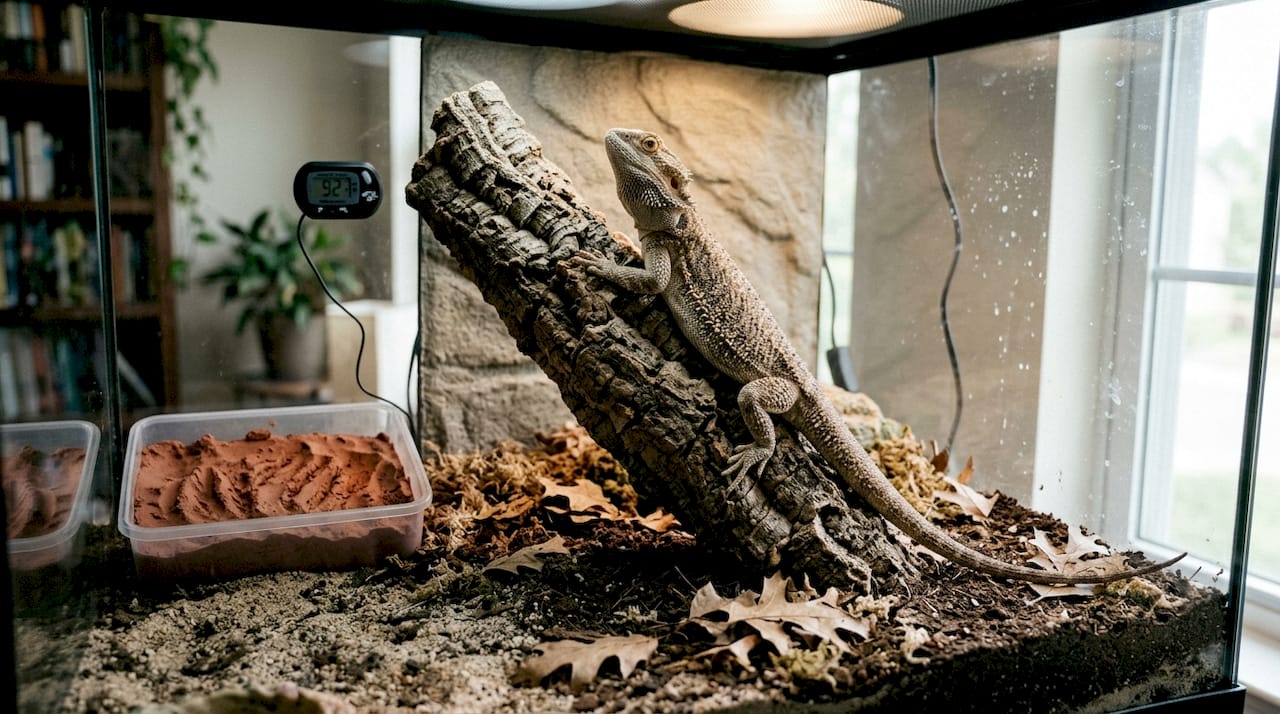
Secure all climbing structures firmly to prevent accidents. Test stability by applying pressure from multiple angles before allowing your dragon access. Branches should be slightly larger in diameter than your dragon’s body width to provide comfortable perching without strain. Position structures to create multiple basking zones at different temperatures, giving your dragon thermal choice throughout the day.
Digging behavior serves multiple purposes in bearded dragons, from thermoregulation to egg-laying preparation in females. Offer digging box with safe substrates like organic soil, playsand, and excavator clay to enable this natural behavior. A dedicated digging area prevents substrate scatter throughout the main enclosure while providing focused enrichment.
Create substrate mixtures using 60% organic topsoil, 30% playsand, and 10% excavator clay for ideal digging consistency. This combination holds tunnels without collapsing while remaining loose enough for easy excavation. Avoid substrates containing fertilizers, pesticides, or moisture-retaining crystals that could harm your dragon.
Place the digging box in a cooler zone of the enclosure to prevent overheating during extended digging sessions. Depth matters; provide at least 4-6 inches of substrate to allow meaningful excavation. Some dragons spend hours manipulating substrate, demonstrating the mental engagement this activity provides.
Pro Tip: Slightly dampen the substrate mixture to improve tunnel stability and make digging more rewarding. The substrate should clump when squeezed but not feel wet or muddy.
Essential climbing structure features:
- Multiple access points and pathways
- Varied textures from smooth bark to rough stone
- Horizontal and angled surfaces, not just vertical
- Integration with basking light placement
- Regular inspection for wear or instability
Explore more beardie activity ideas to complement physical enrichment with behavioral stimulation.
Sensory enrichment: plants, backgrounds, and decor rotation
Sensory variety transforms static enclosures into dynamic environments that continuously engage your dragon’s attention. Incorporate safe live plants like aloe vera and succulents to add visual complexity, textural diversity, and hiding opportunities. Live plants create microhabitats within the enclosure, offering cool retreats and elevated humidity zones near foliage.
Textured backgrounds provide sensory stimulation through varied surfaces that dragons investigate with their sensitive skin and tongue. Three-dimensional backgrounds with ledges and crevices add vertical space without consuming floor area. These installations encourage natural climbing behavior while creating visual barriers that help dragons feel secure.
Rearrange enclosure decor periodically and provide variety in basking spots to prevent environmental boredom. Spatial novelty triggers exploratory behavior, keeping your dragon mentally active and engaged. Even small changes like rotating hide placement or moving a favorite basking rock stimulate investigation and territorial reassessment.
| Plant Type | Primary Benefit | Maintenance Level | Suitability |
|---|---|---|---|
| Aloe vera | Edible, moisture source | Low | Excellent |
| Jade plant | Sturdy structure, climbing | Low | Very good |
| Haworthia | Compact, textural variety | Very low | Excellent |
| Spider plant | Visual interest, safe | Moderate | Good |
This comparison helps you select plants matching your maintenance capacity while ensuring safety. Research each species thoroughly before introduction, verifying non-toxicity through reptile safe plants explained resources.
Steps for safe decor rotation:
- Remove your dragon to a secure temporary enclosure during rearrangement
- Clean all items being repositioned to maintain hygiene
- Test new arrangements for stability before reintroducing your dragon
- Maintain familiar elements like primary hides to provide security anchors
- Observe behavior for 24-48 hours after changes to ensure positive adaptation
- Document arrangements that generate increased activity for future reference
Pro Tip: Take photos of successful enclosure layouts so you can recreate effective arrangements or rotate between proven configurations that your dragon responds to positively.
Introduce changes gradually, especially with shy or stressed dragons. Dramatic overnight transformations can trigger anxiety, while incremental modifications allow adjustment without overwhelming your pet. Balance novelty with familiarity by keeping core elements consistent while varying secondary features.
Welfare benefits and behavioral monitoring of enrichment
Properly implemented enrichment delivers measurable welfare improvements that extend beyond simple entertainment. Enriched enclosures lead to increased activity, less resting, reduced stress behaviors like glass surfing, and clear preference for complex environments when given choice. These behavioral changes indicate improved psychological well-being and better quality of life.
Juvenile bearded dragons show particularly strong responses to enrichment, displaying more natural behavior patterns and reduced anxiety indicators compared to those in barren setups. The developmental period benefits enormously from environments that challenge physical abilities and provide varied sensory input. Adults maintain these benefits throughout life when enrichment continues consistently.
Naturalistic enclosures provide better thermal heterogeneity but complex structure alone may not suffice if enclosure size limits movement and choice. This research underscores that enrichment quality and enclosure dimensions work synergistically. A small tank packed with items creates clutter rather than enrichment, while a spacious enclosure with thoughtful complexity optimizes welfare.
Behavioral monitoring reveals whether enrichment strategies effectively meet your dragon’s needs. Track activity patterns, feeding response, basking duration, and stress indicators to evaluate impact. Positive changes confirm successful implementation, while persistent stress behaviors signal the need for adjustment.
Monitor these welfare indicators:
- Activity levels throughout the day, not just during feeding
- Exploration of new items versus avoidance behavior
- Reduction in repetitive stress behaviors
- Confident body language and alert positioning
- Consistent appetite and normal elimination patterns
Document observations in a simple log, noting dates of enrichment changes and subsequent behavioral shifts. Patterns emerge over weeks, revealing which modifications generate lasting benefits versus temporary novelty effects. This data-driven approach helps you refine enrichment strategies specific to your dragon’s preferences.
Some dragons show individual preferences for certain enrichment types. While one may enthusiastically dig for hours, another might prefer climbing and basking at varied heights. Respect these differences by offering diverse options and emphasizing elements that generate positive engagement for your specific pet.
Learn more about enrichment health benefits and continue monitoring behavior signs to optimize your approach over time. Successful enrichment adapts to your dragon’s changing needs across life stages and seasonal activity variations.
Pro Tip: Video record your dragon during different times of day to capture natural behavior you might miss during brief observations. Review footage to identify activity patterns and enrichment item usage that inform future modifications.
Enhance your bearded dragon’s environment with expert resources
Implementing these enrichment strategies becomes easier with access to proven products and comprehensive guides. Whether you’re upgrading an existing setup or planning a new enclosure, expert resources help you make informed decisions that prioritize your dragon’s welfare.

Discover our curated selection of 2026 bearded dragon enclosures designed with enrichment principles built into their structure. These setups provide the space and features necessary for implementing climbing structures, digging areas, and sensory elements effectively. Our detailed bearded dragon enrichment guide expands on these concepts with additional behavioral insights and troubleshooting advice for common challenges.
Plant selection remains one of the most frequently asked questions among owners seeking to add natural elements safely. Our comprehensive resource on reptile safe plants explained removes guesswork by identifying species that thrive in bearded dragon environments while posing zero toxicity risk. These guides complement the practical tips covered here, giving you everything needed to create truly enriching habitats.
FAQ
How often should I rearrange my bearded dragon’s tank decor?
Rearrange tank decor every 2-4 weeks to maintain novelty and prevent environmental boredom. Make changes gradual rather than dramatic to avoid stressing your dragon. Keep core elements like primary hides consistent while rotating secondary features for optimal balance between familiarity and stimulation.
What substrates are safest for a digging box?
Use mixtures of organic topsoil, playsand, and excavator clay without additives or fertilizers. Avoid substrates containing sharp particles, moisture crystals, or chemical treatments. This combination provides safe digging consistency while holding tunnel structure effectively.
Can live plants harm my bearded dragon?
Only non-toxic species like aloe vera, jade plants, and succulents are safe for bearded dragon enclosures. Research each plant thoroughly through reptile safe plants explained before introduction. Monitor your dragon after adding new plants for any adverse reactions or unusual behavior.
What climbing structures work best for adult bearded dragons?
Natural branches, cork bark flats, and stacked stones create ideal climbing opportunities for adults. Ensure structures support your dragon’s full weight with stability testing before use. Position multiple climbing options at varying heights to encourage exploration and provide thermal choice throughout the enclosure.
How do I know if my enrichment strategies are working?
Successful enrichment produces increased activity, reduced glass surfing, confident exploration, and consistent appetite. Monitor these indicators over several weeks after implementing changes. Video documentation helps capture behavioral patterns you might miss during brief observations, revealing true enrichment effectiveness.
Recommended
- Bearded dragon enrichment: boost health and behavior in 2026
- How to bond with a bearded dragon: step-by-step guide 2026
- How hydration ensures bearded dragon health in 2026
- Supplements for bearded dragons: 30% fewer bone disease cases