Reptile Safe Plants Explained: Healthier Habitats
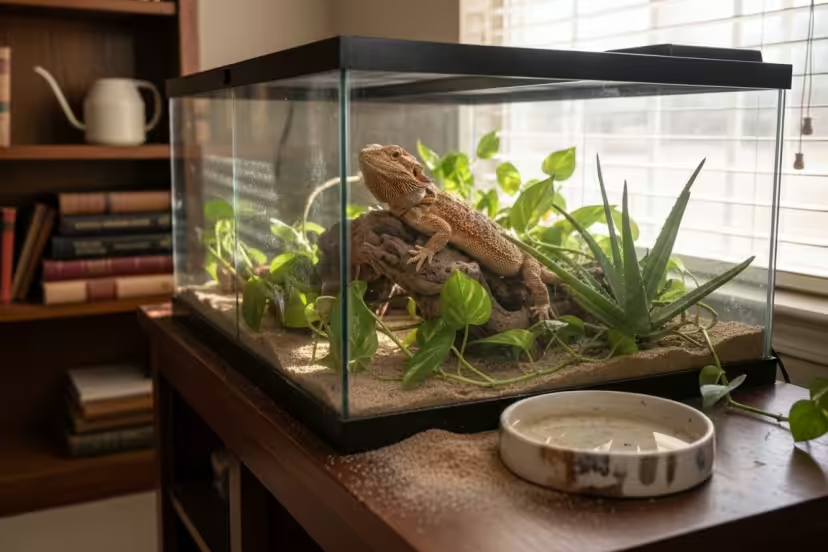
Setting up a bearded dragon enclosure means more than just picking out a basking rock or water dish. Many new owners quickly realize the wrong plant can harm their pet, while the right greenery transforms the space into a thriving mini-habitat. Choosing reptile-safe plants lets you create an environment that supports climbing, hiding, and basking—behaviors critical for your dragon’s health and happiness.
Table of Contents
- What Are Reptile Safe Plants?
- Popular Types For Bearded Dragons
- Key Features Of Suitable Plants
- Risks Of Unsafe Plant Choices
- Common Mistakes And Best Practices
Key Takeaways
| Point | Details |
|---|---|
| Reptile Safe Plants Enhance Habitat | Choosing non-toxic, durable plants improves your bearded dragon’s physical and mental well-being by mimicking natural environments. |
| Select Drought-Tolerant Species | Focus on hardy plants like Aloe Vera and Spider Plant that thrive in dry conditions and can withstand active reptiles. |
| Avoid Toxic Plants | Steer clear of plants like Poinsettias and Oleander, which can cause serious health issues if ingested. |
| Monitor Plant Interaction | Introduce plants gradually and observe your bearded dragon’s behavior to ensure a comfortable and enriching environment. |
What Are Reptile Safe Plants?
Reptile safe plants are living vegetation that creates a healthier, more natural habitat for your bearded dragon. These aren’t just random greenery thrown into an enclosure—they serve real, practical purposes for your scaly pal’s daily life.
So what makes a plant “safe” for reptiles? The answer comes down to a few key criteria:
- Non-toxic to your bearded dragon if ingested or contacted
- Durable enough to survive climbing, basking, and occasional nibbling
- Supportive of natural behaviors like hiding, thermoregulation, and exploration
- Appropriate for your enclosure setup in terms of size and growth
Think of safe plants as the difference between a boring concrete box and a cozy living space. Plants provide more than just decoration—they transform your beardie’s environment.
Safe plants contribute to naturalistic enrichment by mimicking conditions from their native habitats. This means your bearded dragon can express natural behaviors like climbing, hiding, and basking in dappled sunlight, which directly support their physical and mental health.
When choosing plants, you’re looking for species that won’t harm your dragon if munched on accidentally. Your dragon might nibble leaves while exploring or bump into branches while moving around. Toxic plants can cause serious health issues, so this isn’t a detail to skip.
Non-toxic vegetation directly supports your bearded dragon’s physical and mental well-being by enabling natural behaviors.
Here’s what safe plants actually do for your habitat:
- Create layered basking spots at different heights
- Provide shaded retreat areas when your dragon needs to cool down
- Reduce stress by offering hiding places and visual security
- Support thermoregulation through sun exposure and shade access
- Add humidity control in balanced ways
The goal isn’t to create a jungle. It’s to give your bearded dragon intentional choices throughout their day—places to warm up, cool down, explore, and feel secure.
Pro tip: Start with hardy, proven plants like pothos or hibiscus, and monitor your bearded dragon’s behavior for the first few weeks to ensure they’re adjusting well to their new enriched environment.
Popular Types for Bearded Dragons
Not all plants work equally well in a bearded dragon enclosure. Your best bet is choosing species that thrive in dry conditions and can handle the wear and tear of an active reptile moving through the space.
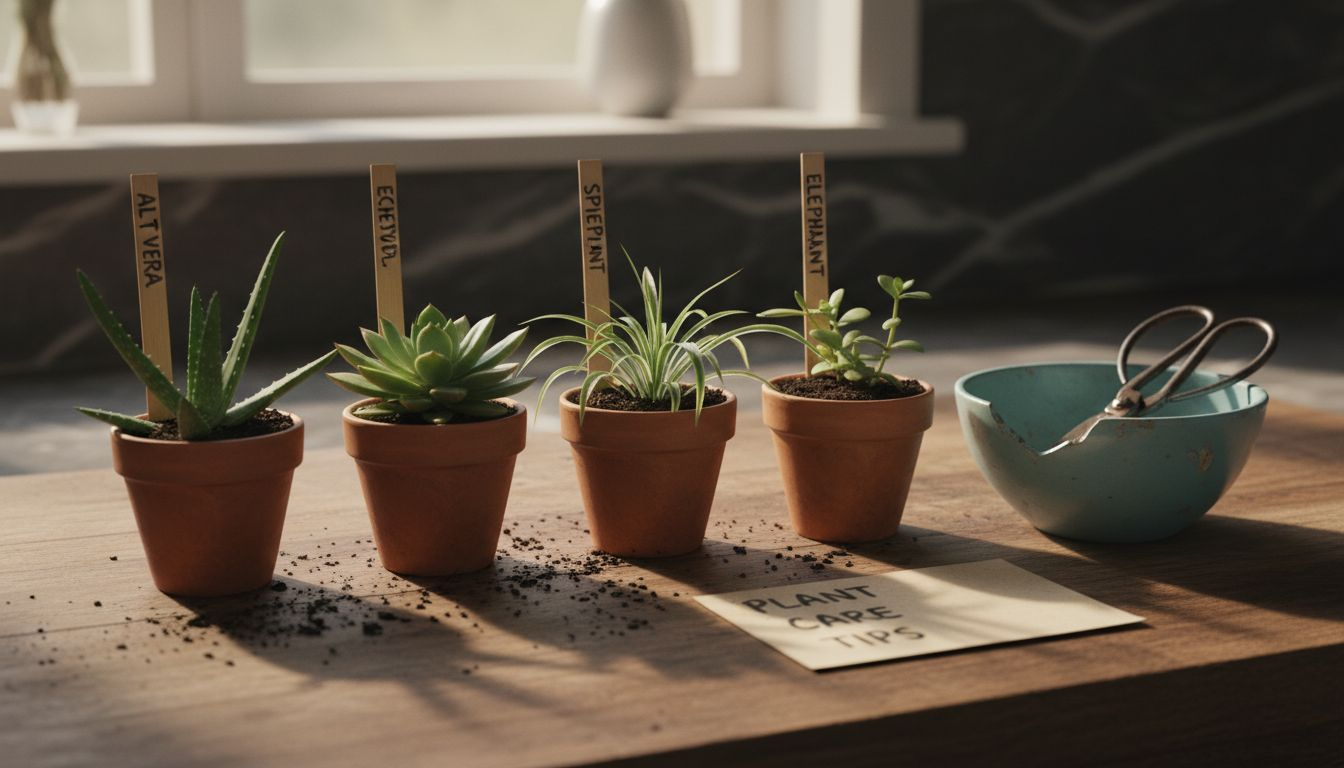
Drought-tolerant succulents like Aloe vera, Echeveria, and Elephant Bush are top choices for bearded dragon habitats. These plants are naturally adapted to arid environments, which matches your dragon’s native climate perfectly. They’re also tough enough to withstand climbing, basking, and occasional nibbling without falling apart.
Here’s why these specific plants work so well:
- Aloe vera: Soft, easy to handle, and provides mild shelter; extremely low maintenance
- Echeveria: Compact rosette shape; stays small and doesn’t overtake the enclosure
- Elephant Bush: Larger stems create natural climbing routes; develops a sturdy structure over time
- Haworthia: Compact growth; safe if accidentally ingested in tiny amounts
- Spider Plant: Non-toxic and forgiving; handles low light better than other options
These aren’t delicate flowers that wilt if your dragon so much as looks at them. They’re built for durability in tough conditions.
Succulents naturally thrive in the same dry, warm environments your bearded dragon needs, making them ideal habitat partners.
Each plant offers different benefits for your setup. Aloe vera works great as ground cover or in corners. Echeveria creates vertical visual interest on shelves. Elephant Bush becomes a natural climbing structure as it matures.
Avoid anything with thorns, spines, or toxic sap. Plants like poinsettias, lilies, and oleander are absolute no-gos. Even beautiful options like kalanchoe can cause problems if ingested.
The real advantage? These plants actually improve your enclosure by maintaining appropriate humidity levels while requiring minimal care. You’re not babysitting delicate greenery—you’re building a functional living space.
Here’s a quick comparison of safe and unsafe plant choices for bearded dragon enclosures:
| Plant Type | Suitability | Common Risks |
|---|---|---|
| Aloe vera | Highly suitable | Sharp edges if too large |
| Echeveria | Good for small spaces | May rot if overwatered |
| Spider Plant | Safe and resilient | None if untreated |
| Haworthia | Safe in moderation | Overeating if undersized |
| Elephant Bush | Great for climbing | Can crowd small enclosures |
| Poinsettia | Dangerous/toxic | Causes digestive upset |
| Oleander | Highly toxic | Organ failure possible |
| Kalanchoe | Not safe | May cause poisoning |
Pro tip: Start with Aloe vera or Spider Plant since they’re nearly impossible to kill and give your bearded dragon immediate visual interest without requiring special lighting or watering schedules.
Key Features of Suitable Plants
Not every plant that’s technically non-toxic will work in your bearded dragon’s enclosure. The best choices share specific characteristics that make them well-suited to a reptile habitat. Understanding these features helps you evaluate plants critically before adding them to your setup.
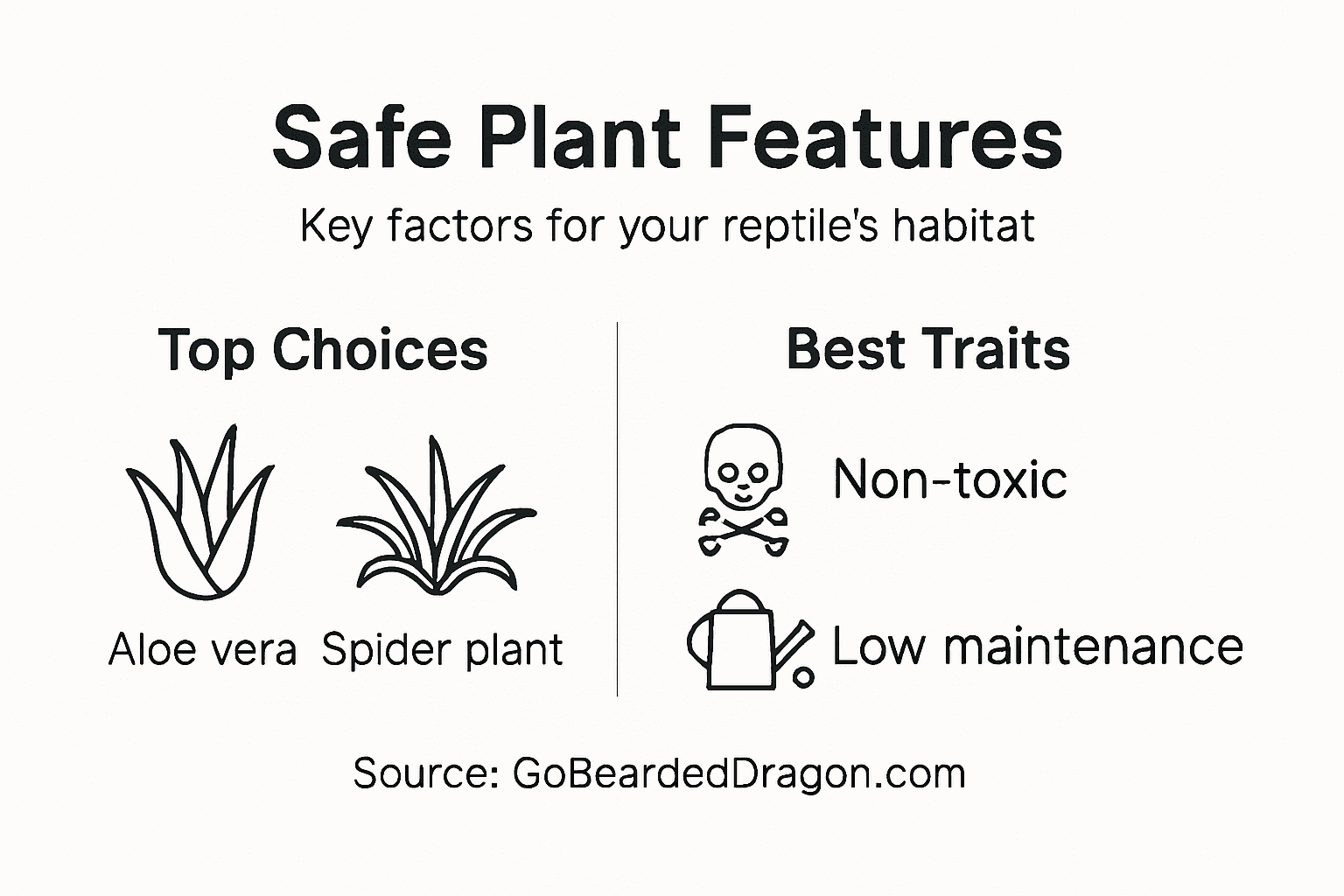
Suitable plants must match your enclosure’s environmental conditions including temperature, humidity, and lighting. Your bearded dragon needs a warm, dry habitat, so plants adapted to arid climates perform best. Tropical plants that demand constant moisture create problems—they’ll rot, develop mold, and throw off your humidity balance.
Here are the core features to look for:
- Non-toxic if ingested: Safe even if your dragon nibbles or accidentally swallows small pieces
- Durable structure: Can withstand climbing, basking weight, and physical contact without breaking
- Appropriate size: Fits your enclosure without overcrowding or blocking basking areas
- Slow growth rate: Won’t explode in size and take over the habitat in weeks
- Safe edges: No sharp thorns, spiky leaves, or hazardous points that could injure eyes or skin
- Good drainage: Prevents root rot and soggy substrate that encourages bacteria and mold
You’re looking for plants that actively contribute to habitat function, not just sit there looking pretty. The best options support soil health through aeration, maintain appropriate humidity through transpiration, and provide shelter without creating dead zones.
Plants that match your bearded dragon’s native habitat conditions thrive while requiring minimal maintenance from you.
Think about the physical layout, too. A plant should create climbing opportunities, provide shade in hot spots, or offer hiding areas—but never block your dragon’s access to the basking lamp. The plant’s position matters as much as the plant itself.
Root development is another hidden factor. Plants with strong, shallow root systems anchor well in substrate and prevent collapsing. Deep-rooted plants often struggle in shallow enclosure floors.
Pro tip: Before introducing any plant, research its specific care requirements and cross-check them against your enclosure’s current temperature, humidity, and lighting to ensure long-term success.
Risks of Unsafe Plant Choices
Choosing the wrong plants for your bearded dragon’s enclosure isn’t just an aesthetic mistake—it can directly harm your reptile’s health. The consequences range from mild stress to serious medical emergencies that require veterinary care.
Toxic plants are the most obvious danger. If your dragon ingests leaves, stems, or berries from poisonous species, it can trigger immediate health problems like vomiting, diarrhea, or organ damage. Plants like lilies, poinsettias, oleander, and dieffenbachia are common houseplants that look innocent but pack serious toxins.
Unsafe plants can cause poisoning, physical injuries, and habitat disruption that stress your dragon. Beyond toxicity, sharp plant parts pose cutting or eye injuries. Thorny or spiky plants can scratch scales, damage eyes, or cause internal injuries if swallowed.
Environmental problems matter too. Plants that require constant moisture create humid, damp conditions that promote respiratory infections and mold growth. Plants that block basking areas prevent your dragon from thermoregulating properly, leading to stress and weakened immunity.
Here’s what can go wrong:
- Poisoning: Vomiting, lethargy, loss of appetite, organ failure
- Physical injury: Eye damage, cuts from thorns, internal lacerations
- Respiratory issues: Mold, excess humidity, fungal infections
- Thermal stress: Blocked basking areas, inability to warm up properly
- Substrate problems: Root rot, bacterial growth, unhealthy substrate conditions
- Behavioral issues: Stress from uncomfortable or claustrophobic environments
Some plants look safe but have hidden dangers. Pesticide residue on non-organic plants can poison your dragon. Plants treated with fertilizers or growth hormones carry the same risk.
Wrong plant choices create cascading problems that damage your dragon’s physical health and mental well-being simultaneously.
If you notice lethargy, loss of appetite, unusual behavior, or visible injuries after introducing a new plant, remove it immediately and contact your veterinarian. Don’t wait to see if things improve on their own.
The good news? This is entirely preventable by sticking with proven safe options and doing your homework before purchasing any new plant.
Pro tip: Keep a photo reference list of safe plants for your bearded dragon and verify every new plant against it before bringing it into the enclosure—this simple habit prevents 95 percent of plant-related problems.
Common Mistakes and Best Practices
Most bearded dragon owners make predictable plant-related mistakes when setting up their enclosures. Learning what to avoid saves time, money, and potential health emergencies down the road.
The biggest mistake? Choosing plants without considering your bearded dragon’s specific needs. What works for a tropical species won’t work for a desert reptile. Your dragon needs arid-adapted plants that match its natural habitat, not rainforest vegetation that thrives in humidity.
Another common error is overcrowding the enclosure with dense planting. A jungle-like setup blocks basking areas, traps heat unevenly, and stresses your dragon by limiting movement. Best practices involve diverse plant spacing that creates varied microhabitats for climbing, hiding, and basking without overcrowding.
People also neglect to research plants before buying them. You spot something beautiful at a garden center and assume it’s safe because it’s a common houseplant. That’s backwards thinking. Common doesn’t mean safe for reptiles.
Here are the mistakes to avoid:
- Choosing plants without verifying non-toxicity first
- Overcrowding the enclosure with too much vegetation
- Using plants requiring tropical humidity levels
- Blocking basking spots or heat lamps
- Adding plants treated with pesticides or fertilizers
- Ignoring drainage issues that cause root rot
- Failing to monitor your dragon’s interaction with new plants
So what actually works? Start small. Add one or two hardy, proven plants like Aloe vera or Spider Plant. Observe your dragon’s behavior for a few weeks. Does it climb them? Hide under them? Nibble them? Use this information to refine your setup gradually.
Success comes from patient observation and incremental adjustments, not rushing to create a “perfect” habitat overnight.
Maintain structural variety in plant height and spacing. Create clear pathways your dragon can navigate comfortably. Ensure basking areas remain unobstructed and well-lit. These simple adjustments make the difference between a functional habitat and a problematic one.
Regularly inspect plants for wilting, mold, or pest infestations. Replace any plants showing damage or disease immediately. Healthy plants support healthy dragons.
The following table summarizes recommended best practices and common mistakes when adding plants to a bearded dragon enclosure:
| Approach | Best Practice Example | Common Mistake Example |
|---|---|---|
| Plant Selection | Research species before purchase | Buying based on appearance alone |
| Layout Design | Leave clear basking zones | Overcrowding with dense foliage |
| Plant Introduction | Add plants gradually | Placing too many plants at once |
| Maintenance | Monitor health and behavior | Ignoring wilted or moldy plants |
Pro tip: Document your enclosure setup with photos and notes about each plant species, placement, and your dragon’s reactions—this reference guide helps troubleshoot problems quickly and guides future habitat improvements.
Enhance Your Bearded Dragon Habitat with Safe Plants Today
Creating a healthier, more natural habitat for your bearded dragon requires careful plant selection to avoid toxic risks and support your pet’s well-being. If you want to provide non-toxic, durable, and arid-adapted plants that encourage climbing and hiding without overcrowding, you are not alone. Many owners struggle to balance beautiful greenery with safe enrichment that fits their bearded dragon’s unique needs.

Discover expert guidance and practical tips on choosing and maintaining reptile-safe plants at gobeardeddragon.com. Our comprehensive resources cover habitat maintenance, health checklists, and enrichment ideas to support your beardie’s natural behaviors and comfort daily. Don’t wait until unsafe plants cause harm or stress. Visit gobeardeddragon.com now to transform your enclosure into a thriving, safe environment your bearded dragon deserves.
Frequently Asked Questions
What are reptile safe plants?
Reptile safe plants are non-toxic vegetation that enhances the habitat for bearded dragons by allowing them to express natural behaviors like climbing, hiding, and basking while providing a more natural environment.
Why is it important to choose non-toxic plants for my bearded dragon’s enclosure?
Choosing non-toxic plants is crucial because if a bearded dragon ingests or comes into contact with toxic plants, it can lead to serious health issues such as vomiting, organ failure, or digestive problems.
What types of plants are recommended for bearded dragon habitats?
Popular choices for bearded dragon habitats include Aloe vera, Echeveria, Spider Plant, and Elephant Bush. These plants are durable, thrive in dry conditions, and are safe if nibbled on accidentally.
How can I ensure the plants I choose are suitable for my bearded dragon’s environment?
To ensure the plants are suitable, look for species that are non-toxic, durable, appropriate in size, have a slow growth rate, and match the arid, warm conditions of your bearded dragon’s natural habitat.
Recommended
- Lizards and Dragons: A Guide to Reptile Companions – Go BEARDED DRAGON
- 2026年胡子龙环境温控器top榜:五款最佳产品推荐
- Bearded Dragon Escape Prevention Guide for Safe Habitats – Go BEARDED DRAGON
- How to Set Up Bearded Dragon Habitat Naturally