Bearded Dragon Behavior Signs – What Owners Must Know

Most pet owners underestimate just how expressive bearded dragons can be in their daily interactions. These reptiles send clear signals through color changes, posture, and movement that reveal mood and health status. Studies show bearded dragons can recognize color and gestures with surprising accuracy. Learning to interpret their unique behaviors not only helps you spot potential problems but also deepens your bond with your scaly companion.
Table of Contents
- Defining Bearded Dragon Behavior Signs
- Normal Behaviors: Eating, Basking, and Socializing
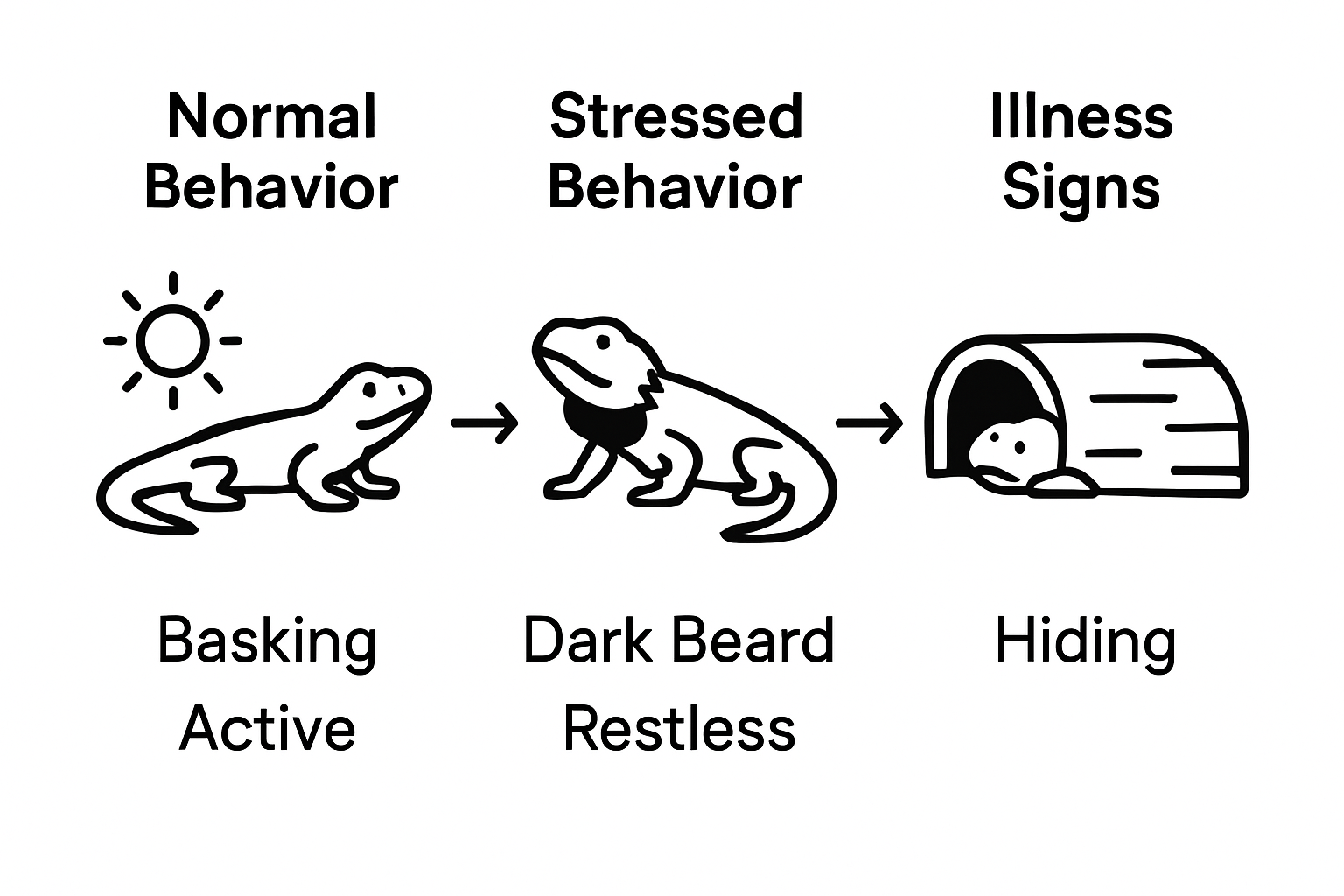
- Signs of Stress and Anxiety in Bearded Dragons
- Unusual Behaviors Linked to Health Issues
- Common Mistakes in Interpreting Bearded Dragon Signals
Key Takeaways
| Point | Details |
|---|---|
| Understanding Behavior | Bearded dragons communicate complex emotions through body language and behavioral signals, enabling a deeper bond between pet and owner. |
| Normal Behaviors | Regular activities such as eating, basking, and exploring are vital for their well-being and indicate a healthy lifestyle. |
| Stress Indicators | Key signs of stress include color changes, defensive posturing, and reduced appetite; recognizing these can prevent health issues. |
| Misinterpretations | Owners must learn to accurately interpret behaviors like head bobbing and tail movements to avoid stressing their dragon and ensure proper care. |
Defining Bearded Dragon Behavior Signs
Understanding your bearded dragon’s behavior is like decoding a complex language of subtle signals and body movements. These scaly companions communicate volumes through their actions, and knowing how to interpret their signals can transform your relationship from basic pet ownership to genuine reptilian connection.
Bearded dragons possess remarkably sophisticated behavioral complexity that goes far beyond simple reactions. Researchers have discovered that these reptiles can distinguish intricate features like color, eye presence, body shape, and motion – indicating a level of perceptual awareness that surprises many owners. This means they’re not just passive creatures, but active communicators with nuanced ways of expressing their internal state.
Their behavioral signs can be grouped into several key categories that provide insights into their emotional and physical well-being. These include:
- Beard Coloration Changes: From neutral tan to dramatic black, their beard color signals everything from territorial aggression to stress
- Body Posture: How they position themselves can indicate comfort, defensive stance, or submission
- Head Movements: Specific head bobbing or tilting communicates complex social and territorial messages
- Tail Positioning: Depending on its angle and movement, the tail reveals emotional state and potential threat perception
By learning to read these behavioral patterns in active versus lazy moments, you will develop a deeper understanding of your scaly friend’s inner world. Think of it as becoming fluent in Dragon, one fascinating signal at a time.
Normal Behaviors: Eating, Basking, and Socializing
Bearded dragons are complex creatures with fascinating daily routines that go far beyond simple survival. Their behaviors reveal intricate patterns of interaction, temperature regulation, and social communication that make them truly unique pets.
Body temperature regulation is a critical aspect of their survival, with bearded dragons actively managing their metabolic functions through strategic behaviors. They meticulously position themselves to absorb heat, adjusting their body orientation to optimize warmth and energy absorption. This isn’t just passive sunbathing – it’s a sophisticated survival mechanism that helps them maintain optimal physiological performance.
Social interactions among bearded dragons are equally nuanced. Their communication methods include complex signals like head bobbing and arm waving. Head bobbing typically represents dominance or territorial assertions, while arm waving signals submission or recognition. These aren’t random movements but deliberate communication strategies that help establish social hierarchies and reduce potential conflicts.
Their daily behavioral patterns typically involve three primary activities:
- Eating: Consuming a diet of insects, vegetables, and occasional fruits
- Basking: Spending significant time under heat lamps to regulate body temperature
- Exploring: Investigating their habitat, climbing, and interacting with environmental elements
Understanding these normal behaviors helps owners provide better care and create environments that support their bearded dragon’s natural instincts and well-being. Each movement and interaction tells a story – you just need to learn how to listen.
Signs of Stress and Anxiety in Bearded Dragons
Bearded dragons might seem tough, but they’re surprisingly sensitive creatures capable of experiencing significant emotional and physical stress. Understanding their stress signals is crucial for maintaining their health and happiness.

Common stressors can dramatically impact a bearded dragon’s well-being, ranging from environmental factors to handling techniques. Incorrect temperatures, insufficient lighting, cramped enclosures, inconsistent handling, and a lack of proper hiding spots can trigger profound anxiety and behavioral changes that compromise their overall quality of life.
Recognizing stress signs early can prevent long-term health complications. Watch for these key indicators:
- Color Changes: Darkening beard or unusual color shifts
- Defensive Posturing: Flattened body, puffed beard, hissing
- Appetite Reduction: Sudden disinterest in food
- Unusual Hiding Behaviors: Excessive hiding or unusual retreat patterns
- Aggressive Interactions: Unexpected biting or tail whipping
Proper handling techniques can significantly reduce your dragon’s stress levels. Understanding their body language, creating a stable environment, and responding to their unique communication signals are fundamental to building a trusting relationship. Remember, each bearded dragon is an individual with specific comfort needs and emotional responses.
Unusual Behaviors Linked to Health Issues
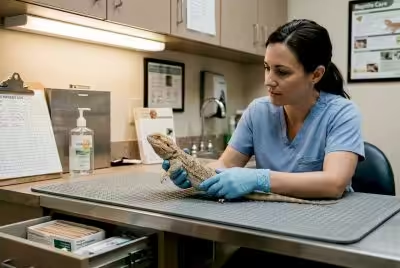
Bearded dragons are masters of disguise when it comes to hiding health problems. Their stoic nature means that unusual behaviors often serve as critical warning signals that something might be wrong internally.
Veterinary researchers emphasize the importance of thorough physical examinations because bearded dragons rarely display obvious signs of illness. Their clinicopathologic data suggest that subtle behavioral changes can indicate significant underlying health conditions that might otherwise go unnoticed.
Some unusual behaviors that warrant immediate attention include:
- Persistent Lethargy: Unexpected reduction in movement or activity levels
- Abnormal Digestive Patterns: Constipation, diarrhea, or changes in waste consistency
- Respiratory Distress: Wheezing, mucus discharge, or labored breathing
- Neurological Changes: Tremors, head tilting, or uncoordinated movements
- Skin Abnormalities: Unusual shedding, discoloration, or visible lesions
Extended handling can potentially trigger anxiety-related behaviors, such as increased tongue flicking or reduced interaction with environmental elements. This means owners must be vigilant and recognize the difference between normal communication and potential health warning signs. When in doubt, consult a reptile veterinarian who can provide professional diagnostic insights.
Common Mistakes Interpreting Bearded Dragon Signals
Bearded dragons are complex communicators with nuanced body language that inexperienced owners can easily misunderstand. What might seem like a simple gesture could actually represent a sophisticated message about their emotional and physical state.
Head bobbing and arm waving are particularly prone to misinterpretation. Fast head bobbing isn’t just random movement – it’s a clear signal of dominance, while slow bobbing or arm waving typically indicates submission. Owners who fail to recognize these subtle distinctions might inadvertently create stress or misread their dragon’s intentions.
Critical misinterpretation areas include:
- Color Changes: Beard darkening isn’t always an aggressive signal
- Tail Movements: Tail positioning can reveal complex emotional states
- Breathing Patterns: Gaping isn’t just temperature regulation
- Body Posture: Flattening might indicate multiple emotional responses
- Vocalization: Different sounds carry different meanings
Bearded dragon communication is a delicate language that requires careful observation and nuanced understanding. Owners who approach their pets with patience and a willingness to learn will develop a much deeper connection than those who rely on generic assumptions about reptile behavior.
Unlock the Secrets of Your Bearded Dragon’s Behavior Today
Understanding subtle signs like beard color changes, head bobbing, and tail positioning can be challenging and sometimes stressful for many bearded dragon owners. If you notice unusual hiding patterns or changes in appetite, it is crucial to act with confidence and knowledge rather than guesswork. At gobeardeddragon.com, we specialize in decoding these complex behaviors and offer clear, reliable guidance to help you nurture a trusting relationship with your pet.

Take control of your bearded dragon’s health and happiness by exploring our detailed handling techniques and learn how to recognize stress versus normal signals. Don’t let misinterpretation cause anxiety or health problems. Visit gobeardeddragon.com now for trusted advice, practical tips, and resources designed specifically for owners who want nothing but the best for their dragons.
Frequently Asked Questions
What do changes in beard coloration mean for a bearded dragon?
Changes in beard coloration can indicate various emotional states in bearded dragons. A darkened beard often signals stress or territorial aggression, while a lighter, neutral color suggests contentment or relaxation.
How can I tell if my bearded dragon is stressed?
Signs of stress in bearded dragons include darkened beard color, defensive posture (flattened body, puffed beard, hissing), reduced appetite, excessive hiding, and aggressive interactions such as biting or tail-whipping.
What are the common normal behaviors of a bearded dragon?
Normal behaviors of a bearded dragon include eating (insects, vegetables, and occasional fruits), basking under heat lamps for temperature regulation, and exploring their habitat through climbing and interaction with environmental elements.
What unusual behaviors should I look out for that may indicate health issues?
Unusual behaviors that may signal health issues include persistent lethargy, abnormal digestive patterns (like constipation or diarrhea), respiratory distress (wheezing or labored breathing), neurological changes (tremors or head tilting), and skin abnormalities (unusual shedding or discoloration).