How hydration ensures bearded dragon health in 2026
Many bearded dragon owners assume providing a water bowl guarantees proper hydration, but this common misconception can lead to serious health problems. Adequate hydration requires a multifaceted approach combining humidity control, misting, soaking, diet adjustments, and accessible water sources. Dehydration poses significant risks including kidney failure and metabolic bone disease, making comprehensive hydration strategies essential for your dragon’s wellbeing. This guide explains how these methods work together to maintain optimal health and prevent common hydration-related issues.
Table of Contents
- Understanding Hydration Needs Of Bearded Dragons
- Effective Methods To Provide Hydration For Your Bearded Dragon
- Monitoring Hydration Status And Preventing Dehydration Problems
- Best Practices For Hydration-Friendly Habitat Setup
- Explore Expert Resources And Supplements For Your Bearded Dragon
- Frequently Asked Questions About Bearded Dragon Hydration
Key takeaways
| Point | Details |
|---|---|
| Multiple hydration methods required | Water bowls alone are insufficient; combine misting, soaking, and water-rich foods for complete hydration. |
| Humidity control is critical | Maintain 20-40% humidity levels to support hydration without causing respiratory issues. |
| Monitor dehydration signs regularly | Watch for loose skin, sunken eyes, and lethargy to catch problems early. |
| Habitat setup affects hydration | Proper substrate choice and water bowl placement significantly impact your dragon’s hydration status. |
| Prevention beats treatment | Regular monitoring and proper care practices reduce the risk of serious dehydration complications. |
Understanding hydration needs of bearded dragons
Hydration plays a vital role in your bearded dragon’s metabolic processes and organ function. Water regulates body temperature, aids digestion, supports nutrient absorption, and maintains healthy skin elasticity. Without adequate moisture, these critical systems begin to fail, leading to cascading health problems that can become life-threatening.
Relying solely on water intake misses a crucial component of reptile hydration. Wild bearded dragons obtain moisture from multiple sources including morning dew, occasional rainfall, and water-rich prey items. Your captive dragon needs similar environmental moisture to absorb water through their skin and respiratory system, supplementing what they drink directly.
Dehydration can lead to kidney failure, metabolic bone disease, and neurological problems. Recognizing early warning signs prevents these severe complications. Common dehydration indicators include:
- Loose or wrinkled skin that doesn’t bounce back when gently pinched
- Sunken or dull eyes lacking normal brightness
- Reduced appetite or complete food refusal
- Lethargy and decreased activity levels
- Dry or sticky mouth membranes
These symptoms often appear gradually, making regular observation essential. By the time dehydration becomes visibly severe, internal damage may already be underway. Understanding bearded dragon hydration needs helps you identify subtle changes before they escalate into emergencies.
Pro Tip: Check your dragon’s skin elasticity weekly by gently pinching the skin on their back. Healthy, hydrated skin should immediately return to its normal position, while dehydrated skin remains tented for several seconds.
Environmental and dietary hydration methods mimic the natural conditions bearded dragons evolved to thrive in. Australian deserts experience temperature fluctuations that create morning dew, providing moisture without constant rainfall. Replicating these patterns through misting and humidity control supports your dragon’s biological expectations. Following essential bearded dragon care tips ensures you address all aspects of their environmental needs.
Effective methods to provide hydration for your bearded dragon
Successful hydration requires combining multiple complementary approaches. Each method addresses different aspects of your dragon’s moisture needs, creating a comprehensive hydration strategy that mirrors natural conditions.
Maintain humidity at 20-40% to support hydration healthfully. Levels below this range increase dehydration risk, while excessive humidity above 40% can cause respiratory infections and skin problems. Use a reliable hygrometer to monitor enclosure humidity and adjust misting frequency accordingly.
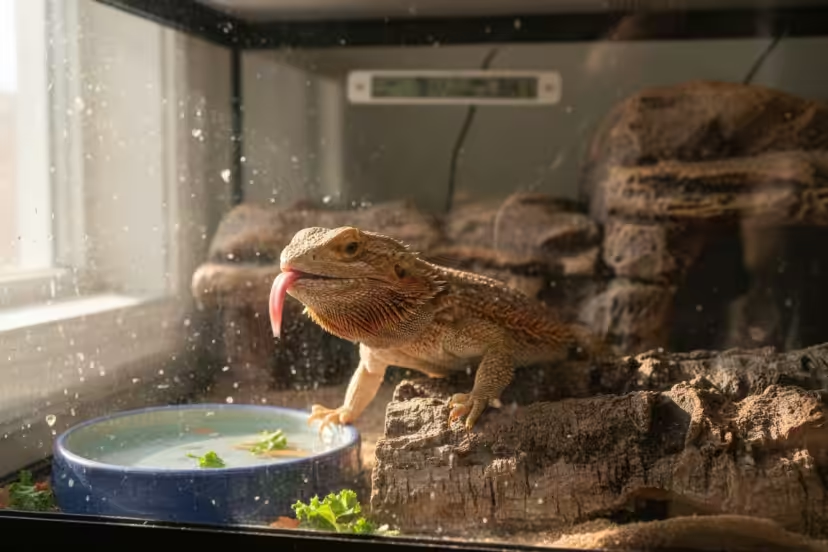
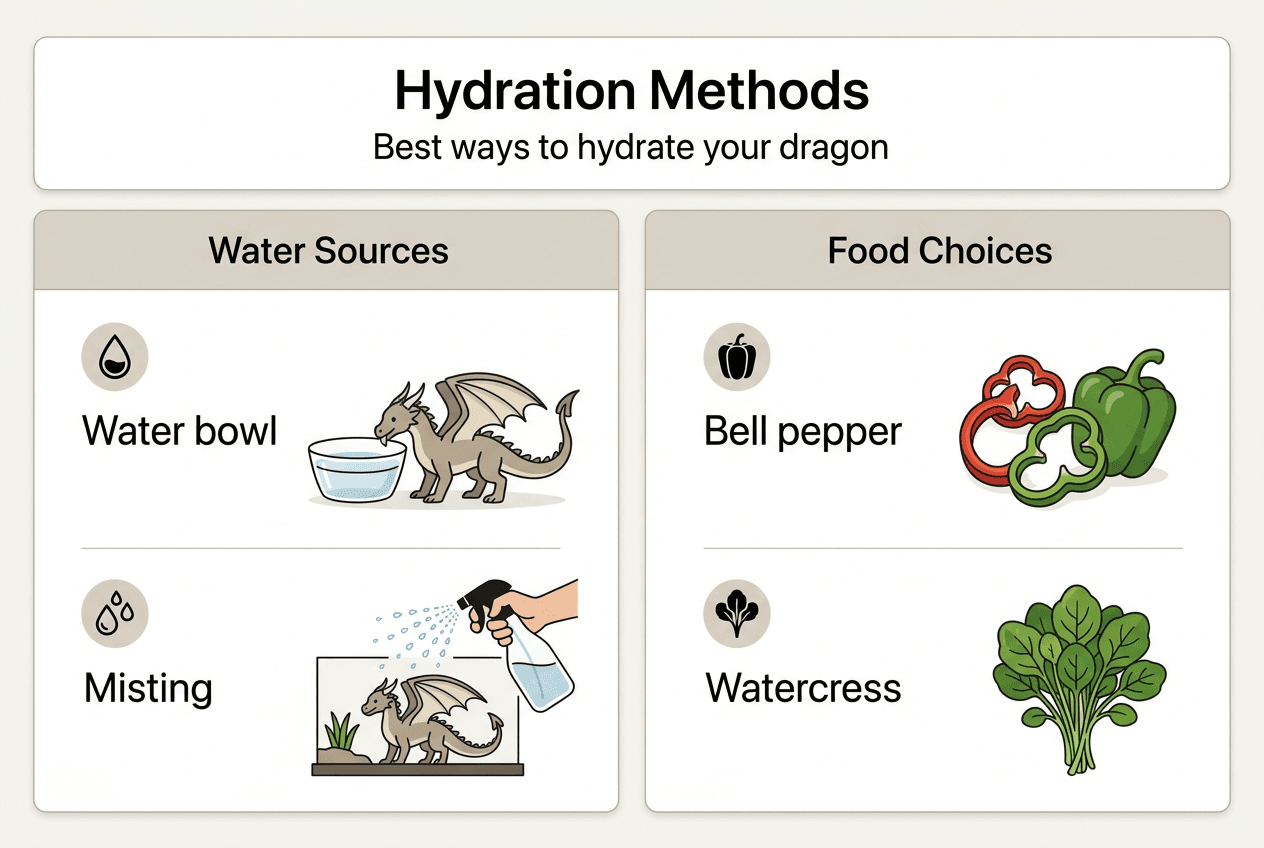
Provide a shallow water bowl changed daily on the cool side of the enclosure. The dish should be shallow enough for your dragon to enter safely without drowning risk, typically no deeper than their shoulder height. Fresh water prevents bacterial growth and ensures palatability, encouraging regular drinking.
Weekly shallow soaks in lukewarm water boost hydration and aid shedding. Fill a container with water reaching just below your dragon’s shoulders, allowing them to soak for 10-15 minutes. Many dragons drink during baths, absorbing additional moisture through their vent area. These sessions also help remove stuck shed and provide gentle exercise.
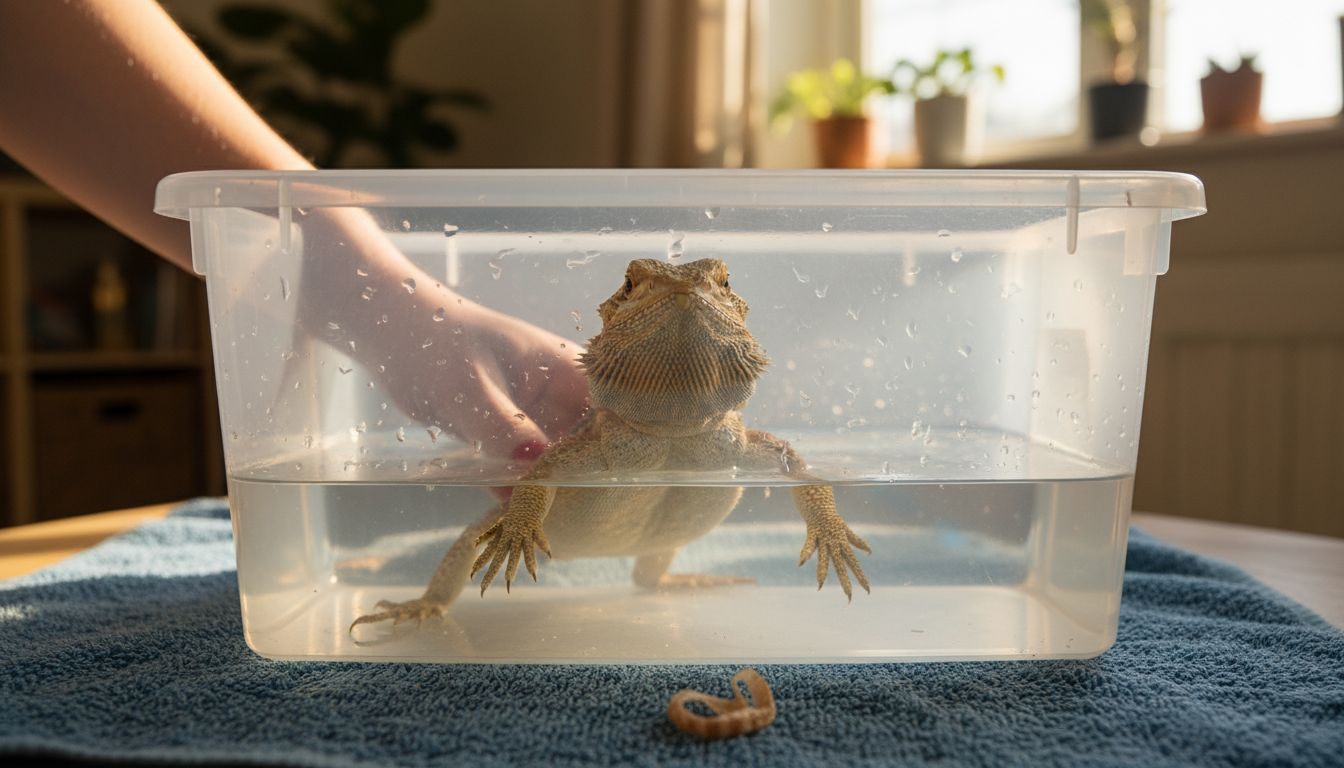
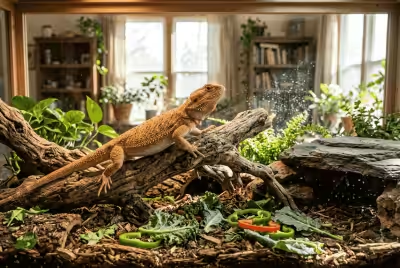
Mist your dragon’s face and enclosure several times weekly to simulate natural dew. Use room temperature or slightly warm water in a fine spray bottle, avoiding direct spraying into their nostrils. Focus on creating droplets on surfaces and decorations that your dragon can lick, mimicking how they would drink morning dew in the wild. Implementing proper bearded dragon hydration tips ensures effective misting technique.
Offer water-rich vegetables such as bell peppers and watercress regularly. These foods contribute significantly to overall hydration while providing essential nutrients. Include these options in your dragon’s diet rotation:
| Vegetable | Water Content | Additional Benefits |
|---|---|---|
| Watercress | 95% | High in calcium and vitamins |
| Bell peppers | 92% | Rich in vitamin C |
| Cucumber | 96% | Low calorie hydration |
| Mustard greens | 91% | Excellent calcium source |
Combine all methods for best hydration results. No single approach provides complete hydration, but together they create a robust system supporting your dragon’s health. Choosing quality nutrition from top bearded dragon food brands ensures water-rich options meet nutritional standards.
Pro Tip: Some dragons prefer drinking from moving water. Try gently dripping water from your finger onto their snout during handling sessions to encourage drinking, or invest in a small reptile fountain that creates gentle water movement.
Avoid excessive humidity to prevent respiratory issues. While hydration is important, creating a constantly humid environment contradicts bearded dragons’ natural desert habitat requirements. Balance is key, with humidity rising temporarily after misting then returning to baseline levels. Understanding why bearded dragons need baths helps you schedule soaking sessions that maximize hydration benefits without environmental moisture overload.
Monitoring hydration status and preventing dehydration problems
Regular observation allows you to catch dehydration early, when intervention is simplest and most effective. Developing a consistent monitoring routine helps you recognize your individual dragon’s normal baseline, making deviations more obvious.
Watch for physical signs like saggy skin, sunken eyes, and reduced appetite. Healthy dragons display plump, smooth skin with bright, alert eyes. When dehydration develops, skin loses elasticity and eyes appear recessed into their sockets. Appetite typically decreases as dehydration worsens, since proper digestion requires adequate moisture.
Check droppings regularly for dryness or abnormal texture. Well-hydrated dragons produce moist feces with distinct white urate portions. Dehydrated dragons pass dry, hard droppings with chalky or orange-tinged urates indicating concentrated waste. Monitoring waste provides valuable insight into internal hydration status.
Follow these steps to assess and maintain proper hydration:
- Perform weekly skin elasticity tests by gently pinching skin on the back or sides
- Observe drinking behavior and water bowl usage daily
- Track feeding patterns and appetite changes
- Examine droppings for consistency and urate color
- Monitor activity levels and behavioral changes
- Measure enclosure humidity twice daily with a hygrometer
Avoid substrates like sand that can cause dehydration and impactions. Sand draws moisture from your dragon’s body through contact and poses ingestion risks during feeding. Safer substrate options include reptile carpet, tile, or paper-based products that don’t absorb moisture or create impaction hazards.
Maintain proper enclosure humidity, avoiding excessive moisture buildup. While misting temporarily raises humidity, the enclosure should return to baseline levels within an hour. Persistent high humidity creates breeding grounds for harmful bacteria and fungi, potentially causing respiratory infections or skin problems. Monitoring hydration needs helps you balance moisture provision with environmental safety.
Pro Tip: Keep a simple log noting your dragon’s drinking frequency, bath schedule, and any dehydration signs. Patterns often emerge that help you optimize your hydration routine and catch problems before they become serious.
Practice good hygiene by washing hands before and after habitat maintenance. Clean water bowls daily with hot water and mild soap, rinsing thoroughly to remove residue. Contaminated water sources can cause illness that compounds dehydration problems, making sanitation a crucial prevention strategy.
Consult a vet promptly if dehydration symptoms appear or worsen. Professional assessment may include subcutaneous fluid administration for severe cases, along with identifying underlying causes like illness or environmental problems. Early veterinary intervention prevents minor dehydration from progressing to organ damage. Understanding supplements for bearded dragons bone disease helps you recognize connections between hydration and metabolic health.
| Dehydration Severity | Signs | Action Required |
|---|---|---|
| Mild | Slight skin tenting, normal appetite | Increase misting, offer bath |
| Moderate | Pronounced skin tenting, reduced appetite, sunken eyes | Daily baths, veterinary consultation |
| Severe | Extreme lethargy, refused food, very sunken eyes | Immediate emergency veterinary care |
Best practices for hydration-friendly habitat setup
Optimizing your enclosure design creates an environment that naturally supports proper hydration. Strategic placement and equipment choices make maintaining moisture levels easier while preventing common problems.
Place the water bowl on the cooler enclosure side to minimize evaporation. Hot basking areas cause rapid water loss through evaporation, requiring more frequent refills and potentially raising humidity excessively. Cool side placement keeps water fresh longer and prevents localized humidity spikes that can cause respiratory issues.
Maintain humidity within 20-40% to balance hydration and respiratory health. Install hygrometers at multiple enclosure levels, since humidity can vary significantly between floor and basking areas. Adjust ventilation, misting frequency, and water bowl size based on readings to achieve consistent levels.
Use safe substrates and avoid sand to reduce dehydration and impaction risk. Tile offers excellent heat retention and easy cleaning without moisture absorption. Reptile carpet provides traction and comfort while allowing humidity control. Paper-based substrates absorb waste effectively without drawing moisture from your dragon’s body.
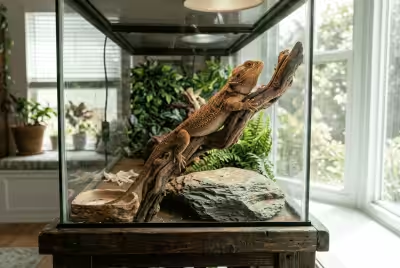
Incorporate reptile-safe plants to improve humidity and enrichment. Live plants release moisture through transpiration, creating localized humidity pockets without affecting overall enclosure levels. Choose non-toxic species like spider plants or pothos that tolerate the temperature gradients in bearded dragon habitats.
Regularly clean water dishes and mist the enclosure appropriately to sustain hydration. Establish a maintenance schedule that includes:
- Daily water bowl cleaning and refilling
- Misting 2-3 times weekly or as needed based on humidity readings
- Weekly deep cleaning of all surfaces and decorations
- Monthly substrate replacement or thorough washing
Comparing habitat elements helps you make informed setup choices:
| Element | Hydration-Friendly Option | Why It Works |
|---|---|---|
| Substrate | Tile or reptile carpet | Doesn’t absorb moisture from dragon’s body |
| Water bowl location | Cool side placement | Minimizes evaporation and humidity spikes |
| Ventilation | Moderate airflow | Prevents stagnant air while maintaining humidity |
| Decorations | Smooth surfaces | Easy to mist and clean without harboring bacteria |
Following comprehensive bearded dragon habitat setup ideas ensures all environmental factors work together supporting hydration. Understanding the humidity role for bearded dragons helps you create conditions that promote health without encouraging respiratory problems.
Explore expert resources and supplements for your bearded dragon
Now that you understand comprehensive hydration strategies, you can enhance your dragon’s care with quality products and expert guidance. Proper supplementation works alongside hydration to prevent metabolic bone disease and support overall health.

Discover bearded dragon vitamin supplements that support hydration and bone health through calcium and vitamin D3 provision. Learn essential care tips that complement hydration practices, covering temperature regulation, lighting schedules, and handling techniques. Find recommended food brands rich in water content and nutrients that make meeting dietary hydration needs simple. Using vetted products alongside proper hydration ensures your dragon thrives with minimal guesswork.
Frequently asked questions about bearded dragon hydration
How often should I change my bearded dragon’s water?
Change water daily to prevent bacterial growth and ensure freshness. Dragons may defecate in their water bowls, requiring immediate replacement when soiled. Fresh water encourages drinking and maintains palatability.
What are signs my bearded dragon isn’t drinking enough water?
Watch for loose skin that doesn’t bounce back when pinched, sunken eyes, reduced appetite, and lethargy. Dry or chalky droppings with orange-tinged urates also indicate inadequate hydration requiring intervention.
How do I safely bathe my bearded dragon for hydration?
Use lukewarm water reaching just below shoulder height in a clean container. Supervise the entire 10-15 minute soak, never leaving your dragon unattended. Many dragons drink during baths and absorb moisture through their vent area.
Where should I place the water bowl in the enclosure?
Position the water bowl on the cool side to minimize evaporation and prevent humidity spikes. Ensure the dish is shallow enough for safe entry, typically no deeper than your dragon’s shoulder height.
How can I encourage my bearded dragon to drink more water?
Try misting their face with room temperature water, offering water-rich vegetables like bell peppers, and providing movement through gentle dripping. Some dragons prefer drinking during baths or from droplets on surfaces rather than standing water.
When should I seek veterinary care for dehydration concerns?
Consult a vet immediately if dehydration symptoms worsen despite home intervention, if your dragon refuses food for more than a few days, or if you observe extreme lethargy and very sunken eyes. Early professional care prevents organ damage and improves recovery outcomes. Regular monitoring of hydration needs helps you recognize when professional help becomes necessary.
Recommended
- Bearded Dragon Hydration Needs – Go BEARDED DRAGON
- 7 Essential Bearded Dragon Hydration Tips for Beginners – Go BEARDED DRAGON