Supplements for bearded dragons: 30% fewer bone disease cases
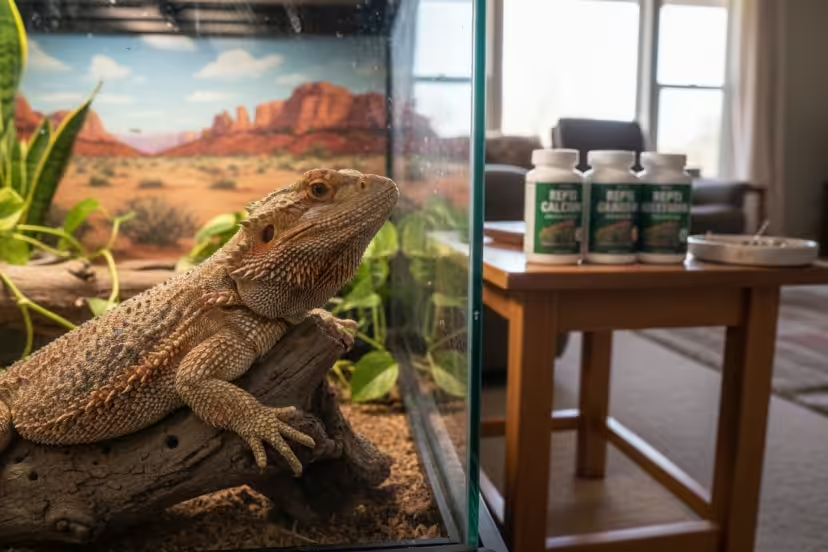
Nearly 30% of captive bearded dragons develop metabolic bone disease, a largely preventable condition caused by supplementation mistakes. Many owners struggle with which supplements to use and when, creating confusion that puts their pets at risk. This guide cuts through the noise with clear, evidence-based strategies for safe, effective supplement use. You’ll learn exactly what your dragon needs, how often to provide it, and how to integrate supplementation with diet and lighting for optimal health. Let’s transform supplementation from guesswork into a simple routine that keeps your bearded dragon thriving.
Table of Contents
- Why Supplementation Matters For Captive Bearded Dragons
- Core Supplements And Their Biological Roles
- Common Supplementation Mistakes And Risks
- Dosing Frequency And Scheduling
- Integrating Supplementation With Diet And Environment
- Risks Of Undersupplementation: Metabolic Bone Disease And Other Deficiencies
- Practical Supplementation Tips For Bearded Dragon Owners
- Enhance Your Bearded Dragon’s Health With Expert Supplements And Care Products
Key takeaways
| Point | Details |
|---|---|
| Supplements fill nutritional gaps | Captive dragons lack the varied diet and natural sunlight of wild dragons, requiring targeted supplementation to prevent deficiencies. |
| Calcium and vitamin D3 are critical but must be dosed carefully | These nutrients support bone health but accumulate to toxic levels if overused, requiring strict alternating schedules. |
| Alternating supplements weekly reduces overdose risks | Rotating calcium with and without D3, plus limiting multivitamins to 3-5 times weekly, prevents dangerous accumulation. |
| Quality UVB lighting and gut-loaded insects minimize synthetic supplement needs | Natural vitamin D3 production from UVB and nutrient-rich feeders reduce reliance on powder supplements. |
| Reptile-specific supplements ensure safety | Human supplements contain inappropriate formulations that can harm bearded dragons and should never be used. |
Why supplementation matters for captive bearded dragons
Wild bearded dragons thrive on a diverse diet of insects, plants, and occasional small vertebrates, all bathed in intense Australian sunlight. This natural environment delivers a complete nutrient profile that supports robust skeletal development, muscle function, and immune health. Captivity changes everything.
Captive bearded dragons lack the varied diet and natural sunlight of the wild, creating nutritional gaps that require supplementation. Even with careful feeding, commercial insects and vegetables often fall short of wild nutritional density. Indoor lighting, no matter how carefully selected, cannot fully replicate the intensity of direct sun exposure.
These limitations create specific deficiencies that threaten your dragon’s wellbeing. Calcium shortfalls weaken bones and impair muscle contractions. Inadequate vitamin D3 prevents calcium absorption, triggering a cascade of metabolic problems. Without intervention, these gaps manifest as metabolic bone disease, lethargy, and compromised immunity.
Supplements bridge these critical shortfalls when used correctly. They deliver concentrated nutrients in forms your dragon can absorb, compensating for what captivity cannot provide naturally. The key is understanding which nutrients your dragon needs, how much to provide, and how to avoid the toxicity risks that come with overuse. This knowledge transforms supplementation from a confusing chore into a straightforward component of bearded dragon care.
Pro Tip: Start a supplementation log tracking which supplements you use on which days. This simple habit prevents accidental doubling and helps identify patterns if health issues emerge.
Core supplements and their biological roles
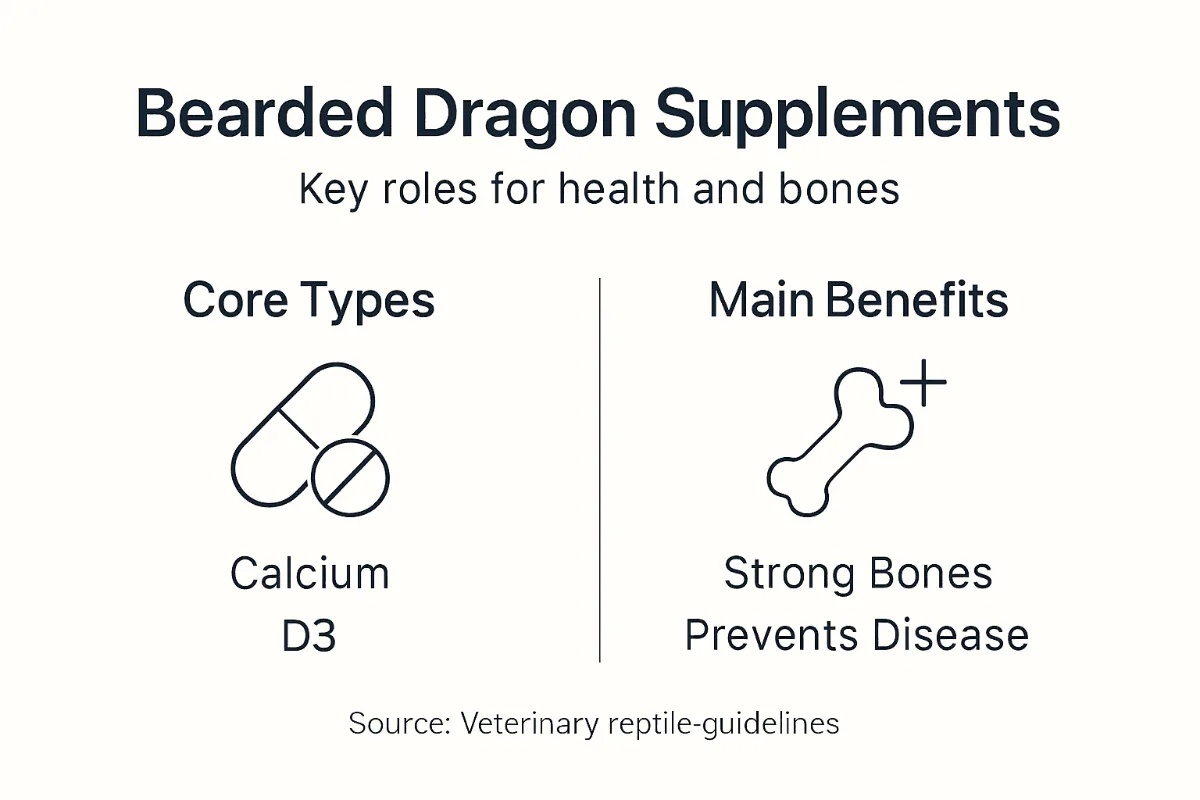
Three supplement categories form the foundation of captive bearded dragon nutrition. Each plays distinct roles that work together to support overall health.
Calcium is the foundation for bearded dragon skeletal health, crucial for bone strength, muscle function, and nervous system health. Without adequate calcium, bones become weak and pliable, muscles cannot contract properly, and nerve signals fail. You’ll use calcium supplements most frequently, making them the cornerstone of your routine.

Vitamin D3 enables calcium absorption in the digestive tract. Even with abundant calcium in the diet, your dragon cannot use it without sufficient D3. This vitamin also supports immune function and cellular health. UVB lighting stimulates natural production of vitamin D3 in bearded dragons, reducing the need for synthetic supplementation. Quality lighting can dramatically decrease your reliance on powder D3.
Multivitamins fill remaining nutritional gaps with trace minerals, vitamin A, B vitamins, and other micronutrients. These support everything from vision to immune response to tissue repair. While less critical than calcium and D3, multivitamins provide insurance against deficiencies in less obvious nutrients.
| Supplement Type | Primary Functions | Frequency |
|---|---|---|
| Calcium without D3 | Bone strength, muscle contraction, nerve function | 4-7 times weekly |
| Calcium with D3 | Calcium absorption, immune support | 2-3 times weekly |
| Multivitamin | Trace minerals, vision, tissue repair | 3-5 times weekly |
Choosing reptile-specific formulations ensures correct nutrient ratios and bioavailability. Human supplements contain inappropriate concentrations and forms that reptiles cannot process safely. Stick with products designed for bearded dragons or omnivorous reptiles.

The interaction between these supplements matters as much as individual nutrients. Calcium and D3 work synergistically, while excess D3 can actually impair calcium metabolism and bone health. This is why alternating formulations and respecting dosing limits is non-negotiable.
Pro Tip: Store supplements in a cool, dry place away from direct sunlight. Heat and moisture degrade vitamin potency, reducing effectiveness over time.
Common supplementation mistakes and risks
Supplementation errors cause as many health problems as supplementation itself prevents. Understanding these pitfalls helps you avoid harming your dragon while trying to help.
Over-supplementation, especially of vitamin D3 and vitamin A, can lead to toxicity and health problems such as organ damage in bearded dragons. These fat-soluble vitamins accumulate in body tissues rather than being excreted like water-soluble nutrients. Daily multivitamin use or excessive D3 dosing creates a toxic buildup that damages kidneys, liver, and other organs.
Many owners assume more supplements equal better health. This logic fails with bearded dragons. Excessive calcium can interfere with other mineral absorption. Too much vitamin A causes bone abnormalities and skin problems. The narrow window between deficiency and toxicity demands precision.
Using human supplements is dangerous and inappropriate as they are not formulated for reptiles, potentially causing harm. Human formulations contain ingredient combinations and concentrations that reptile physiology cannot handle. Some include additives or preservatives toxic to bearded dragons.
Failing to alternate calcium types creates another common problem. Using only calcium with D3 risks vitamin D toxicity. Using only calcium without D3 in dragons with poor UVB exposure triggers deficiency. The solution is structured rotation.
“The difference between medicine and poison is the dose. This ancient principle applies perfectly to bearded dragon supplementation, where both too little and too much create serious health consequences.”
Ignoring your dragon’s individual needs compounds these risks. A dragon with excellent UVB exposure needs less synthetic D3 than one with inadequate lighting. Younger, growing dragons require more frequent calcium than adults. Cookie-cutter approaches miss these critical variations.
Pro Tip: Watch for subtle signs of oversupplementation like decreased appetite, lethargy, or changes in urate color. These early warnings allow correction before serious organ damage occurs.
Implementing safe supplement practices requires awareness of these risks combined with strict adherence to evidence-based protocols. The next section provides those protocols.
Dosing frequency and scheduling
Clear dosing schedules eliminate guesswork and prevent both deficiency and toxicity. These evidence-based guidelines balance your dragon’s needs with safety limits.
Calcium supplementation should be alternated between powders with and without vitamin D3 to balance benefits and reduce toxicity risk. Most dragons thrive on calcium 4-7 times weekly, with D3 included only 2-3 of those times. This rotation ensures adequate calcium intake while preventing D3 accumulation.
Multivitamin supplements should be given 3-5 times per week in addition to calcium to cover other trace minerals and vitamins essential to immune and overall health. Space multivitamin doses throughout the week rather than clustering them. This maintains steady nutrient levels without overwhelming your dragon’s system.
Here’s a practical weekly schedule that balances all three supplement types:
- Monday: Calcium with D3
- Tuesday: Multivitamin
- Wednesday: Calcium without D3
- Thursday: Multivitamin
- Friday: Calcium with D3
- Saturday: Calcium without D3
- Sunday: Multivitamin
This pattern provides calcium six times weekly, D3 twice, and multivitamins three times. Adjust based on your dragon’s age, health status, and UVB exposure quality.
| Dragon Life Stage | Calcium Frequency | D3 Frequency | Multivitamin Frequency |
|---|---|---|---|
| Juvenile (under 12 months) | Daily | 3-4 times weekly | 4-5 times weekly |
| Adult (over 12 months) | 5-6 times weekly | 2-3 times weekly | 3-4 times weekly |
| Breeding females | Daily | 3 times weekly | 4 times weekly |
Consistency matters more than perfection. Missing a single dose won’t harm your dragon, but erratic supplementation creates the nutrient swings that cause problems. Set phone reminders or mark a calendar to maintain your routine.
Adjust frequencies based on UVB quality and diet composition. Dragons with high-quality UVB for 10-12 hours daily may need less frequent D3. Those eating heavily gut-loaded insects might reduce multivitamin frequency slightly.
Integrating supplementation with diet and environment
Supplements work best as part of a comprehensive nutrition and husbandry strategy. Your dragon’s diet and lighting setup directly influence supplementation needs and effectiveness.
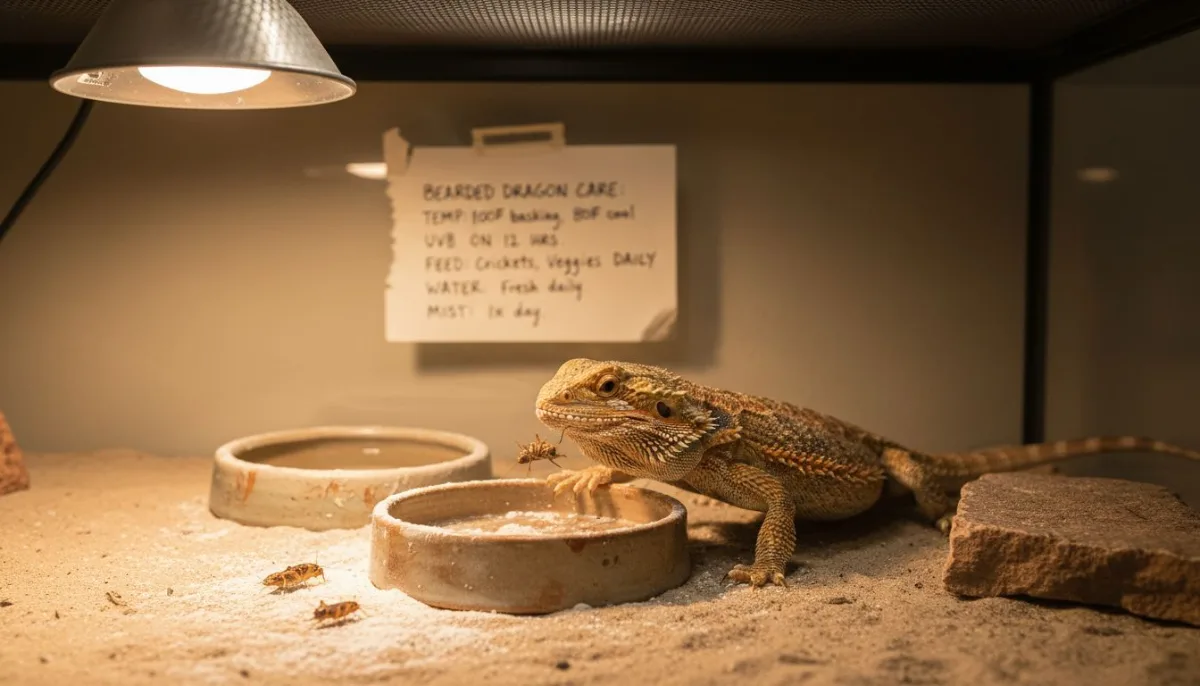
Gut-loading feeder insects with vitamin-rich foods 24-48 hours before feeding significantly improves nutrient intake in bearded dragons. Feed crickets, dubia roaches, and other insects dark leafy greens, squash, and commercial gut-load products. This transforms nutritionally empty insects into nutrient-dense meals, reducing your dragon’s reliance on powder supplements.
The insects essentially become living supplement delivery systems. They consume and store nutrients in their bodies, then transfer those nutrients to your dragon when eaten. This natural form may be more bioavailable than synthetic powders.
UVB lighting stimulates natural production of vitamin D3 in bearded dragons, reducing the need for synthetic supplementation. A high-quality tube UVB bulb positioned correctly allows your dragon to synthesize D3 through skin exposure, just as wild dragons do. This natural production is safer and more effective than powder supplementation.
Evaluate your UVB lighting quality regularly using a UV meter. Bulbs lose output long before they burn out visibly. Most need replacement every 6-12 months depending on type and brand. Inadequate UVB forces you to rely more heavily on synthetic D3, increasing toxicity risk.
Balanced whole-food diet choices also reduce supplement dependence. Dark leafy greens like collard greens and mustard greens provide natural calcium. Squash and bell peppers deliver vitamin A. The more nutritionally complete your base diet, the less you need supplements to fill gaps.
Combine these elements strategically. Excellent UVB plus heavily gut-loaded insects plus calcium-rich greens might allow you to reduce D3 supplementation frequency to once or twice weekly. Poor lighting with nutritionally empty insects requires more aggressive supplementation.
Monitor your dragon’s response to different combinations. Healthy growth, strong bones visible in vet x-rays, and active behavior indicate your integrated approach is working. Adjust individual elements based on these outcomes.
Following best UVB practices forms the foundation of this integrated approach. Quality lighting reduces supplementation needs while supporting overall health in ways powder supplements cannot replicate.
Risks of undersupplementation: metabolic bone disease and other deficiencies
Inadequate supplementation creates devastating health consequences that often prove irreversible. Understanding these risks reinforces why consistent, appropriate supplementation is essential.
Metabolic bone disease represents the most common and serious undersupplementation outcome. This condition causes progressive bone weakening, deformities, and system-wide health collapse. Prevalence linked to insufficient calcium and vitamin D3 intake means up to 30% of captive bearded dragons develop this largely preventable disease.
Metabolic bone disease symptoms in unsupplemented dragons include swollen or misshapen jaw, soft or curved limbs, difficulty walking, muscle tremors, and lethargy. Advanced cases feature bones so weakened they fracture during normal movement. The jaw deformity, often called rubber jaw, prevents proper eating.
Calcium deficiency triggers these symptoms because your dragon’s body pulls calcium from bones to maintain blood levels needed for heart and nerve function. This desperate compensation weakens the skeleton progressively. Without intervention, affected dragons suffer chronic pain, paralysis, and eventual death.
Early warning signs appear before obvious deformities develop. Watch for decreased activity, reluctance to climb, fine muscle tremors, and loss of appetite. These subtle changes indicate your dragon is struggling to maintain normal function despite inadequate nutrition.
Vitamin A deficiency creates different but equally serious problems. Affected dragons develop eye infections, respiratory issues, poor skin quality, and compromised immune function. They become susceptible to infections their bodies would normally fight off easily.
Trace mineral deficiencies manifest as poor growth, dull coloration, slow wound healing, and reproductive problems. While less dramatic than metabolic bone disease, these deficiencies significantly reduce quality of life and longevity.
The tragedy of these conditions is their preventability. Consistent, appropriate supplementation following the schedules outlined earlier virtually eliminates metabolic bone disease risk. The small effort of regular supplementation prevents immense suffering and expensive veterinary treatment.
Practical supplementation tips for bearded dragon owners
Translating supplementation knowledge into daily practice requires attention to application technique, product selection, and monitoring. These practical tips ensure your efforts deliver maximum benefit.
Always purchase reptile-specific supplements from reputable manufacturers. Check expiration dates and store products properly. Supplements lose potency over time, especially when exposed to heat, light, or moisture. Replace supplements annually even if not fully used.
Dust feeder insects just before offering them to your dragon. Place insects in a container or bag, add a small amount of supplement powder, and shake gently to coat. Light dusting works better than heavy coating, which insects may shake off or dragons may refuse.
Avoid applying supplements to vegetables, as powder often falls off before consumption. Focus supplementation efforts on insects, which retain powder better and form the core of most bearded dragon diets.
Observe your dragon during and after feeding. Healthy dragons eagerly consume dusted insects. Refusal or selective eating around heavily dusted items suggests you’re applying too much powder. Adjust technique accordingly.
Monitor long-term health indicators that reflect supplementation adequacy. Annual veterinary exams with blood calcium testing provide objective data. X-rays reveal bone density and identify early metabolic bone disease. Use these professional assessments to fine-tune your supplementation routine.
Watch for behavioral and physical changes at home:
- Strong, purposeful movement indicates good muscle and bone health
- Bright, alert eyes suggest adequate vitamin A
- Normal appetite and digestion reflect overall nutritional balance
- Consistent growth in juveniles shows proper calcium and nutrient intake
- Healthy shed cycles indicate good skin and metabolic function
Adjust supplementation based on life stage changes. Increase frequency during growth spurts, breeding, or recovery from illness. Reduce frequency for older, sedentary adults with excellent UVB exposure.
Keep detailed records of your supplementation schedule, product brands, and any health changes. This documentation helps identify patterns and proves invaluable when consulting with veterinarians about nutrition-related concerns.
Pro Tip: Dedicate specific small containers for each supplement type and label them clearly. This organization prevents mix-ups and makes daily supplementation quick and foolproof.
Enhance your bearded dragon’s health with expert supplements and care products
You now understand the critical role supplements play in preventing disease and supporting vitality. Putting this knowledge into practice starts with accessing quality products formulated specifically for bearded dragon needs.

Our carefully curated selection includes reptile-specific calcium, vitamin D3, and multivitamin formulations that align with the evidence-based protocols detailed throughout this guide. Each product meets strict safety and potency standards, giving you confidence in what you’re feeding your dragon.
Beyond supplements, explore our comprehensive guides on bearded dragon nutritional supplementation strategies and safe supplementation practices. These resources help you build complete care routines that integrate supplementation with optimal diet and habitat management.
Discover how balanced diet choices work synergistically with your supplementation program to maximize health outcomes. Quality feeder insects, fresh vegetables, and appropriate feeding schedules complement supplement use, reducing reliance on synthetic nutrients while improving overall nutrition.
FAQ
What happens if I give my bearded dragon too much vitamin D3?
Excess vitamin D3 causes toxicity symptoms including lethargy, loss of appetite, soft tissue calcification, and organ damage, particularly to kidneys and heart. Because vitamin D3 is fat-soluble, it accumulates in body tissues rather than being excreted, making careful dosing essential to prevent dangerous buildup.
How can I tell if my bearded dragon needs vitamin D3 supplements?
Evaluate your UVB lighting quality and placement using a UV meter to determine natural D3 production capability. If UVB is inadequate, inconsistent, or your dragon has limited exposure time, synthetic D3 supplementation becomes necessary to prevent deficiency and metabolic bone disease.
What is the best way to apply supplements to feeder insects?
Place insects in a container or plastic bag, add a small pinch of supplement powder, and shake gently to create light, even coating. Apply supplements immediately before feeding to prevent powder from falling off, and avoid heavy coating that may cause insects to clump or dragons to refuse food.
Can I use human calcium supplements for my bearded dragon?
Never use human supplements for bearded dragons, as they contain inappropriate nutrient ratios, additives, and forms that reptiles cannot safely process. Reptile-specific formulations ensure correct calcium to phosphorus ratios and exclude ingredients potentially toxic to bearded dragons.
How long does it take to see results from proper supplementation?
You’ll notice improved energy and appetite within 2-3 weeks of starting appropriate supplementation. Bone strength improvements take 2-3 months to become evident through increased activity and normal growth, while blood calcium levels normalize within 4-6 weeks as measured through veterinary testing.
Recommended
- Bearded Dragon Dental Health – What Every Owner Needs
- 6 Clear Signs of a Healthy Bearded Dragon
- Tips for a healthy pet