How to bond with a bearded dragon: step-by-step guide 2026
Building a strong connection with your bearded dragon takes time and intentional effort. Many owners struggle to create meaningful interactions despite providing excellent physical care. This comprehensive guide walks you through proven, research-backed techniques to strengthen your bond, from monitoring health indicators and creating enriching environments to mastering handling methods and recognizing progress. You’ll learn how behavior cues, environmental design, and consistent routines transform cautious reptiles into responsive, trusting companions ready to engage with you.
Table of Contents
- Understand Your Bearded Dragon’s Needs
- Prepare A Stimulating Environment To Encourage Interaction
- Step-By-Step Bonding And Handling Techniques
- Recognizing Progress And Troubleshooting Bonding Setbacks
- Explore Expert Care Products To Enhance Your Bond
- Frequently Asked Questions
Key takeaways
| Point | Details |
|---|---|
| Patience builds trust | Bonding takes weeks to months depending on age and personality, requiring consistent gentle interactions. |
| Health enables bonding | Monitor appetite, activity, and basking behavior to ensure your dragon is physically ready for interaction. |
| Enrichment reduces stress | Varied habitat elements and training activities create positive associations with human presence. |
| Routine strengthens bonds | Regular handling sessions and predictable schedules help adult dragons overcome solitary tendencies. |
| Body language guides timing | Watch for stress signals to adjust interaction intensity and duration appropriately. |
Understand your bearded dragon’s needs
Successful bonding begins with ensuring your dragon is healthy and comfortable. A bearded dragon experiencing health issues will naturally avoid interaction, making bonding attempts frustrating for both of you. Start by observing daily behaviors that indicate wellness.
Healthy dragons display consistent appetite, regular basking under heat lamps, and active exploration during their peak hours. Signs of a healthy bearded dragon include bright eyes, smooth skin without lesions, and responsive movements when you approach the enclosure. If your pet shows lethargy, refuses food for multiple days, or displays unusual postures, metabolic bone disease or parasites may be present and require veterinary attention before bonding work begins.
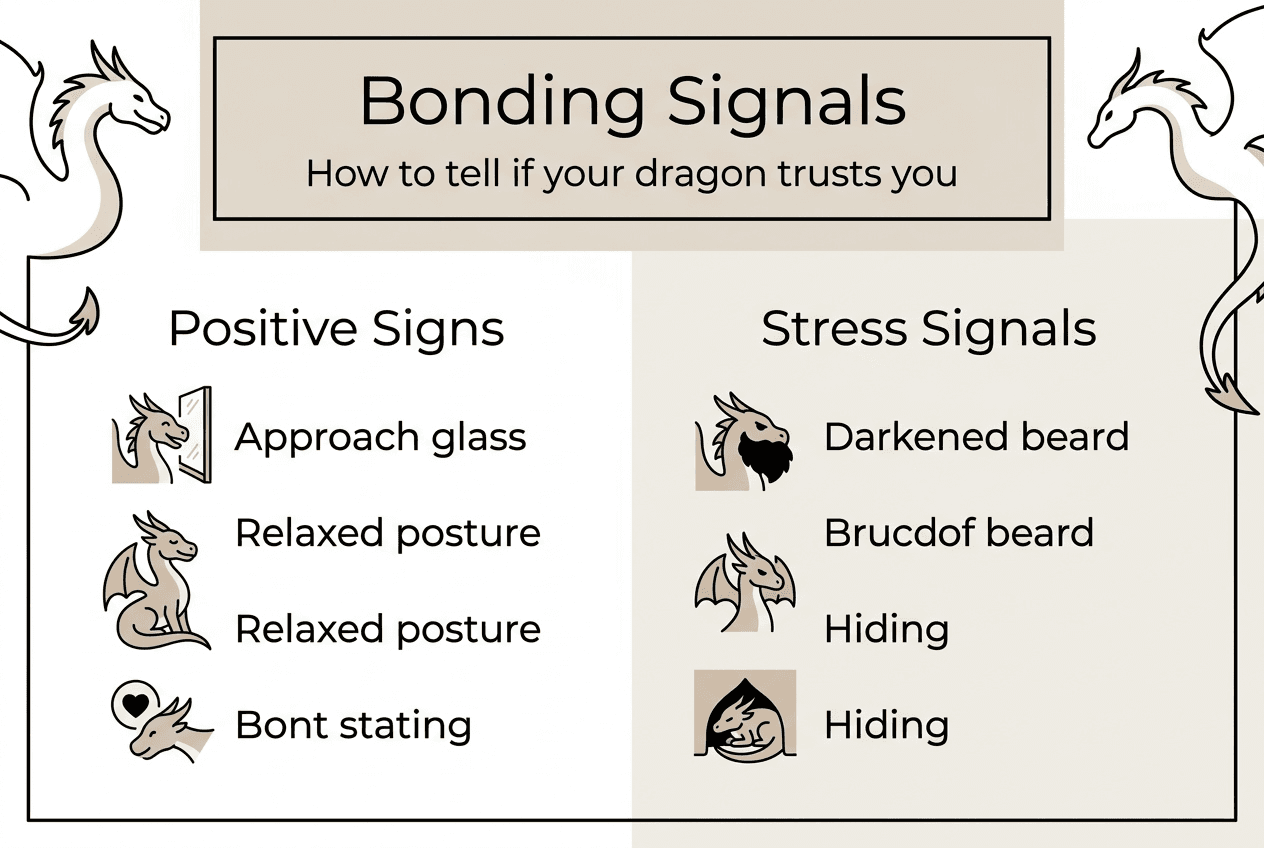
Pay attention to behavior signals that reveal your dragon’s emotional state. Glass surfing, darkened beard coloration, and rapid head bobbing indicate stress or territorial responses. Calm dragons rest with relaxed limbs, maintain normal coloration, and show curiosity by tracking your movements. Understanding bearded dragon behavior signs helps you choose optimal moments for interaction rather than forcing contact during anxious periods.
Key health and behavior indicators to monitor:
- Consistent eating patterns and appropriate food intake for age and size
- Regular basking behavior maintaining body temperature between 95-105°F
- Active exploration during morning and late afternoon periods
- Normal coloration without persistent dark stress marks
- Responsive eye tracking and head movements when approached
Pro Tip: Schedule a veterinary wellness check if you notice any appetite changes, unusual lethargy, or visible physical abnormalities before starting intensive bonding sessions. Addressing underlying health problems first prevents setbacks and ensures your dragon has the energy and comfort needed to engage positively with training efforts.
Prepare a stimulating environment to encourage interaction
Environmental enrichment transforms your dragon’s habitat from a basic enclosure into an engaging space that naturally encourages exploration and reduces anxiety. When dragons feel mentally stimulated and physically comfortable, they become more receptive to human interaction and bonding activities.
Start by adding varied structural elements that promote natural behaviors. Install hammocks at different heights for basking options, create hiding spots with cork bark or commercial caves, and position multiple perches that encourage climbing. Bearded dragon enrichment includes naturalistic décor like safe plants, textured substrates, and background elements that reduce visual stress while providing exploration opportunities.
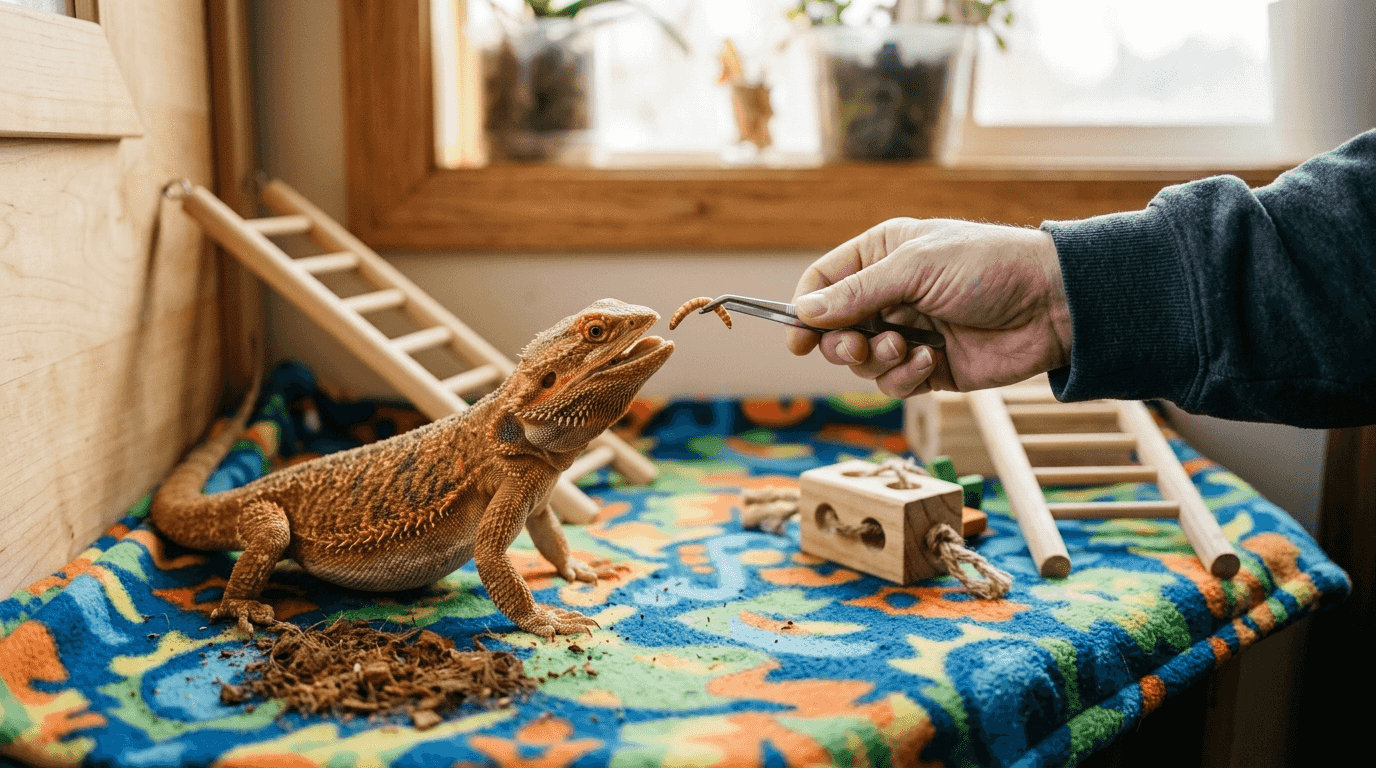
Training activities build positive associations between your presence and rewarding experiences. Teach your dragon to come to your hand by placing it flat in the enclosure and offering a favorite insect when they approach. Practice potty spot training by consistently placing them in a designated area after meals, rewarding successful elimination. Introduce puzzle feeders that require problem solving to access treats, stimulating cognitive engagement while you supervise nearby.
| Activity Type | Simple Version | Advanced Version | Bonding Benefit |
| — | — | — |
| Feeding enrichment | Hand feeding individual insects | Puzzle feeders requiring manipulation | Associates your presence with food rewards |
| Habitat exploration | Single hide spot | Multiple hides, tunnels, climbing structures | Reduces territorial stress, encourages curiosity |
| Training exercises | Come to hand for treat | Potty training, target following | Builds communication and trust through cooperation |
| Free roam time | Supervised floor exploration | Outdoor harness walks in safe areas | Expands positive experiences beyond enclosure |
Supervised exploration outside the enclosure provides powerful bonding opportunities. Create a safe play area on the floor with boundaries, allowing your dragon to investigate while you sit nearby. This enrichment reduces stress by preventing boredom and creates positive associations with your presence during enjoyable activities. Always supervise closely to prevent escapes or access to dangerous items.
Consider your bearded dragon enclosure recommendations when planning enrichment additions. Larger enclosures accommodate more varied elements without overcrowding, giving your dragon choices about where to spend time. This autonomy reduces stress and makes voluntary approaches to you more meaningful indicators of trust.
Pro Tip: Rotate enrichment items weekly to maintain novelty and interest. Introduce one new element at a time, allowing your dragon to adjust before adding another change. This prevents overwhelming them while keeping their environment mentally stimulating and conducive to positive interactions with you during exploration.
Step-by-step bonding and handling techniques
Building trust through handling requires gradual progression and attention to your dragon’s comfort signals. Rushing this process creates negative associations that set back bonding efforts, while patient consistency establishes reliable positive experiences.
Follow these steps to establish trust and cooperative behavior:
-
Begin by simply placing your hand inside the enclosure without attempting to touch your dragon. Rest it palm down for 5-10 minutes daily, allowing them to investigate at their own pace and become familiar with your scent.
-
Once your dragon shows curiosity by approaching your hand, offer a favorite treat immediately after they touch or sniff it. This creates positive reinforcement linking your presence with rewards.
-
Start brief handling sessions by gently sliding your hand under their body, supporting both chest and hindquarters. Lift slowly and hold for just 30-60 seconds initially, returning them to the enclosure while they remain calm.
-
Gradually increase handling duration by 1-2 minutes each session over several weeks. Watch for relaxed posture with limbs extended rather than tense, tucked positions indicating discomfort.
-
Teach simple commands like “come” by using a consistent verbal cue paired with a hand gesture. When your dragon approaches, immediately reward with a preferred insect or vegetable treat.
-
Practice safe handling techniques by always supporting their full body weight, avoiding sudden movements, and never restraining them when they show stress signals like arm waving or beard darkening.
Reptiles learn through classical conditioning more slowly than mammals but retain training exceptionally well once established. Patience and consistency matter more than session frequency. Three 10-minute quality interactions weekly outperform daily rushed handling that creates anxiety.
Monitor body language throughout every interaction. Relaxed dragons display normal coloration, keep their beard flat, and may even close their eyes contentedly when stroked gently along the back. Stressed individuals puff their beard, flatten their body, or attempt to flee. When you notice these signals, immediately return your dragon to their enclosure and try again later.
Pro Tip: Schedule handling sessions during your dragon’s naturally active periods, typically mid-morning after they’ve basked and warmed up. Avoid interactions immediately after feeding when they’re focused on digestion, or during evening hours when they’re preparing to sleep. Timing interactions with their natural rhythms increases receptiveness and success rates.
Recognizing progress and troubleshooting bonding setbacks
Measuring bonding success requires observing subtle behavioral changes that indicate growing trust and comfort with your presence. Understanding these signs helps you adjust your approach and maintain steady progress even when challenges arise.
Positive bonding indicators include your dragon voluntarily approaching the enclosure glass when you enter the room, maintaining relaxed body posture during handling, and willingly eating from your hand. Juveniles show higher social benefits and typically bond faster than adults, often displaying these behaviors within 4-6 weeks of consistent interaction. Adult dragons may require 2-3 months to show similar trust levels due to their more solitary nature.
Common setbacks include sudden regression where a previously cooperative dragon becomes defensive or withdrawn. This often signals environmental stressors like temperature fluctuations, inadequate lighting, or the presence of other pets causing anxiety. Health issues including parasites, respiratory infections, or pain from injuries also trigger bonding difficulties. When progress stalls, reassess both habitat conditions and physical wellness.
| Observation | Success Indicator | Stress Signal | Recommended Action |
| — | — | — |
| Approach behavior | Moves toward you voluntarily | Retreats to hide when approached | Slow interaction pace, increase treat rewards |
| Body language | Relaxed limbs, normal coloration | Beard darkening, body flattening | End session immediately, review handling technique |
| Feeding response | Accepts food from hand readily | Refuses food during interaction | Check health, reduce handling duration |
| Exploration | Investigates surroundings calmly | Glass surfing, frantic movement | Assess bearded dragon stress marks, adjust environment |
When bonding attempts consistently fail despite proper technique, reset your approach by returning to earlier steps. Spend a week simply sitting near the enclosure without handling, allowing your dragon to observe you as a non-threatening presence. Gradually reintroduce hand placement in the habitat before attempting physical contact again.
Maintaining routine becomes especially important for adult dragons whose bearded dragon social needs differ from juveniles. Consistent daily schedules for feeding, lighting, and interaction times help solitary adults develop trust through predictability rather than social drive. They bond through reliable patterns rather than seeking companionship.
Address specific stress behaviors promptly. Persistent glass surfing may indicate inadequate enclosure size or lack of enrichment. Aggressive displays like beard puffing and hissing during every approach suggest previous negative experiences requiring slower desensitization. Refusal to eat accompanied by lethargy demands veterinary evaluation before continuing bonding work.
Explore expert care products to enhance your bond
Deepening your connection with your bearded dragon extends beyond handling techniques to providing optimal care through quality habitat elements and health support. The right products create environments where trust naturally develops through comfort and mental engagement.
Explore comprehensive bearded dragon enrichment guides that detail proven strategies for mental stimulation and stress reduction. These resources help you design activity rotations and training progressions tailored to your dragon’s age and personality, supporting consistent bonding progress throughout 2026.

Invest in top bearded dragon enclosures 2026 that provide adequate space for enrichment elements while maintaining proper temperature gradients. Spacious, well-designed vivariums reduce territorial stress and give your dragon autonomy to choose interaction timing, making approaches to you more meaningful.
Support underlying health with bearded dragon supplements for bone disease prevention. Proper calcium and vitamin D3 supplementation prevents metabolic conditions that impair mobility and energy, ensuring your dragon feels physically capable of engaging in bonding activities and exploration.
Frequently asked questions
How long does it take to bond with a bearded dragon?
Bonding typically requires 4-8 weeks for juvenile dragons and 2-4 months for adults with consistent daily interaction. Individual personality and previous handling experience significantly impact this timeline. Patience and regular gentle contact accelerate trust building more effectively than intensive but sporadic sessions.
Can I bond with an adult bearded dragon?
Yes, adult dragons bond successfully through predictable routines and gentle handling despite their naturally solitary tendencies. They respond well to consistent schedules and environmental enrichment even if they don’t seek social interaction as actively as juveniles. Focus on reliability rather than frequency to build trust with mature dragons.
What are signs my dragon is bonded?
Bonded dragons voluntarily approach you, maintain relaxed body posture during handling, and readily accept food from your hand. They may track your movements around the room, display calm coloration when you’re near, and tolerate extended handling without stress signals. Some individuals even appear to seek out interaction by glass surfing when you enter their space.
How do I avoid stressing my beardie during bonding?
Use slow, predictable movements and keep initial sessions under 5 minutes, gradually increasing duration. Watch for stress indicators like beard darkening, body flattening, or attempts to flee, ending interactions immediately when these appear. Always support their full body weight and avoid restraining them, allowing voluntary participation in handling.
Should I check my dragon’s health before bonding?
Absolutely, underlying health problems severely impair bonding ability and must be addressed first. Schedule a veterinary examination if you notice appetite changes, lethargy, unusual postures, or visible physical abnormalities. Healthy dragons have the energy and comfort needed to engage positively with training and handling efforts.
Recommended
- How to Handle Bearded Dragon Safely for Stress-Free Bonding
- How to Tame Bearded Dragon Naturally and Safely