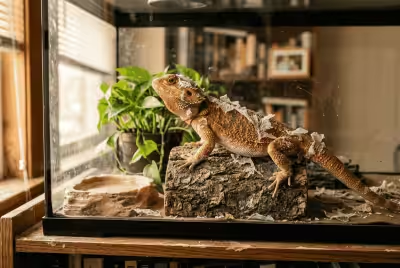
Why dragons need climbing branches for health
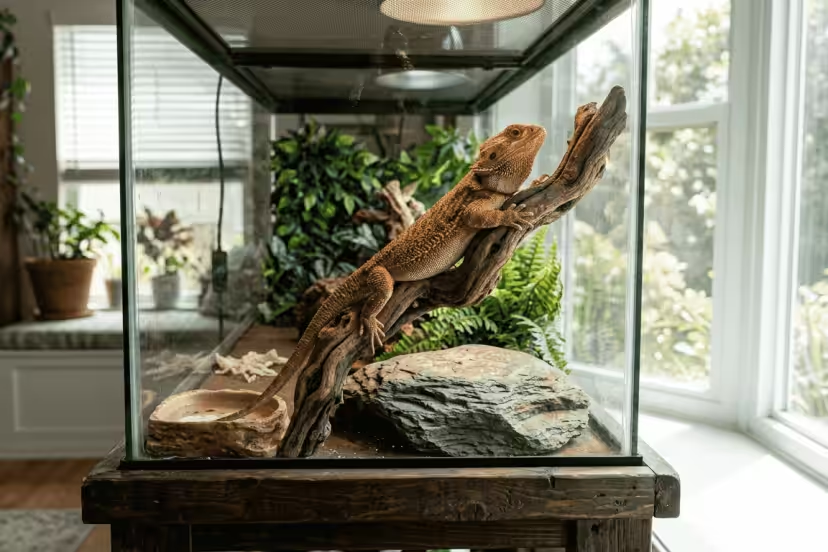
Many new bearded dragon owners assume climbing branches are purely decorative additions to a habitat, nice to have but not essential. This misconception can deprive your dragon of critical physical exercise and mental stimulation that branches naturally provide. Climbing is not optional for bearded dragons; it’s a fundamental behavior rooted in their Australian desert origins. When you add properly selected branches to your dragon’s enclosure, you’re supporting muscle development, joint health, stress reduction, and natural territorial instincts. This guide explains exactly why climbing branches matter for your dragon’s wellbeing and how to incorporate them safely into your setup.
Table of Contents
- Understanding The Natural Climbing Behavior Of Bearded Dragons
- Health Benefits Of Climbing Branches For Physical Fitness
- Mental And Emotional Enrichment From Climbing Activities
- How To Choose And Set Up Climbing Branches Safely In Your Dragon’s Habitat
- Enhance Your Bearded Dragon’s Habitat With Expert-Approved Accessories
- FAQ
Key takeaways
| Point | Details |
|---|---|
| Climbing promotes natural behaviors | Branches allow dragons to express instincts like basking, surveying territory, and temperature regulation that are hardwired from their wild habitat. |
| Physical health improves significantly | Regular climbing builds muscle tone, strengthens bones, maintains joint flexibility, and helps prevent obesity-related health issues. |
| Mental enrichment reduces stress | Climbing provides exploration opportunities and environmental variety that combat boredom, anxiety, and stress-related behaviors in captive dragons. |
| Safety requires thoughtful selection | Choose stable hardwood branches with textured surfaces, secure placement near basking spots, and regular inspection to prevent injury. |
| Habitat quality directly impacts wellness | Combining climbing structures with proper temperature gradients and nutrition creates an environment where dragons thrive physically and emotionally. |
Understanding the natural climbing behavior of bearded dragons
Bearded dragons evolved in the rocky, arid regions of Australia where climbing is a daily survival activity. Their native environment features scattered boulders, fallen logs, low shrubs, and rocky outcrops that provide elevation for temperature control and predator avoidance. These lizards didn’t develop their strong limbs and sharp claws by accident. Every aspect of their anatomy supports vertical movement and grip on rough surfaces.
In the wild, bearded dragons spend significant portions of their day climbing to reach optimal basking spots where they can absorb heat efficiently. Elevated positions also serve as lookout points where they scan for food, potential mates, and threats. This behavior isn’t learned; it’s instinctive. Even captive-bred dragons that have never seen the Australian outback will immediately attempt to climb any suitable structure you provide.
When you observe your dragon in its enclosure, you’ll notice several climbing-related behaviors that mirror wild patterns:
- Scaling cage walls or decorations to reach higher ground
- Positioning themselves on elevated surfaces during basking periods
- Using height to establish territorial dominance and security
- Exploring vertical spaces with the same curiosity they show for horizontal areas
- Adjusting their vertical position throughout the day to regulate body temperature
These behaviors demonstrate that climbing isn’t recreational for bearded dragons. It’s a biological necessity tied to thermoregulation, safety, and psychological comfort. When you deny your dragon access to climbing opportunities, you’re essentially asking it to ignore millions of years of evolutionary programming. Understanding this bearded dragon natural habitat connection helps you appreciate why branches are essential, not optional.
Health benefits of climbing branches for physical fitness
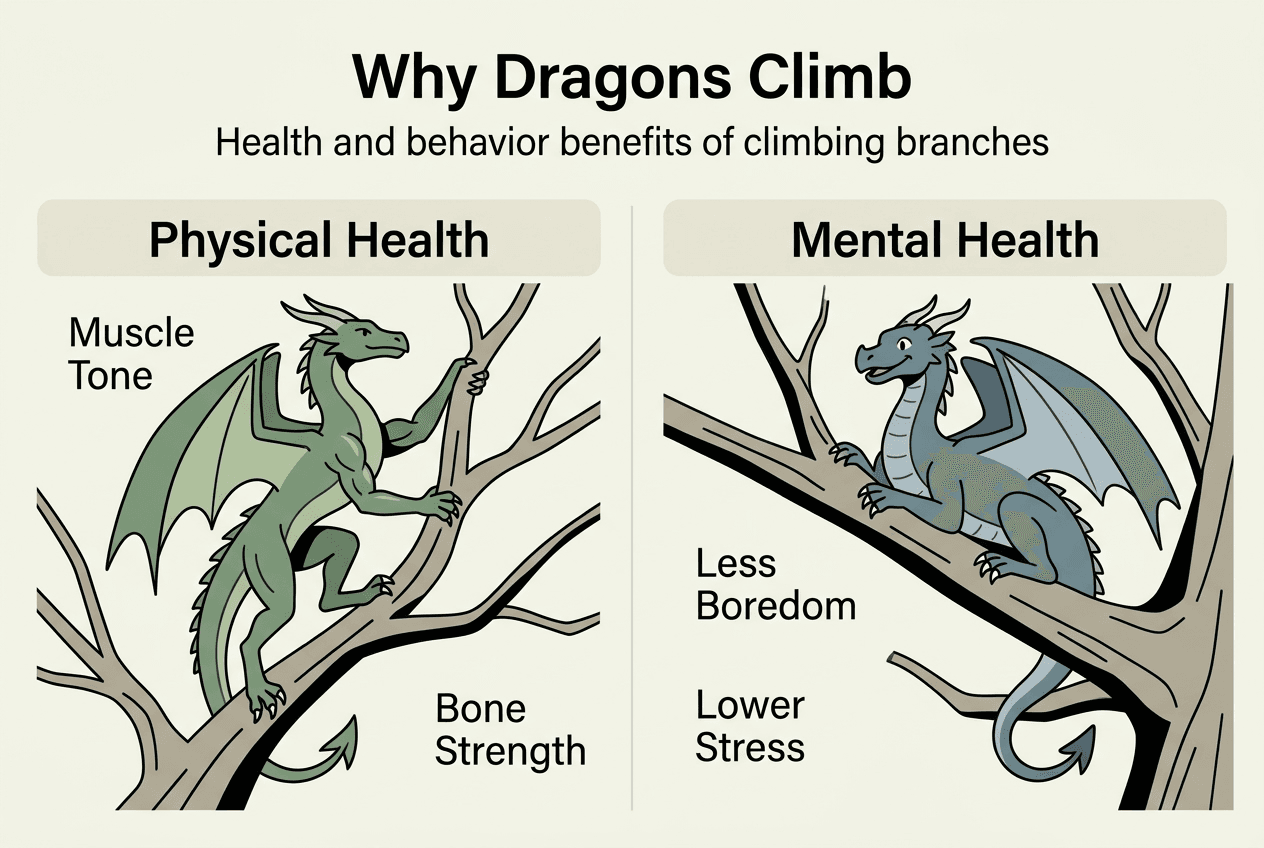
Climbing branches deliver measurable improvements to your bearded dragon’s physical condition that go far beyond basic movement. When your dragon grips a branch and pulls itself upward, it engages core muscles, limb muscles, and stabilizer muscles throughout its body. This full-body workout maintains muscle tone that would otherwise deteriorate in a flat enclosure. Over time, regular climbing creates visible definition in your dragon’s legs and torso.
Joint health benefits from climbing are equally important. The varied movements required to navigate branches, including reaching, gripping, and balancing, keep joints flexible and lubricated. This natural range of motion prevents the stiffness and reduced mobility that can develop when dragons spend too much time on flat surfaces. Flexible joints contribute to better overall movement quality and reduce injury risk during other activities.
Weight management becomes significantly easier when your dragon has opportunities for vertical exercise. Climbing reduces obesity risk by increasing daily calorie expenditure and boosting metabolism. Dragons with climbing access maintain healthier body conditions compared to those confined to ground-level movement. This matters because obesity in bearded dragons leads to fatty liver disease, joint stress, and shortened lifespan.
Bone density improvements from climbing activity deserve special attention. The physical stress that climbing places on bones triggers natural strengthening responses. This weight-bearing exercise helps prevent metabolic bone disease, a common and serious condition in captive bearded dragons. When combined with proper calcium supplementation and UVB lighting, climbing creates the mechanical stimulus bones need to stay dense and strong.
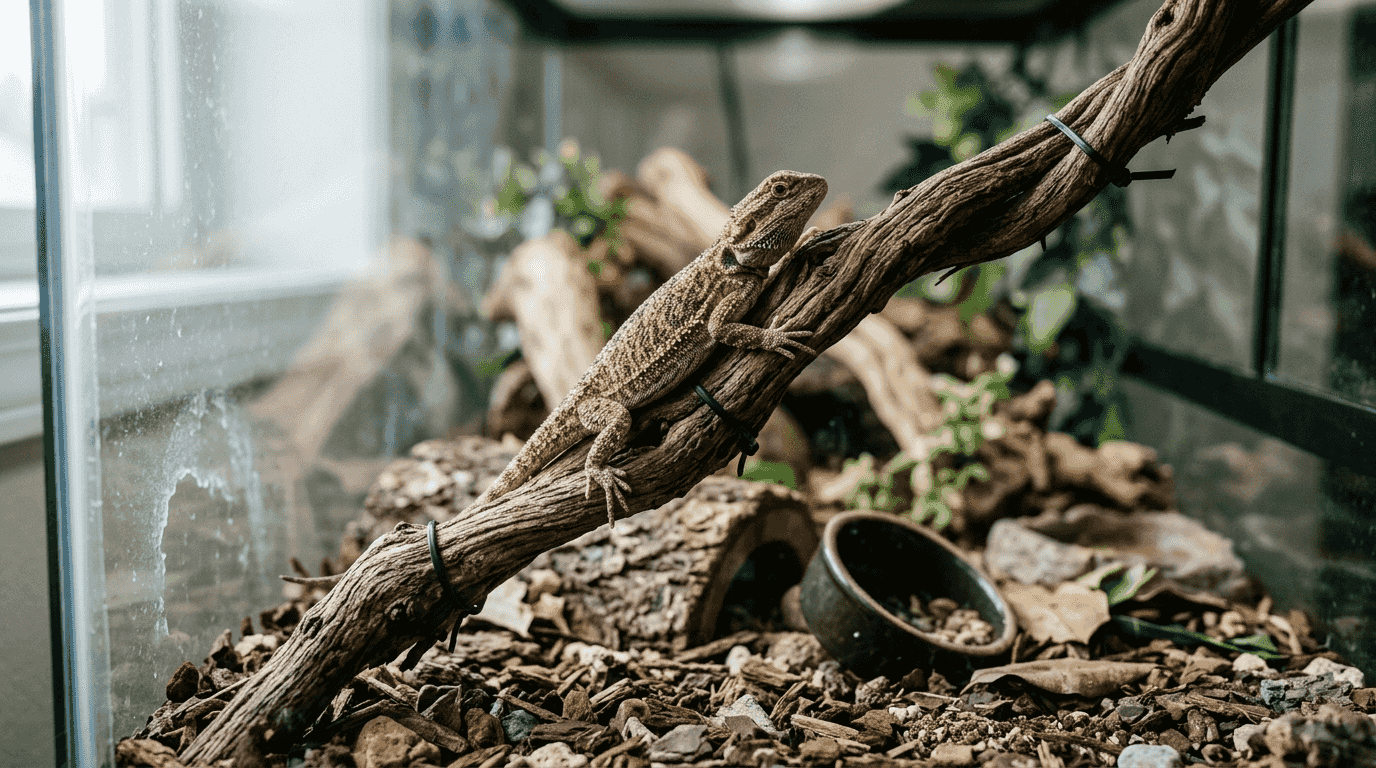
Pro Tip: Introduce climbing branches gradually if your dragon hasn’t had access before. Start with low, stable branches positioned near the ground and slowly increase height over several weeks as your dragon builds confidence and strength.
The cardiovascular benefits of regular climbing shouldn’t be overlooked either. Active dragons develop stronger hearts and more efficient circulatory systems. You’ll notice improved stamina, better appetite regulation, and more consistent energy levels throughout the day. These signs of a healthy bearded dragon become more apparent when physical activity is part of their daily routine. Pairing climbing opportunities with quality bearded dragon vitamin supplements reviews creates a comprehensive approach to physical wellness.
Mental and emotional enrichment from climbing activities
Mental stimulation ranks among the most underestimated aspects of bearded dragon care, yet it profoundly impacts your pet’s quality of life. Captive dragons face a unique challenge: their instincts demand complex environmental interaction, but typical enclosures offer limited variety. Climbing structures reduce stress by providing the environmental complexity their brains expect. Without this stimulation, dragons develop behavioral problems that signal psychological distress.
Recognizing boredom and stress in your bearded dragon requires attention to subtle behavioral changes. Glass surfing, where dragons repeatedly scratch at enclosure walls, often indicates insufficient enrichment. Lethargy beyond normal rest periods, aggressive responses to handling, and repetitive pacing patterns all suggest mental understimulation. These behaviors don’t appear because your dragon is defective; they emerge because its environment fails to meet psychological needs.
Climbing branches address these issues by creating opportunities for natural exploration and territory establishment. When your dragon can choose between multiple perches at different heights, it exercises decision-making abilities and experiences environmental control. This sense of agency reduces anxiety and promotes emotional stability. Dragons with climbing access spend more time engaged in purposeful activity rather than displaying stress behaviors.
The enrichment benefits of climbing extend across multiple dimensions of mental health:
- Provides novel sensory experiences through different textures, temperatures, and viewing angles
- Enables natural territorial marking and establishment of preferred zones
- Creates problem-solving opportunities as dragons navigate branch networks
- Reduces monotony by offering varied daily experiences within the same enclosure
- Supports natural circadian rhythms by facilitating height-based temperature selection
Environmental enrichment is not a luxury for captive reptiles. It’s a fundamental requirement for psychological health. Climbing structures rank among the most effective enrichment tools because they engage both physical and mental faculties simultaneously while supporting natural behavior patterns.
The connection between environmental enrichment and reduced stress-related illness is well documented. Dragons in enriched environments show stronger immune responses, better appetite consistency, and fewer digestive issues compared to those in barren setups. Understanding bearded dragon behavior signs helps you recognize when climbing opportunities are making a positive difference. Consider how bearded dragon social needs also factor into overall mental wellness, though climbing addresses individual enrichment rather than social interaction.
How to choose and set up climbing branches safely in your dragon’s habitat
Selecting appropriate climbing branches requires balancing safety, functionality, and your dragon’s specific needs. Not all branches work equally well, and poor choices can create injury risks or fail to provide intended benefits. This comparison helps you evaluate common options:
| Material Type | Pros | Cons |
|---|---|---|
| Oak hardwood | Extremely durable, natural texture, holds weight well, resists moisture | Heavier to position, requires thorough cleaning before use |
| Manzanita wood | Beautiful appearance, very hard surface, naturally pest-resistant | Can be expensive, sometimes too smooth for optimal grip |
| Grapevine | Interesting twisted shapes, good texture variety, lightweight | Less durable than hardwoods, may need replacement sooner |
| Commercial reptile branches | Pre-sanitized, sized appropriately, designed for safety | Higher cost, less natural appearance than wild-collected options |
Once you’ve selected suitable branches, proper placement becomes critical for safety and functionality. Follow these steps for optimal setup:
- Position the primary branch to create a climbing path from the cool zone toward the basking spot, allowing your dragon to thermoregulate by adjusting height.
- Secure all branches firmly using appropriate mounting hardware or careful wedging between enclosure walls to prevent shifting or collapse under your dragon’s weight.
- Test stability by applying downward pressure equivalent to twice your dragon’s weight; branches should not move, rock, or show any instability.
- Ensure branch surfaces provide adequate grip without sharp edges, splinters, or loose bark that could injure feet or catch on claws.
- Leave sufficient clearance between the highest point of any branch and heat lamps to prevent thermal burns, maintaining at least 8-12 inches of space.
- Create multiple climbing routes at varied heights to encourage exploration and prevent boredom from single-path limitations.
Branch diameter matters more than many owners realize. Choose branches roughly the same diameter as your dragon’s body width. This size allows comfortable gripping without forcing awkward foot positioning. Branches that are too thin bend excessively and feel unstable. Branches that are too thick prevent proper grip and can cause foot strain.
Pro Tip: Inspect climbing branches weekly for signs of wear, damage, or bacterial buildup. Clean them monthly using reptile-safe disinfectants, rinse thoroughly, and allow complete drying before returning them to the enclosure.
Avoid creating fall hazards by limiting maximum branch height. While bearded dragons are capable climbers, falls from excessive heights can cause serious injuries including broken bones and internal trauma. Keep the highest climbing points no more than 12-18 inches above the enclosure floor for adult dragons, proportionally less for juveniles. Proper habitat setup includes safety considerations alongside enrichment goals.
Temperature gradient optimization works hand in hand with branch placement. Position branches so your dragon can move between cooler and warmer zones vertically, not just horizontally. This vertical temperature layering mimics natural conditions and gives your dragon precise control over its body temperature. Learn more about how to set up bearded dragon habitat naturally and review bearded dragon temperature setup instructions for comprehensive guidance on creating optimal thermal environments.
Enhance your bearded dragon’s habitat with expert-approved accessories
Creating an optimal environment for your bearded dragon extends beyond climbing branches alone. While branches provide essential physical and mental enrichment, combining them with proper nutrition and supplementation creates a foundation for long-term health. Explore our comprehensive reviews of bearded dragon vitamin supplements to ensure your dragon receives the calcium and vitamins needed for strong bones and overall vitality.

Our detailed guides on setting up bearded dragon habitat naturally walk you through every aspect of creating spaces where dragons thrive, from substrate selection to lighting placement. Pairing the right habitat setup with quality nutrition makes a measurable difference in your pet’s wellbeing. Check out our expert analysis of top bearded dragon food brands to make informed feeding decisions that complement your enriched environment.
FAQ
Are climbing branches necessary for young bearded dragons?
Young bearded dragons benefit tremendously from climbing opportunities as they develop coordination, strength, and confidence. Branches sized appropriately for smaller bodies promote safe climbing practice that builds physical skills needed throughout life. Start with lower, more stable branches positioned close to the ground, gradually increasing complexity as your juvenile dragon grows. Early exposure to climbing helps establish healthy activity patterns and prevents sedentary habits that can develop when young dragons lack enrichment. Monitor young dragons during initial climbing sessions to ensure they navigate branches safely and adjust setup if you notice any difficulty or hesitation. Understanding bearded dragon behavior signs helps you recognize when your young dragon is comfortable and engaged versus stressed or struggling.
How often should climbing branches be cleaned or replaced?
Clean climbing branches weekly using reptile-safe disinfectant solutions to prevent bacterial accumulation that could cause infections or illness. Remove branches from the enclosure, scrub thoroughly with a soft brush to dislodge debris and waste, rinse completely with clean water, and allow full drying before reinstalling. Replace any branch showing signs of damage including cracks, splinters, excessive wear, or structural weakness that could create safety hazards. Natural wood branches typically last 6-12 months with proper maintenance, though durability varies by wood type and usage intensity. Regular inspection as part of routine habitat maintenance helps you identify problems before they pose risks. Proper bearded dragon habitat setup impact includes consistent cleaning schedules that maintain safe, hygienic climbing surfaces.
Can climbing branches help with behavioral issues like aggression or lethargy?
Climbing provides essential mental stimulation that directly addresses boredom-related behavioral problems including aggression and territorial displays. Environmental enrichment reduces stress behaviors by giving dragons appropriate outlets for natural instincts and energy. Physical activity from regular climbing combats lethargy by increasing metabolism, improving circulation, and promoting healthier sleep-wake cycles. Dragons with adequate climbing opportunities typically show more balanced temperaments and fewer problematic behaviors compared to those in barren enclosures. While climbing branches alone won’t resolve all behavioral issues, they form a critical component of comprehensive behavioral management alongside proper temperature, lighting, nutrition, and handling practices. If aggression or lethargy persists despite environmental improvements, consult a reptile veterinarian to rule out underlying health problems. Recognizing bearded dragon behavior signs early allows you to address issues before they become entrenched patterns.
What types of branches are safest for bearded dragons to climb?
Hardwoods like oak, maple, and apple provide excellent durability and natural texture without toxic compounds that could harm your dragon. These woods resist breaking under weight, maintain structural integrity through repeated use, and offer surfaces that facilitate secure gripping. Branches should feature naturally textured bark or surfaces that provide traction without sharp edges, splinters, or loose pieces that could injure feet or become ingestion hazards. Avoid softwoods like pine or cedar that contain aromatic oils potentially harmful to reptiles, and never use branches treated with pesticides, preservatives, or chemicals. Collect branches from areas you know are free from contamination, or purchase commercial reptile branches that arrive pre-cleaned and verified safe. Proper diameter matching to your dragon’s size ensures comfortable climbing without foot strain or grip difficulties. Learn more about safe materials and setup techniques in our guide on setting up bearded dragon habitat naturally.
Recommended
- 7 Essential Bearded Dragon Care Tips Every Owner Should Know
- Why Bearded Dragons Need Basking for Health – Go BEARDED DRAGON
- How to Set Up Bearded Dragon Habitat Naturally
- 6 beardie activity ideas- Go BEARDED DRAGON