Why Bearded Dragons Need Basking for Health
Setting up the right basking area for a bearded dragon can feel confusing for new owners who want their pet to thrive. Basking influences everything from digestion speed to immune health by allowing these reptiles to absorb critical warmth and UVB light. By learning the basics of basking behavior, habitat setup, and temperature management, you will create a safe and healthy space that supports your bearded dragon’s natural needs—no matter if you live in Australia, Canada, or the United States.
Table of Contents
- Basking In Bearded Dragons Explained
- How Basking Affects Digestion And Immunity
- Setting Up A Proper Basking Area
- Risks Of Inadequate Or Excessive Basking
- Common Basking Mistakes To Avoid
Key Takeaways
| Point | Details |
|---|---|
| Basking is Essential for Health | Bearded dragons require basking to regulate body temperature, which is vital for metabolism and digestion. Without proper basking, they can face serious health issues. |
| Create an Optimal Basking Area | Ensure a basking spot with temperatures between 95-100°F (32-38°C) and a cooler zone to allow temperature regulation. Use appropriate heat lamps to create these environments. |
| Potential Risks of Improper Basking | Both insufficient and excessive basking can lead to significant health problems, including metabolic disorders and dehydration. Monitoring temperature is crucial for their well-being. |
| Common Basking Mistakes | Avoid incorrect heat sources and improper distances when setting up the basking area. Ensure accurate temperature gradients to promote natural behaviors and optimize health. |
Basking in Bearded Dragons Explained
Basking is an essential behavior for bearded dragons that plays a critical role in their survival and overall health. Behavioral studies reveal that these fascinating reptiles rely on environmental heat sources to regulate their body temperature and maintain optimal physiological performance.
Understanding basking involves recognizing its fundamental purpose: temperature management. Bearded dragons are ectothermic creatures, which means they cannot generate their own body heat internally. Instead, they depend on external heat sources to warm themselves. Their basking behavior is a sophisticated survival strategy that involves several key characteristics:
- Positioning their body to maximize heat absorption
- Selecting specific surfaces with optimal temperature
- Changing body posture to control heat intake
- Maintaining a precise body temperature range
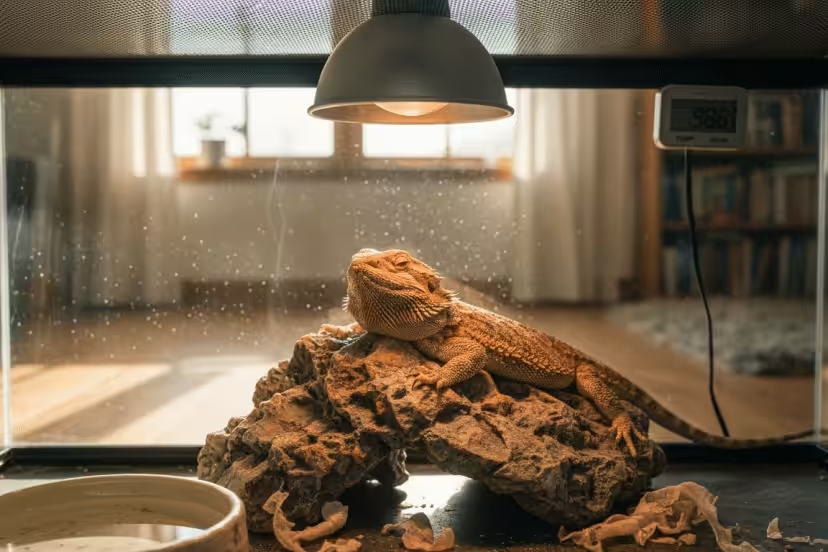
When basking, bearded dragons display remarkable thermoregulatory adaptations. They often spread themselves flat on rocks, branches, or specialized habitat surfaces, maximizing skin surface area to absorb warmth. This behavior isn’t just about comfort—it’s crucial for their metabolism, digestion, and overall health.
The process of basking involves complex physiological mechanisms. As they absorb heat, their bodily functions become more efficient. Digestion speeds up, immune responses strengthen, and their energy levels increase. Without proper basking opportunities, bearded dragons can experience serious health complications like metabolic disorders and weakened immune systems.
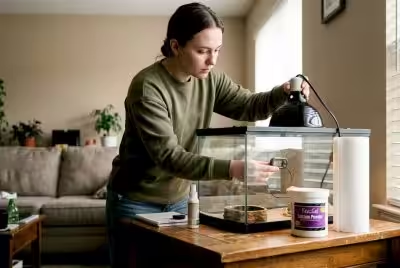
Pro Tip: Create a dedicated basking area in your bearded dragon’s habitat with a heat lamp positioned at the correct distance to provide optimal warmth without risking overheating.
How Basking Affects Digestion and Immunity
Basking is far more than a simple warmth-seeking behavior for bearded dragons—it’s a critical physiological process that directly impacts their digestive efficiency and immune system function. Gastrointestinal research reveals that proper thermoregulation plays a crucial role in maintaining overall reptilian health.
The connection between basking and digestion is intricate and profound. Bearded dragons require specific temperature ranges to optimize their metabolic processes, which directly influence how effectively they break down and absorb nutrients. When these scaly friends bask, their internal systems activate and accelerate, enabling more efficient digestion:
- Faster food transit through the digestive tract
- Enhanced enzymatic activity
- Improved nutrient absorption rates
- More effective metabolic processing
Immune system support is another remarkable benefit of proper basking. Reptile health studies demonstrate that UVB light exposure during basking triggers critical physiological responses. These include vitamin D3 synthesis, which is essential for calcium metabolism and overall immune function.
Without adequate basking, bearded dragons face significant health risks. Their digestive processes slow down, nutrient absorption becomes compromised, and their immune responses weaken. This can lead to potential complications like metabolic disorders, reduced energy levels, and increased susceptibility to infections.
Consistent, proper basking is not a luxury for bearded dragons—it’s a fundamental requirement for survival and optimal health.
Pro Tip: Monitor your bearded dragon’s basking behavior and ensure their habitat provides temperature gradients that allow them to regulate their body temperature effectively throughout the day.
Setting Up a Proper Basking Area
Creating an optimal basking area is crucial for your bearded dragon’s health and well-being. Reptile habitat research demonstrates that the right environment can significantly impact their physiological functions and overall quality of life.
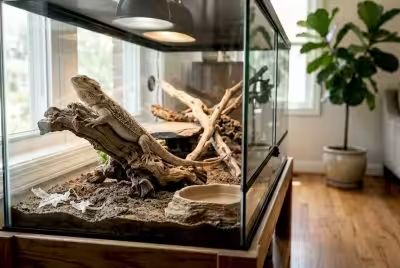
The foundation of a proper basking setup involves establishing a precise temperature gradient within the enclosure. This means creating distinct zones that allow your scaly friend to regulate their body temperature naturally. Key components of an effective basking area include:
- A dedicated heat lamp positioned to create a 95-100°F (32-38°C) basking spot
- A cooler zone ranging between 76-86°F (24-30°C)
- Elevated platforms like flat rocks or branches
- Safe distance between heat source and basking surface
Comprehensive habitat guides recommend using infrared heat lamps that provide warmth without excessive light. The basking platform should be sturdy and positioned to allow maximum heat absorption while preventing potential burns. Ceramic heat emitters or specialized reptile heat lamps work best for creating the ideal thermal environment.
Proper basking setup is more than temperature—it’s about creating a miniature ecosystem that mimics your bearded dragon’s natural habitat.
UVB lighting is another critical component of the basking area. This specialized light helps synthesize vitamin D3, which is essential for calcium metabolism and preventing metabolic bone disease. Aim to provide approximately 12 hours of UVB exposure daily, positioning the light to ensure your bearded dragon can receive direct and indirect illumination.
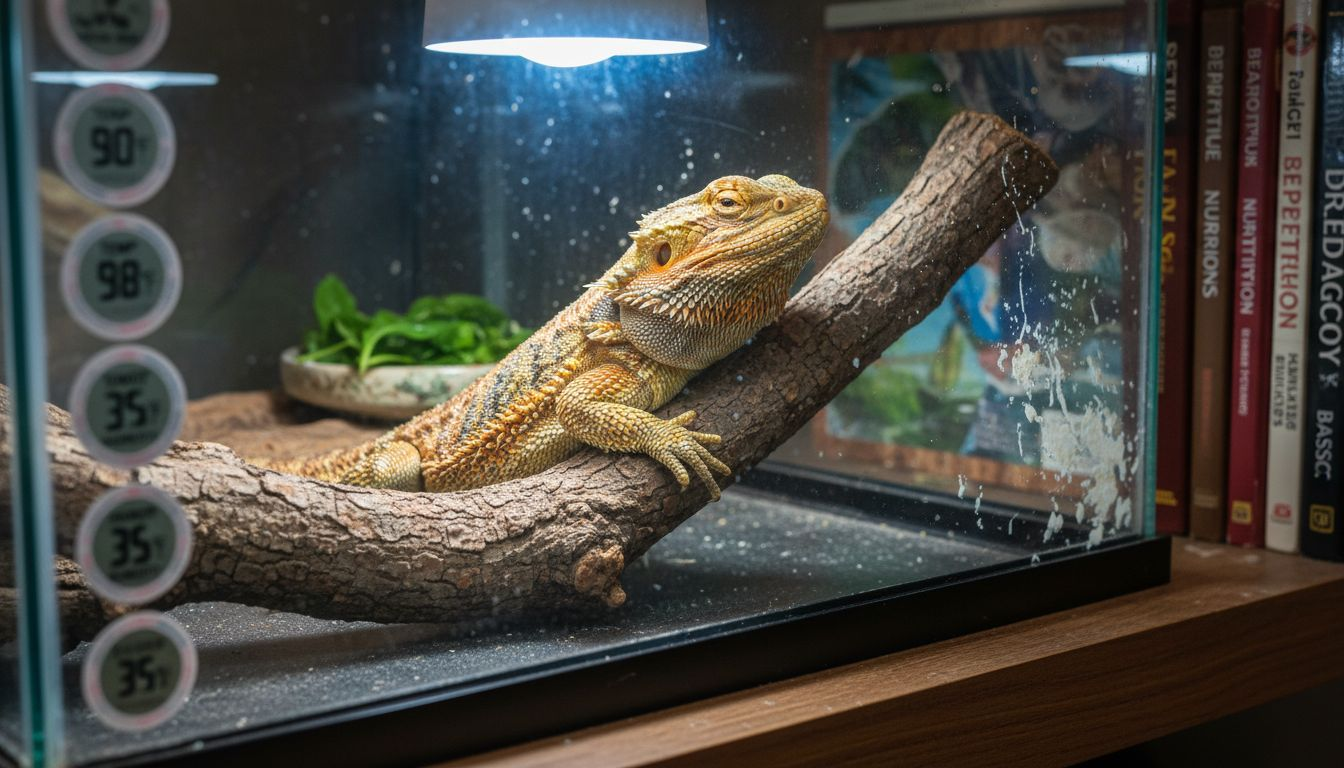
Pro Tip: Use a digital thermometer with probe capabilities to monitor exact temperatures in different enclosure zones, ensuring your bearded dragon always has perfect basking conditions.
Here is a quick reference guide to optimal basking setup parameters for bearded dragons:
| Aspect | Recommended Range | Importance |
|---|---|---|
| Basking Spot Temp | 95-100°F (32-38°C) | Supports digestion, activity |
| Cool Zone Temp | 76-86°F (24-30°C) | Allows safe cooling |
| UVB Exposure Time | Approximately 12 hours | Prevents metabolic disease |
| Platform Height | Close but safe to lamp | Prevents burns, maximizes heat |
Risks of Inadequate or Excessive Basking
Reptile health research reveals that basking conditions dramatically impact bearded dragons’ overall health. The delicate balance of temperature and exposure can mean the difference between a thriving reptile and one facing serious medical complications.
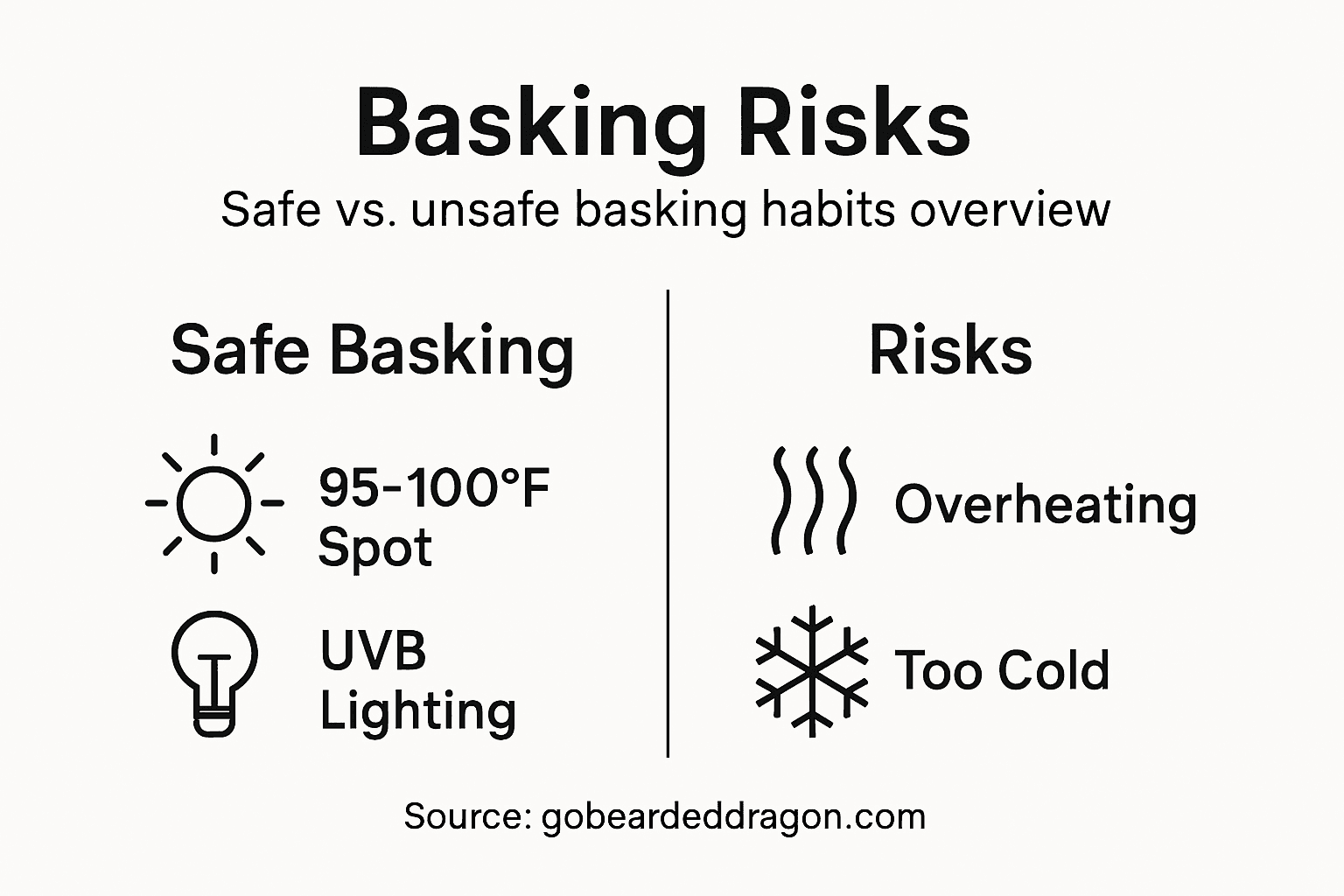
Inadequate basking presents numerous health risks for these temperature-sensitive creatures. When bearded dragons cannot reach their optimal body temperature, they experience a cascade of physiological problems:
- Dramatically slowed metabolism
- Compromised digestive function
- Weakened immune system response
- Increased susceptibility to infections
- Potential development of metabolic bone disease
Comprehensive reptile studies highlight that excessive basking can be equally dangerous. Prolonged exposure to high temperatures creates significant stress on a bearded dragon’s system, potentially causing:
- Severe dehydration
- Heat-induced organ damage
- Skin burns
- Chronic stress responses
- Potential organ failure
Temperature regulation is not a luxury for bearded dragons—it’s a critical survival mechanism.
The consequences of improper basking extend beyond immediate physical symptoms. Chronic temperature mismanagement can lead to long-term health issues, including reduced lifespan, compromised reproductive capabilities, and persistent metabolic disorders.
Pro Tip: Invest in a high-quality digital thermometer with multiple probes to continuously monitor different temperature zones in your bearded dragon’s habitat, ensuring consistent and safe thermal conditions.
The following table compares the effects of insufficient versus excessive basking in bearded dragons:
| Condition | Main Risks | Long-Term Impact |
|---|---|---|
| Insufficient Basking | Slow metabolism, weak immune system | Reduced lifespan, bone disease |
| Excessive Basking | Dehydration, overheating | Organ damage, chronic stress |
Common Basking Mistakes to Avoid
Reptile habitat experts warn that bearded dragon owners frequently make critical errors when setting up basking environments. These mistakes can dramatically impact their scaly friend’s health and long-term well-being.
One of the most common fundamental errors involves inappropriate heat sources. Bearded dragon owners often make these critical mistakes:
- Using incorrect heat bulb wattages
- Placing heat lamps at improper distances
- Neglecting to create temperature gradients
- Failing to use accurate thermometers
- Ignoring seasonal temperature variations
Temperature management requires precision. Many owners unknowingly create environments that either stress their bearded dragons or prevent them from performing natural thermoregulatory behaviors. The wrong heat source can lead to significant health complications, including metabolic disorders, reduced immune function, and chronic stress.
Basking is not just about warmth—it’s about creating a carefully calibrated thermal environment that mimics natural habitat conditions.
UVB lighting presents another complex challenge. Inadequate or incorrect UVB exposure can cause serious long-term health issues, including metabolic bone disease and vitamin D deficiency. Owners must understand that different life stages and seasonal changes require nuanced approaches to heating and lighting.
Pro Tip: Invest in a digital thermometer with multiple probe points to continuously monitor and adjust your bearded dragon’s basking area, ensuring consistent and safe thermal conditions throughout the year.
Ensure Your Bearded Dragon Thrives with Proper Basking Care
Understanding the vital role of basking in your bearded dragon’s health reveals common challenges such as creating the perfect temperature gradient and providing adequate UVB exposure. Many owners worry about avoiding overheating or inadequate warmth that can lead to slowed metabolism or immune issues. Your scaly companion depends on well-regulated basking spots to support digestion and immune function — neglecting this can risk serious health problems.

Discover expert advice and practical solutions at gobeardeddragon.com, your go-to resource for comprehensive care guides and habitat tips tailored specifically for bearded dragons. Dive into detailed articles on basking setups and thermal management to ensure your pet stays healthy and active. Take the next step now and create the ideal environment your bearded dragon deserves by visiting gobeardeddragon.com. Your pet’s vibrant health starts with informed care today.
Frequently Asked Questions
Why is basking important for bearded dragons?
Basking is crucial for bearded dragons as it helps them regulate their body temperature, which is essential for their metabolism, digestion, and overall health. Without proper basking, they can face serious health risks such as metabolic disorders.
What temperature should the basking area for a bearded dragon be?
The basking area should be maintained at a temperature of 95-100°F (32-38°C) to support digestion and activity levels. This allows the bearded dragon to absorb sufficient warmth for its physiological processes.
How can I set up an optimal basking area for my bearded dragon?
To set up an optimal basking area, create a temperature gradient in the enclosure with a basking spot of 95-100°F (32-38°C) and a cooler zone of 76-86°F (24-30°C). Use a heat lamp at the correct distance and provide UVB lighting for vitamin D3 synthesis.
What are the risks of inadequate basking for bearded dragons?
Inadequate basking can lead to a slowed metabolism, compromised digestive function, weakened immune response, and increased susceptibility to infections. Over time, these issues can result in serious health complications, including metabolic bone disease.
Recommended
- Best Heating Equipment for Bearded Dragon Enclosures – Go BEARDED DRAGON
- Why Bearded Dragons Need Baths for Health
- Best UVB Lighting with LEDs for Bearded Dragons – Go BEARDED DRAGON
- Bearded Dragon UV Index: Ensuring Optimal Health – Go BEARDED DRAGON