7 Smart Bearded Dragon Habitat Setup Ideas for Owners
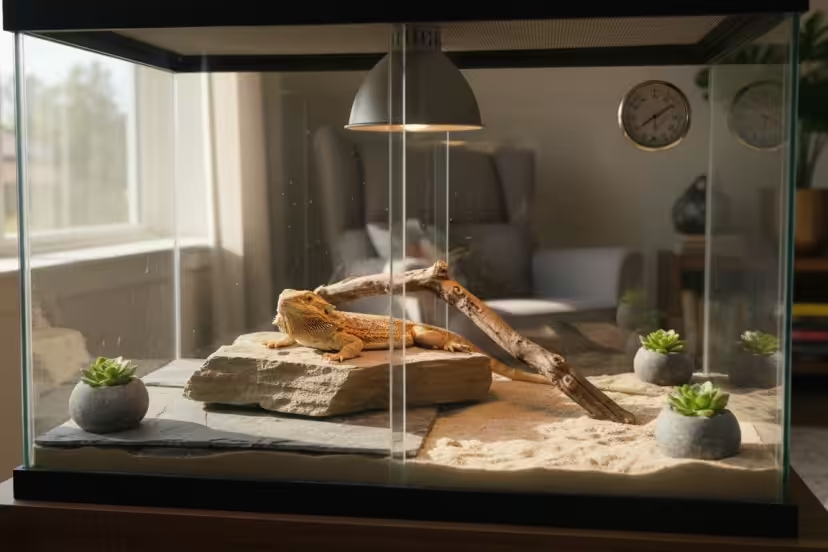
Every reptile owner knows that creating the best habitat for a bearded dragon can be more complex than it first appears. With each choice you make, from tank size to humidity control, you can shape your pet’s daily comfort and long-term health. Studies show that inappropriate habitats contribute to up to 60 percent of illnesses in captive reptiles, underscoring the importance of these decisions. This guide covers the basics so your bearded dragon has the right setup from the start.
Table of Contents
- 1. Choose The Right Tank Size And Material
- 2. Select Safe And Easy-To-Clean Substrate
- 3. Create Temperature Zones With Proper Heating
- 4. Set Up Effective UVB Lighting
- 5. Add Hides And Climbing Enrichment
- 6. Include Safe Plants And Decorations
- 7. Maintain Cleanliness And Monitor Humidity
🦎 Want all the essentials on one printable page?
The Complete Bearded Dragon Care Plan puts daily routines, feeding charts, safe vs. toxic foods and vet red flags into one 16-page PDF for $7.99.
See the Care Plan →Quick Summary
1. Choose the Right Tank Size and Material
Creating the perfect home for your scaly companion starts with selecting the right habitat. Your dragon spends almost its whole life in this enclosure.
Size matters most: 120 gallons (4 x 2 x 2 ft) for an adult. For baby bearded dragons aged 0 to 3 months, you will want a 40-gallon tank that provides enough space without overwhelming them. As they grow into juveniles between 3 and 12 months, they will need increasingly larger spaces to support their rapid development and activity levels.
Once your bearded dragon reaches adulthood, aim for a vivarium of at least 120 gallons (4 x 2 x 2 feet). Larger enclosures are even better as they allow for more natural movement and enrichment. A good tank should include a screen top for ventilation and light fixture mounting, and feature interesting elements like branches for climbing and separate hiding spots on both hot and cool sides of the habitat.
Material matters too. Glass terrariums are popular because they maintain temperature well and offer excellent visibility. However, consider screen enclosures for better airflow or wooden vivariums for improved insulation. Whichever material you choose, ensure it provides proper temperature regulation and durability.
Pro Tip: Measure your available space before purchasing a tank, and always buy slightly larger than your current needs to accommodate your bearded dragon’s growth and prevent frequent replacements.
2. Select Safe and Easy-to-Clean Substrate
The floor affects your dragon’s health. Choosing the right substrate is about more than just aesthetics; it is a critical decision that impacts your reptilian friend’s overall well-being.
When selecting a substrate, you have several options that balance safety, comfort, and ease of maintenance. According to the Royal Society for the Prevention of Cruelty to Animals guidance, reptile-safe sand or a sand and soil mixture can work well for healthy adult bearded dragons. The key is ensuring you use clean, fine-grain sand designed explicitly for reptile habitats.
Substrate Options to Consider:
• Reptile safe sand
• Sand and soil mixture
• Stone tiles
• Natural slate pieces
While loose substrates like sand allow natural digging behaviors, they also require more careful maintenance. Stone tiles and slate provide a stable surface but restrict your dragon’s instinctive digging. If you choose non-loose substrates, consider creating a separate digging box to fulfill their natural behaviors.
Pick a floor that is easy to clean. Smooth surfaces like slate or ceramic tiles make waste removal straightforward. Loose substrates need more frequent complete replacement to prevent bacterial growth and maintain a hygienic environment.
Pro Tip: Always spot clean daily and perform a complete substrate refresh every 4 to 6 weeks to keep your bearded dragon’s habitat clean and healthy.
3. Create Temperature Zones with Proper Heating
Think of your bearded dragon’s habitat like a personal climate-control system where they can choose their perfect comfort zone. Temperature regulation is not just a luxury; it is a critical survival mechanism for these desert-dwelling reptiles.
Vets recommend a temperature gradient that copies their natural desert environment. Your bearded dragon needs a warm zone and a cool zone to control its body temperature. The basking area should be a toasty 95 to 110 degrees Fahrenheit, while the cooler section remains around 80 to 85 degrees Fahrenheit.
Key Temperature Zones:
• Basking Area: 95 110°F
• Cooler Area: 80 85°F
• Nighttime Temperature: Can drop to 70 75°F
Achieving this temperature gradient requires strategic placement of heat lamps and monitoring devices. Use a ceramic heat emitter or specialized reptile basking lamp on one side of the enclosure to create the warmer zone. Place a digital thermometer with dual sensors to accurately track temperatures in both hot and cold regions.
Maintaining these temperature ranges allows your bearded dragon to thermoregulate naturally by moving between warmer and cooler areas. This mimics their wild behavior and supports their metabolic processes, digestion, and overall health.
Pro Tip: Invest in a quality digital thermometer with multiple sensors to continuously monitor your habitat temperatures and ensure your scaly friend stays comfortable.
4. Set Up Effective UVB Lighting
UVB lighting is like sunscreen and a vitamin supplement rolled into one magical lamp for your bearded dragon. Without UVB, bearded dragons cannot use calcium.
UVB lets them make vitamin D3 and use calcium. Your bearded dragon needs full-spectrum UVB light for 10 to 12 hours daily to mimic their natural desert environment.
UVB Lighting Basics:
• Cover at least two-thirds of the enclosure
• Replace bulb every 6 to 12 months
• Provide 10 12 hours of exposure daily
• Position lamp to create a clear light gradient
When selecting a UVB lamp, choose one specifically designed for reptiles. The bulb should emit 10.0 to 12.0 UVB strength and be positioned at the correct distance from your dragon, about 12 to 18 inches away from their basking spot. This ensures they receive adequate UV radiation without risking potential burns.
Remember that UVB bulbs lose effectiveness over time. Even if the bulb still lights up, UV output fades, so replace T5 tubes every 12 months and T8 tubes every 6 months.
Pro Tip: Mark your calendar for UVB bulb replacement every six months and invest in a quality digital UV meter to accurately measure light intensity.
5. Add Hides and Climbing Enrichment
Your bearded dragon is part adventurer and part homebody. Creating a habitat that satisfies both their explorer spirit and need for security is key to a happy reptilian companion.
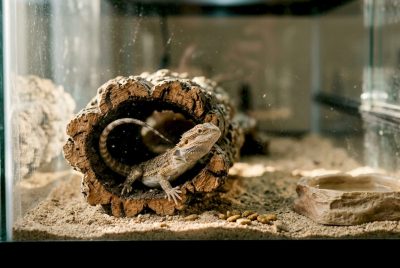
Provide several places to climb and hide, as in their natural habitat. Branches, rocks, hammocks, and strategically placed caves allow your bearded dragon to exercise, explore, and feel safe.
Enrichment Habitat Elements:
• Non-toxic artificial plants
• Sloped branches for climbing
• Cave structures on hot and cool sides
• Varied surface textures
• Rocks and platforms
Consider creating different zones within the habitat that offer varying heights and hiding spots. Place hides on both the warm and cool sides of the enclosure so your dragon can thermoregulate while feeling secure. Natural wood branches and smooth rocks not only provide climbing surfaces but also help maintain their nail length through normal movement.
These environmental additions do more than look attractive. They encourage natural behaviors such as climbing, exploring, and thermoregulation. A well-designed habitat reduces stress and promotes physical and mental stimulation for your scaly friend.
Pro Tip: Rotate and rearrange habitat elements every few months to keep your bearded dragon mentally stimulated and prevent boredom.
6. Include Safe Plants and Decorations
Turning your bearded dragon’s habitat into a desert oasis requires more than just throwing in random greenery.
Veterinary professionals emphasize the importance of choosing safe, secure decorations that provide both aesthetic appeal and functional enrichment. Your goal is to create a habitat that looks amazing while keeping your bearded dragon safe and stimulated.
Safe Decoration Guidelines:
• Non-toxic live plants
• Artificial plant alternatives
• Securely anchored decorations
• Smooth-edged rocks
• Easy to clean surfaces
When selecting plants, choose non-toxic species that grow in dry conditions. Succulents like echeveria or haworthia can add visual interest without introducing potential health hazards. Artificial plants offer a similar aesthetic with zero risk of poisoning or moisture retention.
Secure all decorations so they cannot fall. Loose items can topple and injure your bearded dragon, so ensure everything is firmly anchored. Smooth rocks, ceramic hides, and lightweight branches create a natural environment that encourages exploration without compromising safety.
Pro Tip: Inspect all habitat decorations monthly for signs of wear, potential sharp edges, or loose attachments to prevent unexpected accidents.
7. Maintain Cleanliness and Monitor Humidity
Your bearded dragon’s habitat is more than just a home; it is a delicate ecosystem that requires precise maintenance. Keeping things clean and balanced is your secret weapon in preventing potential health issues.
Regular cleaning protects your dragon’s health. A well-maintained environment means a lower risk of bacterial growth and respiratory problems.
Cleaning and Humidity Management:
• Spot clean daily
• Remove uneaten food immediately
• Maintain 30 40% humidity
• Use a digital hygrometer
• Perform deep clean monthly
Daily spot cleaning involves removing waste and uneaten food and checking the substrate condition. Your digital hygrometer becomes your best friend in tracking humidity levels. Too much moisture can lead to respiratory infections, while too little can cause skin and shedding problems.
A monthly deep clean includes disinfecting surfaces, replacing paper floor liners and checking every part of the setup. Use reptile-safe cleaning solutions and allow surfaces to dry completely before reassembling the habitat.
Pro Tip: Create a cleaning schedule and set phone reminders.
This table sums up the setup steps from the article.
| Category | Key Details | Pro Tips |
|---|---|---|
| Tank Size & Material | Baby dragons need 40 gallons; adults require at least 120 gallons (4 x 2 x 2 feet). Glass offers visibility; wood provides insulation. | Measure your space and purchase slightly larger than needed. |
| Substrate Selection | Options include reptile-safe sand and stone tiles; balance safety and ease of cleaning. | Refresh substrate every 4 to 6 weeks. |
| Temperature Zones | Create gradients: Bask at 95-110°F, cool area 80-85°F, nighttime 70-75°F. | Use a digital thermometer with multiple sensors. |
| UVB Lighting | Needed for calcium metabolism; provide 10-12 hours a day. | Replace bulbs every 6 to 12 months. |
| Enrichment Elements | Include hides, branches, and varied textures. | Rotate habitat items to prevent boredom. |
| Safe Plants & Decorations | Use non-toxic live or artificial plants; keep decorations stable. | Inspect for wear and safety monthly. |
| Cleanliness & Humidity | Spot-clean daily, maintain 30-40% humidity, and deep-clean monthly. | Use a digital hygrometer and reptile-safe cleaners. |
More Bearded Dragon Habitat Guides
Setting up the perfect bearded dragon habitat can seem overwhelming with so many factors to consider, from tank size and safe substrates to UVB lighting and enrichment. Your dragon needs a clean space where it can bask, cool down and explore, with humidity at 30-40%. This article highlights key pain points, like choosing the right heating elements, safe décor, and maintaining an ideal environment that supports your dragon’s health and natural behaviors.

Take the next step toward mastering bearded dragon care by visiting gobeardeddragon.com for guides on cleaning, temperature and enrichment. Explore articles that break down complex topics into simple, actionable steps. You can also find bearded dragon gifts in our shop.
Frequently Asked Questions
What size tank do I need for my bearded dragon?
To start, a baby bearded dragon can live in a 40-gallon tank, while adults need a vivarium of at least 120 gallons (4 x 2 x 2 feet). Measure your available space and opt for a larger tank than you currently need to accommodate your pet’s growth over time.
How can I create temperature zones in my bearded dragon’s habitat?
Establish distinct temperature zones by setting the basking area between 95 and 110 degrees Fahrenheit and keeping the cooler side around 80 to 85 degrees Fahrenheit. Use heat lamps strategically placed on one side to create this gradient, and check temperatures regularly with a digital thermometer.
What substrate is best for my bearded dragon’s enclosure?
Choose a substrate that is safe and easy to clean, such as reptile-safe sand, a sand-and-soil mixture, or smooth stone tiles. Maintain hygiene by spot cleaning daily and performing a complete substrate change every 4 to 6 weeks to prevent bacterial growth.
Does my bearded dragon need UVB lighting?
Yes. UVB lets your bearded dragon make vitamin D3 and use calcium. Install a UVB lamp that covers at least two-thirds of the enclosure, and provide 10 to 12 hours of exposure daily, replacing the bulb every 6 to 12 months.
What types of enrichment should I include in my bearded dragon’s habitat?
Include various climbing and hiding elements such as branches, rocks, and non-toxic artificial plants to mimic natural conditions. Creating diverse zones with different heights and textures will encourage exploration and keep your bearded dragon active and engaged.
How can I maintain cleanliness and monitor humidity in the habitat?
Spot-clean daily, remove uneaten food the same day, and keep humidity between 30 and 40 percent. Use a digital hygrometer to monitor humidity, and perform a deep clean of the habitat monthly to ensure your bearded dragon stays healthy and comfortable.
Recommended

Love your beardie? Wear it proudly.
Dragon Whisperer T-Shirt – from $15.83. Our own bearded dragon designs, printed on demand. Every order supports these free care guides.
View this design → Browse all gifts