Bearded Dragon Temperature Setup Instructions for Success
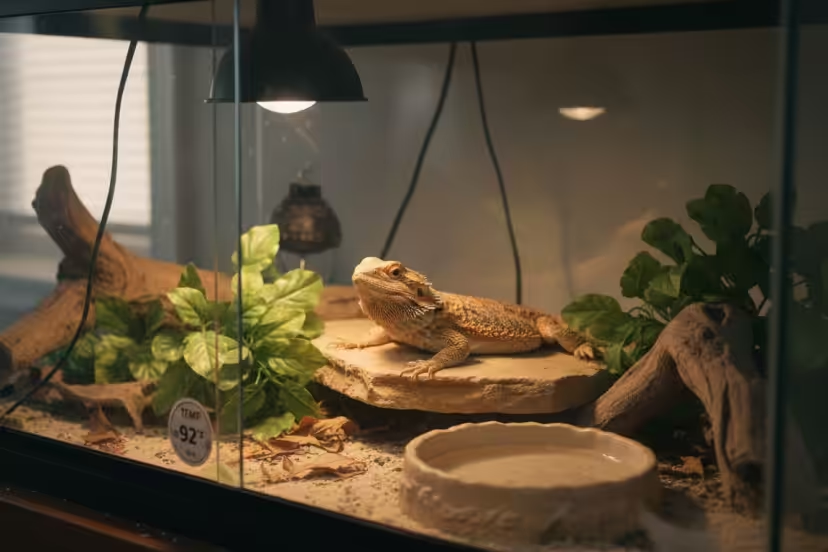
Finding the right temperature setup can make caring for a bearded dragon feel overwhelming for first-time owners. Every small mistake with heating equipment or thermometer placement affects your pet’s ability to digest food and stay energetic. This guide shows how to choose, position and maintain the temperature zones that keep your bearded dragon healthy.
Table of Contents
- Step 1: Select The Right Heating Equipment
- Step 2: Position Thermometers And Heat Sources Accurately
- Step 3: Set Temperature Zones And Adjust Basking Spots
- Step 4: Verify And Maintain Ideal Temperature Ranges
🦎 Want all the essentials on one printable page?
The Complete Bearded Dragon Care Plan puts daily routines, feeding charts, safe vs. toxic foods and vet red flags into one 16-page PDF for $7.99.
See the Care Plan →Quick Summary
| Key Point | Explanation |
|---|---|
| 1. Choose quality heating equipment | Select ceramic heat emitters or heat lamps to provide proper warmth and support your bearded dragon’s health. |
| 2. Establish accurate temperature zones | Create a basking area (95-110°F) and a cooler side (75-85°F) to help your dragon regulate body temperature naturally. |
| 3. Position thermometers correctly | Place thermometers in the basking area and opposite cool side to monitor accurate temperatures and avoid health risks. |
| 4. Regularly verify temperatures | Check basking and cool side temperatures daily to maintain ideal conditions, adjusting setups as needed over time. |
| 5. Use thermostats for stability | Implement thermostats to automate temperature control, ensuring a consistent environment without frequent manual adjustments. |
Step 1: Select the right heating equipment
Choosing the right heating gear is where everything starts. Your bearded dragon’s ability to digest food, maintain energy, and stay healthy depends entirely on you getting this part right. Let’s walk through how to pick equipment that’ll keep your scaly pal warm and happy for years.
There are two main heating types that work beautifully for bearded dragons: ceramic heat emitters and heat lamps. Ceramic heat emitters are ceramic devices that produce infrared warmth without any visible light, which means they won’t mess with your dragon’s natural sleep schedule. Heat lamps, on the other hand, combine warmth with a glow that mimics the sun.
When shopping for ceramic heat emitters, you’ll typically see them labeled as 100W or 150W. The 100W version suits most standard enclosures, while the 150W version suits larger enclosures or cold rooms. Popular ceramic heat emitters come in both wattages and are built to last, offering steady warmth without breaking the bank on your energy bill.
Here’s what matters when comparing your options:
Here’s a quick comparison of popular heating equipment choices for bearded dragons:
| Equipment Type | Light Output | Best For | Average Lifespan |
|---|---|---|---|
| Ceramic Heat Emitter | No visible light | Nighttime & steady warmth | 5,000+ hours |
| Basking Heat Lamp | Bright visible light | Daytime basking, visibility | 1,000-2,000 hours |
| Infrared Bulb | Dim reddish light Not recommended: the red glow disturbs sleep | 2,000-4,000 hours | |
| Mercury Vapor Bulb | Bright, UVB light | Combined heat & UVB needs | 6-12 months |
- Wattage capacity (100W handles standard tanks; 150W for larger spaces)
- Durability and lifespan (ceramic emitters typically last 5,000+ hours)
- Energy efficiency (they run steadily without flickering)
- Compatibility with your current fixture setup
- Whether you need both warmth and light (ceramic emitters provide warmth only)
If you want a heat lamp that provides both warmth and visibility, look for basking lamps paired with appropriate bulbs. These create that cozy sunlight vibe your dragon craves during the day.
Heating equipment is the base of your dragon’s health, so buy quality. A reliable setup prevents metabolic bone disease and digestive problems down the road.
Installation matters just as much as what you buy. Mount your ceramic emitter or heat lamp above the basking area so your dragon can warm up comfortably without direct contact with the fixture itself. This prevents burns and lets the warmth distribute evenly throughout the tank.
Pro tip: Grab a quality thermometer (digital or infrared) when you buy your heating equipment, so you can immediately verify that your basking spot hits the correct temperature range of 95 to 110 degrees Fahrenheit.
Step 2: Position thermometers and heat sources accurately
Now that you’ve picked your heating equipment, placement is everything. Where you put your thermometer and heat source determines whether your dragon gets the perfect warmth or ends up too hot or cold. Let’s get this positioned right so your dragon stays in the comfort zone.
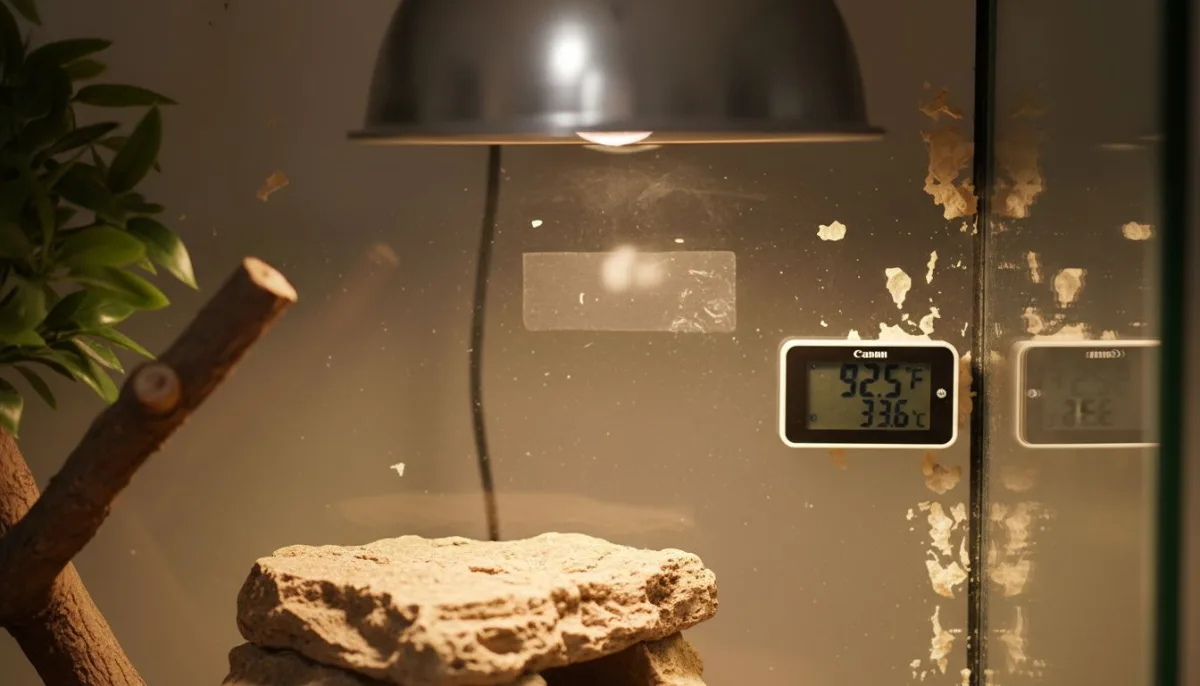
Start by identifying your basking zone, which is the spot where your dragon hangs out to warm up and digest food. This is typically a rock, log, or platform positioned directly under your heat source. Your thermometer needs to go right here at the basking spot so you’re measuring the actual temperature your dragon experiences.
Place your heat source above and slightly to one side of the basking area rather than directly overhead. This setup lets heat distribute naturally without creating a scorching hot spot that could burn your dragon’s skin. The heat source should be mounted securely on a fixture or clamp that keeps it stable and away from curious bearded dragon claws.
For thermometer placement, you have a few solid options:
- Digital probe thermometer placed on the basking surface itself
- Infrared temperature gun to check the spot from outside the tank
- Mounted digital display on the tank wall near the basking area
- Dual thermometer setup to track both basking and cool side temps
The cool side of your tank should be about 10 to 15 degrees cooler than the basking area. This temperature gradient lets your dragon regulate its own comfort by moving around. Measure the cool side with a second thermometer placed in the shaded area opposite the heat source.
Accurate thermometer placement is non-negotiable. A thermometer placed on the tank floor or in shade will give you false readings and lead to dangerous temperature mistakes.
Keep your thermometers away from direct contact with the heat source itself. They read too high and do not show what your dragon feels. Place them where your dragon’s body rests when basking.
Check your readings daily for the first week after setup. Once you’re confident everything is stable, quick daily checks keep you ahead of any equipment failures or gradual temperature drifts.
Pro tip: Use a handheld infrared thermometer as your backup tool. It lets you spot-check temps instantly without relying on fixed gauges, and you’ll immediately catch if your heating element is losing power.
Step 3: Set temperature zones and adjust basking spots
Your dragon’s whole world revolves around temperature choices. Creating separate warm and cool zones lets your scaly friend move around and regulate its own body temperature naturally. This is where the magic happens for healthy digestion and metabolism.

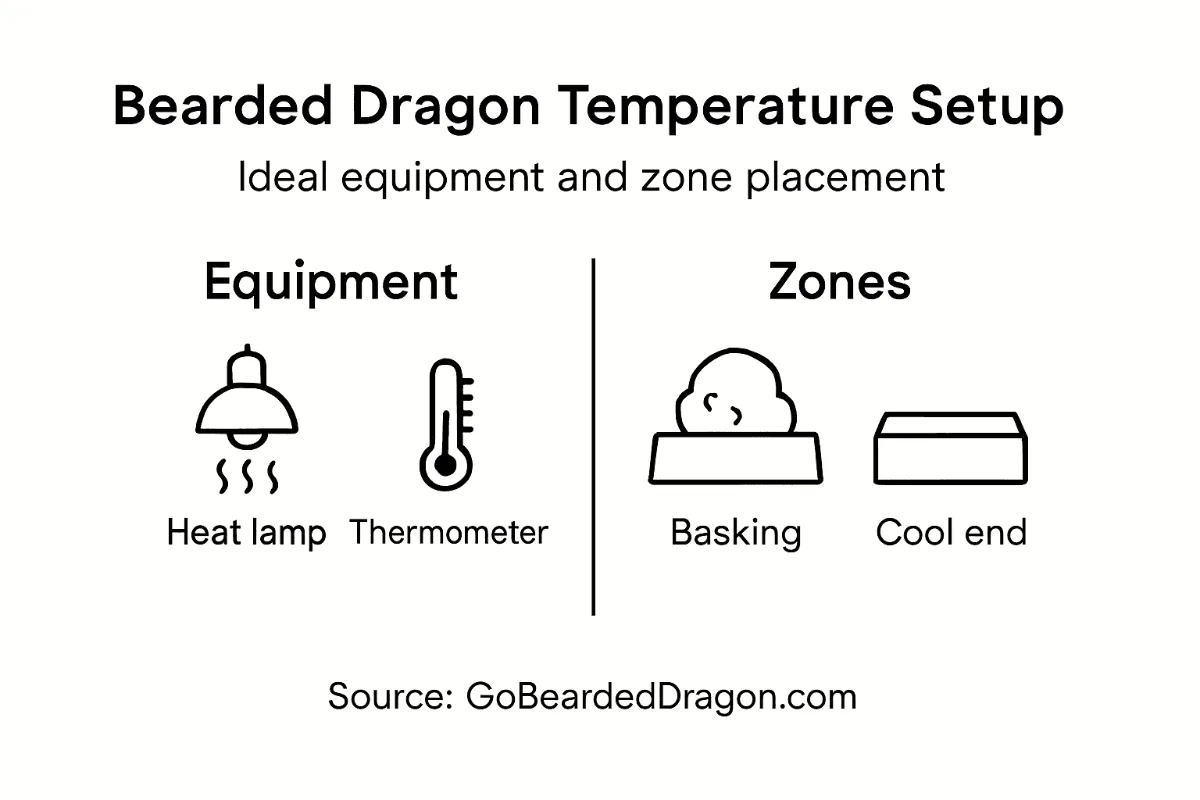
The basking zone is your hot spot where temperatures should hit 95 to 110 degrees Fahrenheit. This is where your dragon soaks up warmth to process meals and stay energized. The cooler retreat area on the opposite side of the tank should hover around 75 to 85 degrees Fahrenheit. This gradient lets your pet warm up and cool down as needed.
To set up these zones, adjust two things: lamp height and wattage. Moving the heat lamp higher reduces temperature intensity, while bringing it closer cranks up the warmth. If you’re using a ceramic emitter, swapping between a 100W and 150W model gives you control over how hot the basking area gets.
Here’s how to dial in your zones:
- Turn on your heating equipment and wait 15 to 20 minutes for temperatures to stabilize
- Measure the basking spot temperature with your thermometer
- Check the cool side temperature in the shaded area
- Adjust heat source height or wattage until you hit your target ranges
- Recheck temperatures after each adjustment and wait a few minutes between changes
Your basking spot adjustment is a hands-on process. Some days you might find your dragon needs a warmer spot, especially during cooler seasons or if you notice sluggish behavior. Other times, you’ll ease off the heat slightly as your dragon gets older or if temperatures in your room naturally fluctuate.
Use this chart for the temperature zones in your bearded dragon’s tank:
| Zone | Daytime Target Temp | Nighttime Target Temp | Purpose of Zone |
|---|---|---|---|
| Basking Area 95-110°F Lamp off | Digestion, energy | ||
| Cool Side | 75-85°F | 65-75°F | Thermoregulation, rest |
| Ambient Overall 80-90°F 65-75°F | General comfort, mobility |
Temperature control prevents both overheating and chilling. Each extreme causes serious health problems, so getting these zones right is one of your most important jobs as a bearded dragon owner.
Use thermostats alongside heat sources to maintain consistent zones without constant manual tweaking. A thermostat automatically cycles your heat on and off, keeping temperatures stable 24/7.
Pro tip: Mark your heat lamp height with tape or a marker on the mounting fixture so you can easily replicate your ideal setup if you ever need to clean or adjust equipment.
Step 4: Verify and maintain ideal temperature ranges
You’re almost there. Next comes the ongoing work: regular temperature checks and maintenance. This step is about making sure everything stays consistent day after day, month after month.
Start by checking your basking spot temperature every single day for the first two weeks. Your thermometer should read around 100 degrees Fahrenheit during daytime hours when your dragon is active and eating. This is when your dragon needs maximum warmth for digestion and metabolism to work properly.
Night temperatures require equal attention. Your basking area can cool down slightly at night, but avoid letting temperatures drop below 65 degrees Fahrenheit. A nighttime dip is natural and healthy, but sustained cold causes metabolic slowdown and health problems.
Check multiple spots in your enclosure, not just the basking zone. Here’s your verification routine:
- Basking spot temperature (should be around 100°F during day)
- Cool side temperature (should be 75 to 85°F)
- Nighttime basking temperature (can drop 10 to 15 degrees)
- Nighttime cool side temperature (must stay above 65°F)
Temperature fluctuations happen for many reasons. Seasonal changes in your home, variations in room humidity, and equipment aging all affect your setup. Weekly checks catch these shifts before they become problems for your dragon.
Use a thermostat to automate temperature control and prevent dangerous swings. A thermostat cycles your heat emitter on and off automatically, keeping temperatures rock solid without constant manual intervention. This is one of the best investments you can make for your dragon’s long-term health.
Consistent temperatures build trust in your setup. Once you’ve confirmed everything stays stable for several weeks, you can relax slightly, but never skip daily visual checks entirely.
Keep a simple log or notes app where you record temperatures. Track what you see, any equipment changes, and how your dragon behaves. Over time, you’ll spot patterns and know exactly what adjustments work best for your specific setup.
Pro tip: Set a daily phone reminder at the same time each morning to check temperatures. Consistency in your checking routine helps you catch temperature drifts early before your dragon shows signs of stress.
Master Your Bearded Dragon’s Temperature Setup with Confidence
Correct temperature zones support your bearded dragon’s health and digestion. This article highlights common challenges like choosing the right ceramic heat emitters versus basking lamps, positioning thermometers correctly, and maintaining ideal temperature gradients. These details matter deeply because improper heating can lead to serious health issues such as metabolic bone disease or digestive problems.

Explore trusted bearded dragon care tips and product recommendations on gobeardeddragon.com to simplify your setup and avoid guesswork. Our guides cover heating gear, wattage and daily temperature checks.
Frequently Asked Questions
How do I choose the right heating equipment for my bearded dragon?
Choosing the right heating equipment involves selecting between ceramic heat emitters and heat lamps. Opt for ceramic heat emitters if you want a light-free warmth source for nighttime and consistent temperature control, while heat lamps provide daylight basking warmth and visibility. Start by assessing your tank size and considering a 100W option for standard setups or a 150W for larger enclosures.
What temperature range should I maintain for my bearded dragon’s basking area?
Your bearded dragon’s basking area should be between 95 to 110 degrees Fahrenheit. Measure with a reliable thermometer and adjust your heat source so your dragon can digest food and stay active.
How do I create temperature zones in my bearded dragon’s habitat?
Place the heat source at one end, so the basking area is much warmer than the cool side. Set the basking spot at 95 to 110 degrees Fahrenheit and the cool side at 75 to 85 degrees Fahrenheit, allowing your dragon to move between zones. Adjust the height or wattage of your heat source to achieve these target temperatures based on your dragon’s behavior.
How often should I check the temperatures in my bearded dragon’s enclosure?
Check the temperatures in your bearded dragon’s enclosure daily for the first two weeks after setup. After confirming stability, continue monitoring temperatures regularly to catch fluctuations early. Consistency is key; perform weekly checks and log your readings to ensure your dragon remains comfortable.
What should I do if the temperature in my bearded dragon’s habitat drops below recommended levels?
If temperatures drop below recommended levels, immediately increase the wattage of your heat source or adjust its height to boost warmth. Ensure no drafts or sudden changes in the environment affect the enclosure, and consider using a thermostat for more consistent temperature control.
How can I use a thermostat to maintain ideal temperature ranges for my bearded dragon?
Using a thermostat will help maintain stable temperature zones by automatically cycling your heat source on and off. Set it to your basking temperature target to reduce manual adjustments. This keeps temperatures steady through the day.
Recommended

Love your beardie? Wear it proudly.
Bearded Dragon Spirit Animal Tote Bag – from $18.48. Our own bearded dragon designs, printed on demand. Every order supports these free care guides.
View this design → Browse all gifts