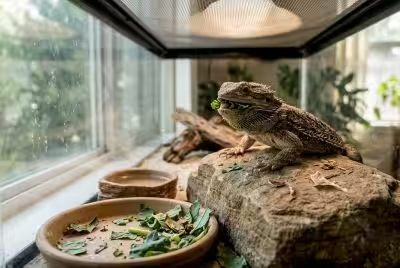
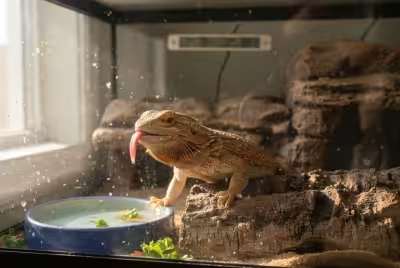
What is a hide in reptile enclosures: bearded dragons

Many bearded dragon owners treat hides as optional decorations, but these simple structures play a vital role in your pet’s physical and mental health. A hide serves as more than just a cave or shelter. It provides security, supports natural behaviors, and helps regulate stress levels in captive reptiles. Without proper hiding spots, your bearded dragon may experience chronic anxiety, disrupted thermoregulation, and weakened immune function. This guide explains what hides are, why your bearded dragon needs one, the best types and materials available, and practical steps for setup and maintenance to ensure your pet thrives.
Table of Contents
- What Is A Hide In Reptile Enclosures?
- Why Your Bearded Dragon Needs A Hide: Benefits Explained
- Types And Materials Of Hides Suitable For Bearded Dragons
- How To Set Up And Maintain Hides For Your Bearded Dragon
- Enhance Your Bearded Dragon’s Habitat With Expert Products And Guides
- FAQ
Key takeaways
| Point | Details |
|---|---|
| Hides reduce stress | Providing secure retreat spaces mimics natural shelter and promotes healthy reptile behavior |
| Multiple hides support thermoregulation | Placing hides in warm and cool zones lets your dragon choose preferred thermal environments |
| Material matters for safety | Non-toxic, reptile-safe materials like natural wood, cork bark, or resin prevent health risks |
| Regular cleaning prevents disease | Sanitizing hides every 1-2 weeks reduces infection risk and encourages consistent use |
| Proper sizing ensures comfort | Hides must allow your bearded dragon to enter fully and turn around without restriction |
What is a hide in reptile enclosures?
A hide is a designated refuge or shelter spot within a reptile enclosure that allows your bearded dragon to retreat from view and feel secure. In the wild, bearded dragons seek cover under rocks, in crevices, or beneath vegetation to escape predators, regulate body temperature, and rest undisturbed. Captive environments must replicate these natural features to support your pet’s instinctive need for privacy and safety.
Hides serve three primary functions in reptile care. First, they provide psychological security by creating a space where your dragon feels protected from perceived threats, including human activity and enclosure lighting. Second, they support thermal regulation by offering shaded areas that allow your pet to cool down or retain heat depending on placement within the temperature gradient. Third, they encourage natural behaviors like exploring, retreating during shedding, and establishing territory, all of which contribute to mental stimulation and overall wellbeing.
Hides reduce stress and mimic natural shelter, promoting healthy reptile behavior. Without adequate hiding spots, bearded dragons may exhibit signs of chronic stress, including reduced appetite, lethargy, and increased susceptibility to illness. Your reptile companions guide emphasizes that proper habitat design must include multiple retreat options positioned strategically throughout the enclosure.
Key characteristics of effective hides include:
- Enclosed structure with at least one entrance
- Opaque or semi-opaque walls that block direct sight lines
- Stable construction that won’t collapse or shift
- Appropriate size for your dragon’s current body length
- Non-toxic materials safe for prolonged contact
“A well-designed hide becomes your bearded dragon’s personal sanctuary, reducing cortisol levels and supporting immune function through stress reduction.”
The following sections explore specific benefits of hides, compare materials and types, and provide actionable guidance for setup and maintenance to ensure your bearded dragon uses these essential habitat features consistently.
Why your bearded dragon needs a hide: benefits explained
Providing hides in your bearded dragon’s enclosure delivers measurable health and behavioral benefits that extend far beyond basic shelter. Understanding these advantages helps you appreciate why hides rank as essential equipment rather than optional accessories.
Stress relief stands as the most immediate benefit of proper hide placement. Bearded dragons experience stress from various sources, including handling, enclosure cleaning, nearby pets, and environmental changes. A secure hiding spot gives your dragon control over when to engage with its surroundings and when to retreat, significantly reducing anxiety levels. Lack of appropriate hides can increase stress and lead to illness in bearded dragons.
Thermoregulation support represents another critical function of strategically placed hides. Bearded dragons rely on behavioral thermoregulation, moving between warm and cool zones to maintain optimal body temperature. By positioning one hide in the basking area and another in the cool zone, you enable your pet to retreat while still accessing preferred temperatures. This dual-hide setup prevents the common problem of dragons choosing between thermal comfort and psychological security.
Privacy during vulnerable periods becomes especially important during shedding, brumation preparation, and recovery from illness. Your bearded dragon instinctively seeks isolation during these times to avoid predator attention. A hide provides the darkness and seclusion needed for successful shed completion and stress-free rest periods. Many owners notice improved shed quality and reduced retained skin when proper hiding spots are available.
Natural behavior encouragement through hide use promotes mental stimulation and prevents boredom-related issues. In the wild, bearded dragons spend significant time in and around shelter spots, using them as home bases for territory establishment. Captive dragons display similar patterns when given appropriate hides, including:
- Morning basking near hide entrances
- Midday retreats during peak heat
- Evening returns to cool-zone hides
- Exploratory behavior around hide perimeters
Pro Tip: Place multiple hides throughout your enclosure to create thermal choices. Position one under the basking light and another in the coolest corner, allowing your dragon to select its preferred microclimate while maintaining security.
Long-term health outcomes improve when bearded dragons have consistent access to quality hiding spots. Chronic stress from inadequate shelter contributes to weakened immune response, digestive issues, and behavioral problems like glass surfing or aggression. Your bearded dragon care tips resource highlights hide provision as a foundational element of proper husbandry that supports all other care aspects.
Behavioral indicators of adequate hide use include relaxed basking posture, consistent feeding patterns, normal activity levels, and willingness to explore the enclosure during active periods. Dragons that lack proper hides often remain hyper-vigilant, display flattened body posture, and show reduced interest in food or interaction.
Types and materials of hides suitable for bearded dragons
Selecting the right hide involves evaluating both type and material to match your bearded dragon’s size, your maintenance preferences, and your enclosure’s aesthetic. Each option offers distinct advantages and considerations that impact functionality and longevity.
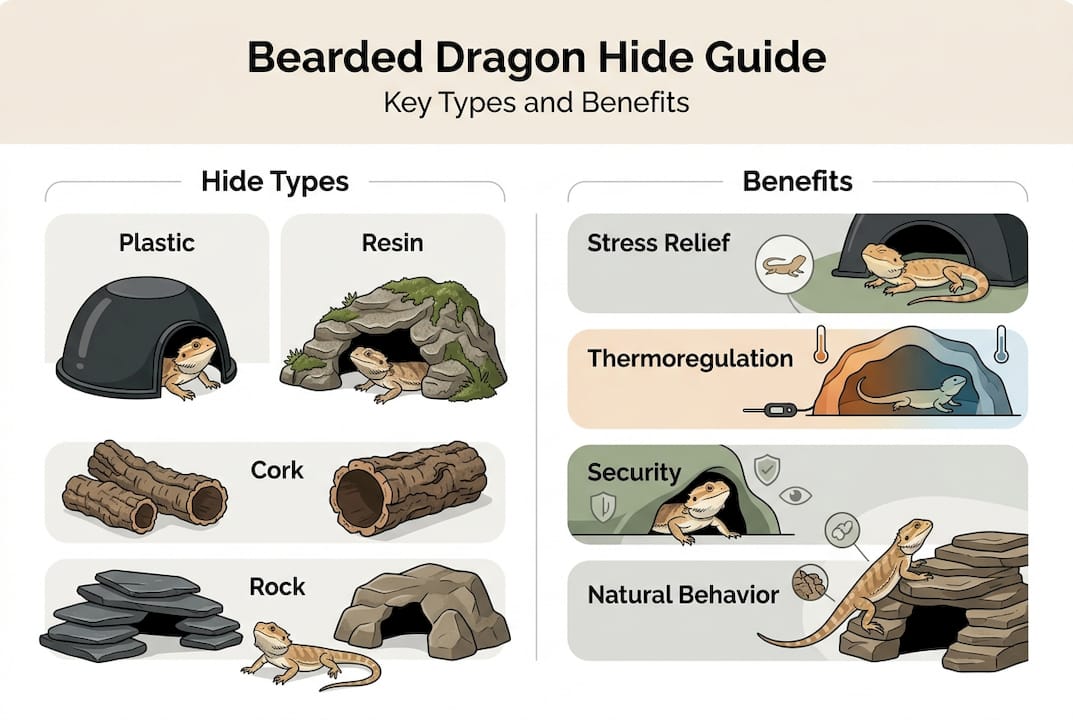
Commercial plastic hides dominate the reptile supply market due to their affordability, ease of cleaning, and variety of sizes. These molded structures typically feature smooth surfaces that resist bacterial growth and withstand repeated sanitization. However, plastic hides may lack the naturalistic appearance many owners prefer and can retain heat differently than porous materials, affecting microclimate creation within the hide.
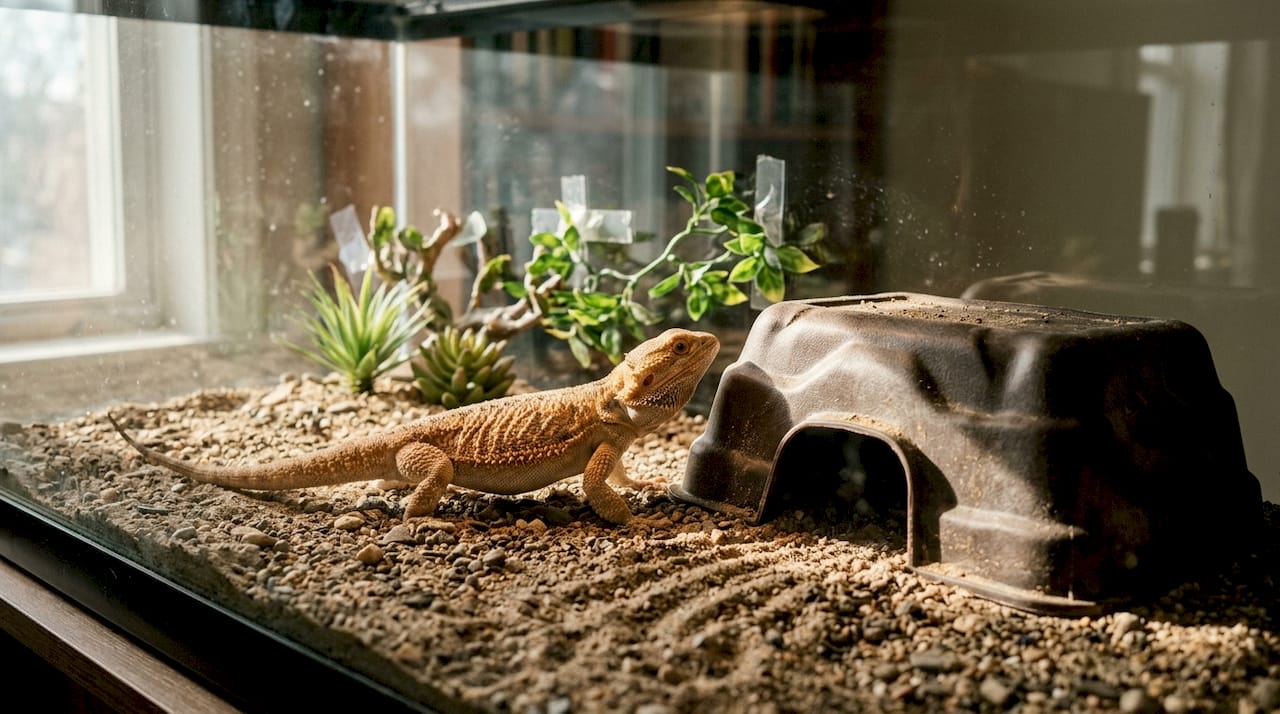
Resin and ceramic hides provide middle-ground solutions combining durability with more natural aesthetics. These materials often mimic rock formations or wood textures while maintaining the cleaning ease of synthetic options. Resin hides weigh more than plastic alternatives, offering better stability for larger dragons that might shift lightweight structures during entry and exit.
Natural wood and cork bark hides deliver authentic appearance and texture that closely replicate wild shelter options. Naturalistic hides made from safe wood or resin blends best mimic wild refuges and last longer. Cork bark particularly excels due to its moisture resistance, natural antimicrobial properties, and ability to create varied hide configurations through stacking and positioning. Your reptile safe hides materials guide provides detailed information on selecting non-toxic wood species.
Rock and stone hides offer maximum thermal mass and stability but require careful selection to avoid sharp edges or unstable stacking. Slate, sandstone, and smooth river rocks work well when properly arranged and secured. These materials excel at creating temperature gradients within the hide itself, with the top surface warming faster than shaded lower areas.
| Material | Durability | Cleaning Ease | Aesthetics | Safety Considerations |
| — | — | — | — |
| Plastic | High | Very easy | Basic | Ensure BPA-free, check for sharp edges |
| Resin | Very high | Easy | Good | Verify reptile-safe formulation |
| Cork bark | Medium | Moderate | Excellent | Inspect for mold, replace if deteriorating |
| Natural wood | Medium | Moderate | Excellent | Use only reptile-safe species, avoid treated lumber |
| Stone/rock | Very high | Difficult | Excellent | Secure against tipping, smooth all edges |
Sizing considerations trump material choice in importance. Your bearded dragon must fit completely inside the hide with enough room to turn around but not so much space that the structure loses its secure feel. For adult bearded dragons measuring 16 to 24 inches in length, hides should provide internal dimensions of approximately 10 to 14 inches in length and 6 to 8 inches in width.
Pro Tip: Avoid hides with sharp edges, unstable construction, or rough interior surfaces that might injure your dragon during entry or cause retained shed on scales. Inspect all hides before placement and smooth any problematic areas with sandpaper or a file.
Custom and DIY hide options allow personalization while potentially reducing costs. Your DIY enclosure ideas resource offers plans for creating hides from safe materials like untreated wood, terra cotta pots, or stacked flat rocks. When building custom hides, prioritize structural stability, appropriate sizing, and non-toxic materials over aesthetic complexity.
Material combinations can optimize function by pairing different hide types within one enclosure. For example, placing a ceramic hide in the basking zone for heat retention and a cork bark hide in the cool zone for moisture regulation creates complementary microclimates that support your dragon’s thermoregulatory needs throughout the day.
How to set up and maintain hides for your bearded dragon
Proper hide placement and consistent maintenance ensure your bearded dragon uses these essential habitat features effectively while preventing health risks associated with poor hygiene or incorrect positioning.
Selecting ideal locations for hides requires understanding your enclosure’s thermal gradient and your dragon’s behavioral patterns. Position your primary hide partially under the basking light to create a warm retreat option, ensuring the interior temperature reaches 95 to 100 degrees Fahrenheit. Place your secondary hide in the coolest section of the enclosure, typically the opposite end from the basking spot, where temperatures remain between 75 and 85 degrees Fahrenheit.
Proper placement and regular cleaning of hides reduces risk of infections and promotes use by the reptile. Your temperature setup instructions guide provides detailed information on creating appropriate thermal zones that complement hide placement.
Cleaning and sanitizing hides regularly prevents bacterial growth, mold development, and parasite transmission. Follow these numbered steps for thorough hide maintenance:
- Remove the hide from the enclosure and discard any substrate or waste material from interior surfaces
- Rinse the hide thoroughly with hot water to remove loose debris and organic matter
- Scrub all surfaces with a reptile-safe disinfectant or a 10% bleach solution, paying special attention to corners and textured areas
- Rinse the hide multiple times with clean water until no chemical smell remains
- Allow the hide to air dry completely in direct sunlight if possible, as UV exposure provides additional sanitization
- Inspect the hide for damage, sharp edges, or deterioration before returning it to the enclosure
Frequency of cleaning depends on your dragon’s habits and substrate type. Spot clean any visible waste daily by removing the hide and wiping affected areas. Perform deep cleaning every 1 to 2 weeks or immediately if you notice foul odors, visible mold, or signs of illness in your bearded dragon.
Encouraging natural retreat behavior involves more than simply placing hides in the enclosure. Observe your dragon’s preferences for hide type, location, and entrance orientation. Some bearded dragons prefer hides with single entrances that provide maximum security, while others favor pass-through designs that offer escape routes. Adjust hide positioning based on these observations to increase usage rates.
Signs your dragon is comfortable using the hide include:
- Regular morning and evening retreats
- Relaxed body posture when inside
- Consistent use during shedding periods
- Willingness to eat near hide entrances
- Calm demeanor when you approach the enclosure
Preventing mold and parasites requires controlling humidity levels and selecting appropriate substrate around hides. Avoid placing hides directly on moisture-retaining substrates like coconut fiber or moss in areas where water dishes might spill. Instead, position hides on tile, paper, or other non-porous surfaces that allow easy cleaning and prevent moisture accumulation. Monitor humidity levels inside hides using a small hygrometer, ensuring readings stay below 40% for bearded dragons to prevent respiratory issues and mold growth.
Substrate choice around hides impacts both cleanliness and your dragon’s willingness to use the structure. Loose substrates like sand or soil can accumulate inside hides, creating cleaning challenges and potential impaction risks if ingested. Solid substrates like tile, reptile carpet, or paper provide easier maintenance and clearer visibility of waste that requires removal.
Seasonal adjustments to hide placement support natural behavioral cycles. During brumation preparation in fall and winter months, your bearded dragon may spend increased time in hides. Ensure at least one hide maintains cooler temperatures around 65 to 75 degrees Fahrenheit to accommodate this natural dormancy period. In spring and summer, verify that warm-zone hides don’t exceed safe temperatures by monitoring interior readings with a probe thermometer.
Multiple hide options throughout the enclosure prevent territorial stress in situations where you house multiple dragons temporarily or want to provide enrichment through choice. Offering three to four hide locations allows your pet to select preferred spots based on time of day, activity level, and thermal needs, promoting natural decision-making behaviors that enhance mental stimulation.
Enhance your bearded dragon’s habitat with expert products and guides
Creating the perfect hide setup represents just one aspect of comprehensive bearded dragon care. Go Bearded Dragon offers detailed guides on nutrition, supplementation, and enrichment that work together with proper habitat design to ensure your pet thrives. Explore our bearded dragon food brands review to select high-quality staple diets that support growth and vitality.

Complement your hide setup with proper vitamin supplementation by reviewing our bearded dragon vitamin supplements analysis, which explains calcium and D3 requirements that prevent metabolic bone disease. For comprehensive behavioral enrichment strategies that maximize your dragon’s quality of life, visit our bearded dragon enrichment guide featuring practical activities and habitat modifications. These trusted resources help you build a complete care approach that addresses every aspect of your bearded dragon’s physical and mental wellbeing.
FAQ
What size should a hide be for a bearded dragon?
Hides should be large enough for your bearded dragon to enter fully and turn around comfortably without feeling cramped. For adult dragons measuring 16 to 24 inches in length, interior dimensions of 10 to 14 inches long and 6 to 8 inches wide work well. Juvenile dragons require proportionally smaller hides that grow with them, typically 6 to 8 inches long for dragons under 12 inches in total length. The hide should feel snug enough to provide security but spacious enough to prevent your dragon from getting stuck during entry or exit.
How often should I clean my bearded dragon’s hide?
Clean hides at least once every 1 to 2 weeks with thorough disinfection using reptile-safe cleaners or diluted bleach solution. Spot clean any visible waste daily by removing the hide and wiping affected areas with damp paper towels. Increase cleaning frequency if you notice foul odors, visible mold, or if your dragon is recovering from illness. Deep cleaning involves scrubbing all surfaces, rinsing thoroughly to remove chemical residue, and allowing complete air drying before returning the hide to the enclosure.
Can hides help with bearded dragon stress?
Yes, hides provide a safe retreat that significantly reduces stress and anxiety in captive bearded dragons. These structures give your pet control over when to engage with its environment and when to withdraw, lowering cortisol levels and supporting immune function. Dragons with access to appropriate hides show improved feeding patterns, better shed quality, and more natural behavioral repertoires compared to those housed without adequate shelter options. Multiple hides positioned in different thermal zones maximize stress reduction by allowing your dragon to maintain security while meeting thermoregulatory needs.
Are natural hides better than plastic ones?
Natural hides often offer better aesthetics and more closely mimic the environmental features bearded dragons encounter in the wild, potentially encouraging instinctive use patterns. Materials like cork bark and untreated wood provide texture and thermal properties similar to natural refuges. However, plastic hides can be easier to clean and sanitize thoroughly, reducing disease transmission risk. Both options work effectively when properly sized and positioned. Ensure all materials, whether natural or synthetic, are non-toxic and specifically sold as reptile safe hides materials. The best choice depends on your maintenance preferences, budget, and desired enclosure appearance, as both types successfully provide the security and thermal benefits your bearded dragon needs.