Bearded Dragon Escape Prevention Guide for Safe Habitats
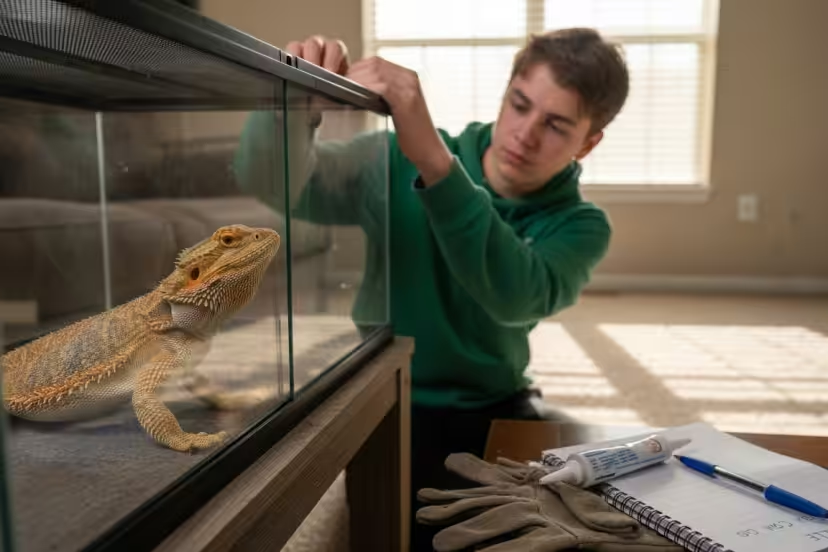
Finding your bearded dragon halfway across the living room can leave any new pet owner feeling stressed and unsure. Keeping these reptiles safe inside their enclosures takes more than luck and a glass tank. Bearded dragons are known for their agility and curiosity, which means even small oversights can lead to escape attempts. This guide offers practical escape prevention strategies based on proven husbandry and enclosure design principles, helping you create a secure, comfortable environment for your Australian native companion.
Table of Contents
- Step 1: Assess Existing Enclosure For Escape Risks
- Step 2: Reinforce Lids And Access Points Securely
- Step 3: Eliminate Potential Climbing Or Jumping Aids
- Step 4: Install Reliable Locking Mechanisms
- Step 5: Test Enclosure Security With Safety Checks
Quick Summary
| Key Point | Explanation |
|---|---|
| 1. Inspect for escape routes | Regularly check for gaps, loose screens, and other vulnerabilities that could allow your bearded dragon to escape. |
| 2. Secure lids and access points | Reinforce the enclosure lid with metal mesh, clips, and other locking mechanisms to prevent escapes. |
| 3. Remove climbing aids around enclosure | Keep decorations and items away from the top of the terrarium to eliminate jumping or climbing potential. |
| 4. Use reliable locking mechanisms | Incorporate a variety of locks to enhance security, ensuring your bearded dragon remains safe inside its habitat. |
| 5. Perform weekly safety checks | Conduct systematic inspections of the enclosure to identify and address vulnerabilities before they lead to escapes. |
Step 1: Assess existing enclosure for escape risks
When it comes to keeping your scaly pal safe, thoroughly inspecting their habitat is your first line of defense against potential Houdini-style adventures. Bearded dragons might look chill, but they can be surprisingly crafty escape artists who will explore every possible exit route if given the chance.
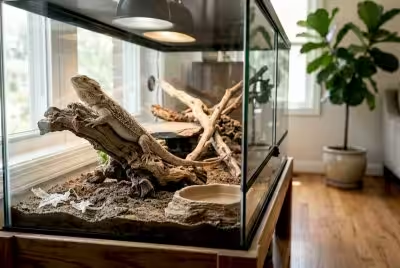
To start your assessment, you’ll want to examine enclosure design principles that prevent unauthorized reptilian wanderings. Check your terrarium systematically by looking for these potential escape routes:
- Gaps around doors or lid edges
- Loose or damaged screen sections
- Unsecured ventilation openings
- Weakened terrarium seams or corners
- Poorly fitted substrate that creates potential climbing opportunities
Pay special attention to vertical surfaces and potential climbing points. Bearded dragons are surprisingly agile climbers who can squeeze through remarkably small spaces. Measure any openings – anything larger than your dragon’s head width represents a potential escape route.
A secure habitat is your dragon’s protective castle, not just a container.
Carefully inspect each side of the enclosure, testing latches, checking seal integrity, and ensuring no unexpected weak points exist. Your goal is creating an environment that’s simultaneously secure and comfortable for your reptilian roommate.
Here’s a quick reference comparing common enclosure vulnerabilities and their associated risks:
| Vulnerability Location | Typical Cause | Escape Risk Level | Suggested Fix |
|---|---|---|---|
| Lid edges | Loose or warped fitting | High | Tight-fitting clips, seals |
| Ventilation openings | Poor or missing covers | Moderate | Metal mesh, secure fasteners |
| Corners and seams | Wear or sealant failure | High | Reseal with aquarium silicone |
| Substrate near walls | Overfilled or shifted | Low to Moderate | Reduce height, rearrange |
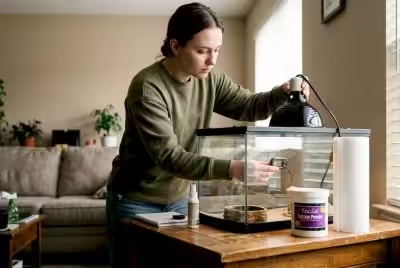
Pro tip: Keep a small repair kit nearby with silicone sealant, mesh patches, and zip ties to immediately address any discovered vulnerabilities in your bearded dragon’s habitat.
Step 2: Reinforce lids and access points securely
Now that you’ve identified potential escape routes, it’s time to transform your bearded dragon’s enclosure into an impenetrable fortress. Lid security is your primary defense against any reptilian Houdini attempts.
Start by examining reinforcement techniques for enclosure barriers. Your goal is creating a rock-solid lid system that prevents even the most adventurous dragon from finding an exit route. Here are key strategies to bulletproof your terrarium:
- Install metal mesh screens with tight weave patterns
- Use adjustable lid clips on all four corners
- Add secondary locking mechanisms
- Replace worn screen sections immediately
- Apply weather-stripping around lid edges for tighter seal
Pay special attention to custom modifications that match your specific terrarium. Some enclosures may require additional reinforcement techniques, such as silicone sealant along seams or custom-cut mesh panels.
A well-secured lid isn’t just about prevention – it’s about creating a safe home for your scaly companion.
Consider investing in professional-grade terrarium hardware designed specifically for reptile habitats. These specialized components offer superior strength and reliability compared to generic materials.
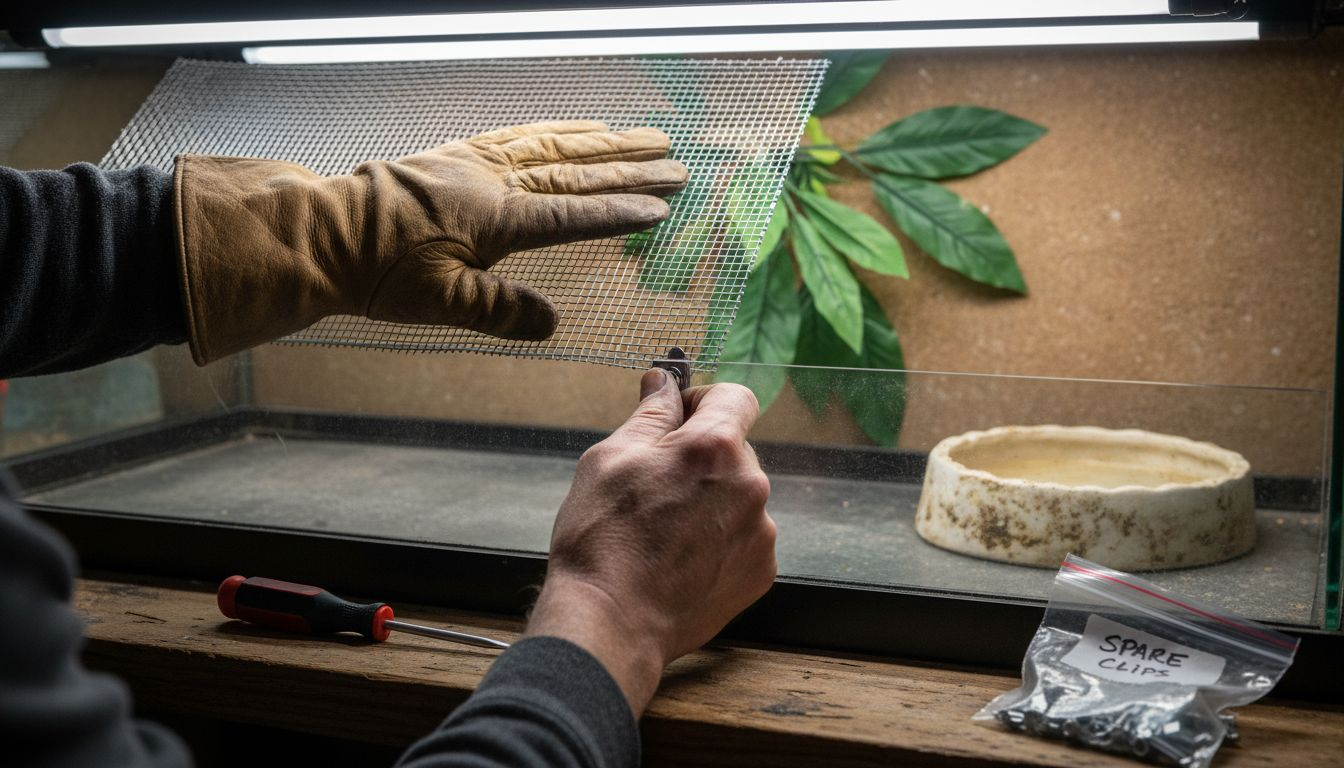
Pro tip: Perform a “lid wiggle test” weekly by gently trying to lift the enclosure lid to confirm all locking mechanisms remain secure and functional.
Step 3: Eliminate potential climbing or jumping aids
Bearded dragons are surprisingly resourceful escape artists who can turn even the most innocent habitat decoration into a potential launching pad to freedom. Your mission is to strategically remove or rearrange anything that might give your scaly friend an unexpected escape route.
Carefully evaluate habitat layout and potential climbing points to minimize escape opportunities. Focus on these key areas of potential dragon mischief:
- Decor placed near enclosure walls
- Branches positioned close to lid edges
- Stacked rocks or substrate creating height
- Overhanging decorative elements
- Loose items that can be used as climbing platforms
Pay special attention to vertical positioning of habitat accessories. Your goal is to create a space that’s enriching but doesn’t provide convenient escape routes. This means strategically spacing decorations and ensuring no single item creates an unintended bridge to potential freedom.
Your terrarium should be a secure palace, not an obstacle course for adventure.
Remember that bearded dragons are master opportunists. What looks like an innocent piece of driftwood to you might seem like a perfectly engineered escape route to your clever reptilian companion. Regularly reassess and rearrange habitat elements to maintain maximum security.
Pro tip: Create a “minimum distance” rule where no habitat decoration is placed within 4 inches of the enclosure’s top edge to prevent potential jumping or climbing attempts.
Step 4: Install reliable locking mechanisms
Let’s talk dragon-proofing your terrarium with some serious security upgrades. Locking mechanisms are your last line of defense against a curious bearded dragon’s escape attempts – think of them as the ultimate safety net for your scaly adventurer.
Explore advanced containment strategies to create an impenetrable habitat fortress. Here are the most effective locking options to keep your reptilian friend safely contained:
- Carabiner clip locks
- Sliding bolt mechanisms
- Twist-lock lid clips
- Key-operated security locks
- Combination padlock systems
- Tension-based locking clips
Diversify your locking strategy by combining multiple mechanisms. No single lock is 100% dragon-proof, so layering different types of locks creates a more robust security system. Think of it like a security system for your mini prehistoric roommate.
A well-locked enclosure isn’t a prison – it’s a safe sanctuary for your bearded dragon.
Pay special attention to lock placement and compatibility with your specific terrarium design. Some locks work better with screen tops, while others are ideal for glass or solid-lid enclosures. Regularly inspect and test your locking mechanisms to ensure they remain tight and functional.
This table summarizes key locking mechanism types, their strengths, and best uses:
| Lock Type | Strengths | Best For |
|---|---|---|
| Carabiner Clip | Easy to operate, affordable | Basic hinged lids |
| Sliding Bolt | High tamper resistance | Glass or wooden doors |
| Twist-Lock Clip | Quick to secure, compact | Screen top enclosures |
| Combination Pad | Maximum security, keyless | Valuable or exotic pets |
Pro tip: Keep a small toolkit nearby with spare clips, screwdrivers, and replacement locks so you can quickly address any potential security weaknesses.
Step 5: Test enclosure security with safety checks
Time to play detective and become your bearded dragon’s personal security expert. Safety checks are your secret weapon in preventing potential great escapes and ensuring your scaly friend stays exactly where they belong – safe and sound in their habitat.
Implement comprehensive enclosure inspection protocols to guarantee maximum security. Here’s a systematic approach to testing your dragon’s living quarters:
- Check lid and lock integrity
- Inspect screen mesh for tears
- Test all locking mechanisms
- Examine substrate and decor placement
- Measure potential gap sizes
- Simulate potential escape scenarios
Conduct weekly security audits to catch potential vulnerabilities early. Think of yourself as a reptilian homeland security agent, constantly monitoring for any weak points that your clever bearded dragon might exploit.
Your thorough inspection is the difference between a secure home and an unexpected dragon adventure.
Pay close attention to subtle signs that might indicate your dragon is plotting an escape. Repeated scratching, persistent climbing near specific areas, or unusual interest in lid edges can signal potential security risks that need immediate attention.
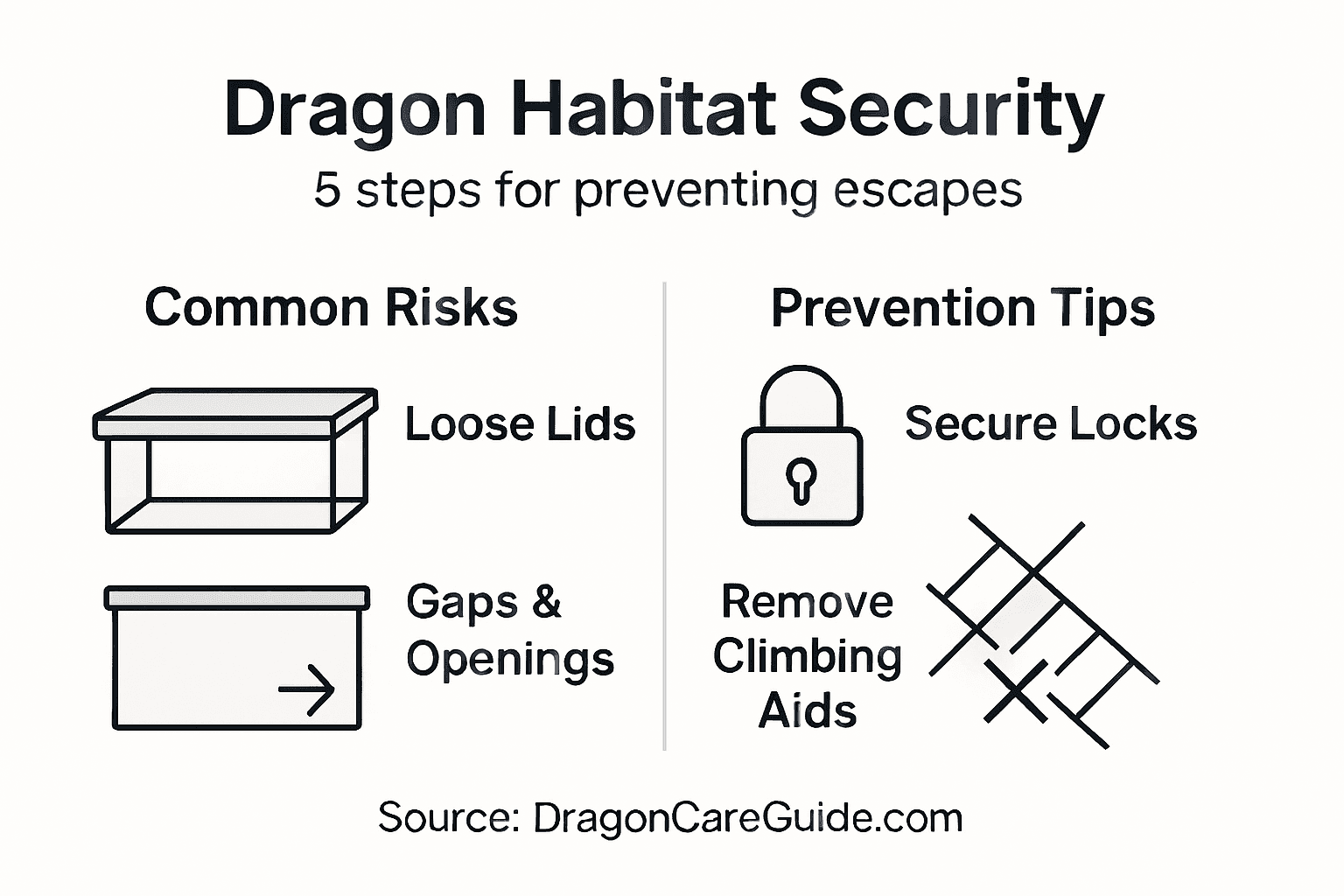
Pro tip: Create a monthly “security log” where you document each inspection, noting any wear and tear or potential modifications needed to maintain your enclosure’s fortress-like status.
Secure Your Bearded Dragon’s Habitat with Expert Solutions
Preventing your bearded dragon from escaping requires thorough attention to enclosure security, lid reinforcement, and strategic habitat arrangement. This article highlights the common pain points such as loose lid edges, weak locking mechanisms, and climbing aids that can turn your terrarium into an escape challenge. At gobeardeddragon.com, we understand how important it is to create a safe and comfortable sanctuary for your scaly companion.

Explore practical guides and reliable tips to reinforce your bearded dragon’s habitat effectively. Discover expert advice on maintaining secure lids, selecting durable locks, and organizing enriching yet safe décor. Don’t wait for an escape attempt to happen—take action now by visiting gobeardeddragon.com to learn more and protect your pet’s home. Your dragon’s safety and your peace of mind start here.
Frequently Asked Questions
How can I assess my bearded dragon’s enclosure for escape risks?
To assess your bearded dragon’s enclosure, systematically inspect it for gaps around doors and lids, loose screen sections, unsecured ventilation openings, and weakened seams. Regularly check that all areas are secure and fix any identified vulnerabilities immediately to prevent escape.
What are effective ways to reinforce lids and access points in my bearded dragon’s habitat?
Reinforce lids and access points by installing metal mesh screens, using adjustable lid clips, and incorporating secondary locking mechanisms. Ensure that any wear and tear is promptly addressed; this will enhance security and keep your bearded dragon safe.
What should I remove to eliminate climbing or jumping aids in my bearded dragon’s enclosure?
To eliminate climbing or jumping aids, remove or rearrange any decorations or accessories located near the enclosure walls, such as branches or stacked rocks. Maintain a minimum distance of 4 inches from the top edge of the enclosure to minimize potential escape routes.
How can I install reliable locking mechanisms on my bearded dragon’s enclosure?
To install reliable locking mechanisms, consider using options like carabiner clips, sliding bolt locks, and twist-lock lid clips. Diversifying your locking strategy by combining multiple types will create a more secure environment for your bearded dragon.
What steps should I follow to conduct safety checks on my bearded dragon’s enclosure?
Follow a systematic approach to conduct safety checks by inspecting lid and lock integrity, examining for screen mesh tears, and testing all locking mechanisms. Schedule these audits weekly to identify vulnerabilities and address them promptly, ensuring your bearded dragon remains safe and secure.
How often should I perform inspections to ensure my bearded dragon’s enclosure is secure?
Perform inspections weekly to ensure your bearded dragon’s enclosure is secure. Regularly check for signs of wear, test locks, and reassess decoration placement to quickly address potential escape risks.
Recommended
- How to Set Up Bearded Dragon Habitat Naturally
- 7 Essential Types of Bearded Dragon Habitats Explained