Role of Humidity for Bearded Dragons – Why It Matters
Over half of reptile owners underestimate the impact that humidity has on their bearded dragons’ health. Creating the right environment for these Australian natives is much more than adding water dishes and lamps. The difference between respiratory issues or vibrant, active dragons often comes down to understanding and controlling moisture levels. This guide breaks down the science and everyday tactics for keeping your quirky companion comfortable, healthy, and stress-free.
Table of Contents
- Humidity Needs For Bearded Dragons Explained
- Optimal Humidity Ranges And Their Importance
- Health Risks From Incorrect Humidity Levels
- How To Measure And Control Humidity Effectively
- Common Mistakes In Humidity Management
Key Takeaways
| Point | Details |
|---|---|
| Optimal Humidity Range | Bearded dragons thrive at humidity levels of 30% to 40%, reflecting their natural arid environment. Maintaining this balance prevents health issues like respiratory infections and shedding difficulties. |
| Monitoring Tools | A digital hygrometer is essential for accurately tracking humidity levels within the terrarium. Consistent monitoring helps ensure a stable environment for your bearded dragon. |
| Avoid Common Pitfalls | Frequent misting and the use of moisture-retaining substrates can lead to dangerous humidity spikes. It’s crucial to focus on ventilation and stable humidity control instead. |
| Importance of Environment | A well-managed humidity level fosters a comfortable habitat, promoting your bearded dragon’s overall health. Ensuring proper humidity management transforms pet ownership into responsible care. |
Humidity Needs for Bearded Dragons Explained
Bearded dragons are quirky scaly friends who require precise environmental conditions to thrive, and humidity plays a crucial role in their overall health and well-being. Maintaining the right moisture level isn’t just a suggestion – it’s a fundamental aspect of responsible dragon care. Good ventilation is essential, and the humidity should be moderate, typically ranging between 40% and 60% to support their unique physiological needs.
Understanding humidity for these modern-day dinosaurs means recognizing their natural desert habitat. Unlike tropical reptiles, bearded dragons originate from arid Australian regions where moisture levels are consistently low. Too much humidity can cause serious respiratory issues, fungal infections, and skin problems. Conversely, humidity that’s too low can lead to shedding difficulties and potential dehydration. Think of their environment like a delicate ecosystem where balance is everything.
To effectively manage humidity, reptile owners should invest in a reliable digital hygrometer to consistently monitor moisture levels. Key strategies include:
- Using substrate materials that don’t retain excessive moisture
- Providing proper ventilation in their habitat
- Avoiding frequent misting (which can dramatically increase humidity)
- Creating designated basking areas with controlled temperature and airflow
Tracking humidity isn’t just about numbers – it’s about creating a comfortable, stress-free environment for your scaly companion. By understanding and implementing these principles, you’ll help ensure your bearded dragon stays healthy, happy, and ready to be the king or queen of their terrarium domain.
Optimal Humidity Ranges and Their Importance
Understanding the precise humidity requirements for bearded dragons is crucial for their health and comfort. The optimal humidity range for these scaly companions is typically between 30% and 40%, a narrow window that mimics their native Australian desert environment. Maintaining this specific moisture level isn’t just about comfort – it’s about preventing potential health complications that can arise from environmental stress.
Bearded dragons are sensitive creatures whose physiological functions depend heavily on environmental conditions. When humidity levels drift too high or too low, they can experience a range of health issues. Monitoring humidity with a reliable hygrometer helps ensure you keep levels between 20-40%, which supports critical bodily functions. Excessive moisture can lead to respiratory infections, fungal growth, and skin problems, while overly dry conditions can cause shedding difficulties and potential dehydration.
To help bearded dragon owners maintain optimal humidity, here are some strategic approaches:
- Use a digital hygrometer with precise measurement capabilities
- Select substrate materials that don’t retain excessive moisture
- Ensure proper habitat ventilation
- Create designated basking areas with controlled temperature and airflow
- Avoid frequent misting, which can rapidly increase humidity
Think of humidity management like being a climate controller for your little dragon. By understanding and implementing these principles, you transform from a simple pet owner to a habitat hero, ensuring your bearded dragon can thrive in a carefully balanced environment that closely mimics their natural desert home.
Health Risks From Incorrect Humidity Levels
Bearded dragons are remarkably sensitive creatures, and environmental conditions can dramatically impact their health. Deviations from the ideal humidity range can result in serious health complications, transforming what seems like a minor atmospheric shift into a potential medical crisis for these delicate reptiles.
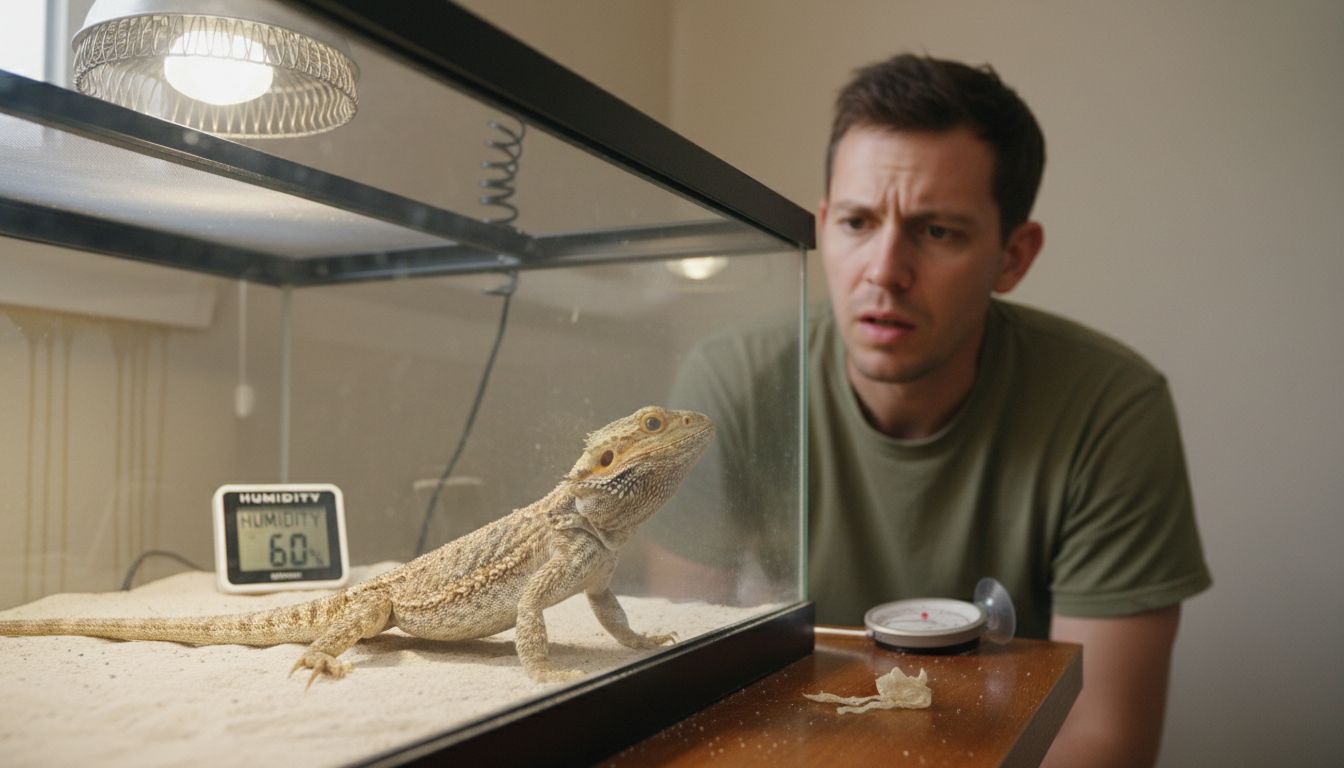
When humidity levels swing too high, bearded dragons become susceptible to a range of respiratory and dermatological issues. Excessive moisture creates an ideal breeding ground for harmful fungi and bacteria, which can quickly lead to respiratory infections that compromise their breathing and overall immune system. Fungal growth becomes a significant threat, potentially causing skin infections that can spread rapidly and become challenging to treat. These conditions can cause severe stress, weakening their natural defense mechanisms and making them more vulnerable to additional health problems.
Conversely, humidity levels that are too low present equally dangerous challenges:
- Impaired shedding process, leading to retained skin patches
- Increased risk of dehydration
- Potential kidney and urinary tract complications
- Compromised skin health and potential scale damage
- Reduced the effectiveness of thermoregulation
Understanding these risks transforms humidity management from a simple environmental control to a critical aspect of responsible bearded dragon care. By maintaining consistent, appropriate moisture levels, you’re not just creating a comfortable habitat – you’re actively protecting your scaly companion’s health and ensuring they can live a vibrant, active life free from unnecessary medical complications.
How to Measure and Control Humidity Effectively
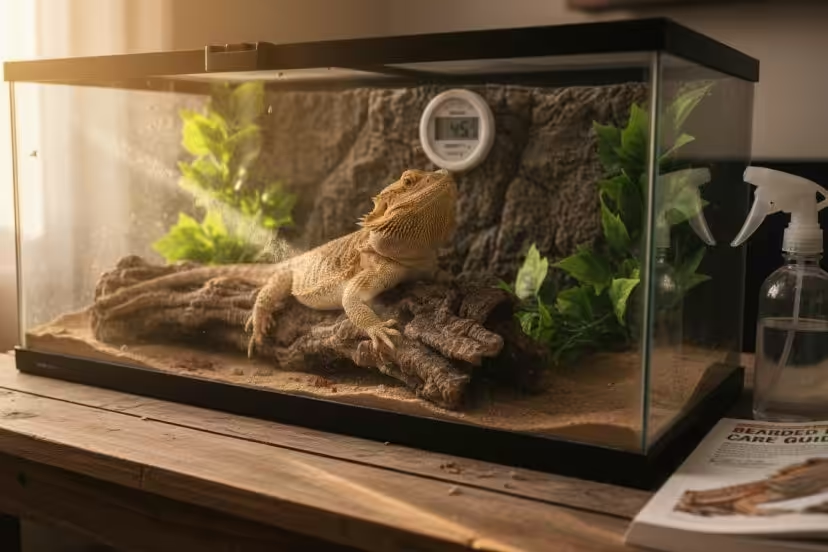
Mastering humidity control for your bearded dragon requires precision, patience, and the right tools. Digital hygrometers are your primary weapon in this environmental management battle, offering real-time moisture level readings that can make the difference between a thriving and struggling reptilian companion. These small but mighty devices allow you to monitor humidity with scientific accuracy, helping you maintain the delicate 30-40% range that mimics your dragon’s natural desert habitat.
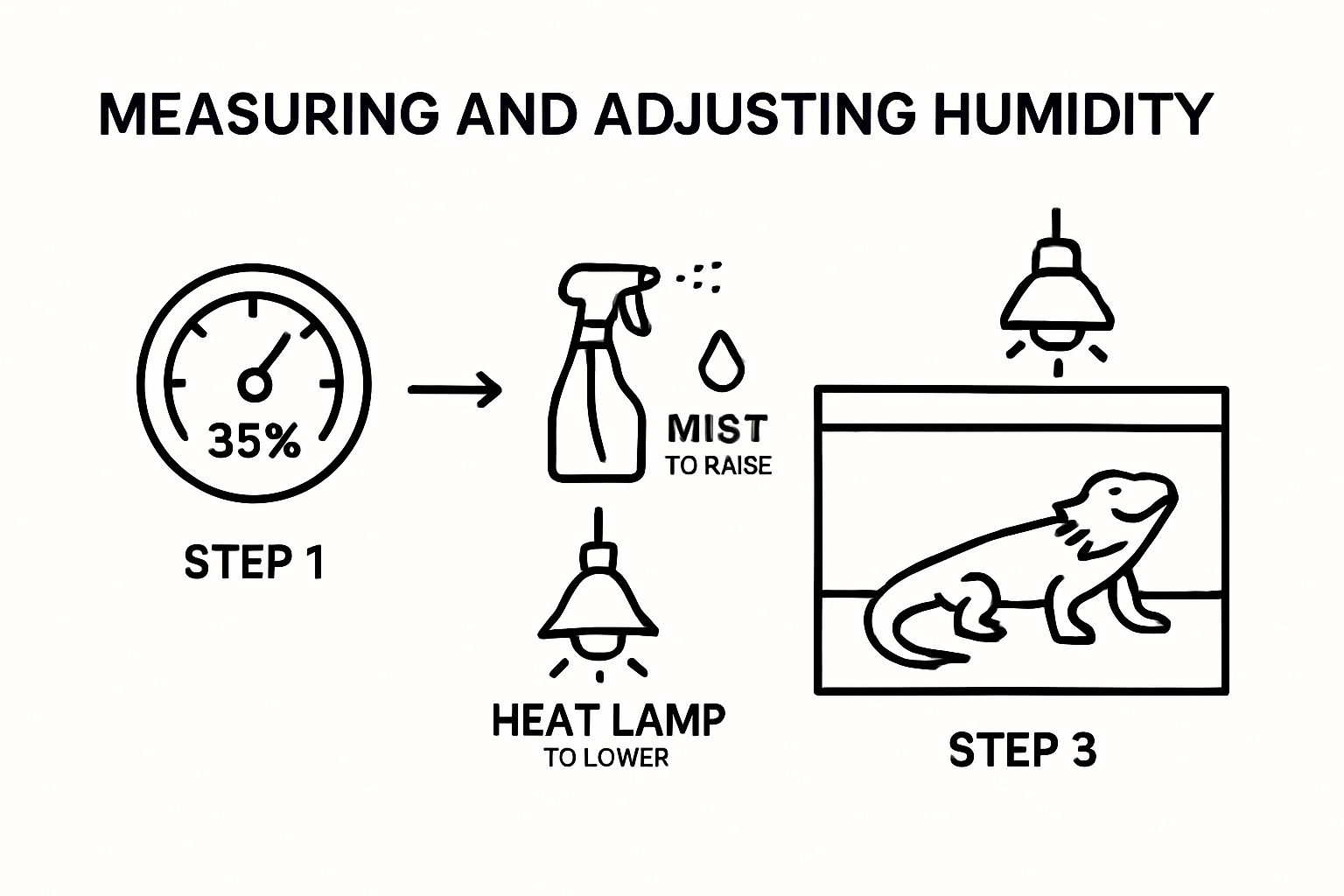
Creating the perfect humidity environment involves strategic habitat design and consistent monitoring. Place your hygrometer in multiple locations within the terrarium to get a comprehensive moisture reading, as humidity can vary significantly between different areas. Strategic placement near substrate, basking spots, and cooler regions will give you a more nuanced understanding of your bearded dragon’s microclimate. Key strategies for humidity control include selecting appropriate substrate materials that don’t retain excessive moisture, ensuring proper ventilation, and creating designated zones with different environmental characteristics.
Here are practical techniques for maintaining optimal humidity levels:
- Invest in a high-quality digital hygrometer with precision sensors
- Use loose, dry substrates like reptile carpet or newspaper
- Implement a well-ventilated terrarium design
- Avoid misting except during specific shedding assistance
- Create temperature gradient zones to regulate moisture naturally
- Use a dehumidifier or humidity-absorbing materials if levels consistently run high
Think of humidity management like conducting a delicate scientific experiment. Every adjustment matters. By becoming an attentive and proactive habitat manager, you transform from a simple pet owner to a reptile environmental specialist, ensuring your scaly friend enjoys a comfortable, health-supporting living space that closely mimics their ancestral Australian desert home.
Common Mistakes in Humidity Management
Bearded dragon owners often stumble into humidity management pitfalls that can dramatically compromise their pet’s health. Overcorrection is perhaps the most frequent and dangerous mistake, where well-intentioned reptile enthusiasts swing wildly between humidity extremes instead of maintaining a stable environment. These dramatic fluctuations stress out bearded dragons, weakening their immune system and potentially causing long-term physiological damage.
One critical error is frequent misting, which many new owners believe helps their dragon’s hydration but actually creates dangerous moisture buildup. Bearded dragons evolved in arid Australian desert regions and have sophisticated biological mechanisms for water conservation. Excessive moisture can lead to respiratory infections, fungal growth, and skin problems that can quickly become serious medical conditions. Another common misconception is using inappropriate substrate materials that either retain too much moisture or fail to provide proper air circulation.
Here are the most problematic humidity management mistakes to avoid:
- Misting the entire terrarium instead of providing targeted hydration
- Using moisture-retaining substrates like moss or soil
- Ignoring ventilation and air circulation requirements
- Placing the hygrometer in a single, non-representative location
- Failing to create temperature gradient zones
- Overreacting to minor humidity fluctuations
- Using humidifiers designed for tropical environments
Think of humidity management like walking a tightrope – precision and consistency are your best allies. By understanding these common pitfalls, you transform from a novice reptile owner into a sophisticated habitat manager, ensuring your scaly companion thrives in an environment that closely mimics their natural desert ecosystem.
Master Humidity Control to Keep Your Bearded Dragon Healthy and Happy
Proper humidity management is one of the most critical challenges bearded dragon owners face. This article highlights the delicate balance needed to maintain humidity between 30% and 40 percent to prevent respiratory infections, skin issues, and shedding problems. If you have struggled with fluctuating moisture levels or worry about the long-term health risks incorrect humidity can cause your scaly friend you are not alone.

Discover expert care tips and practical solutions at gobeardeddragon.com. You can explore detailed guides on habitat maintenance, learn how to optimize your terrarium environment, and find recommendations for the best substrates and tools, such as digital hygrometers. Take control of your bearded dragon’s habitat now and prevent dangerous health complications with our trusted resources. Visit our site and become the confident, informed owner your dragon deserves today.
Frequently Asked Questions
What is the ideal humidity range for bearded dragons?
The optimal humidity range for bearded dragons is typically between 30% and 40%, closely mimicking their natural desert habitat. Maintaining this level helps prevent health issues caused by extreme fluctuations in humidity.
How can I measure the humidity in my bearded dragon’s terrarium?
You can measure humidity using a digital hygrometer, which provides precise readings. Place the hygrometer in various locations within the terrarium to gain a comprehensive understanding of moisture levels in different areas.
What are the risks of having too high humidity for bearded dragons?
Excessive humidity can lead to respiratory infections, fungal growth, and skin conditions in bearded dragons. It creates an environment that promotes harmful bacteria and fungi, which can severely affect their health.
How can I maintain the proper humidity level in my bearded dragon’s habitat?
To maintain proper humidity levels, use a hygrometer for monitoring, select appropriate substrate materials that don’t retain excessive moisture, ensure good ventilation, and avoid misting too frequently. Create temperature-gradient zones to support natural variations in humidity.