Why Bearded Dragons Puff Up – Meanings and Care Insights
Most reptile owners are surprised to learn that a single bearded dragon can puff up to appear nearly twice its normal size. This unusual display is more than an eye-catching spectacle—it is a vital way for these popular pets to communicate everything from stress to mating intentions. Understanding the reasons behind puffing up can help American keepers support their bearded dragons’ health and security with confidence.
Table of Contents
- Bearded Dragon Puffing Up Explained
- Common Reasons For Puffing Up Behavior
- Puffing Up During Mating And Social Interactions
- Stress, Defense, And Health Warning Signs
- Owner Responses And Common Mistakes
Key Takeaways
| Point | Details |
|---|---|
| Puffing Up as a Defense Mechanism | Bearded dragons puff up to appear larger when threatened, signaling to potential predators to stay away. This behavior also includes changes in beard color as part of the visual display. |
| Triggers for Puffing Up | Common reasons for puffing up include stress from environmental changes, territorial disputes, and mating displays. Each situation conveys a distinct emotional response that reflects the dragon’s state. |
| Observing and Responding to Behavior | Owners should carefully observe puffing behavior to distinguish between normal behavior and signs of health issues. Creating a calm environment can help reduce stress-related puffing. |
| Avoiding Common Mistakes | Misinterpreting puffing behavior can increase stress in the bearded dragon. Owners should focus on understanding the underlying causes rather than intervening directly when puffing occurs. |
Bearded Dragon Puffing Up Explained
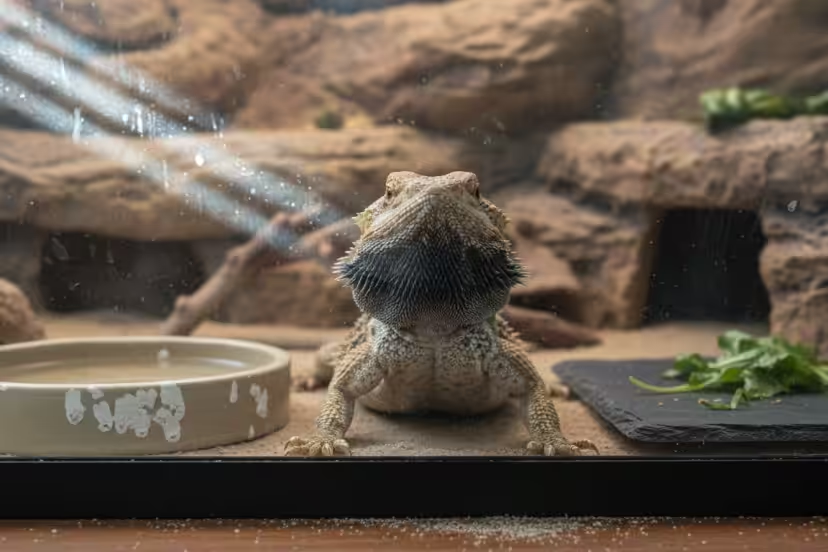
Bearded dragons have a fascinating defense mechanism that involves puffing up their bodies and beards when feeling threatened. This remarkable behavior, characterized by a dramatic body expansion, serves as a powerful visual warning to potential predators or perceived threats.
When a bearded dragon decides to puff up, they dramatically increases its body size by expanding their throat and inflating their specialized beard area. This transformation makes them appear significantly larger and more intimidating, which is a strategic survival tactic. The beard often darkens during this display, creating an even more dramatic visual signal that communicates “stay away” to anything or anyone causing stress or perceived danger.
Puffing up can occur in various situations beyond pure predator defense. Bearded dragons might inflate their bodies during territorial disputes, when feeling anxious about their environment, or when experiencing heightened emotional states. This defensive posture allows these reptiles to communicate complex emotional and survival signals through a remarkable physical transformation that serves multiple communication purposes.
Pro Tip: Careful Observation Technique: When your bearded dragon puffs up, remain calm and identify the potential trigger. Understanding what causes this behavior can help you create a more secure and stress-free environment for your scaly companion.
Common Reasons for Puffing Up Behavior
Bearded dragons exhibit puffing up behavior for multiple complex reasons, each signaling a unique emotional or survival response. Understanding these diverse triggers can help owners interpret their pet’s communication signals, ranging from defensive strategies to social interactions.
One primary reason for puffing up is stress response. When bearded dragons feel threatened or uncomfortable, they dramatically expand their body to appear larger and more intimidating. This can happen due to environmental changes, sudden movements, unfamiliar people or animals, or perceived territorial invasions. The physical inflation serves as a warning mechanism, essentially telling potential threats to maintain distance and avoid confrontation.
Another significant trigger for puffing up involves mating behaviors. Male bearded dragons often puff up their beards during courtship displays, using this dramatic physical transformation to attract females and demonstrate their fitness. During breeding season, these displays become more frequent and pronounced, representing a complex form of reptilian communication that goes beyond simple defensive posturing.
Pro Tip: Signal Interpretation Strategy: Pay close attention to the context and accompanying body language when your bearded dragon puffs up. By observing additional cues such as beard color, head position, and the surrounding environment, you can more accurately determine whether the behavior stems from stress, territorial instincts, or mating intentions.
Here’s a quick overview of common triggers and what they mean:
| Situation | Puffing Up Purpose | Typical Accompanying Signals |
|---|---|---|
| Environmental Stress | Defense and intimidation | Beard darkening, body inflation |
| Territorial Disputes | Warning to rivals | Stiff posture, aggressive stance |
| Courtship/Mating Display | Attracting a mate | Head bobbing, vibrant coloration |
| Social Rank or Competition | Assertion of dominance | Arm waving, intense beard display |
| Health or Discomfort | Communicate unease | Lethargy, loss of appetite |
Puffing Up During Mating and Social Interactions
Male bearded dragons engage in intricate social interactions that involve sophisticated communication through physical displays, with puffing up serving as a critical signaling mechanism. Complex behavioral patterns emerge during male-male competitive interactions and mating rituals, revealing the nuanced ways these reptiles establish social hierarchies and attract potential mates.
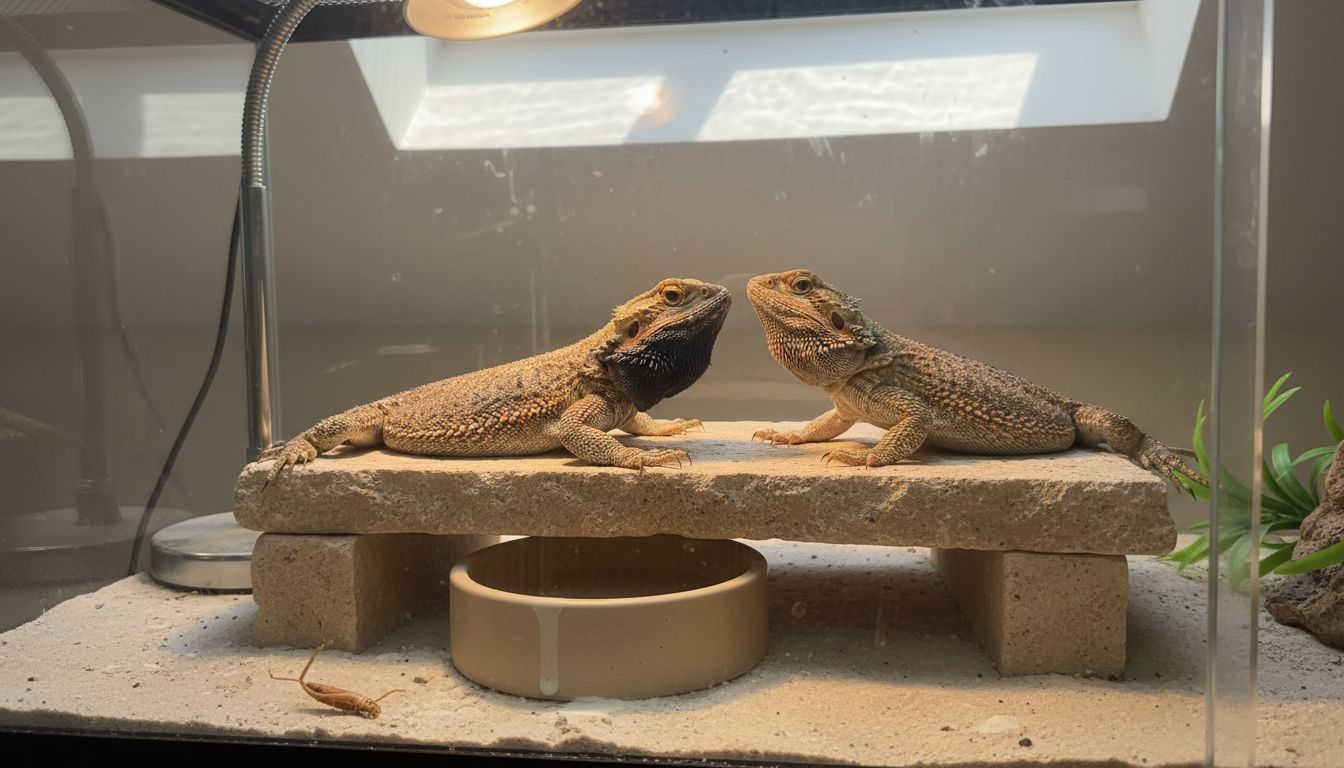
During courtship, male bearded dragons deploy an impressive repertoire of behaviors designed to capture female attention. Elaborate mating dances feature dramatic beard puffing, color darkening, rhythmic head bobbing, and strategic arm waving – a mesmerizing performance that demonstrates the male’s fitness and reproductive readiness. These displays are not merely aesthetic but represent critical communication strategies that convey genetic quality and physical health to potential partners.
Interestingly, while puffing up plays a significant role in social interactions, research suggests these displays do not always directly correlate with reproductive success. Male bearded dragons use these physical transformations to establish dominance, compete with rival males, and signal reproductive intentions, but the ultimate selection remains complex and multifaceted. The intensity of beard darkening and body inflation can vary based on individual temperament, environmental conditions, and specific social contexts.
Pro Tip: Courtship Behavior Observer: When witnessing your bearded dragon’s mating displays, resist the urge to intervene. These behaviors are natural communication methods, and understanding them can provide fascinating insights into your reptile’s social and reproductive instincts.
Stress, Defense, and Health Warning Signs
Bearded dragons use puffing up as a nuanced communication tool that extends far beyond simple defensive posturing. Their physical response to stress involves a complex series of body language signals that reveal underlying health and environmental concerns, providing owners with critical insights into their reptile’s emotional state and potential wellness challenges.
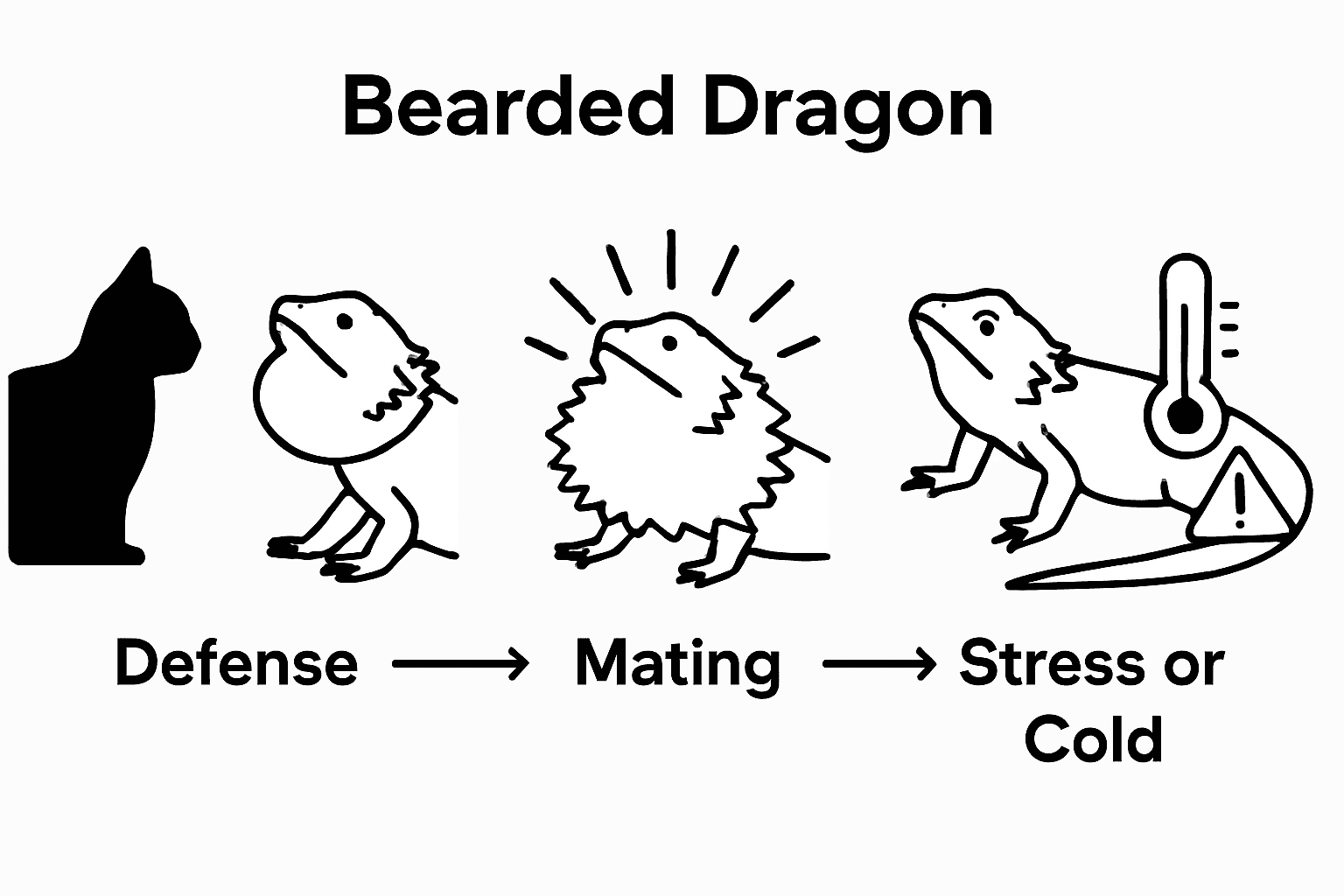
When experiencing stress or perceived threats, bearded dragons deploy a sophisticated defensive mechanism characterized by body inflation and beard darkening. This behavioral response can indicate various underlying issues ranging from environmental discomfort to potential territorial conflicts. Potential triggers include sudden environmental changes, the presence of unfamiliar animals, inappropriate handling, inadequate habitat conditions, or sensory overstimulation.
Understanding the context of puffing up is crucial for distinguishing between normal behavioral responses and potential health warning signs. Chronic or frequent puffing might suggest persistent stressors in the bearded dragon’s environment, such as inappropriate temperature gradients, insufficient hiding spaces, improper social interactions, or undiagnosed medical conditions. Owners should carefully observe accompanying behaviors like lethargy, changes in appetite, unusual skin coloration, or alterations in standard movement patterns that might indicate more serious underlying health concerns.
Pro Tip: Stress Reduction Specialist: Create a calm, predictable environment for your bearded dragon by maintaining consistent habitat conditions, minimizing sudden movements and loud noises, and providing plenty of secure hiding spaces that help your reptile feel safe and protected.
Use this table to help distinguish between regular puffing and potential health concerns:
| Puffing Context | Normal Pattern | Signs of Health Issue |
|---|---|---|
| Defensive/Stressed | Short-lived, stops when calm | Frequent, persists after the event |
| Mating/Social Display | Only during social interactions | None—if constant, seek a vet |
| Environmental Triggers | Resolves with habitat adjustment | No change after improving conditions |
| Accompanying Behavior | Alert, active movement | Lethargy, color changes, poor appetite |
Owner Responses and Common Mistakes
Owners must approach bearded dragon puffing behavior with careful observation and thoughtful response. Misinterpreting these complex communication signals can lead to inappropriate handling and increased stress for the reptile, making it critical to develop a nuanced understanding of their body language and emotional states.
One of the most common mistakes owners make is responding to puffing up with direct confrontation or excessive handling. When a bearded dragon puffs up, it is signaling discomfort or potential threat, and attempting to interact or restrain the animal forcibly can escalate their stress levels. Instead, owners should focus on identifying the underlying cause of the behavior, such as environmental triggers, potential health issues, or social stressors that might be making the reptile feel threatened.
Successful management of puffing up behavior requires a holistic approach that combines careful observation, environmental modification, and patient interaction. This means creating a stable habitat with appropriate temperature gradients, providing sufficient hiding spaces, minimizing sudden environmental changes, and learning to read subtle body language cues. Owners should also be prepared to consult with reptile veterinarians if puffing up becomes frequent or is accompanied by other unusual behaviors that might indicate underlying health concerns.
Pro Tip: Calm Interaction Expert: Develop a gentle, predictable interaction routine with your bearded dragon that respects their personal space and allows them to feel secure. Approach slowly, avoid sudden movements, and let the dragon initiate contact when they feel comfortable.
Understand Your Bearded Dragon’s Puffing With Expert Care Solutions
Bearded dragons puffing up is a clear sign they are communicating stress, territorial instincts, or mating behaviors. If you want to confidently respond to these important signals and provide the best environment for your pet, understanding the cause is key. This article highlighted how puffing can indicate anything from defense mechanisms to social dominance and even health concerns. Avoid common mistakes like forcing interaction and instead create a habitat where your bearded dragon feels safe, calm, and secure.

Discover practical tips and detailed guides on how to improve your bearded dragon’s well-being. From habitat maintenance to identifying health issues, gobeardeddragon.com is your ultimate resource for everything you need to know. Visit gobeardeddragon.com now and learn how to reduce stress triggers, interpret puffing signals correctly, and ensure your reptile thrives with confidence and care.
Explore expert advice today with Bearded Dragon Care Guides and make every behavior a chance to strengthen your bond.
Frequently Asked Questions
Why do bearded dragons puff up?
Bearded dragons puff up as a defense mechanism when they feel threatened. This behavior makes them appear larger and more intimidating to potential predators or perceived threats.
What triggers puffing up in bearded dragons?
Puffing up can be triggered by various factors, including environmental stress, territorial disputes, mating behaviors, and social interactions. Observing accompanying body language can help you identify the cause.
How can I reduce my bearded dragon’s stress?
To help reduce stress in your bearded dragon, create a calm and predictable environment by maintaining stable habitat conditions, minimizing sudden movements or loud noises, and providing hiding spaces for security.
What are the warning signs of health issues in bearded dragons?
Warning signs of health issues include persistent puffing, lethargy, changes in appetite, unusual skin coloration, and alterations in movement patterns. Consult a veterinarian if you notice these symptoms accompanying puffing behavior.
Recommended
- Bearded Dragon Beard – What It Means and Signals
- Bearded Dragon Behavior Signs – What Owners Must Know
- Why Do Bearded Dragons Hiss? Key Causes and Owner Tips
- Bearded Dragon Social Needs – Why Solitude Matters