Why Do Bearded Dragons Hiss? Key Causes and Owner Tips
Over 60 percent of reptile owners encounter hissing from their bearded dragons at some point, and it often sparks confusion or concern. This unique behavior is a silent language that reveals your pet’s stress, fear, or need for space. Understanding what bearded dragon hissing really means can transform your relationship and prevent misunderstandings. You will discover why your scaly companion hisses and learn practical steps to keep both you and your bearded dragon calm and happy.
Table of Contents
- What Bearded Dragon Hissing Means
- Main Triggers For Hissing Behaviors
- Distinguishing Stress, Fear, And Aggression
- How Owners Should Respond To Hissing
- Mistakes To Avoid When Handling Hissing
Key Takeaways
| Point | Details |
|---|---|
| Hissing as Communication | Bearded dragon hissing is a warning signal indicating stress or discomfort, not necessarily aggression. |
| Identifying Triggers | Environmental factors, handling methods, and social interactions can trigger hissing behaviors. |
| Responding to Hissing | Owners should respect hissing signals, move slowly, and provide personal space to ensure the dragon feels safe. |
| Avoiding Mistakes | Do not force interaction or make sudden movements; instead, build trust through patient handling and observation. |
What Bearded Dragon Hissing Means
Bearded dragon hissing is more than just a random sound – it’s a critical communication method that signals your scaly friend’s emotional state. When your bearded dragon releases a hiss, they’re essentially speaking a language of warning and self-protection. Hissing serves as a defensive signal indicating the dragon feels threatened or stressed, much like a cat arching its back or a dog growling.
Unlike popular misconceptions, hissing doesn’t automatically mean your bearded dragon is aggressive or wants to attack. Instead, it’s a nuanced warning sign communicating vulnerability and discomfort. Stress triggers can include sudden movements, unfamiliar environments, attempts to handle when they’re not ready, or perceived territorial invasions. A hiss is their way of saying, “I feel uncomfortable, and I might defend myself if you continue.”
Interestingly, bearded dragons are typically gentle reptiles with complex emotional ranges. Their hissing is a sophisticated communication strategy designed to avoid actual physical confrontation. When your beardie hisses, they’re demonstrating remarkable self-awareness by attempting to discourage potential threats without resorting to direct aggression. Paying attention to the context of their hissing – body language, environmental factors, and recent interactions – can help you understand and address their underlying concerns more effectively.
Key signs that accompany hissing and indicate heightened stress include:
- Puffing out their beard
- Darkening beard color
- Flattening body posture
- Rapid head bobbing
- Turning sideways to appear larger
Most importantly, respect your bearded dragon’s signals. When they hiss, please stop what you’re doing, move slowly, and give them space to feel safe and calm.
Main Triggers for Hissing Behaviors
Bearded dragons are sensitive creatures with specific environmental and social needs, and understanding their stress triggers is crucial for preventing hissing episodes. Inadequate habitat conditions like improper lighting, temperature fluctuations, and lack of privacy can significantly contribute to their stress levels, causing them to feel threatened and respond defensively.

Environmental factors play a massive role in your bearded dragon’s emotional state. Sudden loud noises, frequent household activity, unexpected movements, or frequent handling can overwhelm these naturally cautious reptiles. They’re not just reacting randomly – each hiss represents a carefully considered response to perceived threats. Imagine being picked up repeatedly when you’re not in the mood, or hearing constant loud sounds that disrupt your sense of safety. Your beardie experiences stress similarly, using hissing as a communication tool to express discomfort.
Social interactions and territorial instincts also heavily influence hissing behaviors. Bearded dragons are complex creatures with individual personalities and boundaries. Introducing new pets, rearranging their habitat, bringing unfamiliar people close, or even changing their routine can trigger defensive responses. They might hiss when:
- Another pet approaches their space
- A human moves too quickly near them
- Their habitat feels invaded
- They’re experiencing hormonal changes
- They feel physically uncomfortable
To minimize hissing, create a stable, predictable environment that respects your bearded dragon’s need for security. Slow, gentle movements, consistent handling techniques, and maintaining a calm household atmosphere can dramatically reduce stress-induced hissing behaviors.
Distinguishing Stress, Fear, and Aggression
Understanding the nuanced emotional states of bearded dragons requires careful observation and interpretation. Reactive hissing often emerges as a direct response to external stimuli like sudden movements or unfamiliar objects in their territory, but it’s not always a straightforward sign of aggression.
Stress responses typically manifest differently from true aggression. When a bearded dragon feels stressed, they might display subtle body language cues like slight beard puffing, color changes, and tentative positioning. Fear-based reactions tend to be more pronounced, with dramatic beard darkening, complete body flattening, and a more defensive posture. True aggression, by contrast, involves more assertive behaviors like intense head bobbing, rapid color changes, and a more confrontational stance.
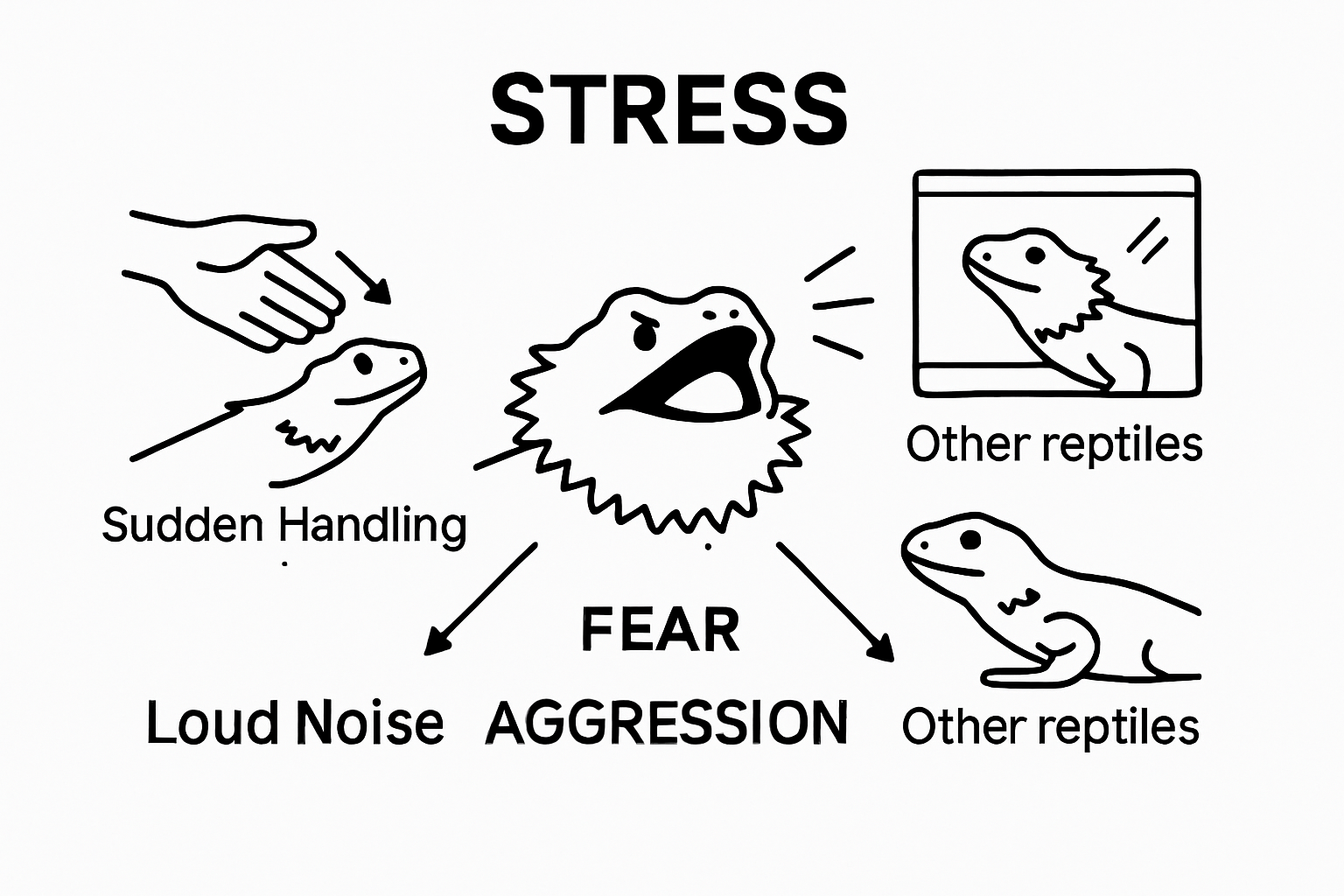
The key to differentiating these emotional states lies in understanding the context and reading the full range of your bearded dragon’s communication signals. Stress hissing often indicates a desire to be left alone or to establish personal boundaries, while fear-based hissing suggests a more immediate sense of threat. Aggressive hissing is rarer and typically occurs in specific scenarios, such as territorial disputes or mating seasons.
Important distinctions include:
- Stress Hissing: Subtle body language, minimal movement
- Fear Hissing: Dramatic posture changes, visible tension
- Aggressive Hissing: Assertive positioning, direct confrontational signals
Most importantly, always approach your bearded dragon with patience and respect. Observe their entire body language, not just the hissing sound, to truly understand their emotional state and respond appropriately.
How Owners Should Respond to Hissing
When a bearded dragon hisses, owners should immediately recognize it as a clear warning signal requiring careful and gentle response. The most critical initial step is to create a sense of safety by moving slowly, avoiding sudden movements, and giving your reptilian friend plenty of personal space. Think of it like approaching a startled cat – calm, predictable, and non-threatening.
Environmental adjustments are crucial in managing hissing behaviors. Frequent hissing may indicate underlying stress related to habitat conditions, so owners should carefully assess factors like lighting, temperature, and privacy to create a more comfortable environment. This might mean:
- Checking basking spot temperatures
- Ensuring proper UVB lighting
- Creating more hiding spaces
- Reducing household noise levels
- Maintaining consistent daily routines
Never punish or scold a hissing bearded dragon, as this will only escalate their stress and potentially damage your relationship. Instead, use these moments as opportunities to learn about your pet’s emotional boundaries. Observe their body language, respect their signals, and gradually build trust through patient, gentle interactions. Some bearded dragons might need several minutes to calm down, while others might require you to completely leave the area.
If hissing becomes a persistent issue, consider consulting a reptile veterinarian or experienced herpetologist. They can help you identify potential underlying health issues or environmental stressors that might be causing your bearded dragon’s defensive reactions. Remember, each hiss is a communication attempt – your job is to listen and respond with understanding.
Mistakes to Avoid When Handling Hissing
When approaching a hissing bearded dragon, owners must avoid coming from directly above, as this mimics predatory behavior and can intensify their defensive response. Bearded dragons are incredibly sensitive to approach techniques, and looming over them triggers an instinctive fear response that can transform a mild warning into a full-blown stress reaction.
Handling mistakes can escalate tension quickly. Common errors include:
- Forcing interaction when the dragon is clearly uncomfortable
- Making sudden, jerky movements
- Speaking loudly or creating unexpected noise
- Trying to handle them immediately after they’ve displayed warning signals
- Grabbing them from above instead of supporting their entire body
Chronic hissing often signals an underlying environmental or health issue that requires careful investigation rather than repeated handling attempts, so owners must resist the urge to repeatedly test their dragon’s tolerance. Professional reptile veterinarians recommend establishing trust through patient, predictable interactions and creating a stress-free habitat before attempting frequent handling.
The golden rule is simple: respect your bearded dragon’s boundaries. If they’re hissing, they’re communicating a clear message of discomfort. Pushing past that signal can damage your relationship and potentially cause long-term behavioral issues. Patience, observation, and gentle approach are your best tools in building a trusting bond with these remarkable reptilian companions.
Understand Your Bearded Dragon’s Hissing and Build a Stronger Bond Today
Bearded dragon hissing can feel alarming but recognizing it as a clear signal of stress or discomfort is key to improving your pet’s well-being. This article highlights common triggers like environmental stressors and handling mistakes that lead to hissing and shows how patience and respect can transform your relationship. To dive deeper into creating the ideal habitat and mastering gentle care techniques, explore comprehensive guides that address health checklists, habitat maintenance, and effective ways to reduce stress.

Take control now by visiting GoBeardedDragon.com and discover trusted advice, practical tips, and thoughtful solutions designed specifically for bearded dragon owners who want to listen closely and respond wisely to their pet’s needs. Don’t wait until hissing becomes frequent stress. Learn how to build trust and comfort for your reptile companion today.
Frequently Asked Questions
Why do bearded dragons hiss?
Bearded dragons hiss primarily as a defensive signal, indicating that they feel threatened or stressed. It’s a form of communication expressing discomfort rather than aggression.
What triggers hissing in bearded dragons?
Common triggers for hissing include sudden movements, unfamiliar environments, attempts to handle when they aren’t ready, or territorial invasions. Stress from inadequate habitat conditions can also contribute.
How should I respond when my bearded dragon hisses?
When your bearded dragon hisses, it’s important to move slowly, avoid sudden movements, and give them space. Respect their signals and allow them to calm down on their own.
What are the signs of stress in a bearded dragon?
Signs of stress accompanying hissing may include puffing out their beard, darkening beard color, flattening their body posture, rapid head bobbing, and turning sideways to appear larger.
Recommended
- Bearded Dragon Beard – What It Means and Signals
- Why Do Bearded Dragons Hide: Complete Guide
- Bearded Dragon Stress Marks – What Owners Must Know