Why Bearded Dragons Bob Heads – Social Signals Decoded
A bearded dragon suddenly starts bobbing its head, and many new owners find themselves puzzled by this bold display. Understanding this unique behavior is important, since head bobbing serves as a crucial part of your bearded dragon’s social and health-driven communication. By learning to recognize the different types of head bobbing and their meanings, you can better connect with your reptilian companion and keep an eye on their well-being.
Table of Contents
- Bearded Dragon Head Bobbing Explained
- Different Types of Head Bobbing Behavior
- Understanding Gender and Dominance Differences
- Health, Stress, and Environmental Triggers
- When Head Bobbing Signals a Health Issue
Key Takeaways
| Point | Details |
|---|---|
| Bearded Dragon Communication | Head bobbing is a complex non-verbal communication method that conveys emotions and social intentions in bearded dragons. |
| Different Head Bob Types | Variations in head bobbing indicate dominance, submission, mating readiness, or defensive behavior. |
| Gender Differences | Male and female bearded dragons display different head bobbing patterns, with males using more aggressive and pronounced movements to assert dominance. |
| Health Monitoring | Unusual head bobbing can be a sign of health issues; regular observation is essential to detect potential problems early. |
Bearded Dragon Head Bobbing Explained
Bearded dragon head bobbing is a fascinating communication method that reveals complex social dynamics in these scaly companions. Head bobbing behaviors serve multiple critical functions in their reptilian world, ranging from territorial displays to courtship signals.
These unique head movements are more than just random motions – they’re sophisticated social signals packed with meaning. Different types of head bobs communicate distinct messages:
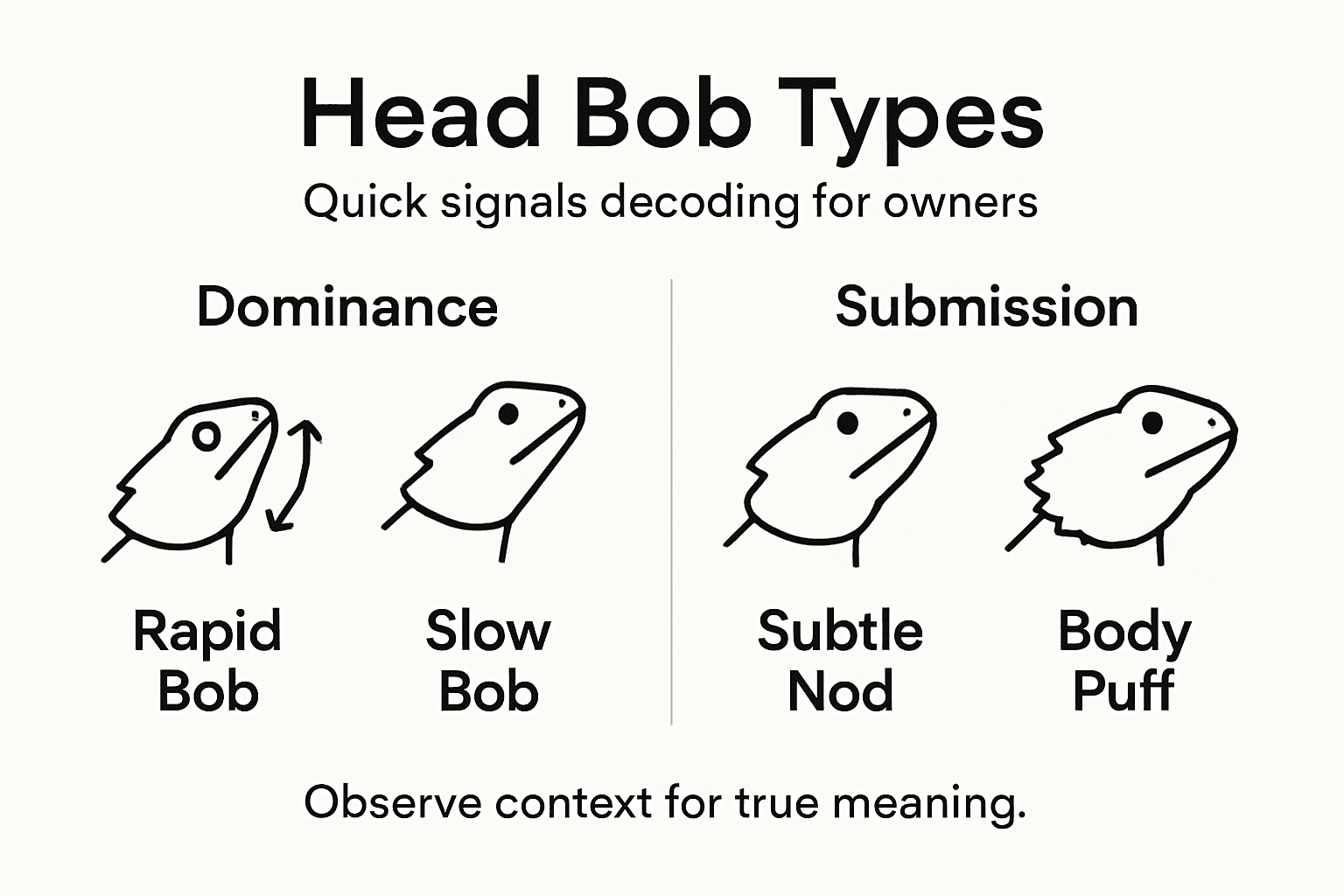
- Rapid Head Bobs: Typically signal dominance or territorial aggression
- Slow Head Bobs: Often represent submission or acknowledgment
- Rhythmic Head Bobs: Can indicate mating readiness or social interaction
The intensity and speed of head bobbing directly correlate with the dragon’s emotional state and intended message. Male bearded dragons particularly use this communication method to establish social hierarchies and attract potential mates.
Bearded dragons use head bobbing as a non-verbal communication tool that’s as complex as any verbal language.
Interestingly, head bobbing isn’t just limited to interactions with other bearded dragons. They might also perform these displays in response to perceived threats, reflections, or even their human owners moving nearby.
Pro tip: Watch your bearded dragon’s head bob speed and context to understand their current mood and social intentions.
Different Types of Head Bobbing Behavior
Bearded dragons communicate through a fascinating array of head bobbing styles that reveal intricate social messages. Multiple head-bobbing behaviors demonstrate the complexity of their non-verbal communication system, each movement carrying a specific social signal.
These head bob types can be categorized based on their speed, intensity, and context:
- Dominant Head Bobs: Rapid, intense movements signaling territorial control
- Submissive Head Bobs: Slow, gentle movements indicating acceptance
- Courtship Head Bobs: Rhythmic, specific patterns used during mating rituals
- Defensive Head Bobs: Sharp, protective movements in response to perceived threats
Specific head bobbing patterns are particularly pronounced in male bearded dragons. During territorial disputes or mating seasons, males will perform more aggressive and pronounced head bobbing displays. These displays often accompany other body language signals like beard puffing and arm waving.
Head bobbing is a sophisticated communication system that allows bearded dragons to express complex social intentions without making a sound.
Interestingly, context and accompanying body language are crucial for interpreting these head-bob signals. A fast head bob with a darkened beard means something entirely different from a slow, gentle bob with relaxed body posture.

Pro tip: Observe the full body language of your bearded dragon, not just the head bobbing, to truly understand their communication.
Here’s a summary of bearded dragon head bobbing types and their typical meanings:
| Head Bob Type | Main Purpose | Typical Body Language | Common Context |
|---|---|---|---|
| Rapid and Intense | Show of dominance | Beard darkening | Territorial disputes |
| Slow and Gentle | Submission or acceptance | Relaxed posture | Social interaction |
| Rhythmic Patterns | Mating signal | Arm waving, display | Courtship behaviors |
| Sharp Movements | Defensive reaction | Stiff posture | Response to threat |
Understanding Gender and Dominance Differences
Gender dynamics in bearded dragon head bobbing reveal a fascinating world of social communication that differs dramatically between males and females. The nuanced behaviors provide critical insights into their complex social interactions and hierarchical structures.
Male and female bearded dragons exhibit distinctly different head bobbing patterns:
- Male Head Bobbing: – Rapid, aggressive movements – Used to establish territorial dominance – Frequently accompanied by beard darkening and expansion
- Female Head Bobbing: – Generally slower and less frequent – Often defensive or submissive in nature – Less pronounced physical displays
Social hierarchy signals are most evident during mating seasons and territorial encounters. Male bearded dragons use head bobbing as a primary method of asserting dominance, with dominant males performing more intense and rapid head bobs to intimidate rivals and attract potential mates.
Bearded dragon head bobbing is a sophisticated non-verbal communication system that speaks volumes about social status and intentions.
Interestingly, the intensity of head bobbing can vary with environmental factors, population density, and individual personality. Younger males might perform less aggressive bobs, while mature males display more confident and pronounced movements.
Pro tip: Pay close attention to the speed and context of your bearded dragon’s head bobbing to understand their current emotional state and social intentions.
The following table contrasts male and female head bobbing behaviors:
| Behavior Aspect | Male Bearded Dragons | Female Bearded Dragons |
|---|---|---|
| Frequency | Frequent and pronounced | Less frequent, milder |
| Intensity | Aggressive and rapid | Generally slow, gentle |
| Main Function | Dominance, attracting mate | Defense, submission |
| Accompanying Signs | Beard puffing, darkening | Less physical display |
Health, Stress, and Environmental Triggers
Environmental stressors significantly impact bearded dragon head bobbing behaviors, transforming what seems like a simple communication method into a complex stress response mechanism. Understanding these triggers is crucial for maintaining your scaly companion’s mental and physical well-being.
Key environmental factors that can provoke head bobbing include:
- Habitat Conditions: – Incorrect temperature gradients – Insufficient hiding spaces – Inadequate terrarium size
- Social Stressors: – Overcrowding – Presence of perceived threats – Unexpected movements near their habitat
Stress-induced head bobbing patterns reveal important information about a dragon’s psychological state. More frequent or aggressive head bobs might indicate underlying anxiety or discomfort, rather than typical social communication.
Bearded dragons use head bobbing as a sophisticated stress barometer, signaling when their environmental needs are not being met.
Medical conditions can also trigger unusual head bobbing. Potential health issues like metabolic bone disease, neurological problems, or internal parasites might manifest through changes in head bobbing frequency and intensity. Regular veterinary checkups can help distinguish between normal communication and potential health concerns.
Pro tip: Maintain a consistent, calm environment and monitor your bearded dragon’s head bobbing patterns to quickly identify potential stress or health issues.
When Head Bobbing Signals a Health Issue
Neurological examinations of bearded dragons reveal that not all unusual head bobbing is simply a communication tool. Sometimes, these movements can be critical indicators of underlying health problems that require immediate veterinary attention.
Potential health issues associated with abnormal head bobbing include:
- Neurological Disorders: – Unexplained head tilting – Persistent, uncontrolled bobbing – Loss of balance or coordination
- Metabolic Conditions: – Calcium deficiency – Vitamin imbalances – Metabolic bone disease
- Potential Infections: – Respiratory infections – Parasitic infestations – Systemic bacterial or viral diseases
Progressive health decline symptoms often manifest as changes in head-bobbing patterns. A bearded dragon experiencing lethargy, accompanied by unusual or excessive head movements, might be signaling a more serious health concern that demands professional evaluation.
Unusual head bobbing is your bearded dragon’s way of communicating potential internal distress – always take these signals seriously.
Some head bobbing variations that warrant immediate veterinary consultation include continuous bobbing without a social context, bobbing accompanied by other neurological symptoms, or sudden changes in bobbing frequency and intensity. These could indicate anything from nutritional deficiencies to more complex neurological conditions.
Pro tip: Maintain a detailed log of your bearded dragon’s head bobbing patterns to help veterinarians quickly diagnose potential health issues.
Decode Your Bearded Dragon’s Head Bobs With Expert Care
Understanding the subtle signals behind your bearded dragon’s head bobbing is key to a happy and healthy pet experience. This article highlights how these movements convey emotions like dominance, submission, or stress. If you want to confidently respond to your dragon’s needs and decode their social signals effortlessly, explore our comprehensive guides at Go Bearded Dragon. We cover everything from health checklists to creating an ideal habitat that minimizes stress triggers.

Take control of your bearded dragon’s well-being with trusted advice today. Visit Go Bearded Dragon and unlock detailed care tips and expert insights tailored to interpreting head bobbing behavior. Start improving your dragon’s comfort and happiness now by learning more about their unique language and health needs.
Frequently Asked Questions
Why do bearded dragons bob their heads?
Bearded dragons bob their heads as a form of communication. This behavior serves multiple purposes, including establishing dominance, signaling submission, and expressing mating readiness.
What do different types of head bobs mean in bearded dragons?
Different types of head bobs convey specific messages: rapid bobs indicate dominance or aggression, slow bobs signal submission or acknowledgment, and rhythmic bobs suggest mating readiness or social interaction.
How can I tell if my bearded dragon’s head bobbing is a sign of stress?
If your bearded dragon is bobbing its head more frequently or aggressively without social context, or displaying other signs of stress, such as lethargy or unusual posture, it could indicate discomfort or anxiety due to environmental factors.
When should I be concerned about my bearded dragon’s head bobbing behavior?
You should be concerned if your bearded dragon exhibits unusual head bobbing patterns, such as persistent or uncontrolled movements, which may indicate neurological disorders, metabolic issues, or other health problems that require veterinary attention.
Recommended
- Bearded Dragon Beard – What It Means and Signals
- Bearded Dragon Behavior Signs – What Owners Must Know
- Why Do Bearded Dragons Wave? Behavioral Meaning Explained
- Bearded Dragon Social Needs – Why Solitude Matters