Why Do Bearded Dragons Wave? Behavioral Meaning Explained

Most pet owners are surprised to learn that arm waving, one of the most recognizable bearded dragon behaviors, is far more than a quirky gesture. Studies show younger dragons wave up to three times more often than adults, revealing deep social instincts at work. Understanding what this fascinating movement really means helps American reptile enthusiasts interpret their bearded dragon’s emotions and strengthen the bond with their scaly companion.
Table of Contents
- What Bearded Dragon Waving Means
- Common Reasons Bearded Dragons Wave
- Is Waving Normal or Concerning Behavior?
- Distinguishing Waving From Other Signals
- How to Respond to Excessive Waving
Key Takeaways
| Point | Details |
| Waving as Communication | Bearded dragon waving is primarily a signal of submission or acknowledgment of dominance and can vary based on context. |
| Factors Influencing Waving | Various reasons influence the frequency of waving, including age, environmental factors, and social dynamics with other dragons or reflections. |
| Interpreting Excessive Waving | While occasional waving is normal, excessive waving may indicate stress or discomfort that requires habitat evaluation and potential veterinary consultation. |
| Understanding Body Language | Observing accompanying behaviors, such as body posture and beard coloration, is crucial for accurately interpreting a bearded dragon’s emotional state and intentions. |
What Bearded Dragon Waving Means
Bearded dragon waving is a fascinating and complex communication behavior that might seem quirky to human observers. When a bearded dragon lifts one of its front legs and moves it in a circular motion, it’s engaging in what reptile experts call an “arm wave.” This unique gesture has specific social meanings that go far beyond simple random movement.
Understanding this behavior requires recognizing it as a sophisticated form of communication. In most cases, arm waving signals submission or acknowledgment of a potential threat. Younger bearded dragons tend to wave more frequently, indicating they recognize another creature’s dominance or perceived superiority. This could be directed towards other bearded dragons, their human caretakers, or even their own reflection in a glass surface. Think of it like a tiny reptilian white flag – a way of saying “I mean no harm” without verbal language.
Interestingly, the context of the wave matters significantly. While submission is the primary interpretation, some bearded dragons might wave during territorial interactions or when feeling uncertain about their environment. Female bearded dragons, in particular, might use arm waving as a mating signal to communicate receptiveness to potential partners. Observant owners who pay attention to accompanying body language can better understand whether the wave represents fear, respect, or something more nuanced in their scaly friend’s social vocabulary.
To truly appreciate these remarkable signals, owners should observe their bearded dragon’s overall behavior. A wave accompanied by a darkened beard might indicate stress, while a casual wave during calm interactions could simply be a social acknowledgment. Learning about broader bearded dragon behavior signs can help you become fluent in your reptilian companion’s unique communication style.
Common Reasons Bearded Dragons Wave
Bearded dragons wave for several nuanced reasons, revealing complex social communication strategies that go far beyond simple random movements. Each wave can be a deliberate signal communicating different emotional states or social intentions. Submission stands out as the most common motivation, where a younger or smaller dragon acknowledges the presence of a more dominant individual.
The context of waving varies significantly across different scenarios. During territorial interactions, a bearded dragon might wave to defuse potential conflict, essentially saying “I’m not a threat” through body language. Female bearded dragons frequently use arm waving as a mating signal, subtly communicating receptiveness to potential partners. Understanding the subtle signals in dragon behavior helps owners interpret these fascinating communication methods more accurately.

Interestingly, environmental factors can also trigger waving behavior. Stress, uncertainty, or encountering unfamiliar objects might prompt a dragon to wave. This could happen when introduced to a new habitat, encountering a reflection, or sensing another animal nearby. Younger dragons tend to wave more frequently as they navigate social hierarchies and learn to communicate their boundaries, while adult dragons might wave less often but with more intentional messaging.
Bearded dragon owners should pay close attention to accompanying body language to fully understand a wave’s meaning. A wave combined with a darkened beard might indicate anxiety, whereas a casual wave during calm interactions could simply represent social acknowledgment. By observing these intricate communication signals, you can develop a deeper understanding of your scaly companion’s emotional landscape and social interactions.
Is Waving Normal or Concerning Behavior?
Bearded dragon waving is typically a normal behavior, but frequency and context matter significantly. Occasional waving represents healthy social communication, serving as a natural mechanism for expressing submission, reducing conflict, and navigating social interactions. Most waves are harmless signals that help these reptiles communicate their emotional state and maintain peaceful relationships within their environment.
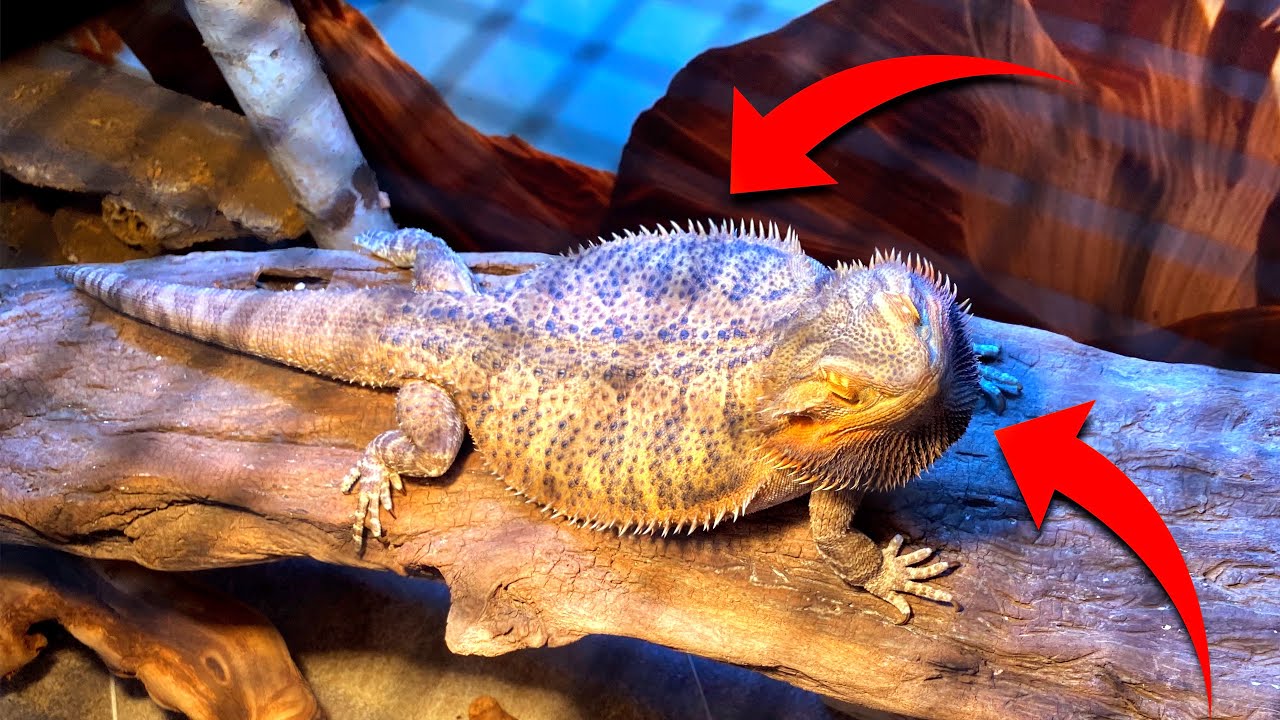
However, excessive waving could potentially indicate underlying issues that merit closer investigation. Stress triggers might prompt more frequent arm waves, suggesting the dragon is experiencing discomfort in its habitat. This could result from factors like inadequate tank setup, inappropriate temperature gradients, insufficient hiding spaces, or the presence of perceived threats. Owners should carefully assess their dragon’s living conditions and look for additional signs of anxiety or distress that might accompany persistent waving.
Age and individual personality play crucial roles in determining what constitutes normal waving behavior. Younger bearded dragons tend to wave more frequently as they learn social dynamics, while adult dragons typically wave less often. Certain scenarios – like introducing a new tank mate, moving to a different habitat, or experiencing environmental changes – can temporarily increase waving frequency. These situational waves are generally harmless and represent the dragon’s adaptive communication strategy.
To determine whether waving is cause for concern, reptile owners should monitor accompanying behavioral cues. A wave combined with a darkened beard, flattened body posture, or signs of lethargy might suggest deeper emotional or health problems. Conversely, a relaxed dragon that waves occasionally and maintains good appetite, active movement, and overall healthy appearance is likely just engaging in normal social communication. When in doubt, consulting a veterinarian specializing in reptile care can provide definitive insights into your bearded dragon’s specific behavioral patterns.
Distinguishing Waving from Other Signals
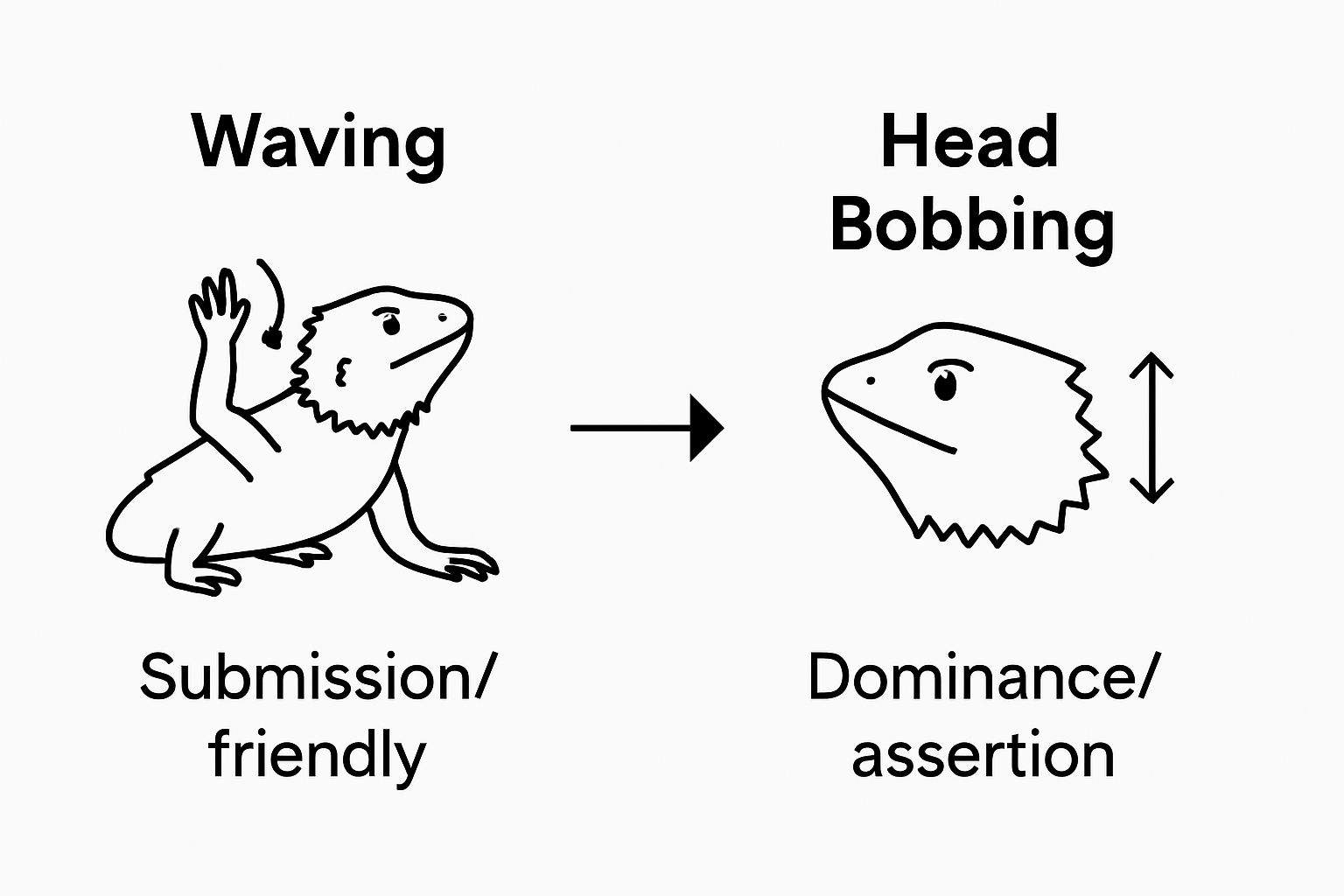
Bearded dragons have a rich vocabulary of body language signals that go far beyond simple arm waving. Understanding the nuanced communication behaviors helps owners accurately interpret their reptilian companion’s emotional state and intentions. While arm waving typically signals submission, other behaviors like head bobbing and bearding communicate entirely different messages.
Head bobbing represents a stark contrast to waving, signaling dominance and territorial assertion. Where a wave is gentle and circular, head bobbing involves rapid, aggressive up-and-down movements that demonstrate a dragon’s confidence or challenge to potential rivals. This behavior is most common among male bearded dragons during breeding season or when establishing social hierarchies. The intensity and speed of head bobbing can indicate the dragon’s emotional state – slow, deliberate bobs might suggest mild territorial display, while rapid, aggressive bobbing signals heightened confrontation.
Another critical signal to distinguish from waving is bearding, where the dragon puffs up and darkens its throat area. This dramatic display differs significantly from the subtle arm wave, representing a more intense emotional response. Bearding typically occurs when a bearded dragon feels threatened, stressed, or wants to appear larger and more intimidating. Unlike the submissive nature of waving, bearding is a defensive posture that communicates potential aggression or extreme discomfort. Owners should pay close attention to the context – a bearded dragon might beard in response to perceived threats like loud noises, sudden movements, or unfamiliar objects in its environment.
To become fluent in bearded dragon communication, owners must observe the entire context of these behaviors. A wave combined with a relaxed body posture suggests different emotions compared to a wave accompanied by defensive signals. Factors like age, gender, habitat conditions, and individual personality all influence how these signals are expressed. Younger dragons tend to wave more frequently as a learning mechanism, while adults use these communication methods more strategically. By carefully observing these subtle nuances, you can develop a deeper understanding of your scaly companion’s complex emotional world.
How to Respond to Excessive Waving
Excessive waving in bearded dragons requires a systematic and compassionate approach to understanding and addressing the underlying causes. Comprehensive strategies for managing stress-related behaviors can help owners create a more comfortable environment for their scaly companions. The first step involves carefully evaluating the dragon’s habitat and identifying potential sources of anxiety or discomfort.
Habitat assessment becomes crucial when dealing with persistent waving. Bearded dragons are sensitive to their environment, and even minor disruptions can trigger stress responses. Owners should meticulously check temperature gradients to ensure proper heat zones and basking areas. Inadequate lighting, incorrect humidity levels, or cramped living spaces can provoke constant waving as a stress signal. Consider creating multiple hiding spots, using appropriate substrate, and maintaining clean, well-structured enclosures that mimic their natural habitat. The goal is to create a secure, comfortable space that minimizes potential triggers for anxiety-driven waving.
Social dynamics play a significant role in bearded dragon behavior, and excessive waving may indicate complex social interactions. If multiple dragons are housed together, carefully observe their interactions for signs of territorial disputes or dominance issues. For single dragons, evaluate exposure to potential stressors like loud noises, frequent handling, or proximity to other pets. Reducing external stimuli and creating a calm, predictable environment can help minimize stress-induced waving. Some dragons may wave excessively due to seeing their own reflection or perceiving threats from objects near their enclosure, so strategic placement and visual barriers can be helpful.
Ultimately, persistent excessive waving warrants professional consultation. Veterinarians specializing in reptile care can rule out underlying health issues that might manifest through behavioral changes. Potential medical concerns like metabolic disorders, hormonal imbalances, or internal discomfort can trigger unusual communication behaviors. Owners should maintain detailed observation logs noting the frequency, context, and accompanying behaviors of waving episodes. This information is invaluable to veterinary professionals for diagnosing and addressing the root causes of excessive waving. Remember, each bearded dragon is an individual with unique communication patterns, and patience is key to understanding their complex emotional landscape.
Understand Your Bearded Dragon’s Waving and Create a Happier Habitat
If you’ve ever wondered why your bearded dragon waves its arm and what this behavior means, you are not alone. Waving can signal submission, stress, or social communication, and understanding these nuances is key to providing the best care. At gobeardeddragon.com, we recognize how confusing excessive waving or unusual signals can be for owners who want to build trust and avoid stress triggers for their scaly friend.

Explore expert behavior insights, habitat maintenance tips, and stress-relief strategies on gobeardeddragon.com. Whether you want to fine-tune your enclosure or decode your bearded dragon’s body language, our comprehensive resources help you address waving concerns with confidence. Start by visiting our site now for clear guidance and enriching ideas that keep your pet calm and thriving.
Frequently Asked Questions
What does it mean when my bearded dragon waves?
When a bearded dragon waves, it typically signals submission or acknowledgment of another dragon’s dominance. It may also occur during territorial interactions or as a mating signal from females.
Is bearded dragon waving a common behavior?
Yes, waving is a common and normal behavior among bearded dragons. It serves as a way for them to communicate and express their emotional state, particularly in social situations.
How can I tell if my bearded dragon is waving due to stress?
Excessive waving may indicate stress, especially if accompanied by a darkened beard or flattened body posture. Monitoring your dragon’s overall behavior and environment can help identify potential sources of anxiety.
What should I do if my bearded dragon is waving excessively?
If your bearded dragon is waving excessively, assess its habitat for comfort and stressors, and consider consulting a reptile-specialized veterinarian to rule out health issues.
Recommended
- Bearded Dragon Tail Waving: Complete Behavior Guide
- Bearded Dragon Beard – What It Means and Signals
- Bearded Dragon Behavior Signs – What Owners Must Know