Why Bearded Dragons Turn Black: What It Means
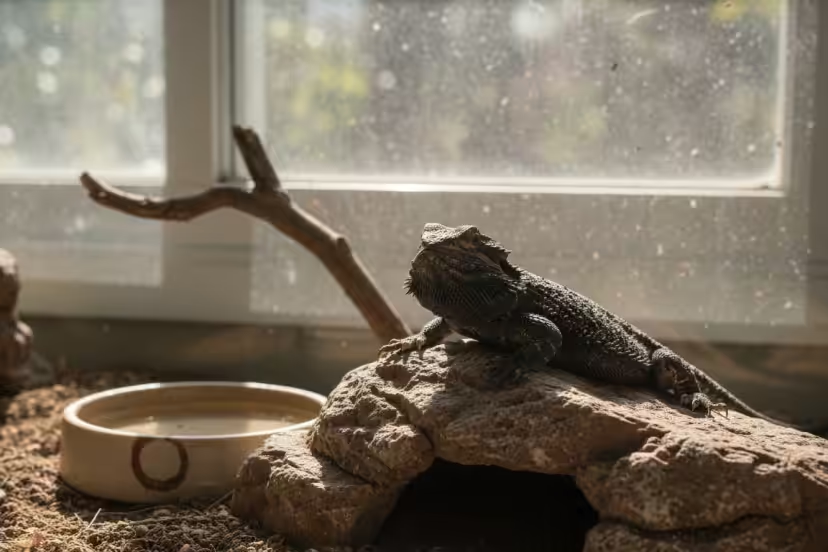
Spotting your bearded dragon suddenly darken its beard or shift colors can leave new pet owners feeling confused and concerned. These dramatic changes may look mysterious, but they are natural signals that reveal important clues about your reptile’s comfort, mood, and health. Understanding color change in bearded dragons empowers you to better decode their needs, respond to stress, and create a happier, healthier habitat for your scaly companion.
Table of Contents
- Color Change In Bearded Dragons Explained
- Common Reasons For Turning Black
- Thermoregulation And Environmental Triggers
- Stress, Health, And Social Communication
- When To Worry And What Owners Should Do
Key Takeaways
| Point | Details |
|---|---|
| Color change serves multiple functions | Bearded dragons change color for thermoregulation, social communication, and camouflage. |
| Black coloration indicates various states | When turning black, bearded dragons signal threats, assert dominance, or respond to temperature changes. |
| Observation is key for health assessment | Track color changes alongside behavior to identify stress or health issues in bearded dragons. |
| Maintain optimal habitat conditions | Ensure proper temperature, lighting, and shelter to minimize stress-induced color changes. |
Color Change in Bearded Dragons Explained
Bearded dragons are nature’s mood rings with scales, capable of transforming their color in fascinating ways. Their ability to shift shades isn’t just random – it’s a sophisticated communication and survival mechanism. Color changes on different body regions serve multiple critical functions beyond simple aesthetic shifts.
These remarkable reptiles use color changes primarily for three key purposes:
- Thermoregulation: Adjusting skin tone to absorb or reflect heat
- Social Communication: Signaling emotional states and territorial boundaries
- Camouflage: Blending with environmental backgrounds for protection
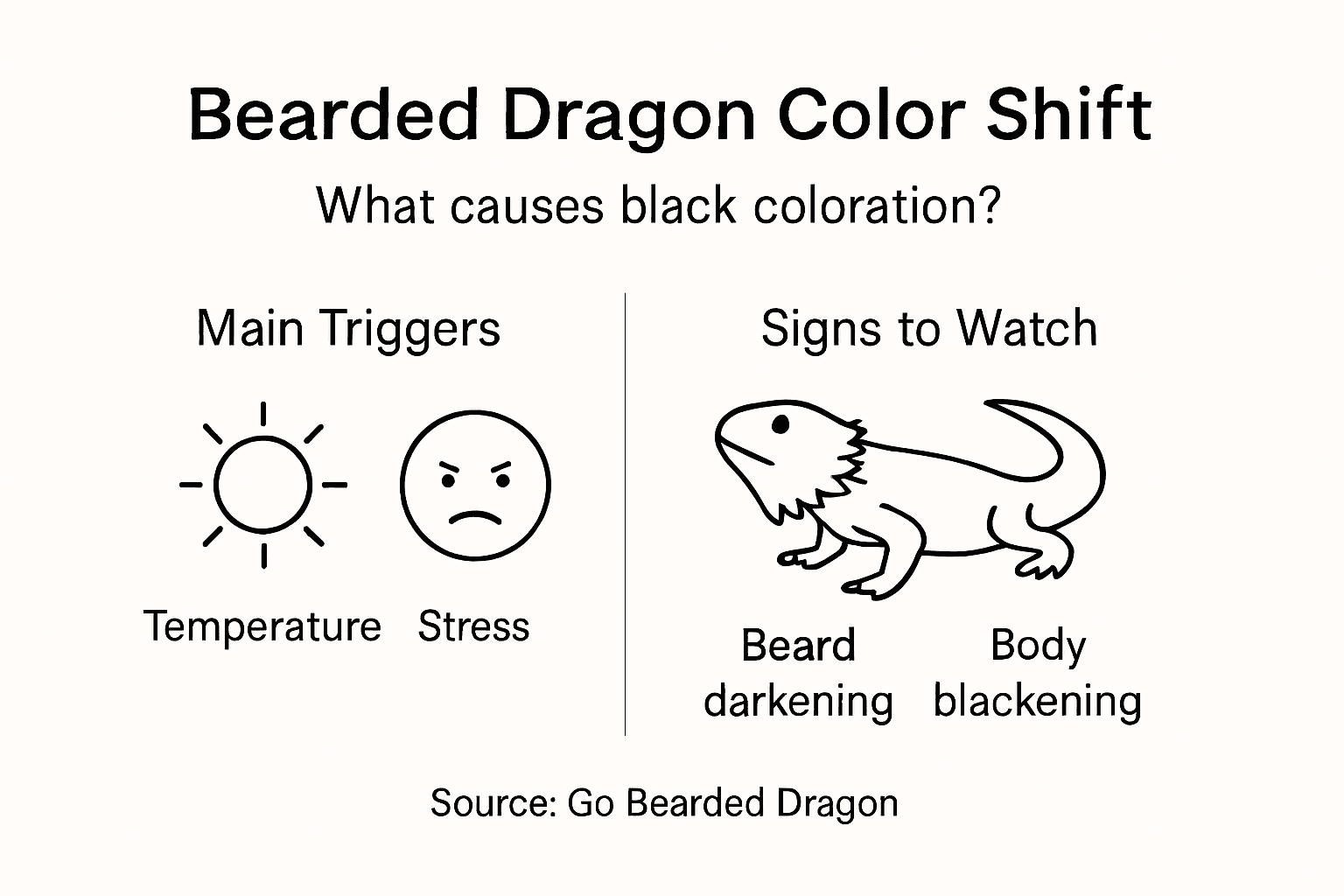
When a bearded dragon turns black, it’s sending a powerful message. This dramatic color shift typically indicates one of several intense emotional or physiological states. Bearded dragons darken their throat pouch as a deliberate signal of excitement, threat response, or territorial display.
The color transformation process involves complex biological mechanisms. Their skin contains specialized cells called chromatophores that can rapidly expand or contract, allowing quick pigment changes. These cells respond to environmental triggers like temperature, light exposure, and emotional stimulation, enabling bearded dragons to communicate and adapt with remarkable speed.
Pro tip: Observe your bearded dragon’s color changes closely, as they’re a direct window into its current physical and emotional state.
Common Reasons for Turning Black
Bearded dragons don’t just change color randomly – each shade shift tells a complex story. Bearded dragons darken their beard as a sophisticated communication strategy that serves multiple crucial survival functions. This dramatic color transformation is far more than a simple aesthetic change.
The primary reasons for a bearded dragon turning black include:
- Threat Response: Appearing larger and more intimidating to potential predators
- Territorial Display: Signaling dominance during social interactions
- Mating Behavior: Males using color change to attract or challenge other dragons
- Temperature Regulation: Absorbing more heat in cooler environments
Male bearded dragons are particularly prone to dramatic color shifts. Territorial confrontations and courtship behaviors often trigger their most intense black coloration. By puffing out their beard and darkening its color, they create an impressive visual display designed to command attention and respect.
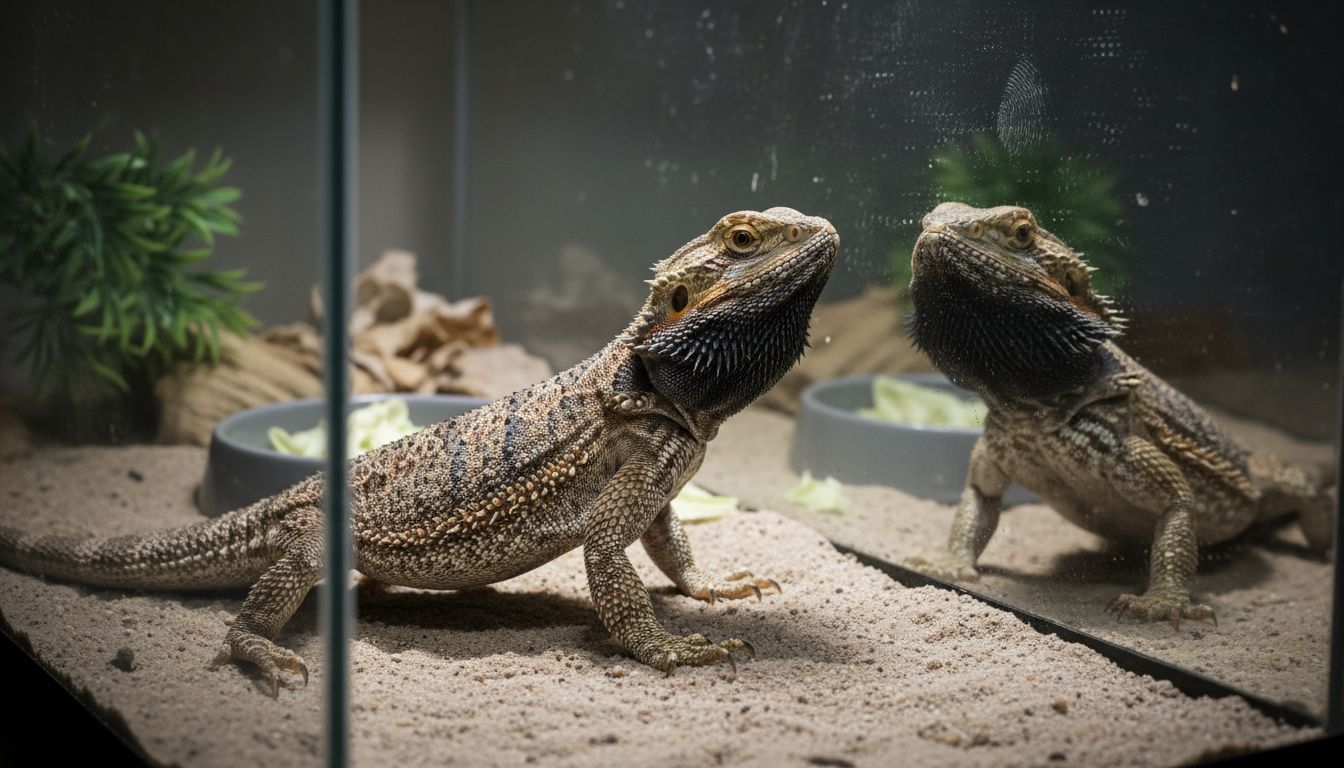
Interestingly, the black coloration isn’t just a visual trick – it’s a complex biological response. When a bearded dragon feels threatened or wants to assert dominance, specialized skin cells called chromatophores rapidly expand, creating an instant color transformation that can make the reptile appear significantly larger and more formidable.
Pro tip: Watch your bearded dragon’s body language alongside color changes to understand the full context of their communication.
Thermoregulation and Environmental Triggers
Bearded dragons are masters of temperature management, using their skin like a sophisticated biological thermostat. Color changes help regulate body temperature through an adaptive mechanism that extends beyond simple pigmentation.
Key environmental factors influencing color changes include:
- Ambient Temperature: Darker colors absorb more heat
- Sunlight Intensity: Lighter or darker shades adjust solar energy absorption
- Habitat Conditions: Variations in enclosure temperature and lighting
- Seasonal Shifts: Natural adaptations to changing environmental conditions
Ectothermic Adaptation is the scientific term describing how these reptiles manage their body temperature through external means. Bearded dragons use skin color strategically to either warm up quickly or cool down, depending on their immediate physiological needs. When temperatures drop, they’ll turn darker to maximize heat absorption, essentially transforming their skin into a living solar panel.
Their parietal eye – a unique third eye on top of their head – plays a crucial role in detecting light changes and helping them make rapid thermoregulation decisions. This specialized sensory organ allows them to quickly assess environmental conditions and trigger appropriate color change responses, ensuring they maintain optimal body temperature with remarkable precision.
Pro tip: Monitor your bearded dragon’s color changes during different times of day to understand their thermal comfort levels and adjust habitat conditions accordingly.
Stress, Health, and Social Communication
Bearded dragons are complex communicators, using their color as a nuanced language of emotions and survival strategies. Behavioral signals reveal complex social interactions that go far beyond simple visual displays, transforming their skin into a dynamic communication platform.
Key stress indicators manifested through color changes include:
- Territorial Confrontations: Darkening to appear more intimidating
- Emotional Distress: Black coloration signaling internal tension
- Illness Symptoms: Persistent dark coloration as potential health warning
- Hormonal Fluctuations: Color shifts during mating and breeding seasons
Beard darkening represents one of the most dramatic communication methods these reptiles employ. Stress can cause significant color transformations that serve as critical warning signals, indicating everything from mild discomfort to serious health concerns. When a bearded dragon turns black, it’s essentially broadcasting its internal state to its environment, whether that means feeling threatened, preparing for confrontation, or signaling potential illness.
Understanding these color communication nuances requires careful observation. The context of the color change – including body posture, environmental conditions, and accompanying behaviors – provides crucial insights into what your bearded dragon is experiencing. A momentary black beard might indicate temporary excitement, while a prolonged dark coloration could signal more serious underlying issues requiring veterinary attention.
Here’s a quick reference guide to recognizing bearded dragon color changes and their possible meanings:
| Color Change Location | Likely Cause | Recommended Action |
|---|---|---|
| Beard turns black | Stress, defense, or dominance | Observe environment and social context |
| Body darkens | Thermoregulation | Check temperature gradient in enclosure |
| Prolonged blackness | Potential illness or chronic stress | Consult a reptile veterinarian quickly |
| Rapid color shifts | Emotional arousal or excitement | Note behavior and triggers |
Pro tip: Keep a daily color change journal to track your bearded dragon’s health and emotional patterns, helping you detect subtle shifts in their well-being.
When to Worry and What Owners Should Do
Deciphering when a bearded dragon’s black coloration signals genuine concern requires keen observation and understanding. Prolonged black coloration demands careful assessment of multiple health and environmental factors to ensure your scaly companion’s well-being.
Critical warning signs that require immediate attention include:
- Persistent Black Coloration: Lasting more than several hours
- Accompanying Behavioral Changes: Lethargy, reduced appetite, or unusual hiding
- Physical Symptoms: Visible weight loss, abnormal breathing, or discharge
- Lack of Response: Minimal interaction or delayed reactions to stimuli
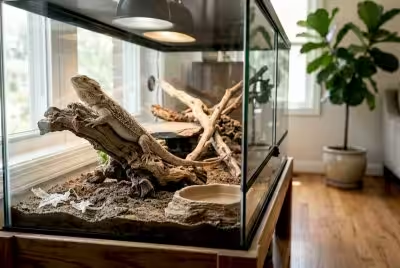
Habitat management plays a crucial role in preventing stress-induced color changes. A well-designed environment with proper temperature gradients, appropriate lighting, and suitable hiding spaces can significantly reduce the likelihood of prolonged black coloration. Owners should maintain consistent temperatures between 75-85°F in the primary habitat area, with a basking spot reaching 95-105°F, to support optimal reptile health.
Here’s a summary of optimal enclosure conditions to minimize harmful color changes:
| Habitat Feature | Ideal Range | Impact on Color Changes |
|---|---|---|
| Basking Spot Temp | 95-105°F | Reduces stress and helps thermoregulation |
| Cool Side Temp | 75-85°F | Prevents excessive darkening from chill |
| UVB Lighting | 12-14 hours daily | Supports healthy color communication |
| Hiding Areas | 1-2 per enclosure | Lowers stress-triggered black coloration |
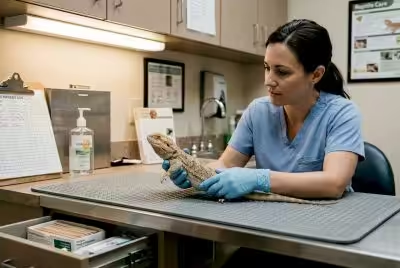
When uncertain about your bearded dragon’s health, professional veterinary consultation becomes paramount. Exotic pet veterinarians specialized in reptile care can provide comprehensive assessments, identifying underlying issues that might manifest through color changes. Remember that early intervention can prevent minor health concerns from escalating into more serious medical conditions.
Pro tip: Create a baseline health log documenting your bearded dragon’s typical color patterns, behavior, and environmental conditions to quickly recognize potential health anomalies.
Support Your Bearded Dragon’s Health and Happiness with Expert Care Resources
Understanding why your bearded dragon turns black is crucial for responsive and compassionate pet care. This color change often signals important needs like thermoregulation, stress management, or social communication. If you want to ensure your pet stays comfortable and healthy, tackling these challenges means more than just observation—it requires reliable information and practical solutions.

Explore comprehensive guides on habitat setup, health checklists, and behavioral insights at Go Bearded Dragon to create the perfect environment for your scaly friend. From managing temperature gradients to identifying stress signals, our expert resources empower you to act confidently and prevent prolonged black coloration that might indicate health issues. Don’t wait for subtle signs to become problems. Visit Go Bearded Dragon now and take the first step towards providing the care your bearded dragon deserves.
Frequently Asked Questions
Why do bearded dragons turn black?
Bearded dragons typically turn black as a response to stress, territorial behaviors, or mating displays. This color change is part of their communication and survival strategies.
How can I tell if my bearded dragon’s black coloration is a sign of stress?
If your bearded dragon turns black and shows signs of behavioral changes such as lethargy, reduced appetite, or hiding, it may indicate stress or health issues.
What is the role of temperature in a bearded dragon turning black?
Bearded dragons use color changes, including turning black, to regulate their body temperature. Darker colors help them absorb more heat in cooler environments.
When should I be concerned about my bearded dragon’s black coloration?
You should be concerned if your bearded dragon maintains a black coloration for more than a few hours, especially if it is accompanied by behavioral changes or physical symptoms, indicating potential health issues.
Recommended
- Why Is My Bearded Dragon Beard Black? – Go BEARDED DRAGON
- Bearded Dragon Beard – What It Means and Signals
- Bearded Dragon Behavior Signs – What Owners Must Know
- Why Bearded Dragons Change Color – Key Causes and Care
- Role of Color in Pet Products—Impact on Homes and Happiness – Dev Rove Studio
- Kosthold og hundens pels: Alt du må vite — Dr-Clauder Norge