Bearded Dragon Feeding Schedule by Age: Daily Plan from Baby to Adult
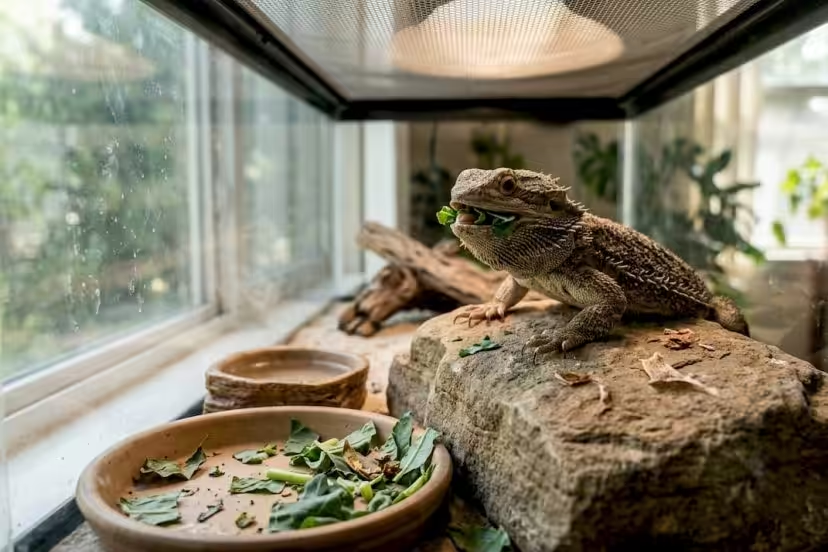
A baby bearded dragon eats insects two to three times a day. An adult eats them two or three times a week. Between those two points the schedule changes every few months, and a dragon that stays on the plan it started with ends up overfed or underfed. This guide gives you a daily timetable for each age, a weekly supplement calendar and the signs that tell you to adjust.
Feeding Schedule at a Glance
Use this table as your starting point. For what to put on the plate, see our bearded dragon feeding guide or the NC State Veterinary Hospital’s feeding advice.
| Age | Insect meals | Greens | Insects / greens |
|---|---|---|---|
| 0 to 6 months | 2 to 3 a day | Daily, small portion | 70–80% / 20–30% |
| 6 to 12 months | 1 a day | Daily | About 50% / 50% |
| 12 to 18 months | Every other day | Daily | Moving toward 20% / 80% |
| 18 months and older | 2 to 3 a week | Daily | About 20% / 80% |
🦎 Want all the essentials on one printable page?
The Complete Bearded Dragon Care Plan puts daily routines, feeding charts, safe vs. toxic foods and vet red flags into one 16-page PDF for $7.99.
See the Care Plan →Baby Bearded Dragons (0 to 6 Months)
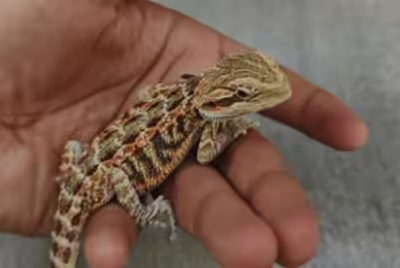
Babies grow fast and need protein. Offer insects in two or three sessions across the day and let your dragon eat as many as it takes in 10 to 15 minutes. Then take the leftovers out, because loose crickets nibble on sleeping dragons.
A sample day:
- About an hour after lights on: first insect meal, dusted with calcium
- Midday: second insect meal
- Afternoon, at least two hours before lights off: third insect meal
- Morning: a small dish of chopped greens that stays in all day
Pick insects no wider than the space between your dragon’s eyes. Skip mealworms and superworms at this age, since their hard shells are tough to digest. Our newborn bearded dragon guide covers the first weeks in more detail.
Juveniles (6 to 12 Months)
Around six months, growth slows. Cut back to one insect meal a day and give greens about half of the plate.
- Morning: fresh greens and vegetables
- Late morning: one insect meal, 10 to 15 minutes
- Evening: remove leftover insects and wilted greens
Your dragon may start to ignore the odd insect meal. As long as its weight holds, you can let that go.
Subadults (12 to 18 Months)
Move insect meals to every other day. Each month, shift the plate a little further toward greens until you reach about 80 percent plants by 18 months.
- Insect days: greens in the morning, insects late morning
- Off days: greens only
- Once a week: weigh your dragon and write the number down
Adults (18 Months and Older)
Adults need fiber and fewer calories. Keep greens in the enclosure each day and serve insects two or three times a week. An overfed adult puts on fat, and a fat dragon risks fatty liver disease.
A sample week:
- Monday: greens and insects with plain calcium
- Tuesday: greens
- Wednesday: greens and insects with calcium plus D3
- Thursday: greens
- Friday: greens and insects with calcium and a multivitamin
- Saturday and Sunday: greens
Rotate staple greens such as collard, mustard and turnip greens. Our guide on why bearded dragons need greens lists the ones you can feed daily.
What Time of Day to Feed
Feed after your dragon has basked for about an hour. Bearded dragons need heat to digest, and a warm dragon shows more interest in food. Serve the last insect meal at least two hours before lights off, so your dragon digests it before the enclosure cools down for the night.
Run your lights on a timer. Fixed light hours keep meal times predictable, and our UV index guide explains how long the UVB lamp should stay on.
Weekly Supplement Calendar
Calcium protects your dragon from metabolic bone disease, and UVB light lets its body use that calcium. A common dusting schedule looks like this:
| Supplement | Babies and juveniles | Adults |
|---|---|---|
| Plain calcium | Most insect meals | Most insect meals |
| Calcium with D3 | 2 times a week | Once a week |
| Multivitamin | Once a week | Once a week |
Check the label of your product, and ask your vet if your dragon has a health condition. For more detail, read about supplements that prevent bone disease and why vitamin D3 matters.
How to Tell If the Schedule Fits
- Weight: babies and juveniles gain a little each week, adults hold steady. A kitchen scale works fine.
- Fat pads: the two pads on top of the head should look full. Sunken pads point to underfeeding, bulging ones to overfeeding.
- Droppings: regular and formed. Our guide shows what normal bearded dragon poop looks like.
- Energy: an alert dragon that basks, explores and hunts. Compare with our signs of a healthy bearded dragon.
When to Change the Schedule
- Shedding: appetite often drops for a few days. Keep offering food on the usual schedule.
- Brumation: stop insect meals once your dragon stops basking and sleeps most of the day, and keep fresh water available. Our brumation guide walks you through it.
- Gravid females: egg-laying takes a lot of calcium. Talk to your vet about extra food and supplements.
- Low temperatures: a cold dragon cannot digest. Fix the basking spot before you change the menu.
- Dehydration: wrinkled skin or sticky saliva point to too little water. Offer fresh water and a shallow bath, and see our hydration guide.
Want the schedule on paper next to the enclosure? The Complete Bearded Dragon Care Plan has feeding charts by age, a safe and toxic food list and a weekly tracker on 16 printable pages for $7.99.
FAQs
1. How often should I feed a baby bearded dragon?
A: Two to three insect meals a day, plus a small dish of greens. Let it eat for 10 to 15 minutes per meal.
2. How many crickets should a bearded dragon eat?
A: Watch the clock instead of counting. Offer insects for 10 to 15 minutes and stop when your dragon loses interest. Babies eat more per day than adults.
3. Can I feed my bearded dragon at night?
A: No. Feed while the basking lamp is on, and serve the last meal at least two hours before lights off.
4. What if my bearded dragon skips a meal?
A: One skipped meal is no problem. Check your temperatures first. If your dragon refuses food for several days outside of shedding or brumation, see a reptile vet.
5. When should I switch to the adult schedule?
A: Around 18 months. Spread the change over several months so your dragon gets used to more greens and fewer insects.

Love your beardie? Wear it proudly.
Bearded Dragon Spirit Animal Tote Bag – from $18.48. Our own bearded dragon designs, printed on demand. Every order supports these free care guides.
View this design → Browse all gifts