Bearded Dragon UV Index: Targets, Bulbs and Life Stages
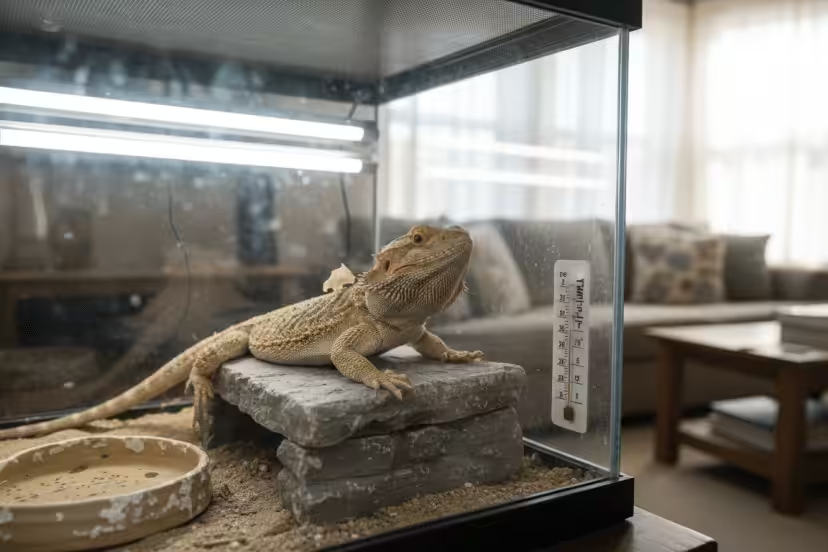
The UV index (UVI) tells you how strong the UVB light is at the spot where your bearded dragon basks. Aim for a UVI of about 4 to 6 on the basking platform, falling to 0 to 1 in the shade, for 10 to 12 hours a day. That target applies to hatchlings, juveniles and adults alike. A UV meter is the only way to know what your bulb delivers in your setup.
Table of Contents
- What the UV Index Means for Bearded Dragons
- Types of UVB Lighting for Reptile Habitats
- UVB Levels for Different Life Stages
- Benefits of the Right UV Index
- Risks from Wrong UV Exposure and Fixes
- UV Index Checklist
🦎 Want all the essentials on one printable page?
The Complete Bearded Dragon Care Plan puts daily routines, feeding charts, safe vs. toxic foods and vet red flags into one 16-page PDF for $7.99.
See the Care Plan →Key Takeaways
| Point | Details |
|---|---|
| Target UVI | 4 to 6 at the basking spot, 0 to 1 in the shade, 10 to 12 hours a day. |
| Same target at every age | Hatchlings and juveniles need the same UVI as adults. They need consistent exposure and enough dietary calcium, not stronger light. |
| Best bulb type | A linear T5 high-output tube on the basking side of the enclosure covers most setups. |
| Measure and replace | UVB output fades long before the bulb stops glowing. Check with a UV meter and replace T5 tubes every 12 months. |
What the UV Index Means for Bearded Dragons
The UV index is the same scale weather services use for sunburn risk. It measures the strength of the ultraviolet light that affects skin. The NOAA explains how UV radiation reaches the ground and how the index is calculated.
For your bearded dragon, the UVB part matters most. When UVB light hits the skin, your dragon makes vitamin D3, and D3 lets the gut absorb calcium. A dragon with too little UVB develops metabolic bone disease. A dragon with too much and no shade risks eye and skin damage.
A rough guide to readings inside a bearded dragon enclosure:
- UVI 0 to 1: shade level, right for hides and the cool side
- UVI 2 to 3: too low for a basking spot
- UVI 4 to 6: target range at the basking platform
- UVI 7 and above: too strong for a captive basking spot that your dragon uses for hours
Read more about building the whole setup in How to Set Up a Bearded Dragon Habitat.
Pro tip: Start with the T5 tube 12 inches above the basking platform, take a reading at your dragon’s back height, then raise or lower the platform until you see 4 to 6.
Types of UVB Lighting for Reptile Habitats
Three kinds of UVB lamp show up in reptile shops. The Herpetological Society of Ireland gives a good overview of how they differ.
- Linear fluorescent tubes (T5 HO and T8): the standard choice for bearded dragons. A T5 HO tube with a reflector gives a wide, even UV zone. T8 tubes are weaker and need to sit closer.
- Mercury vapor lamps: produce heat, light and UVB from one bulb. They work in tall, large enclosures but create a small, intense spot, so you need a meter to place them.
- LED UVB lamps: a newer option with a long lifespan. Fewer independent measurements exist for them, so check the readings yourself.
Skip compact coil UVB bulbs. They light a narrow cone and leave most of the enclosure without UV.
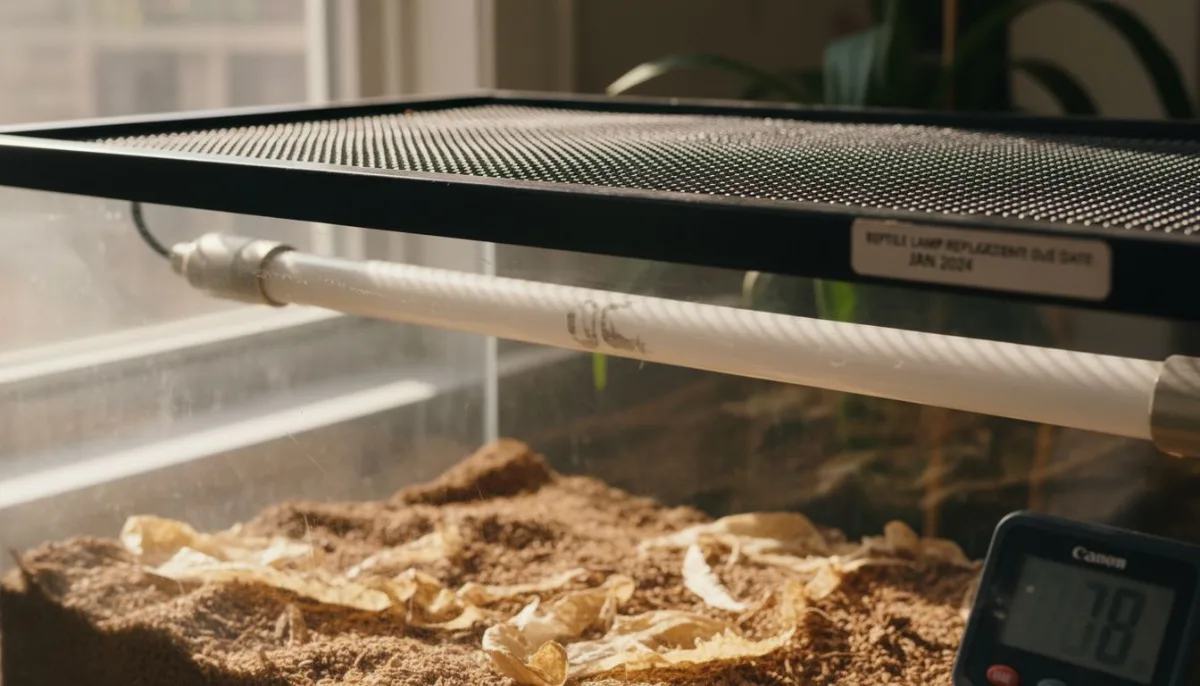
Pro tip: Write the install date on the end cap of each tube with a marker. You will know at a glance when it is due for replacement.
| Lighting type | Typical lifespan | UV pattern | Replace |
|---|---|---|---|
| T5 HO tube | 12 months | Wide, even zone | Every 12 months |
| T8 tube | 6 months | Weaker, needs to sit close | Every 6 months |
| Mercury vapor lamp | 12 months | Small, intense spot | Every 12 months or per meter |
| LED UVB | Several years (maker’s claim) | Varies by product | When the meter shows a drop |
UVB Levels for Different Life Stages
An earlier version of this article recommended a UVI of 8 to 10 for hatchlings. That figure was wrong, and we have corrected it. Young dragons grow fast and need reliable vitamin D3, but they get it from steady daily exposure in the normal range, plus calcium in their food. A basking UVI near 10 is stronger than the midday sun most dragons choose in the wild and can damage their eyes and skin.
| Life stage | Basking UVI | What changes |
|---|---|---|
| Hatchling (0 to 6 months) | 4 to 6 | Daily insects dusted with calcium, a warmer basking spot |
| Juvenile (6 to 18 months) | 4 to 6 | Calcium dusting most days, steady growth checks |
| Adult (18 months and up) | 4 to 6 | More greens, fewer insects, calcium a few times a week |
For a healthy setup at any age, follow the guidance from the bearded dragon care guides and give your dragon a shaded retreat, so it can decide how much UV it takes.
Pro tip: Take your dragon to a reptile vet once a year. A vet can spot early signs of bone problems on an X-ray before you see them.
Benefits of the Right UV Index
Bearded dragons see UV light, so the lamp also changes how they perceive their surroundings. This overview of bearded dragon vision explains how they use UV to read color and signals.
With the right UV index, you can expect:
- Strong bones: your dragon makes enough vitamin D3 to use the calcium in its food.
- A normal day rhythm: your dragon wakes, basks, hunts and rests on a regular schedule.
- A good appetite: dragons under proper light eat with more interest.
- Normal behavior: head bobbing, color display and exploring all depend on a bright, UV-rich environment.
Our 7 care tips cover the other parts of a healthy routine.
Pro tip: A Solarmeter 6.5 UV index meter pays for itself. One reading tells you whether your bulb, mesh and basking height work together.
Risks from Wrong UV Exposure and Fixes
The EPA’s UV index guide describes the risks of strong UV for people. Your dragon faces similar problems at both ends of the scale.
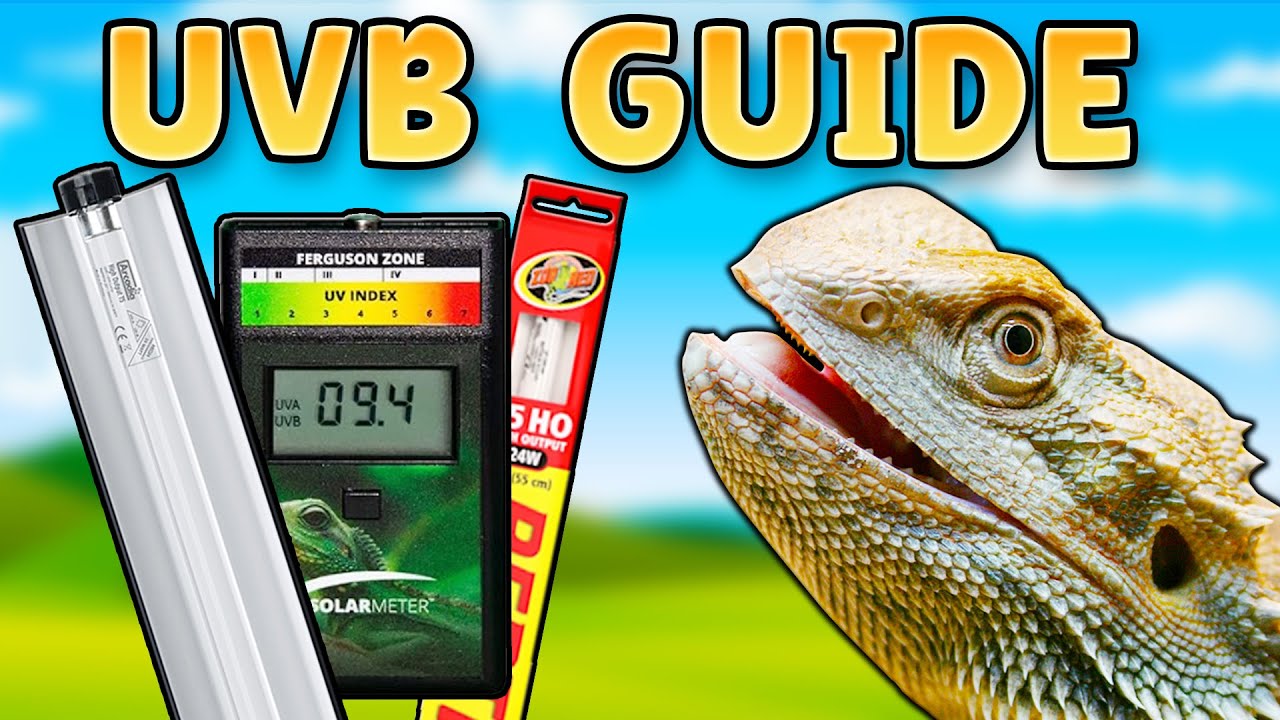
Too little UV:
- metabolic bone disease, with a soft jaw, bent limbs and tremors
- stunted growth in young dragons
- low energy and poor appetite
Too much UV:
- closed, swollen or watery eyes
- skin damage on the back and head
- a dragon that avoids the basking spot
Fixes:
- Too low: replace an old tube, remove glass or plastic between bulb and dragon, or raise the basking platform.
- Too high: lower the platform, add distance, or switch to a weaker tube.
- Always: give your dragon a shaded hide on the cool side.
Our guide to bearded dragon enclosure basics shows how to lay out the lights and hides.
Pro tip: Measure the UVI every three months. A reading that drops from 5 to 3 tells you the tube is fading.
UV Index Checklist
- Basking platform reads UVI 4 to 6 at your dragon’s back height.
- Cool side and hides read UVI 0 to 1.
- A linear T5 HO tube runs on the basking side, inside the enclosure or above mesh, never above glass.
- Lights run 10 to 12 hours a day on a timer.
- The tube carries an install date and you replace it every 12 months.
- Insects get a calcium dusting on the schedule for your dragon’s age.
Frequently Asked Questions
What is the UV index and why is it important for bearded dragons?
The UV index measures the strength of ultraviolet light. Your bearded dragon needs UVB to make vitamin D3, which it uses to absorb calcium. The right index prevents metabolic bone disease without harming the eyes or skin.
How much UVB exposure do bearded dragons need at different life stages?
Hatchlings, juveniles and adults all need a basking UVI of about 4 to 6, with shade available and 10 to 12 hours of UVB a day. Young dragons need more calcium in their diet, not stronger UV.
What types of UVB lighting are suitable for a bearded dragon habitat?
A linear T5 high-output tube works best for most enclosures. Mercury vapor lamps suit large, tall setups. LED UVB lamps are newer and need checking with a meter. Avoid compact coil bulbs.
What are the consequences of incorrect UV exposure for bearded dragons?
Too little UV leads to metabolic bone disease and stunted growth. Too much UV without shade causes eye and skin damage. A UV meter and a shaded hide prevent both.
Recommended
- Role of Humidity for Bearded Dragons
- Why Bearded Dragons Need Basking for Health
- Ferguson Zones for Bearded Dragons
- How to Set Up a Bearded Dragon Habitat

Love your beardie? Wear it proudly.
I'm in Beardie Mode Tee – from $15.83. Our own bearded dragon designs, printed on demand. Every order supports these free care guides.
View this design → Browse all gifts