Ferguson Zones for Bearded Dragons: UVB Targets and Setup
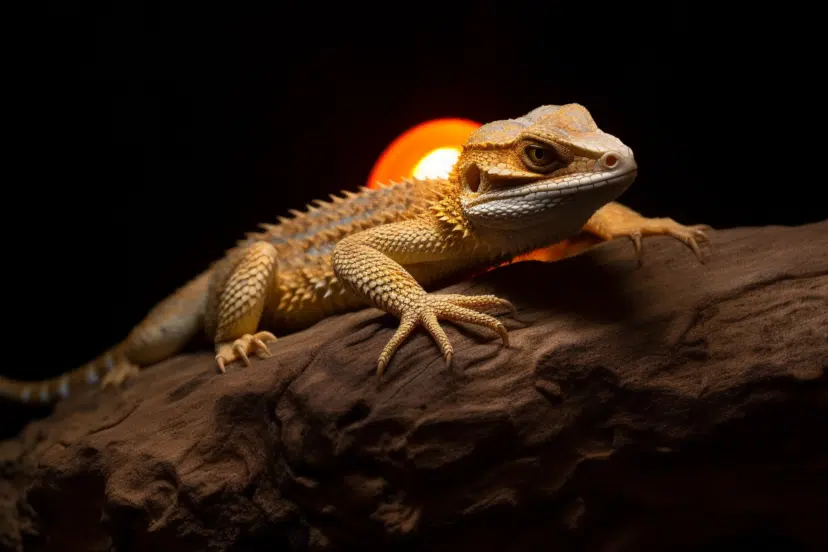
Ferguson zones tell you how much UVB light a reptile species gets in the wild, and how much you should give it in captivity. Bearded dragons are open-country sun baskers. Care references place them in the high end of the scale, Zone 3 or Zone 4, which in practice means a UV index (UVI) of about 4 to 6 at the basking spot and close to 0 in the shade.
What Are Ferguson Zones?
The zones come from a 2010 study by Gary Ferguson and colleagues, who measured how much UV different reptile species seek out in their natural habitat. The researchers sorted the species into four groups by the average UV index each one experienced during the day.
| Zone | Typical habits | Average UVI |
|---|---|---|
| Zone 1 | Crepuscular or shade dwellers | 0 to 0.7 |
| Zone 2 | Partial sun, occasional baskers | 0.7 to 1.0 |
| Zone 3 | Open or partial sun baskers | 1.0 to 2.6 |
| Zone 4 | Mid-day sun baskers | 2.6 to 3.5 |
These averages cover the whole enclosure over the whole day. The basking spot itself reads much higher, because your dragon moves in and out of the UV like it would in the wild.
🦎 Want all the essentials on one printable page?
The Complete Bearded Dragon Care Plan puts daily routines, feeding charts, safe vs. toxic foods and vet red flags into one 16-page PDF for $7.99.
See the Care Plan →Why Ferguson Zones Matter for Bearded Dragons
Your bearded dragon’s skin makes vitamin D3 when UVB light hits it. The body needs D3 to absorb calcium from food. A dragon without enough UVB pulls calcium out of its own bones and develops metabolic bone disease (MBD): soft jaws, bent limbs, tremors and fractures.
Too much UVB causes problems as well. A dragon stuck under a strong bulb with no shade can develop eye irritation and skin damage. The Ferguson zone gives you a target range between those two extremes.
Bearded dragons come from the dry woodland and scrub of inland Australia. They spend hours on rocks, logs and fence posts in full sun, then retreat to shade or burrows when they have had enough. Your setup should copy that pattern: a strong UV zone and a shaded zone.
The Right Zone for a Bearded Dragon
Older care sheets, including an earlier version of this guide, list bearded dragons as Zone 3. Many current references place them in Zone 4 because they bask in the middle of the day. Both lead to the same practical target:
- UVI 4 to 6 where your dragon’s back sits on the basking platform
- a gradient down to UVI 0 to 1 on the cool side and inside the hides
- 10 to 12 hours of UVB a day, on the same timer as the basking lamp
Pair the UVB with the right heat. Adults need a basking surface of about 95 to 105°F (35 to 40°C) and a cool side of 75 to 85°F (24 to 29°C). A dragon basks long enough to get its UV dose when the basking spot is warm. Our guide to basking for health covers the heat side in detail.
How to Measure UVB in Your Enclosure
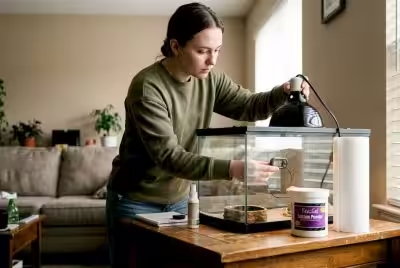
A UV index meter such as the Solarmeter 6.5 reads the UV index at any point in the enclosure. Hold it where your dragon’s back would be on the basking platform, then take readings across the tank. Write the numbers down so you can see when the bulb starts to fade.
Without a meter, follow the bulb maker’s distance chart and replace the tube on schedule. You will be close, but a meter removes the guesswork.
Choosing the Right UVB Bulb
Use a linear T5 high-output tube, such as an Arcadia 12% or a ReptiSun 10.0. Run it across at least half the length of the enclosure, on the same side as the basking lamp. Compact coil bulbs produce a narrow, uneven beam and are not a good fit for a bearded dragon.
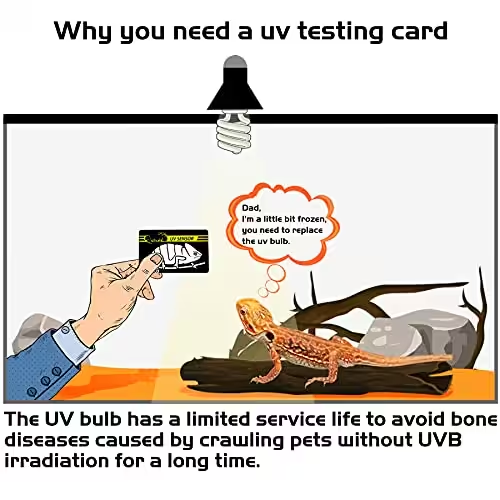
UVB output drops over time while the visible light stays the same. Replace a T5 tube every 12 months and a T8 tube every 6 months, or sooner if your meter shows the UVI falling below 3 at the basking spot.
Setting Up the Enclosure
A bearded dragon enclosure that meets the target has three parts.
Bulb placement
Mount a T5 HO tube 12 to 18 inches (30 to 45 cm) above the basking spot. A mesh top blocks 30 to 50 percent of the UVB, so place the basking platform closer when the tube sits on top of mesh. Glass and plastic block all UVB.
A UV gradient
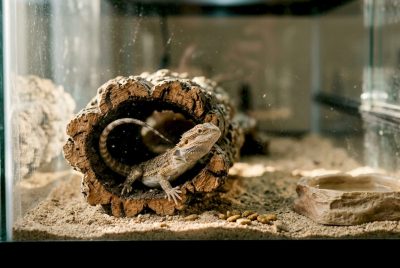
Your dragon decides how much UV it takes. Give it the choice: high UV on the basking platform, less in the middle of the tank, and full shade in a hide or under a ledge on the cool side.
A fixed schedule
Put the UVB tube and the basking lamp on a timer for 10 to 12 hours a day. Shorten the day to about 8 hours if your dragon goes into brumation in winter.
Health Benefits of the Right UVB
Correct UVB prevents metabolic bone disease, the most common serious illness in pet bearded dragons. It also supports normal appetite and activity. Dragons with good UVB eat, explore and bask on a regular rhythm, which makes changes in their behavior easier to spot.
UVB does not replace calcium in the diet. Dust insects with calcium powder and use a multivitamin on the schedule in our feeding guide.
Common UVB Mistakes
- No shade. A tube that covers the whole enclosure leaves your dragon no place to escape the UV.
- Bulb too far away. A tube 24 inches above the platform, behind mesh, can drop the basking UVI below 2.
- Old bulbs. A tube that still glows after two years produces little UVB.
- UVB through glass. A lamp on top of a glass lid gives your dragon no UVB at all.
- No measurement. Bulb ratings on the box describe the bulb, not your setup.
Ferguson Zone Setup at a Glance
Aim for a UVI of 4 to 6 on the basking platform, a shaded cool side, a T5 HO tube on the basking side and a 10 to 12 hour timer. Check the readings with a UV meter every few months and replace the tube once a year. If your dragon shows a soft jaw, swollen limbs or tremors, see a reptile vet before you change the lighting.
Frequently Asked Questions
What Ferguson zone is right for bearded dragons?
Care references place bearded dragons in Zone 3 or Zone 4. For your setup, aim for a UV index of 4 to 6 at the basking spot and close to 0 in the shade.
How do I measure UVB levels in my bearded dragon’s tank?
Use a UV index meter such as the Solarmeter 6.5. Hold it at the height of your dragon’s back on the basking platform and take readings across the tank.
How often should I replace my UVB bulb?
Replace a T5 high-output tube every 12 months and a T8 tube every 6 months. The bulb keeps glowing after its UVB output has dropped.
Can I use a stronger UVB bulb to improve my dragon’s health?
A stronger bulb helps when your readings sit below the target. Above a UVI of about 7 at the basking spot, your dragon risks eye and skin damage. Measure first and adjust the distance.
What happens if my bearded dragon doesn’t get enough UVB?
Your dragon cannot make enough vitamin D3, so it cannot absorb calcium from its food. Over weeks to months this leads to metabolic bone disease, with soft bones, deformities and fractures.

Love your beardie? Wear it proudly.
King of the Terrarium Tee – from $15.68. Our own bearded dragon designs, printed on demand. Every order supports these free care guides.
View this design → Browse all gifts