Why Bearded Dragons Stop Eating: Causes and When to See a Vet
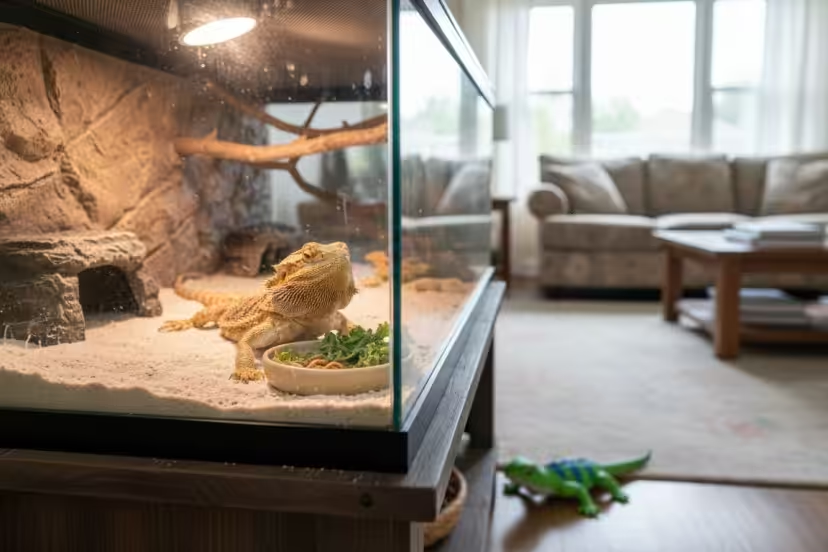
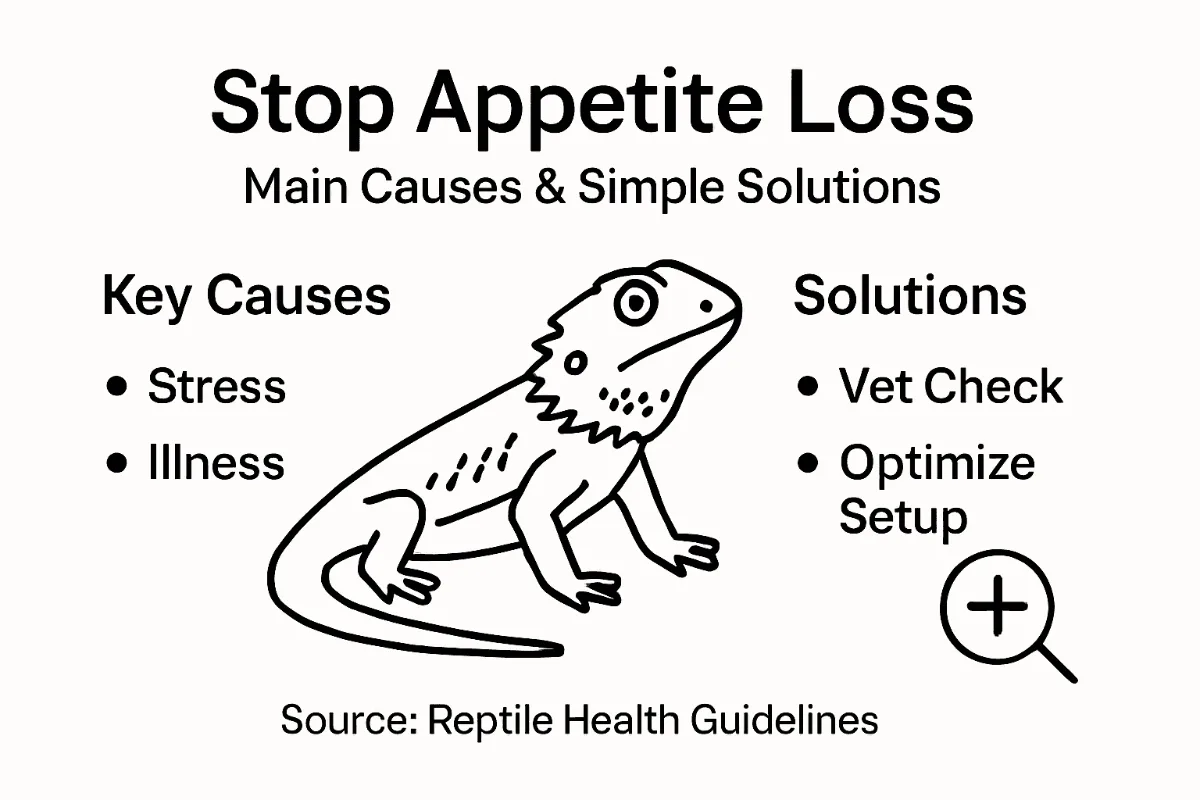
A bearded dragon stops eating for one of four reasons: the enclosure is too cold or the UVB is weak, the dragon is stressed or shedding, it is going into brumation, or it is ill. Check the basking temperature and the age of the UVB tube first, since those cause many cases. A healthy adult can skip food for a few days without harm, but a baby that refuses food for more than a day or two, or any dragon that loses weight, needs a reptile vet.
Table of Contents
- Loss of Appetite Explained
- Medical Causes
- Enclosure and Behavior Causes
- Diet and Nutrition
- When to See a Vet
🦎 Want all the essentials on one printable page?
The Complete Bearded Dragon Care Plan puts daily routines, feeding charts, safe vs. toxic foods and vet red flags into one 16-page PDF for $7.99.
See the Care Plan →Key Takeaways
| Point | Details |
|---|---|
| Check the setup first | Basking surface 95 to 105°F (35 to 41°C) for adults, 105 to 110°F (40 to 43°C) for babies. UVB tube less than 12 months old. |
| Normal reasons | Shedding, a new home, mating season and brumation can all reduce appetite for a while. |
| Weigh your dragon | Weight tells you more than single meals. Steady weight is reassuring, weight loss is not. |
| See a vet | If a baby skips food for more than a day or two, an adult for more than a week outside brumation, or any dragon loses weight. |
Loss of Appetite Explained
Bearded dragons are cold-blooded. They need heat to digest food, and a cold dragon has little appetite. They also need UVB to make vitamin D3 and use calcium, and a dragon with weak UVB becomes weak and stops eating.
| Cause | Examples | Typical pattern |
|---|---|---|
| Enclosure | Low basking temperature, old UVB tube, too small an enclosure | Slow decline in appetite and activity |
| Stress | New home, move, handling, other pets, reflections | Sudden drop, often for days to a couple of weeks |
| Natural cycles | Shedding, brumation, mating season, egg-laying | Temporary, weight stays stable |
| Illness | Parasites, impaction, mouth rot, metabolic bone disease, egg binding | Ongoing, often with weight loss or other signs |
Medical Causes
- Parasites: pinworms and coccidia can cause weight loss and runny droppings.
- Impaction: a blocked gut stops a dragon from eating. Look for missing droppings and a swollen belly.
- Mouth rot: a painful mouth makes eating hard.
- Metabolic bone disease: caused by weak UVB or too little calcium. Signs include a soft jaw, tremors and weak legs.
- Egg binding: a female that cannot lay her eggs stops eating and becomes weak. This is an emergency.
- Respiratory infection: wheezing, mucus, open-mouth breathing at rest.
- Organ disease and other illnesses: liver and kidney disease, adenovirus and, less often, cancer, such as the lymphoid leukemia cases described in veterinary research.
A reptile vet finds these with an exam, a fecal test, blood work and X-rays.
Enclosure and Behavior Causes
Husbandry manuals such as the NSW Fauna and Marine Parks Association bearded dragon manual link appetite to temperature and lighting.
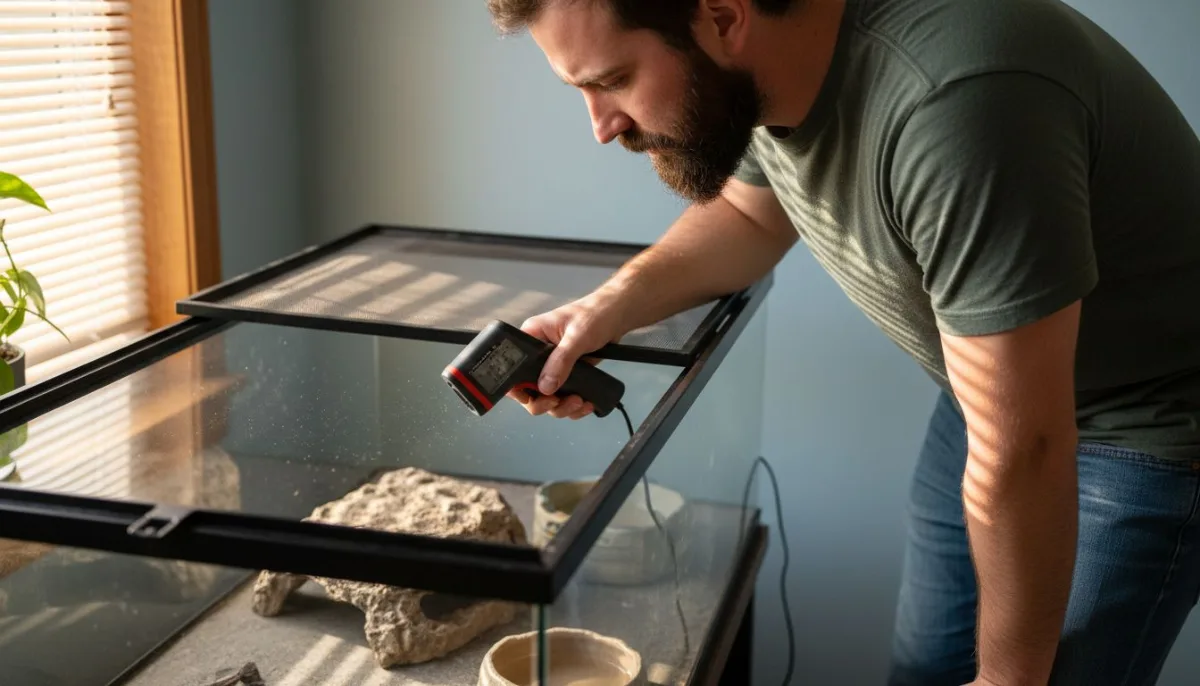
- Temperature: measure the basking surface with an infrared thermometer. Keep the cool side at 75 to 85°F (24 to 29°C).
- UVB: use a linear T5 tube with a UV index of about 4 to 6 at the basking spot, and replace it every 12 months.
- Day length: 12 hours of light, then darkness. Shorter days in winter can trigger brumation.
- Stress: a new home, loud noise, other pets in view, a reflection in the glass or a second dragon in the enclosure can all stop a dragon from eating. Keep each dragon alone and give it hides and enrichment.
- Shedding: many dragons eat less for a few days around a shed.
- Brumation: adults often eat less in autumn and winter and sleep more. Have a vet check your dragon before brumation and track its weight. Our brumation guide covers this.
- Mating season and egg-laying: males may lose interest in food, and females eat less before laying.
Diet and Nutrition
Care guides such as the Colorado Reptile Humane Society guide describe how diet changes with age.
| Age | Insects | Greens and vegetables |
|---|---|---|
| 0 to 6 months | About 70 to 80% | About 20 to 30% |
| 6 to 18 months | About 50%, falling | About 50%, rising |
| Adult | About 20% | About 80% |
- Picky adults: an adult fed insects every day may refuse greens. Cut back on insects and offer fresh greens each morning.
- Insect size: insects larger than the space between the eyes can be refused or cause problems.
- Supplements: dust insects with calcium, use calcium with D3 on a set schedule and gut-load insects for 24 hours before feeding.
- Water: offer a shallow water dish and mist greens. A dehydrated dragon eats less.
When to See a Vet
The Reptiles and Research care guide stresses early vet visits. See a reptile vet if:
- a baby or juvenile refuses food for more than a day or two
- an adult refuses food for more than a week outside brumation
- your dragon loses weight
- you see runny or bloody droppings, no droppings, a swollen belly, sunken eyes, wheezing, a soft jaw or tremors
- a female looks swollen, digs a lot and stops eating
Bring a fresh stool sample and a log of meals, weight and temperatures.
Related Guides
Read our feeding guide, our guide to basking temperatures and our article on lethargic bearded dragons.

Frequently Asked Questions
What are the common causes of appetite loss in bearded dragons?
Low temperatures, weak or old UVB, stress, shedding, brumation and illness such as parasites, impaction or metabolic bone disease.
How can I determine if my bearded dragon’s appetite loss is due to a medical condition?
Weight loss, lethargy, abnormal droppings, breathing problems or swelling point to illness. A dragon that keeps its weight and acts normal is more likely shedding, stressed or slowing down for brumation. When in doubt, see a vet.
What role does temperature play in my bearded dragon’s eating habits?
A dragon needs heat to digest food. Keep the basking surface at 95 to 105°F for adults and 105 to 110°F for babies, and the cool side at 75 to 85°F.
When should I seek veterinary help for my bearded dragon’s appetite issues?
When a baby refuses food for more than a day or two, an adult for more than a week outside brumation, or any dragon loses weight or shows other signs of illness.
Recommended

Love your beardie? Wear it proudly.
My Bearded Dragon Is My Spirit Animal Tee – from $18.45. Our own bearded dragon designs, printed on demand. Every order supports these free care guides.
View this design → Browse all gifts