Why Do Bearded Dragons Glass Surf – Behavioral Insights
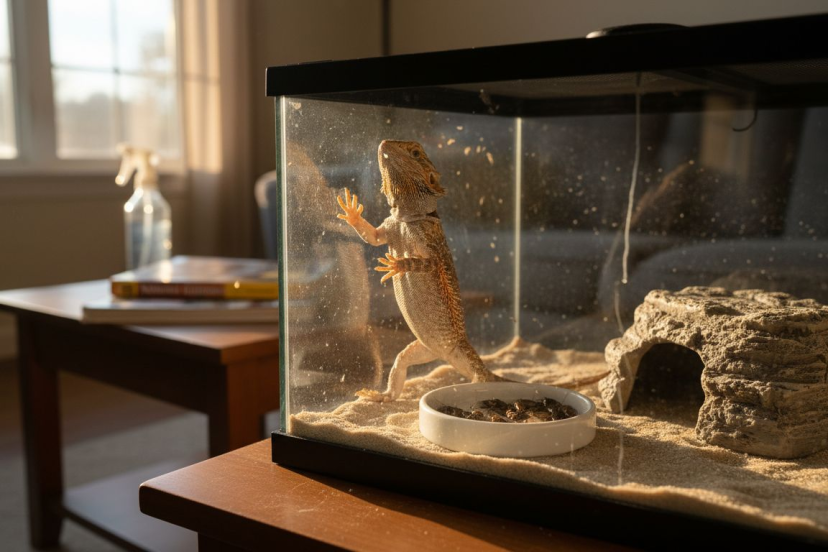
Many new bearded dragon owners are surprised when their pet starts frantically pacing or climbing the glass walls of its enclosure. This dramatic display, known as glass surfing, is a sign your scaly companion is trying to communicate discomfort or stress within their habitat. Understanding why this happens helps owners make meaningful changes, improving both the well-being and happiness of these unique reptiles.
Table of Contents
- Glass Surfing In Bearded Dragons Explained
- Common Triggers For Glass Surfing Behavior
- Recognizing Stress And Environmental Cues
- Preventing And Addressing Glass Surfing
- Common Mistakes Owners Should Avoid
Key Takeaways
| Point | Details |
|---|---|
| Understanding Glass Surfing | Glass surfing in bearded dragons signals stress or discomfort and indicates the need for environmental adjustments. Owners should recognize this behavior as a communication method from their pets. |
| Identifying Triggers | Common triggers include inadequate space, improper temperature, and visual overstimulation. Being aware of these can help create a more comfortable habitat. |
| Recognizing Stress Signals | Look for stress indicators like persistent glass surfing, reduced appetite, or color changes to better gauge your bearded dragon’s well-being. |
| Preventative Measures | To minimize glass surfing, create an enriched environment with adequate hiding spots, proper temperature gradients, and consistent handling routines. |
Glass Surfing in Bearded Dragons Explained
Bearded dragon owners sometimes encounter a peculiar behavior called glass surfing – where their scaly friend frantically moves along the enclosure walls like they’re attempting an epic reptilian escape. This behavior isn’t just random; it’s a complex communication signal that reveals important insights about your pet’s emotional and physical state.
According to animal behavior research, glass surfing occurs when bearded dragons experience stress, discomfort, or perceive something threatening in their environment. These modern-day dinosaurs aren’t just randomly scratching glass – they’re actively trying to communicate something is wrong.
Several key factors can trigger glass surfing behavior:
- Insufficient habitat space
- Incorrect temperature gradients
- Visual stimuli causing territorial responses
- Reflections that confuse territorial instincts
- Boredom or lack of environmental enrichment
- Feeling vulnerable or exposed
Understanding these triggers helps reptile owners create more comfortable environments. Glass surfing isn’t just annoying – it’s a critical sign your bearded dragon wants something to change. Paying attention to when and how often this occurs can provide valuable insights into your pet’s well-being.
Interestingly, not all glass surfing indicates a serious problem. Sometimes, these curious creatures are simply exploring, investigating reflections, or seeking interaction with their human companions. Context matters immensely when interpreting this behavior.
Pro tip: Monitor your bearded dragon’s glass surfing frequency and note potential environmental triggers to create a more comfortable habitat.
Common Triggers for Glass Surfing Behavior
Bearded dragons are complex creatures with nuanced communication styles, and glass surfing represents one of their most intriguing behavioral signals. These scaly companions don’t randomly climb enclosure walls – they’re sending a message about their environment and emotional state.
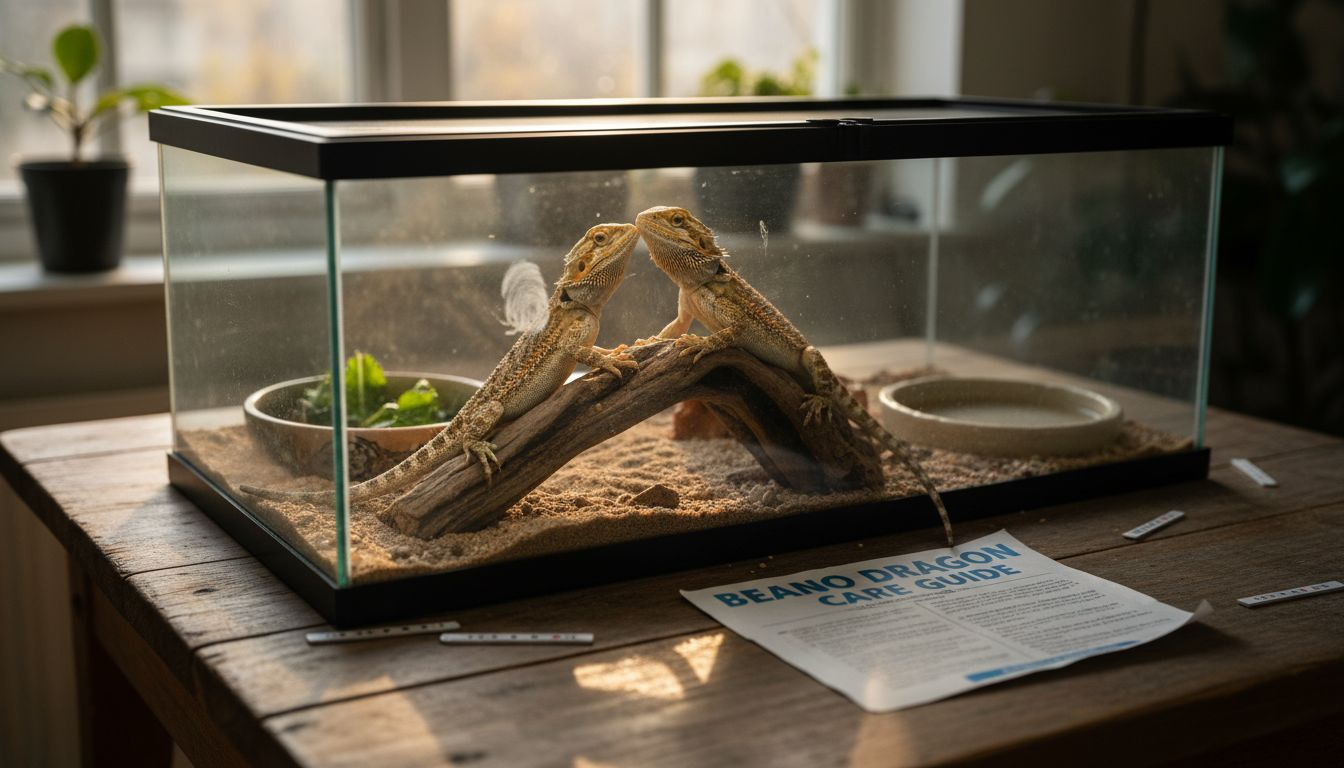
Environmental research reveals multiple potential triggers that prompt this distinctive behavior. Understanding these triggers helps reptile owners create more comfortable and stress-free habitats for their scaled companions.
The primary triggers for glass surfing include:
- Territorial Stress: Seeing reflections or movement outside their enclosure
- Temperature Discomfort: Improper heat gradient causing physiological strain
- Space Limitations: Enclosures that feel too small or restrictive
- Visual Overstimulation: Excessive external activity causing anxiety
- Inadequate Hiding Spots: Lack of secure areas to retreat
Temperature plays a crucial role in bearded dragon behavior. When the habitat’s thermal environment doesn’t match their physiological needs, these reptiles become increasingly agitated. A habitat that’s too cold or too hot can trigger persistent glass surfing as the dragon attempts to regulate its body temperature.
Social and psychological factors also contribute significantly to glass surfing. Bearded dragons are surprisingly sensitive creatures that can experience stress from seemingly minor environmental changes. Factors like new decorations, repositioned furniture, or even seasonal light variations can provoke this behavior.
Glass surfing isn’t just random movement – it’s your bearded dragon’s way of communicating complex emotional and physical needs.
Context matters immensely when interpreting glass surfing. Sometimes, it might indicate curiosity or a desire for interaction, while other times, it signals genuine distress that requires immediate attention.
Pro tip: Regularly assess your bearded dragon’s habitat from their perspective, looking for potential stressors or environmental inconsistencies that might trigger glass surfing behavior.
Recognizing Stress and Environmental Cues
Bearded dragons are complex reptiles with sophisticated communication methods that go far beyond simple physical movements. Stress signals in these scaly companions can be subtle yet profound, requiring keen observation and deep understanding from their human caretakers.
According to animal behavior research, stress manifestations in bearded dragons encompass a wide range of behavioral and physiological indicators that attentive owners must learn to recognize.
Key stress indicators include:
- Persistent glass surfing
- Unusual color changes
- Reduced appetite
- Increased aggression
- Excessive hiding
- Rapid breathing
- Lethargy or decreased activity levels
Environmental factors play a crucial role in triggering stress responses. Temperature, humidity, enclosure size, and external stimuli can dramatically impact a bearded dragon’s psychological well-being. A habitat that feels unsafe or uncomfortable can transform these typically docile creatures into anxious, defensive animals.
Stress is not just an emotional state for bearded dragons – it’s a complex physiological response that can significantly impact their overall health and longevity.
Social dynamics also contribute to stress levels. Bearded dragons are territorial creatures who can become overwhelmed by excessive handling, rapid environmental changes, or the presence of perceived threats. Understanding their communication signals helps owners create a more harmonious living environment.
Interestingly, not all stress indicators are negative. Some behaviors, like arm waving or head bobbing, can be normal communication methods that don’t necessarily signify distress.
Here’s a summary comparing common stress signals versus normal behaviors in bearded dragons:
| Behavior | Indicates Stress | Typical Communication | Owner Response Needed |
|---|---|---|---|
| Persistent glass surfing | Likely stress or discomfort | Sometimes curiosity | Assess environment for triggers |
| Arm waving | Not necessarily stress | Submission or greeting | Observe, not usually urgent |
| Head bobbing | Not always stress | Territorial display | Normal, monitor for changes |
| Excessive hiding | Potential stress | Sometimes natural rest | Review hiding options |
Pro tip: Maintain a consistent observation journal tracking your bearded dragon’s behavior patterns to quickly identify potential stress triggers and environmental changes.
Preventing and Addressing Glass Surfing
Addressing glass surfing requires a holistic approach that combines environmental management, behavioral understanding, and proactive care strategies. Bearded dragon owners must become detective and caretaker, carefully analyzing the underlying causes of this repetitive behavior.
Environmental modification research suggests multiple strategies for mitigating glass surfing and creating a more comfortable habitat for these sensitive reptiles.
Key prevention strategies include:
- Creating a spacious, well-designed enclosure
- Establishing proper temperature gradients
- Minimizing external visual stimuli
- Providing environmental enrichment
- Implementing consistent handling routines
- Adding multiple hiding spots
- Reducing reflective surfaces
Temperature regulation is crucial in preventing stress-induced behaviors. Bearded dragons require precise thermal environments that mimic their natural desert habitats. A carefully configured habitat with distinct warm and cool zones allows these reptiles to self-regulate their body temperature and reduce anxiety.
Preventing glass surfing is about understanding your bearded dragon’s psychological and physiological needs, not just managing their physical environment.
Social interaction and mental stimulation play significant roles in reducing glass surfing. Bearded dragons are intelligent creatures that require engagement, varied environments, and consistent positive interactions to feel secure and content.
Regular habitat assessments and willingness to adapt are key. What works today might need adjustment tomorrow as your bearded dragon’s needs evolve and change.
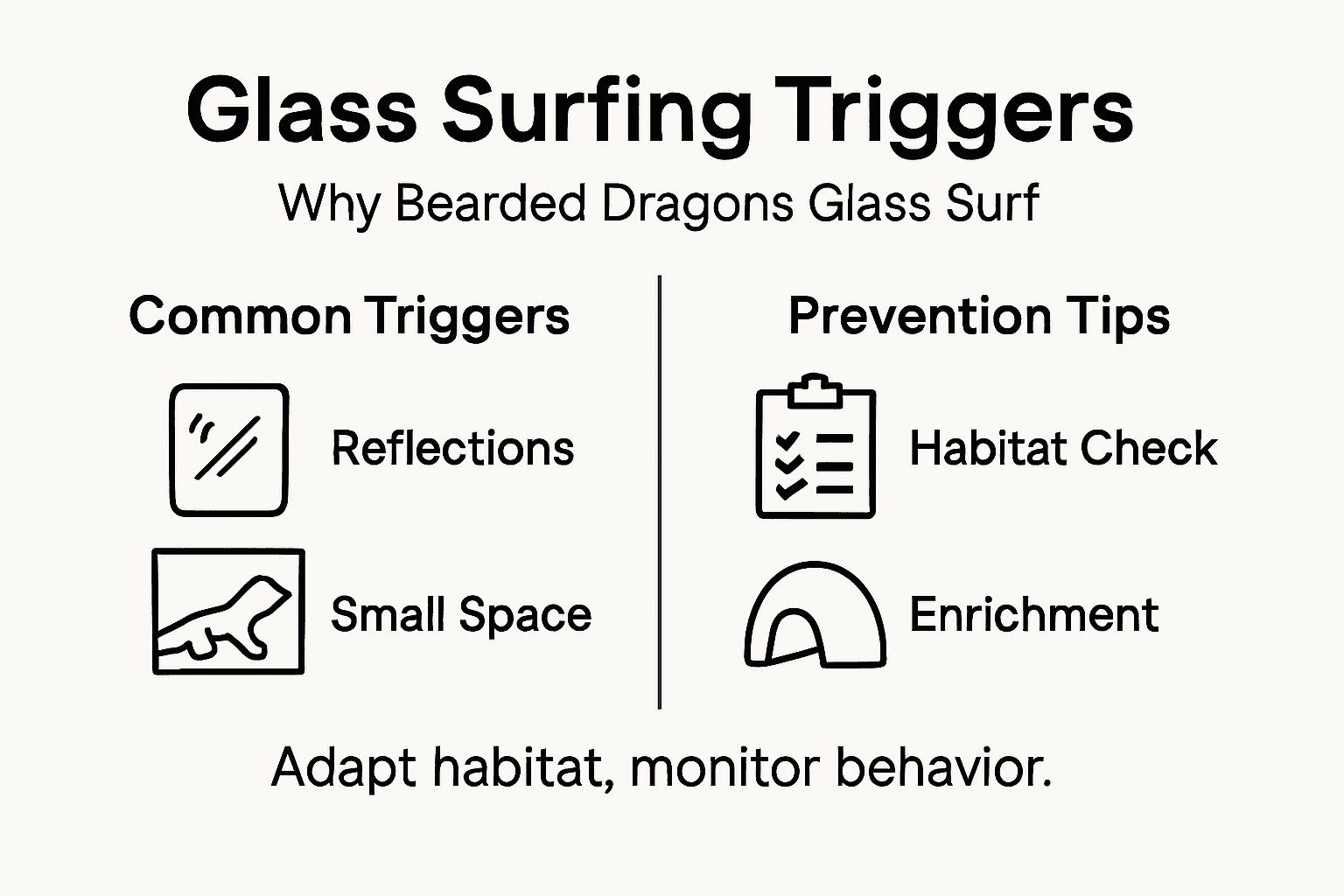
Compare how environmental changes can affect bearded dragon behavior:
| Environmental Change | Possible Effect | Recommended Adjustment |
|---|---|---|
| New enclosure decor | Temporary agitation | Introduce gradually |
| Adjusted temperature zones | Increased comfort or stress | Monitor reactions daily |
| More human activity nearby | Visual overstimulation | Provide visual barriers |
| Changed lighting schedule | Sleep disruption | Keep a consistent cycle |
Pro tip: Create a detailed habitat observation log to track environmental changes and your bearded dragon’s response, helping you fine-tune their living space.
Common Mistakes Owners Should Avoid
Bearded dragons are delicate creatures that require nuanced care, and novice owners often make critical errors that can trigger stress and problematic behaviors like glass surfing. Understanding these common mistakes is crucial for creating a healthy, supportive environment for your scaly companion.
Reptile husbandry research highlights several fundamental mistakes that can significantly impact a bearded dragon’s psychological and physical well-being.
Common mistakes include:
- Inadequate habitat temperature management
- Overcrowded or undersized enclosures
- Inconsistent feeding schedules
- Excessive handling
- Ignoring subtle stress signals
- Poor lighting configurations
- Lack of environmental enrichment
Temperature regulation stands out as a critical factor. Many owners mistakenly create uniform habitat temperatures, failing to establish the crucial thermal gradients that bearded dragons require. These reptiles need distinct warm and cool zones to properly regulate their body temperature and metabolic functions.
Not all mistakes are created equal – some can have long-lasting impacts on your bearded dragon’s health and behavior.
Social interaction presents another complex challenge. Owners often misinterpret bearded dragon communication, either handling them too frequently or completely neglecting necessary social engagement. These sensitive creatures require a delicate balance of interaction and personal space.
Psychological enrichment is frequently overlooked. Bearded dragons are intelligent reptiles that need mental stimulation beyond basic survival needs. A static, unchanging environment can lead to boredom, stress, and repetitive behaviors like persistent glass surfing.
Pro tip: Regularly photograph and document your bearded dragon’s habitat and behavior to track subtle changes and catch potential issues early.
Discover How to Stop Glass Surfing and Create a Happier Habitat for Your Bearded Dragon
Glass surfing can be a frustrating sign that your bearded dragon is stressed or uncomfortable. If your pet frequently scrambles along the enclosure walls due to temperature issues, territorial stress, or simply feeling exposed, you need tailored advice to transform their environment into a calming sanctuary. Understanding these behavioral signals is the first step toward providing the care your scaly friend truly deserves.

Take control of your bearded dragon’s well-being today by exploring expert care tips, habitat maintenance strategies, and enrichment ideas at GoBeardedDragon.com. Don’t let glass surfing persist when solutions are within reach. Visit now for detailed guides and practical resources that will help you prevent stress and enhance your pet’s life.
Learn more about creating the perfect enclosure and address behavioral challenges by checking out these helpful insights at GoBeardedDragon.com. Your bearded dragon’s comfort and happiness depend on the choices you make today.
Frequently Asked Questions
Why do bearded dragons engage in glass surfing?
Bearded dragons often glass surf as a way to communicate stress, discomfort, or curiosity about their environment. They may feel threatened by reflections, lack adequate space, or face temperature discomfort.
What are the common triggers for glass surfing in bearded dragons?
Common triggers include insufficient habitat space, incorrect temperature gradients, visual stimuli like reflections, boredom due to lack of environmental enrichment, and feeling vulnerable in their enclosure.
How can I prevent my bearded dragon from glass surfing?
To prevent glass surfing, create a spacious and well-designed enclosure, maintain proper temperature gradients, minimize external visual stimuli, provide environmental enrichment, and ensure multiple hiding spots are available for security.
What should I do if my bearded dragon is frequently glass surfing?
If your bearded dragon is frequently glass surfing, it’s essential to assess its habitat for potential stressors, adjust environmental conditions, and observe behavioral patterns. Keeping a journal of these observations can help identify and resolve underlying issues.
Recommended
- Bearded Dragon Social Needs – Why Solitude Matters
- Bearded Dragon Behavior Signs – What Owners Must Know