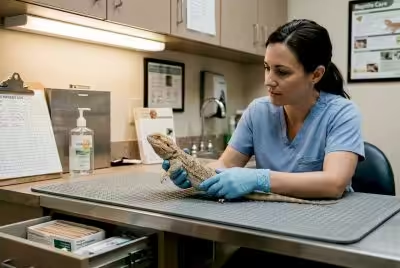
Role of supplements in bearded dragon care: expert guide

Many bearded dragon owners believe that supplements can replace a balanced diet, but this misconception leads to serious health problems. Supplements serve a critical support role, addressing specific nutrient gaps that captivity creates, but they cannot substitute for proper nutrition and environmental care. Understanding when and how to use calcium, vitamin D3, and multivitamins correctly prevents metabolic bone disease while avoiding dangerous toxicity from overuse.
Table of Contents
- Understanding Nutritional Needs Of Bearded Dragons
- Why Supplements Are Necessary In Captive Care
- Types Of Supplements And Their Roles
- Common Supplementation Mistakes And Risks
- How To Choose And Use Supplements Correctly
- Debunking Common Myths About Supplements
- Putting It All Together: Practical Supplementation Strategy For Your Dragon
- Explore Top Supplements And Care Resources For Your Bearded Dragon
- Frequently Asked Questions
Key takeaways
| Point | Details |
|---|---|
| Supplements fill captivity gaps | Captive dragons lack natural UVB exposure and dietary diversity, creating nutrient deficiencies that targeted supplementation addresses. |
| Calcium and D3 prevent bone disease | Proper calcium with vitamin D3 supplementation prevents metabolic bone disease, which affects most unsupplemented captive dragons. |
| Overuse causes toxicity | Excessive supplementation leads to hypercalcemia, vitamin A toxicity, and kidney damage rather than improved health. |
| Dosing schedules matter critically | Calcium twice weekly and multivitamins once weekly, combined with gut-loaded insects, maximizes safety and effectiveness. |
| Supplements support, never replace | Quality diet, proper UVB lighting, and optimal habitat remain more important than any supplement regimen. |
Understanding nutritional needs of bearded dragons
Bearded dragons require specific nutrients to thrive in captivity. Calcium supports bone density and metabolic functions, while vitamin D3 enables calcium absorption. Protein drives growth and tissue repair, and various vitamins maintain immune health and organ function.
Captive diets typically consist of commercially raised insects and vegetables that lack the nutrient diversity wild dragons consume. Natural sunlight provides UVB radiation that stimulates vitamin D3 synthesis, but indoor habitats rarely replicate this exposure adequately. Even with quality UVB bulbs, many captive dragons receive insufficient radiation for optimal vitamin D3 production.
Research shows up to 70% of captive dragons on unsupplemented diets display clinical nutrient deficiency signs. Common deficiencies include calcium, vitamin D3, and vitamin A, each causing distinct health problems. Metabolic bone disease, immune suppression, and reproductive issues frequently result from inadequate nutrition.
Balanced diets alone often fall short of meeting complete nutritional requirements. Commercially raised crickets contain far less calcium than wild insects, and captive vegetables lack the mineral diversity of natural forage. Understanding these fundamental gaps explains why supplementation becomes essential rather than optional for responsible bearded dragon care. Recognizing signs of a healthy bearded dragon helps owners identify when dietary adjustments or supplements are needed.
Key nutritional requirements include:
- Calcium for bone structure and nerve function
- Vitamin D3 to facilitate calcium absorption
- Protein for growth and tissue maintenance
- Vitamin A for vision and immune health
- Multiple trace minerals for metabolic processes
Why supplements are necessary in captive care
Metabolic bone disease represents the most devastating consequence of calcium deficiency. This condition causes soft, deformed bones, fractures, paralysis, and death if untreated. Vitamin D3 deficiency compounds the problem because dragons cannot absorb dietary calcium without adequate D3 levels, even when calcium is present.
Vitamin D3 supplementation enhances calcium absorption by up to 50%, critical since captive dragons often lack adequate UVB exposure for natural synthesis. Indoor habitats, even with quality UVB bulbs, cannot replicate the intensity and spectrum of natural sunlight. Glass and plastic barriers filter essential UVB wavelengths, further reducing natural D3 production.
Wild bearded dragons consume incredibly diverse diets containing hundreds of insect species, native plants, and occasional small vertebrates. This variety provides balanced nutrition that captivity cannot match. Commercially raised insects are nutritionally inferior, containing higher fat and lower calcium than wild counterparts. Captive vegetables, while nutritious, represent only a fraction of the plant diversity wild dragons encounter.
Supplementation directly compensates for these captivity-induced nutritional gaps. Calcium powder restores the calcium-to-phosphorus ratio that feeder insects lack. Vitamin D3 supplements support calcium metabolism when UVB exposure is insufficient. Multivitamins provide trace nutrients absent from limited captive diets.
Proper supplementation transforms nutritionally deficient captive diets into complete nutrition profiles that support long-term health and prevent common diseases.
Understanding why bearded dragons need basking connects to supplement effectiveness, as proper temperatures enhance nutrient absorption and metabolism. Environmental factors and supplementation work together, not independently, to maintain optimal health.
Critical reasons supplements are essential:
- Metabolic bone disease prevention through adequate calcium
- Enhanced calcium absorption via vitamin D3 supplementation
- Compensation for insufficient natural UVB exposure
- Nutrient diversity absent from limited captive food sources
- Correction of calcium-to-phosphorus imbalances in feeder insects
Types of supplements and their roles
Calcium supplements form the foundation of bearded dragon supplementation. Pure calcium carbonate powder provides the most bioavailable calcium form for reptiles. Calcium citrate offers an alternative that some dragons absorb more efficiently, though carbonate remains the standard recommendation.
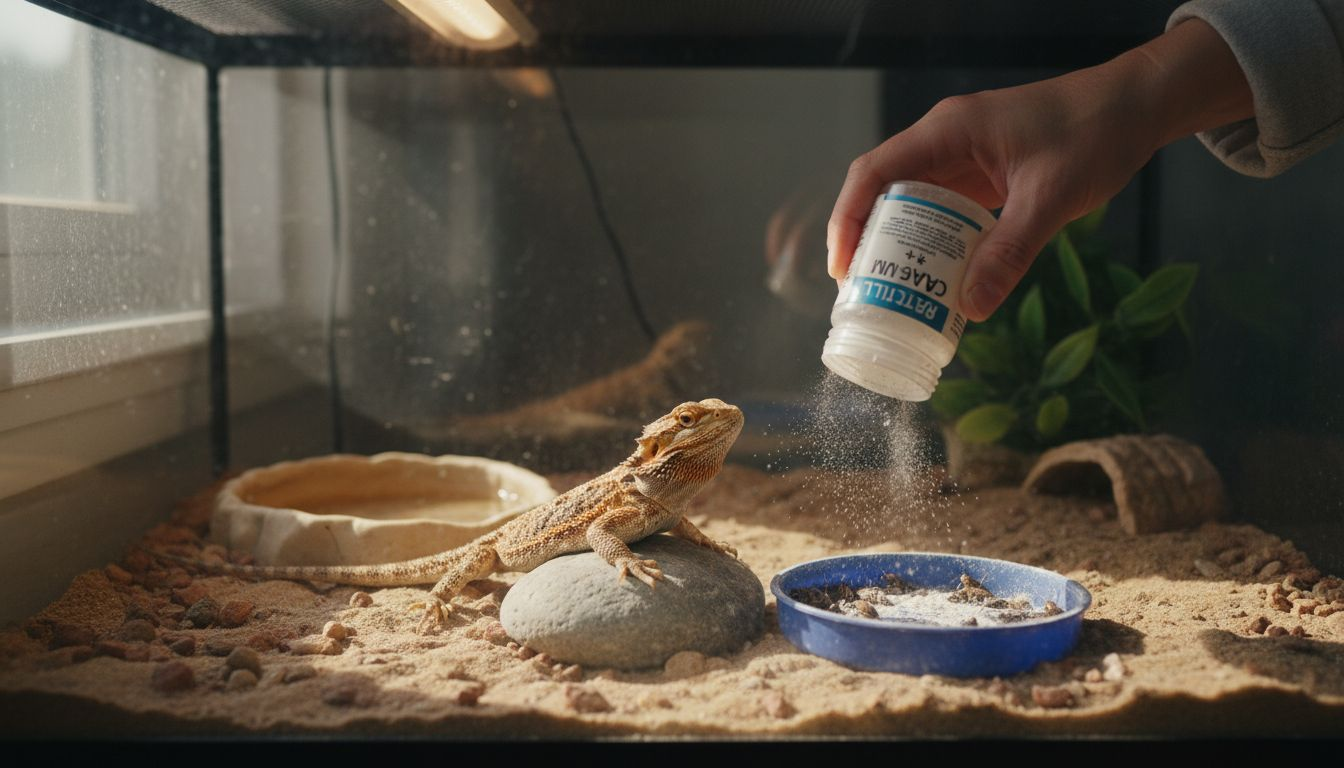
Vitamin D3 supplements boost calcium absorption when UVB lighting proves inadequate. Many calcium powders include D3, creating convenient combination products. Separate D3 supplements allow precise dosing control but require careful measurement to avoid toxicity.
Multivitamins provide additional nutrients including vitamin A, B vitamins, and trace minerals. These products fill gaps that calcium and D3 cannot address. However, multivitamins require cautious use because fat-soluble vitamins accumulate in body tissues, creating toxicity risks with overuse.
Calcium carbonate dissolves readily in stomach acid, making it highly bioavailable for most dragons. Calcium citrate requires less stomach acid for absorption, benefiting dragons with digestive issues. Both forms effectively prevent metabolic bone disease when dosed correctly.
Some supplements contain additional ingredients like phosphorus binders or digestive enzymes. Evidence supporting these additives remains limited, and basic calcium, D3, and multivitamin formulations typically suffice. Selecting quality products from reptile-specialized manufacturers ensures proper formulation and purity.
| Supplement Type | Primary Function | Key Benefits | Usage Frequency |
|---|---|---|---|
| Calcium Carbonate | Bone strength, metabolic support | Highly bioavailable, prevents MBD | Twice weekly |
| Calcium with D3 | Enhanced calcium absorption | Convenient combination product | Twice weekly |
| Multivitamin | Trace nutrients, vitamin A | Fills dietary gaps | Once weekly |
| Vitamin D3 (separate) | Calcium metabolism support | Precise dosing control | As directed by vet |
Pro Tip: Choose supplements specifically formulated for reptiles rather than general pet products, as reptile-specific formulations account for unique metabolic requirements and avoid harmful additives.
Explore bearded dragon vitamin supplements reviews 2026 for detailed product comparisons and recommendations based on ingredient quality and effectiveness.
Common supplementation mistakes and risks
Over-supplementation causes serious health problems that mirror deficiency symptoms. Hypercalcemia develops when excessive calcium intake overwhelms the kidneys, leading to organ damage and metabolic disruption. Calcium deposits form in soft tissues, causing pain and dysfunction.
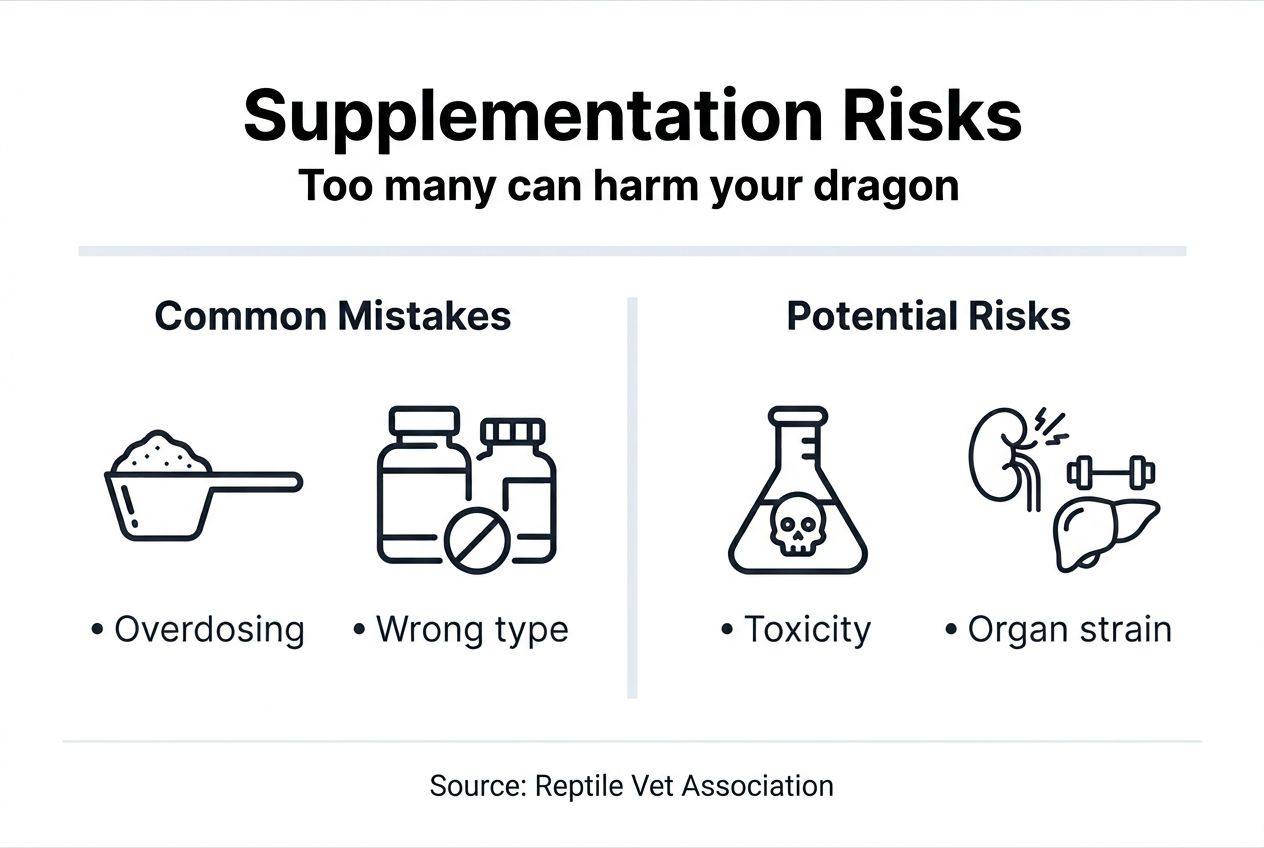
Incorrect dosing frequency, particularly with multivitamins, creates dangerous vitamin accumulation. Vitamin A toxicity develops when multivitamins exceeding 10,000 IU/kg are given more frequently than weekly. Fat-soluble vitamins A, D, and E cannot be excreted easily, building to toxic levels with repeated overdosing.
Low-quality supplements risk contamination with heavy metals or contain inaccurate nutrient levels. Some products lack proper quality control, delivering inconsistent doses that undermine health rather than supporting it. Choosing reputable manufacturers with third-party testing ensures safety and effectiveness.
Excessive reliance on supplements without dietary balance proves ineffective and harmful. Supplements cannot compensate for poor diet quality or inadequate variety. Whole foods provide fiber, water, and nutrient combinations that isolated supplements cannot replicate.
Proper education prevents most supplementation mistakes. Understanding correct dosing schedules, recognizing quality products, and balancing supplements with diet optimization creates safe, effective care. Learning about common supplementation mistakes and risks helps owners avoid these dangerous pitfalls.
Frequent supplementation errors include:
- Daily calcium dusting causes hypercalcemia and kidney stress
- Weekly or more frequent multivitamin use leading to vitamin A toxicity
- Using human supplements formulated for different metabolic needs
- Ignoring diet quality while relying solely on supplements
- Failing to adjust supplementation as dragons age and needs change
Pro Tip: Keep a supplementation log tracking dates and amounts used, helping identify patterns if health issues develop and ensuring consistent dosing schedules.
How to choose and use supplements correctly
Select reptile-specific supplements from manufacturers with established reputations in herpetological care. Look for products listing exact nutrient quantities rather than vague ingredient lists. Third-party testing verification indicates quality control and accurate labeling.
Follow evidence-based dosing schedules for optimal safety and effectiveness:
- Dust feeder insects with calcium powder twice weekly for adults, three times weekly for juveniles under 12 months.
- Apply multivitamin powder once weekly, ensuring even coating without excessive buildup.
- Gut-load feeder insects 24 to 48 hours before feeding, maximizing their nutritional value.
- Rotate between calcium with D3 and pure calcium if UVB lighting is strong, preventing D3 oversupply.
- Monitor your dragon’s health indicators including activity level, appetite, and fecal consistency.
- Adjust supplementation frequency based on age, health status, and veterinary guidance.
Research demonstrates vitamin and mineral bioavailability increased by up to 40% through gut-loading feeder insects. This practice involves feeding insects nutritious foods before offering them to your dragon. Gut-loaded insects deliver superior nutrition compared to unfed insects, reducing supplementation dependence.
Avoid daily calcium supplementation unless a veterinarian specifically recommends it for treating diagnosed deficiency. Most healthy dragons thrive on twice-weekly calcium and once-weekly multivitamins. Overuse creates more problems than it solves.
Monitor your dragon continuously for signs indicating supplementation adjustment needs. Lethargy, appetite changes, abnormal feces, or behavioral shifts may signal nutritional imbalances. Regular veterinary checkups with blood work provide objective nutritional status assessment.
Pro Tip: Lightly dust insects by placing them in a bag with supplement powder and gently shaking, ensuring even coverage without caking that dragons might avoid eating.
Review bearded dragon vitamin supplements reviews 2026 for current product recommendations based on formulation quality and user experiences.
Debunking common myths about supplements
Supplements do not replace balanced, varied diets rich in whole foods. This widespread misconception leads owners to neglect diet quality while over-relying on powders and capsules. Whole insects and vegetables provide fiber, moisture, and nutrient synergies that isolated supplements cannot deliver.
Vitamin C supplementation is unnecessary for bearded dragons because they synthesize this vitamin internally. Unlike humans, reptiles produce adequate vitamin C through normal metabolism. Adding vitamin C supplements provides no benefit and may interfere with other nutrient absorption.
Excessive supplementation harms rather than helps your dragon. More supplements do not create better health beyond meeting basic nutritional requirements. Overdosing causes toxicity, organ damage, and metabolic disruption that undermines the health supplementation should protect.
Proper UVB exposure and diet quality matter more than supplements alone. Environmental factors drive vitamin D3 synthesis, calcium metabolism, and overall health. Supplements support these foundational elements but cannot substitute for them.
Owners should prioritize habitat optimization and nutrition before increasing supplementation. Quality UVB bulbs, proper temperatures, diverse diets, and appropriate housing create health that supplements merely support. Understanding bearded dragon hydration needs demonstrates how environmental factors interconnect with nutrition and supplementation.
Common myths to reject:
- Supplements can fully replace natural diet diversity
- More frequent supplementation always improves health
- All vitamins benefit bearded dragons equally
- Supplements work independently of environmental conditions
- Expensive supplements necessarily outperform budget options
Putting it all together: practical supplementation strategy for your dragon
Implement a consistent supplementation routine that balances safety with effectiveness:
- Establish a weekly schedule marking calcium days (typically Monday and Thursday) and multivitamin day (typically Sunday).
- Prepare gut-loaded insects 24 to 48 hours before each feeding, ensuring maximum nutritional value.
- Dust insects lightly and evenly, avoiding powder clumps that dragons refuse to eat.
- Observe your dragon during and after feeding, noting appetite and behavioral patterns.
- Schedule veterinary checkups every 6 to 12 months including blood work when possible.
- Adjust supplementation as your dragon ages, moving from juvenile to adult schedules around 12 months.
Regular monitoring for deficiency or toxicity signs proves essential. Weight loss, lethargy, tremors, or bone deformities indicate potential problems requiring immediate veterinary attention. Early detection prevents minor imbalances from becoming serious health crises.
Balance supplements with high-quality diet and proper UVB lighting. Offer diverse vegetables including collard greens, butternut squash, and bell peppers. Provide appropriately sized insects dusted according to schedule. Maintain UVB bulbs on 10 to 12 hour daily cycles, replacing them every 6 to 12 months.
| Day | Supplementation | Insects | Notes |
|---|---|---|---|
| Monday | Calcium powder | Gut-loaded crickets | Light dusting |
| Tuesday | None | Dubia roaches | No supplements |
| Thursday | Calcium with D3 | Gut-loaded crickets | Alternate with pure calcium |
| Saturday | None | Black soldier fly larvae | High natural calcium |
| Sunday | Multivitamin | Gut-loaded insects | Once weekly only |
Use this routine table as a practical reference, adjusting based on your dragon’s age, health status, and veterinary recommendations. Consistency matters more than perfection, so establish sustainable habits.
Consult the bearded dragon health checklist regularly to ensure supplementation supports overall wellness rather than existing in isolation from other care factors.
Explore top supplements and care resources for your bearded dragon
Optimizing your bearded dragon’s supplementation requires access to quality products and expert guidance. Finding the right calcium powder, multivitamin, and feeding schedule makes the difference between thriving health and preventable disease.

Discover detailed top bearded dragon vitamin supplements reviews comparing formulations, pricing, and effectiveness based on ingredient analysis and community feedback. These reviews help you select products matching your dragon’s specific needs and your budget.
Expand your reptile care knowledge through our comprehensive guide to reptile companions, exploring care principles applicable across species. Understanding broader reptile nutrition principles strengthens your supplementation decisions.
Environmental factors directly impact supplement effectiveness, making proper habitat setup critical. Review the bearded dragon habitat setup impact to ensure your dragon’s environment supports nutritional health and supplement absorption.
Frequently asked questions
How often should I dust feeder insects with calcium powder?
Calcium dusting is recommended twice weekly for most adult bearded dragons, increasing to three times weekly for juveniles under 12 months old. More frequent dusting risks hypercalcemia and kidney stress. Avoid daily dusting unless a veterinarian specifically directs it for treating diagnosed deficiency, as excessive calcium causes more harm than benefit.
Can vitamin D3 supplements replace UVB lighting for my bearded dragon?
Vitamin D3 supplements aid calcium absorption but cannot replicate all benefits of UVB exposure, which influences behavior, circadian rhythms, and overall metabolic health. UVB lighting remains essential for complete care and must complement rather than be replaced by supplementation. Both elements work together to maintain optimal health.
Is it necessary to give multivitamins weekly?
Multivitamins should be administered once weekly to avoid vitamin A toxicity and fat-soluble vitamin accumulation in body tissues. More frequent use leads to dangerous toxicity rather than improved health. Weekly dosing provides necessary trace nutrients while maintaining safe levels that prevent organ damage.
What signs indicate my bearded dragon is over-supplemented?
Signs include lethargy, decreased appetite, abnormal urates appearing chalky or orange, and kidney dysfunction symptoms like swelling or reduced urination. Neurological symptoms such as tremors or weakness may also develop. If you observe these signs, consult a veterinarian immediately and reduce supplementation frequency until professional guidance is obtained.
Recommended
- Supplements for bearded dragons: 30% fewer bone disease cases
- Top 6 Bearded Dragon Vitamin Supplements Reviews 2026
Want the complete roadmap for a healthy bearded dragon? Download the Bearded Dragon Care Plan — a comprehensive PDF guide covering nutrition, habitat, lighting, health, and more.