How to handle bearded dragon shedding for healthy growth
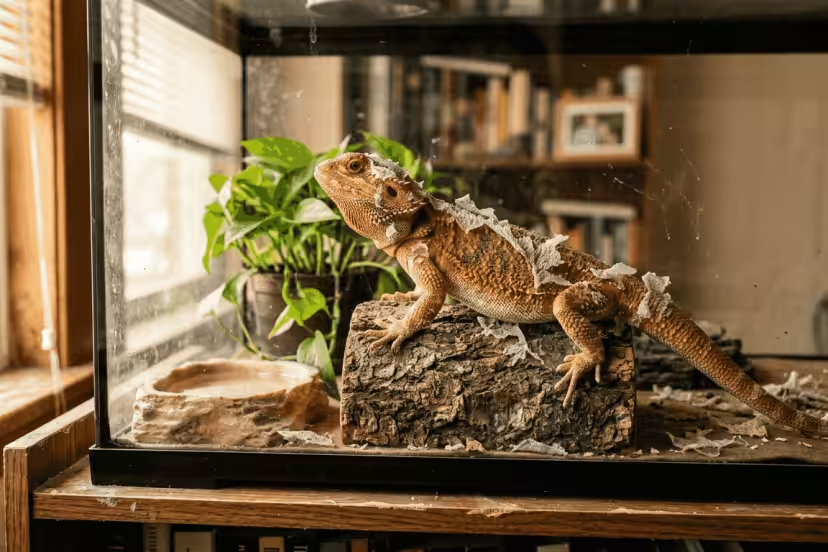
Watching your bearded dragon shed for the first time can feel overwhelming. You notice flaky skin, dull colors, and behavioral changes that leave you wondering if something is wrong. This guide walks you through recognizing normal shedding, creating the right environment, and safely assisting your pet through this natural process without causing harm.
Table of Contents
- Understanding Bearded Dragon Shedding: What To Expect
- Preparing The Right Environment And Nutrition For Shedding
- How To Assist Your Bearded Dragon During Shedding Safely
- Recognizing And Addressing Shedding Problems
- Care Tips And Products For Bearded Dragon Health
Key takeaways
| Point | Details |
|---|---|
| Shedding frequency changes with age | Hatchlings shed every week or two, juveniles every two months, and adults once or twice a year. |
| Environment and nutrition prevent problems | Maintaining humidity at 30-40% and providing vitamin A rich foods support healthy shedding. |
| Never force skin removal | Use gentle soaking and assistance methods instead of pulling shed skin to avoid injury. |
| Watch for warning signs | Repeated stuck shed, swelling, or infection require immediate veterinary attention. |
Understanding bearded dragon shedding: what to expect
Shedding replaces old, worn skin and allows your bearded dragon to grow properly. This biological process happens throughout their entire life, though the frequency dramatically changes as they mature. Understanding what triggers shedding and how long it takes helps you recognize when things are progressing normally versus when intervention becomes necessary.
The bearded dragon shedding process varies significantly by age. Hatchlings shed every week or two, juveniles every two months, and adults once or twice a year. Younger dragons shed more frequently because they’re growing rapidly. Adults shed less often since their growth has slowed considerably.
Duration also depends on life stage. The shedding process takes 2 days for hatchlings, 10 days for juveniles, and up to 3 weeks for adults. Patience is essential, especially with older dragons who take longer to complete the cycle.
You’ll notice several behavioral changes during shedding:
- Skin appears dull, white, or flaky before peeling begins
- Rubbing against rough surfaces to loosen skin
- Reduced appetite or temporary feeding refusal
- Bulging eyes as they loosen facial skin
- Increased hiding or irritability from discomfort
Eating shed skin is completely normal. Your dragon recycles nutrients by consuming their discarded skin, so don’t be alarmed when you catch them munching on flakes.
Preparing the right environment and nutrition for shedding
Creating optimal conditions before shedding starts prevents most complications. Your dragon’s habitat directly impacts how smoothly skin releases and how comfortable they feel throughout the process.
Humidity levels between 30-40% are crucial during shedding periods. Too dry causes skin to stick, while excessive moisture breeds bacteria. Monitor humidity with a reliable hygrometer and adjust as needed.
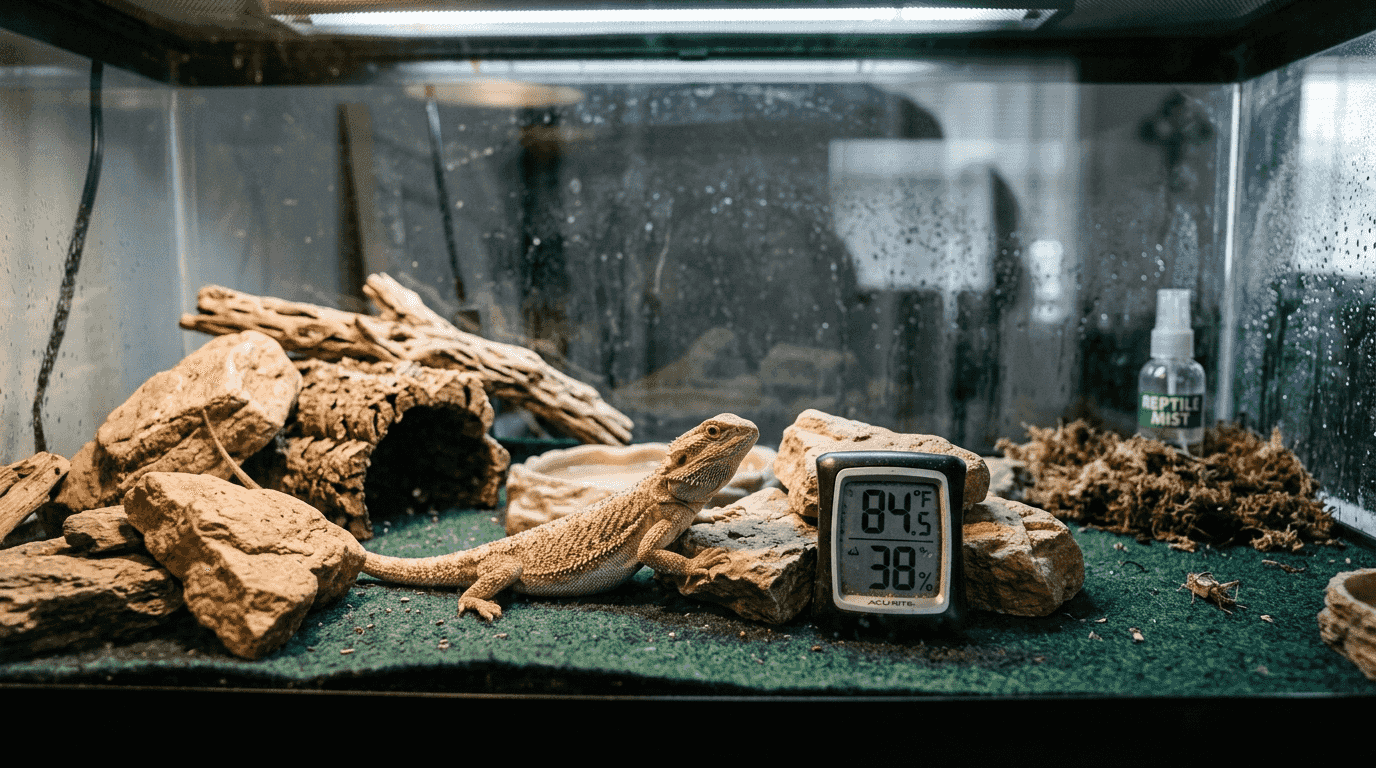
Nutrition plays an equally vital role. Vitamin A deficiency contributes to shedding issues, making proper supplementation essential. Feed vitamin A-rich foods like butternut squash, carrots, and dark leafy greens regularly. Avoid relying solely on beta-carotene supplements, as bearded dragons convert them inefficiently compared to preformed vitamin A sources.
Hydration cannot be overlooked. Dehydrated dragons struggle with shedding because their skin lacks the moisture needed for proper separation. Offer fresh water daily, mist vegetables before feeding, and provide soaking opportunities during shedding periods.
Key environmental factors to optimize:
- Maintain basking spot temperatures between 95-105°F to support metabolism
- Provide rough surfaces like rocks or branches for natural rubbing
- Add a moist hide box with damp sphagnum moss
- Keep the enclosure clean to prevent bacterial growth on vulnerable shedding skin
- Never apply oils, lotions, or petroleum products that clog pores
Pro Tip: Increase humidity slightly during active shedding by misting one side of the enclosure once daily. This creates a humidity gradient without oversaturating the entire habitat.
Proper supplements in bearded dragon care and bearded dragon humidity management work together to ensure your pet has everything needed for trouble-free shedding.
How to assist your bearded dragon during shedding safely
Knowing when and how to help requires understanding the difference between normal shedding and stuck shed. Several steps can be taken at home to assist incomplete shedding, but timing and technique matter enormously.
Never forcibly remove skin, even if it looks loose. Premature removal tears healthy tissue underneath and causes bleeding or infection. Wait until skin naturally separates before offering assistance.
The sauna method effectively softens stubborn shed:
- Fill a shallow container with lukewarm water, roughly 85-90°F
- Water depth should reach only halfway up your dragon’s legs
- Allow soaking for 10-15 minutes while supervising constantly
- Gently rub loose skin with your fingertips or a soft toothbrush
- Pat dry thoroughly after removing from water
- Return to their enclosure and monitor progress
Repeat baths every other day if needed, but avoid daily soaking which strips natural oils. Space sessions to let skin naturally begin separating between interventions.
For targeted assistance on specific areas:
- Use damp cotton swabs on toes, tail tip, and facial areas
- Apply gentle circular motions to encourage loosening
- Stop immediately if you see redness or your dragon shows distress
- Focus only on pieces that move freely without resistance
Moist hides provide continuous humidity without constant handling. Line a hide box with damp sphagnum moss, paper towels, or reptile substrate. Replace daily to prevent mold growth and maintain optimal moisture levels.
Pro Tip: Start baths at the first sign of dull skin rather than waiting until shedding is well underway. Early intervention prevents skin from drying and sticking.
Pro Tip: Keep a shedding journal noting start dates, duration, problem areas, and what helped most. Patterns emerge over time that guide your approach for future sheds.
Your shedding checklist ensures you cover all bases during each cycle without missing critical care steps.
Recognizing and addressing shedding problems
Most sheds complete without complications, but certain warning signs indicate when professional help becomes necessary. Early recognition prevents minor issues from escalating into serious health threats.
Incomplete shedding causes skin constriction, circulation problems, and loss of extremities if untreated. Retained skin acts like a tourniquet, cutting off blood flow to toes, tail tips, and other appendages. Tissue death occurs quickly once circulation stops.
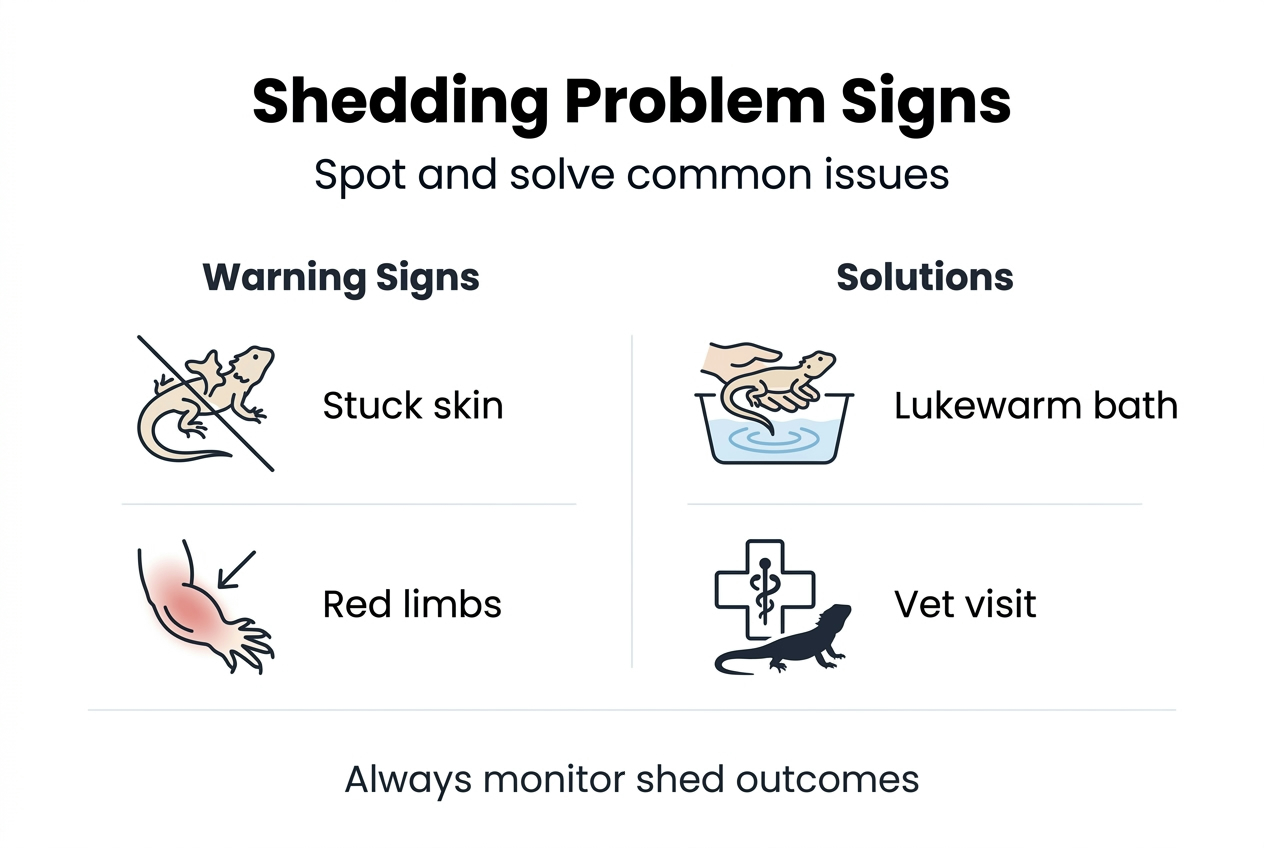
Distinguishing normal from problematic shedding:
| Normal Shedding | Problematic Shedding | Action Needed |
|---|---|---|
| Completes within expected timeframe for age | Skin remains stuck after 1-2 weeks beyond normal duration | Increase humidity, offer daily baths, consult vet if no improvement |
| Slight appetite reduction | Complete feeding refusal lasting multiple days | Rule out other health issues, ensure proper temperatures |
| Mild irritability during active shedding | Lethargy, weakness, or hiding constantly | Immediate veterinary examination |
| Skin peels in large sections | Small scattered patches remain stuck repeatedly | Address underlying causes like nutrition or hydration |
| No visible swelling or discoloration | Redness, swelling, discharge, or foul odor | Emergency vet visit for potential infection |
Specific areas require urgent attention:
- Eyes with retained skin cause vision impairment and corneal damage
- Mouth area shedding problems interfere with eating
- Toe and tail constriction leads to necrosis within days
- Vent area retention causes waste elimination difficulties
Underlying causes of chronic shedding problems include stress from poor habitat conditions, dehydration from inadequate water access, parasites that affect overall health, nutritional deficiencies particularly vitamin A, and metabolic disorders requiring medical treatment.
Watch for patterns. One difficult shed might be normal, but repeated issues every cycle indicate something needs correction in their care routine or health status.
Maintaining signs of a healthy bearded dragon between sheds gives you a baseline to compare against when evaluating whether current shedding is progressing normally.
Care tips and products for bearded dragon health
Supporting healthy shedding extends beyond just managing the process itself. Quality supplements fortify skin health from the inside, while proper habitat setup prevents problems before they start.

Exploring top bearded dragon vitamin supplements helps you identify products that deliver essential nutrients without fillers or harmful additives. Look for supplements specifically formulated for bearded dragons rather than generic reptile products.
Mastering bearded dragon humidity management year round keeps your pet comfortable and reduces shedding complications. Seasonal adjustments account for changes in your home’s baseline humidity.
Your bearded dragon habitat setup directly impacts shedding success. Proper lighting, temperature gradients, and substrate choices all contribute to how well your dragon sheds and recovers between cycles.
FAQ
How often do bearded dragons shed?
Shedding frequency depends entirely on age and growth rate. Hatchlings shed approximately every one to two weeks as they experience rapid growth spurts. Juveniles slow to roughly every two months, while adults typically shed only once or twice per year since growth has nearly stopped.
What are safe ways to help my bearded dragon shed?
Offer lukewarm baths lasting 10-15 minutes to soften stuck skin without forcing removal. Use damp cotton swabs to gently encourage loose pieces on toes and facial areas. Maintain humidity between 30-40% and provide moist hides for continuous support. Never pull or peel skin that resists coming off, as this tears healthy tissue underneath.
When should I take my bearded dragon to the vet for shedding issues?
Seek veterinary care if skin remains stuck after home treatments spanning one to two weeks beyond normal shedding duration. Immediate attention is required for redness, swelling, discharge, or foul odors indicating infection. Behavioral changes like lethargy, complete feeding refusal, or constant hiding warrant examination. Retained skin around eyes or mouth requires urgent professional removal to prevent serious complications.
Can I use oil or lotion to help my bearded dragon shed?
Never apply oils, lotions, petroleum jelly, or similar products to your bearded dragon’s skin. These substances clog pores, interfere with natural skin oils, and can cause bacterial or fungal infections. Stick to water based methods like soaking and maintaining proper humidity instead.
Why is my bearded dragon eating its shed skin?
Eating shed skin is completely normal and beneficial behavior. Your dragon recycles valuable nutrients and proteins by consuming their discarded skin. This instinctive behavior poses no health risks and actually provides nutritional value, so allow your pet to eat shed pieces if they choose to do so.