Are Silkback Bearded Dragons Cruel? An Honest Look at the Scaleless Morph
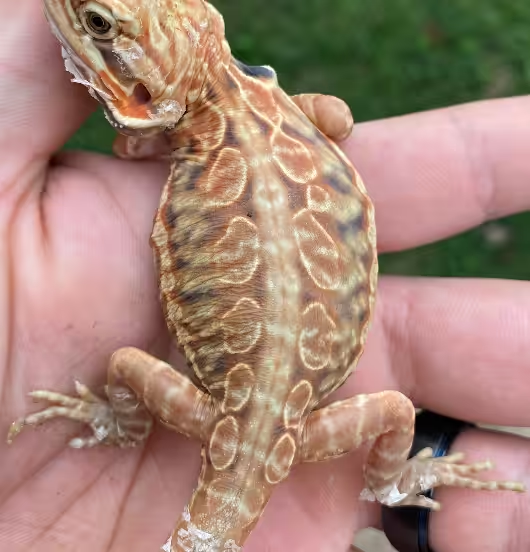
Short answer: Keeping a silkback bearded dragon does not make you cruel, but the morph comes with real welfare costs. A silkback has no scales, so it loses water faster, scratches faster and depends on its keeper far more than a normal bearded dragon. Breeders and keepers share the responsibility for those costs, and you have every right to ask if they are acceptable.
This article looks at what the research says, where the evidence is thin, and what both sides of the debate argue. If you already own one, jump to the silkback care guide.
What Makes a Silkback Different
A silkback is a Central bearded dragon with two copies of a scale mutation. With one copy, the dragon is a leatherback with smaller, flatter scales. With two copies, it has no scales at all and a soft, smooth skin.
Researchers at the University of Geneva traced this to a disrupted gene called ectodysplasin-A (EDA), in a study published in Science Advances in 2016 (University of Geneva press release). In humans and mice, mutations in the same gene affect hair, teeth, glands and nails. The study does not show that silkbacks have those problems, but it makes clear that the smooth skin comes from a defect and goes beyond a cosmetic variation.
🦎 Want all the essentials on one printable page?
The Complete Bearded Dragon Care Plan puts daily routines, feeding charts, safe vs. toxic foods and vet red flags into one 16-page PDF for $7.99.
See the Care Plan →What Scales Protect Against
Scales are not decoration. In a normal bearded dragon they help with three things:
- Water loss. A 2021 study from Brock University, published in the Journal of Experimental Biology, found that scaleless silkbacks lost water much faster than dragons with normal scales at basking temperature. Leatherbacks lost almost as much. The dragons did not move to cooler spots to make up for it (Journal of Experimental Biology summary).
- Injuries. Scales act like armor against rough rocks, branches and the claws of other dragons. Bare skin tears and scrapes faster.
- Light and heat. Many keepers and vets assume thin, bare skin is more sensitive to strong basking lamps and UVB. This is plausible, but there is no published study on silkbacks that proves it.
Problems Keepers Report
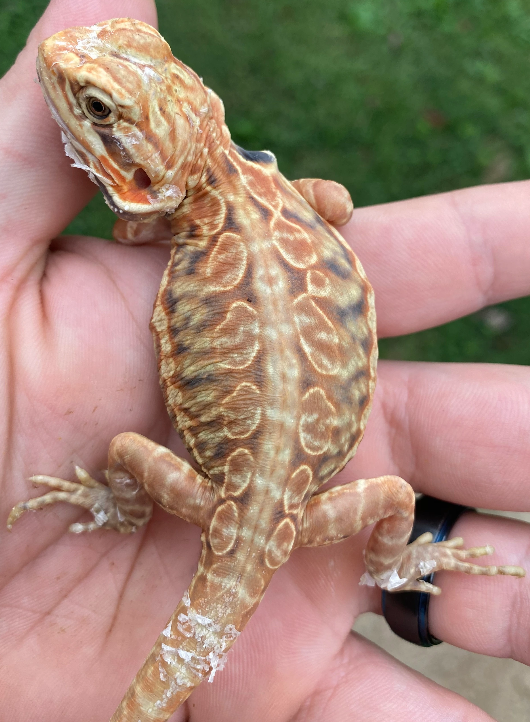
Beyond the research, keepers and rescues describe a set of recurring problems:
- Shedding trouble, with skin that sticks to toes and the tail tip and can cut off blood flow
- Dehydration, above all in dry homes or with strong heat
- Dry, cracked or scratched skin
- Toe and tail-tip loss after stuck shed
- Reports of shorter lives than normal bearded dragons
Treat that last point with care. There is no published lifespan study on silkbacks. Shorter lifespans and higher illness rates are reported by keepers, rescues and care websites, but they are observations, not measured data. Some silkbacks live long lives in good care, and some problems may come from poor husbandry rather than the morph itself.
The Case Against Breeding Silkbacks
Critics argue that breeders produce on purpose animals with a known defect for their looks. Their main points:
- The morph exists only because of a mutation that removes a protective structure.
- Every silkback needs more care than a normal dragon to stay healthy, so the animal carries the cost of a human preference.
- Many silkbacks are sold to beginners who do not know about their needs.
- Some keeper sites, such as ReptiFiles, argue in public that silkbacks should not be bred.
The Case for Silkbacks
Supporters make these points:
- With the right setup, many silkbacks eat, bask and behave like normal bearded dragons.
- Their care needs are higher, but manageable for an informed keeper.
- Silkbacks already exist in the pet trade and need good homes.
- Leatherbacks, which keep partial scale cover, are a middle ground that many breeders now prefer.
Our View
We do not think owning a silkback makes someone a bad keeper. But we would not recommend a silkback as a first bearded dragon, and we think buyers should know the trade-offs before they pay extra for one. If you love the look, a leatherback offers a similar smooth appearance with more natural protection. You can compare all traits in our guide to bearded dragon morphs.
If You Already Have a Silkback
A silkback can have a good life when its keeper adapts the setup:
- Offer fresh water daily and regular lukewarm baths.
- Give shade close to the basking spot so the dragon can move out of the heat and UVB beam.
- Choose smooth decor and avoid sharp rocks or rough substrate.
- Check toes and tail tip after every shed.
- Find a reptile vet before problems start, and book a check if the skin looks dry, cracked or burned.
Our silkback care guide covers housing, diet and skin care in detail, and the Complete Bearded Dragon Care Plan puts daily routines and vet red flags on one printable page.
FAQs
1. Are silkback bearded dragons cruel to breed?
A: Opinions differ. The scaleless skin comes from a gene defect and makes the dragon more prone to water loss and injury. Many keepers and some care sites argue they should not be bred; others say they can live well with expert care.
2. Do silkback bearded dragons live shorter lives?
A: Many keepers report shorter lives, but there is no published lifespan study. Good hydration, skin care and vet checks make the biggest difference.
3. Are silkbacks good for beginners?
A: No. Their skin, shedding and hydration needs make them a poor choice for a first bearded dragon.
4. Is a leatherback better than a silkback?
A: For most keepers, yes. A leatherback has smaller scales but keeps much of their protection, so it is less fragile than a fully scaleless silkback.

Love your beardie? Wear it proudly.
My Bearded Dragon Is My Spirit Animal Tee – from $18.45. Our own bearded dragon designs, printed on demand. Every order supports these free care guides.
View this design → Browse all gifts