Supplements for Bearded Dragons: Calcium, D3 and Vitamins Explained

Supplements support a bearded dragon’s diet. They do not replace it. Pet dragons need three: plain calcium to balance the phosphorus in insects, calcium with vitamin D3 as a backup to UVB light, and a reptile multivitamin in small amounts. Babies need calcium at most insect meals, adults a few times a week. Good UVB, gut-loaded insects and calcium-rich greens matter more than any powder, and too much vitamin D3 or vitamin A causes harm.
Table of Contents
- Nutritional Needs
- Why Pet Dragons Need Supplements
- Types of Supplements
- How to Choose and Use Them
- Mistakes and Risks
- Myths
- Frequently Asked Questions
🦎 Want all the essentials on one printable page?
The Complete Bearded Dragon Care Plan puts daily routines, feeding charts, safe vs. toxic foods and vet red flags into one 16-page PDF for $7.99.
See the Care Plan →Key takeaways
| Point | Details |
|---|---|
| Support, not replacement | Diet, UVB and heat come first. Supplements fill gaps. |
| Calcium is the main one | Feeder insects contain more phosphorus than calcium. |
| D3 and vitamins in small amounts | Both build up in the body when overused. |
| Schedule by age | Babies need more calcium than adults. See the table below. |
Nutritional Needs
Bearded dragons need protein for growth, calcium for bones, muscles and nerves, vitamin D3 to absorb calcium, vitamin A for eyes, skin and immunity, and a range of trace minerals. A pet diet of a few farmed insect species and supermarket greens covers most of this, but not all. Signs of a dragon that is doing well are covered in our guide to signs of a healthy bearded dragon.
Why Pet Dragons Need Supplements
- Calcium-to-phosphorus balance: crickets, roaches and worms contain more phosphorus than calcium. Without calcium powder, a dragon draws calcium from its bones.
- Vitamin D3: dragons make D3 in their skin under UVB. Glass and plastic block UVB, and tubes weaken with age. A small amount of D3 in powder acts as a backup.
- Narrow diet: pet dragons eat far fewer kinds of food than wild ones. A multivitamin covers small gaps.
Without enough calcium and UVB, dragons develop metabolic bone disease, with a soft jaw, weak and swollen legs, tremors and broken bones. Correct heat matters too: read why bearded dragons need basking.
Types of Supplements
| Supplement | Role | Babies and juveniles | Adults |
|---|---|---|---|
| Plain calcium carbonate (no D3, no phosphorus) | Bone strength, balances insect phosphorus | Most insect meals | 2 to 3 insect meals a week |
| Calcium with D3 | Backup source of D3 | 2 to 3 times a week | Once a week |
| Reptile multivitamin | Vitamins and trace minerals | 1 to 2 times a week | Once or twice a month |
| Separate D3 or vitamin A products | Treatment of diagnosed deficiency | When a vet prescribes them | |
These are common starting points. Follow the product label and ask your vet, in particular if your UVB setup is unusual or your dragon is ill or laying eggs. Our supplement reviews compare products.
How to Choose and Use Them
- Buy reptile products from known brands with clear amounts on the label.
- Choose a plain calcium without phosphorus for most dusting.
- Pick a multivitamin with beta-carotene, which carries a lower risk of vitamin A overdose than preformed vitamin A.
- Gut-load insects for at least 24 hours with greens, squash or a gut-load diet.
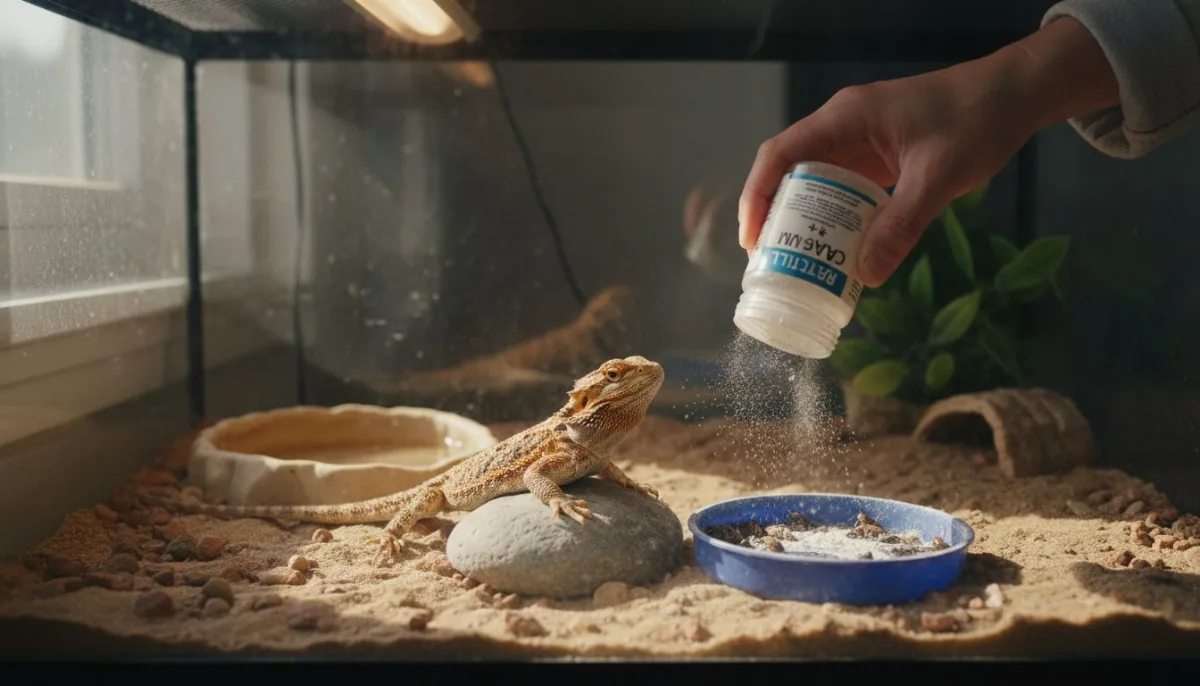
- Put insects in a cup with a pinch of powder, shake and feed at once.
- Keep a log of which powder you used on which day.
- Store powders closed, dry and out of the sun, and replace them by the date on the label.
Mistakes and Risks
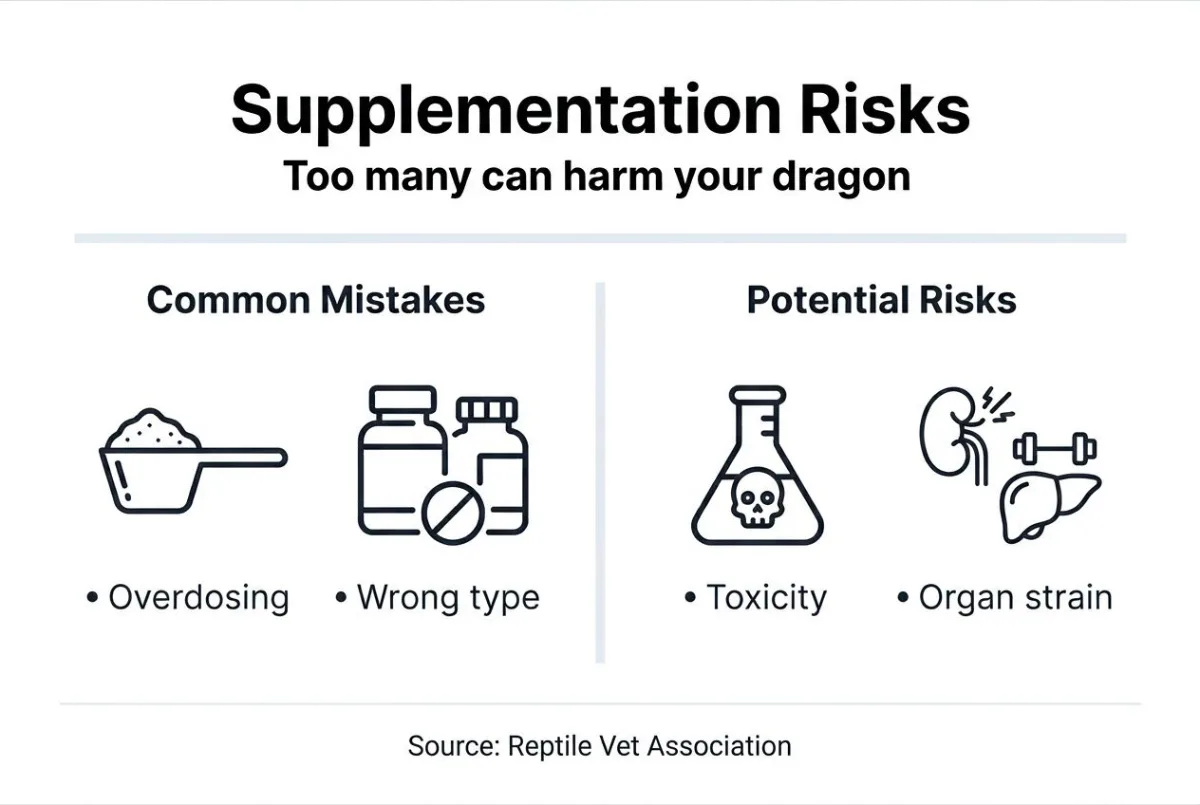
- Too much vitamin D3: using calcium with D3 at every meal can cause calcium deposits in organs and kidney damage.
- Too much vitamin A: frequent multivitamin use with preformed vitamin A can cause dry, peeling skin and swelling.
- Too little calcium for babies: growing dragons need calcium at most insect meals. Twice a week is not enough for a baby.
- Human supplements: wrong forms and doses for reptiles.
- Powder instead of UVB: supplements cannot replace a working T5 tube.
Myths
- “Supplements replace a varied diet.” They do not. Fresh greens, varied insects and gut-loading provide most nutrients.
- “More is better.” Overdosing D3 and vitamin A causes illness.
- “Powder D3 means UVB is optional.” UVB also affects behavior and well-being. Every dragon needs it.
- “Expensive means better.” Look at the label, not the price.
Example adult week
| Day | Insects | Powder |
|---|---|---|
| Monday | Gut-loaded dubia roaches | Plain calcium |
| Wednesday | Gut-loaded crickets | Plain calcium |
| Saturday | Black soldier fly larvae | Calcium with D3, multivitamin every two to four weeks |
| Every day | Fresh greens | None |
Pair this with our health checklist and a yearly vet visit.
Related Guides

Read our feeding guide, our guide on hydration and our habitat setup guide.
Frequently asked questions
How often should I dust feeder insects with calcium powder?
Babies and juveniles: at most insect meals with plain calcium, plus calcium with D3 two to three times a week. Adults: plain calcium on two to three insect meals a week and calcium with D3 once a week. Follow the label and your vet’s advice.
Can vitamin D3 supplements replace UVB lighting for my bearded dragon?
No. UVB is the main source of vitamin D3 and also affects behavior and well-being. Powder D3 is a backup.
Is it necessary to give multivitamins weekly?
For babies and juveniles, once or twice a week is common. For adults on a varied diet, once or twice a month is enough in most cases.
What signs suggest a bearded dragon is over-supplemented?
Lethargy, a poor appetite, weakness, dry or peeling skin and swelling. Stop the extra powders and see a reptile vet, who can check blood calcium and kidney values.
Recommended

Love your beardie? Wear it proudly.
My Bearded Dragon Is My Spirit Animal Tee – from $18.45. Our own bearded dragon designs, printed on demand. Every order supports these free care guides.
View this design → Browse all gifts