Bearded Dragon Travel Prep: 6 Steps for 100% Safe Trips
Traveling with your bearded dragon can feel overwhelming. Temperature swings, stress, and improper carriers put your pet at serious risk during transport. This guide walks you through six proven steps to prepare your dragon for safe, comfortable travel. You’ll learn carrier selection, temperature management, hydration timing, and common mistakes that endanger reptiles on the road. Follow these strategies to protect your pet and enjoy stress-free trips together.
Table of Contents
- Prerequisites: What You Need Before Traveling
- Step 1: Choose and Prepare the Right Carrier
- Step 2: Manage Temperature and Humidity During Travel
- Step 3: Prepare Your Bearded Dragon for Travel
- Step 4: Best Practices During Travel
- Step 5: Common Mistakes and Troubleshooting
- Step 6: Expected Outcomes and Success Metrics
Key Takeaways
| Point | Details |
|---|---|
| Secure carriers with ventilation prevent overheating and injury during transport | Choose plastic reptile carriers with mesh windows and avoid glass tanks that trap heat |
| Temperature control between 75-85°F is critical to prevent hypothermia or thermal shock | Use portable thermometers and heating packs to monitor and maintain safe conditions |
| Acclimate your dragon to the carrier 3-5 days before travel to reduce anxiety | Start with short sessions and gradually increase time spent inside |
| Fast your bearded dragon 12-24 hours before travel to minimize digestive stress | Provide hydration instead and resume feeding after arrival |
| Schedule breaks every 2-3 hours to check hydration, temperature, and allow exercise | Use leash and harness during stops to reduce stress safely |
Prerequisites: What You Need Before Traveling
Gathering the right equipment before you hit the road determines whether your trip succeeds or creates a crisis. Start by securing a proper carrier designed specifically for reptiles. You’ll need portable thermometers to track internal temperatures, chemical heating packs rated for reptile use, a spray bottle for hydration, and familiar items like your dragon’s favorite blanket or small hide.
Know your travel duration and the environmental challenges you’ll face. A two-hour car ride requires different preparation than an eight-hour road trip. Check weather forecasts for extreme heat or cold along your route. Plan rest stops where you can safely monitor your pet without exposure to dangerous outdoor temperatures.
Essential Travel Equipment:
- Secure ventilated carrier with locking latches
- Digital thermometer and humidity gauge
- Chemical heating packs designed for reptile transport
- Spray bottle for misting and hydration
- Familiar substrate or soft padding
- Emergency contact information for exotic veterinarians
- Leash and harness for supervised breaks
Carrier Type Comparison:
| Carrier Type | Pros | Cons | Best For |
|---|---|---|---|
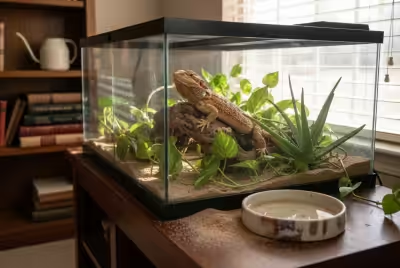
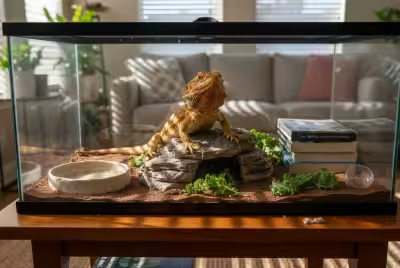
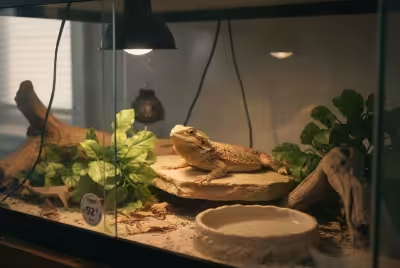
| Glass Tank | Familiar environment | Poor ventilation, heavy, heat buildup risk, breakable | Never recommended for travel |
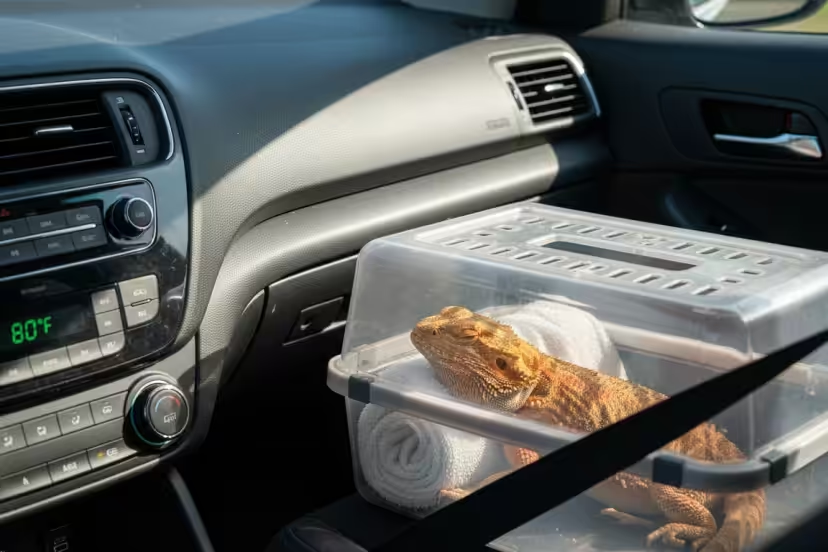
| Plastic Reptile Carrier | Lightweight, secure latches, good airflow, easy to clean | May need added insulation | Trips under 4 hours |
| Soft-Sided Carrier | Portable, collapsible | Less secure, harder to control temperature | Very short trips only |
Carriers with inadequate ventilation or made of glass should be avoided as they increase the risk of overheating, suffocation, or injury during travel. Glass tanks trap heat dangerously fast and offer no protection if you brake suddenly. Ventilation keeps air circulating and prevents carbon dioxide buildup that can suffocate your dragon within minutes.
Set up your equipment at home first. Test the carrier’s latches, verify your thermometer works, and confirm heating packs activate properly. This dress rehearsal prevents discovering broken equipment when you’re already on the highway with a stressed reptile.
Step 1: Choose and Prepare the Right Carrier
Your carrier choice directly impacts your bearded dragon’s survival during transport. Select a plastic reptile carrier sized appropriately for your dragon’s length. The carrier should allow your pet to turn around comfortably but not provide so much space that it gets tossed during sudden stops. For adult dragons, aim for carriers measuring 18-24 inches long.
Look for these critical security and ventilation features. Locking latches prevent accidental openings that could let your dragon escape in your vehicle or at rest stops. Mesh windows on at least two sides ensure proper airflow. Multiple ventilation points distribute fresh air throughout the carrier and prevent hot spots from forming.
Prepare the interior with soft padding or paper towels as substrate. Avoid loose substrates like sand that your dragon might ingest if stressed. The padding should absorb any waste and provide cushioning against bumps. Add a small piece of your dragon’s favorite blanket or a familiar hide to provide psychological comfort through scent recognition.
Carrier Preparation Checklist:
- Verify all latches lock securely and cannot pop open
- Confirm mesh windows are intact with no tears
- Line bottom with 2-3 layers of paper towels or soft fabric
- Place familiar item inside for scent comfort
- Test that carrier fits securely in your vehicle without sliding
- Ensure you can access the interior quickly for temperature checks
Glass tanks trap heat and block airflow, creating deadly conditions within 15 minutes in warm weather. Even with windows cracked, glass enclosures concentrate solar radiation and prevent heat dissipation. One owner lost their dragon to heat stroke in a glass tank during a 30-minute trip on a 78°F day.
Invest in quality transportation gear designed for reptile safety rather than improvising with containers meant for other purposes. Pet stores sell carriers specifically engineered for reptile ventilation and temperature management.
Pro Tip: Test carrier security by gently shaking it while empty. If latches feel loose or the lid flexes, reinforce with zip ties through ventilation holes. A $15 carrier that fails mid-trip costs you far more in veterinary emergency care.
Step 2: Manage Temperature and Humidity During Travel
Temperature regulation separates successful trips from fatal disasters. Bearded dragons risk fatal thermal shock or hypothermia when exposed to temperatures outside the 75-85°F range during travel. Your dragon cannot regulate its body temperature internally, so you must create and maintain the right environment artificially.
Place a digital thermometer inside the carrier before loading your dragon. Position it where you can read it through the mesh without opening the carrier during travel. Add a humidity gauge to monitor moisture levels, which should stay around 30-40% for bearded dragons. Dry air stresses respiratory systems while excess humidity promotes bacterial growth.
Temperature Control Methods:
- Chemical heating packs activated 10 minutes before placing dragon inside
- Insulated carrier covers to retain warmth in cold weather
- Frozen water bottles wrapped in towels for cooling in hot weather
- Battery-powered heating pads designed for reptile use
- Vehicle climate control set to maintain 75-80°F cabin temperature
Never place heating packs directly against your dragon’s skin. Wrap them in towels and position them under the substrate layer or against the carrier’s exterior wall. Chemical packs can reach 130°F and cause severe burns within seconds of direct contact. Test pack temperature with your hand before inserting it anywhere near your pet.
Avoid direct sunlight hitting the carrier even briefly. A carrier sitting in a sunny window can jump from 75°F to 95°F in under five minutes. Park in shaded areas during stops and use sunshades on vehicle windows if driving during peak daylight hours.
Maintain humidity by lightly misting the substrate before travel. Don’t soak it; damp is sufficient. During longer trips, spray a light mist through the ventilation holes every 3-4 hours. This prevents dehydration without creating a swamp that promotes scale rot.
Temperature Safety Statistics:
Research shows that bearded dragons exposed to temperatures below 65°F for more than 30 minutes experience immune system suppression and respiratory infections. Temperatures above 95°F for just 15 minutes can trigger heat stroke with permanent organ damage.
Consider quality temperature control equipment that maintains stable conditions automatically. Battery-powered thermostats designed for reptile travel eliminate guesswork and provide alerts if temperatures drift outside safe ranges.
Pro Tip: Keep a backup set of heating packs in your vehicle. Chemical packs lose effectiveness after 8-10 hours, so long trips require replacements. Store unused packs in a cooler to prevent accidental activation before you need them.
Step 3: Prepare Your Bearded Dragon for Travel
Physical and mental preparation reduces stress that can trigger health complications during travel. Start acclimation 3-5 days before your departure date, not the morning of your trip. Rushing this process guarantees an anxious, potentially aggressive dragon.
Pre-Travel Preparation Steps:
- Place your bearded dragon in the travel carrier for 10 minutes daily, three days before travel
- Gradually increase carrier time to 30 minutes by day two
- Add familiar items to the carrier during acclimation sessions
- Practice controlled handling techniques to build trust
- Fast your dragon 12-24 hours before departure to empty digestive system
- Offer water up until 2 hours before loading into carrier
- Gather emergency veterinary contacts along your route
Fasting prevents regurgitation and impaction during travel. Food sitting in your dragon’s digestive tract during stress and motion can cause serious blockages. The 12-24 hour window allows complete digestion while preventing dehydration from extended food deprivation.
Hydration matters more than food for short trips. Mist your dragon lightly or offer water via dropper the morning of travel. Well-hydrated dragons tolerate stress better and recover faster after arrival. Dehydrated dragons show sunken eyes, wrinkled skin, and lethargy that can persist for days post-travel.
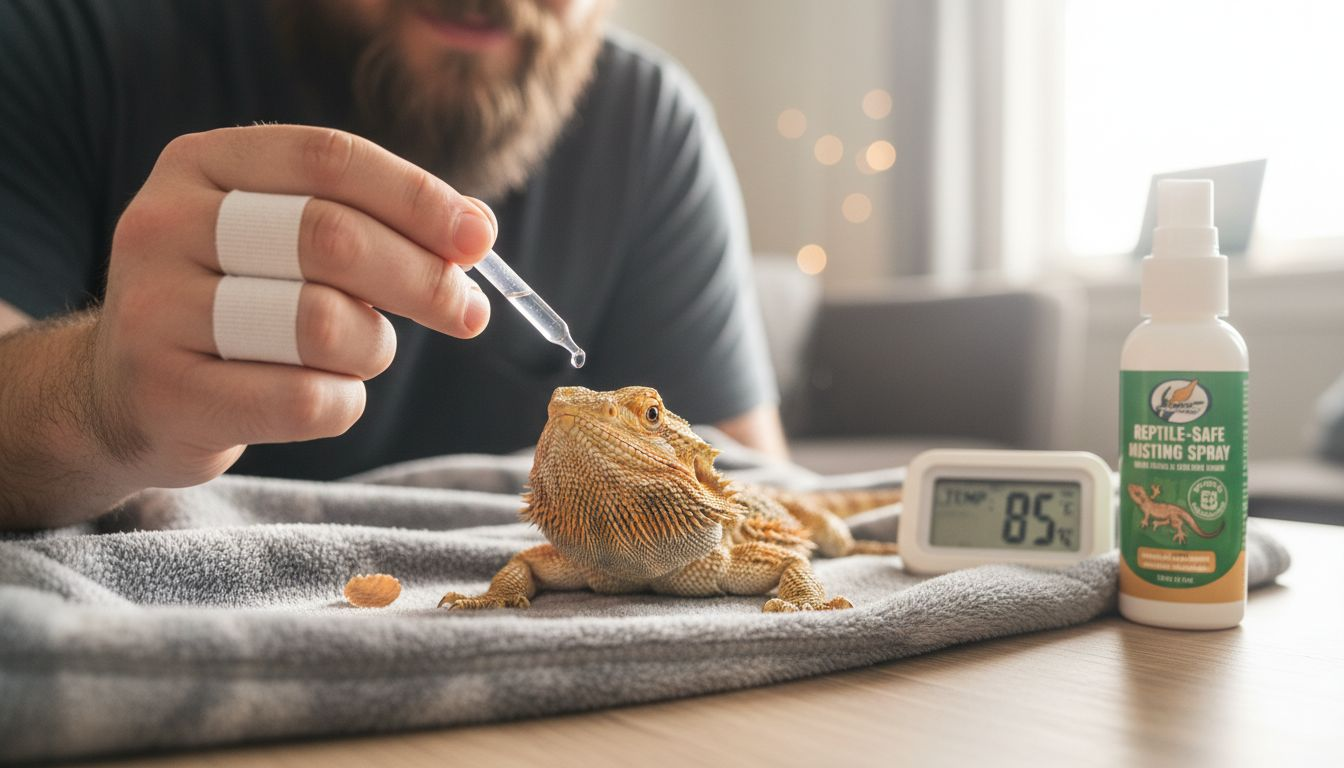
Calm handling techniques reduce pre-trip anxiety. Approach your dragon slowly, support its full body weight when lifting, and avoid sudden movements. Speak in low, steady tones. Stressed dragons display dark beard coloring, aggressive posturing, or attempts to flee. If you see these signs, extend your acclimation period.
Travel Documentation and Emergency Prep:
- Current health records from your exotic vet
- Emergency veterinary clinic contacts in your destination area
- Photos of your dragon for identification if escape occurs
- Written care instructions if others will handle your pet
- List of your dragon’s behavioral quirks and stress signals
Leashes and harnesses allow safe exercise during breaks to reduce stress on long trips. Practice leash walking at home before travel so your dragon accepts the restraint. Never leave a leashed dragon unattended; hawks and other predators can strike within seconds.
Understand your dragon’s hydration needs change during travel. Stress increases water requirements even as access becomes limited. Plan your hydration strategy before leaving home.
Many owners mistakenly feed dragons the morning of travel, thinking it provides energy. This practice causes digestive distress and increases impaction risk. Your dragon’s metabolism slows during stress, so food sits undigested while motion jostles internal organs. The result is often regurgitation inside the carrier or serious blockages requiring veterinary intervention.
Step 4: Best Practices During Travel
Executing your travel plan correctly prevents emergencies and keeps your dragon comfortable. Your driving habits directly affect your pet’s safety. Sudden stops throw your dragon against the carrier walls even with padding. Hard turns create similar impacts. Drive smoothly and anticipate traffic changes early.
In-Transit Safety Protocols:
- Secure carrier in a climate-controlled area away from direct sun or AC vents
- Drive carefully with gradual acceleration and braking
- Monitor your dragon’s behavior through the carrier mesh every 30 minutes
- Check temperature and humidity readings every 2 hours
- Schedule breaks every 2-3 hours on trips over 4 hours
- Offer water via dropper or misting during breaks
- Allow 5-10 minutes of leashed exercise at safe rest stops
- Document any concerning behaviors or symptoms immediately
Keep These Items Accessible:
- Bottled water at room temperature for hydration
- Extra heating packs if originals lose effectiveness
- Your dragon’s familiar blanket or hide
| Emergency veterinary contact numbers - First aid supplies including saline solution and gauze
- Backup carrier in case primary unit fails
Stress monitoring requires understanding normal versus concerning behaviors. Glass surfing, frantic scratching, darkened beard coloring, gaping mouth, or attempts to escape signal severe distress. Lethargy, closed eyes, and lack of response to stimuli indicate possible hypothermia or heat stroke. Address temperature issues immediately if you see these signs.
Regular hydration breaks maintain health during extended travel. Every 2-3 hours, park in a safe shaded area and lightly mist your dragon or offer water via dropper. Don’t force drinking; simply make water available. Most dragons lap droplets from their snouts or surrounding surfaces.
Keep your carrier positioned in the vehicle’s most stable area. The floor behind the front passenger seat offers the smoothest ride with minimal jostling. Avoid the trunk where temperature control is impossible and vibrations are severe. Never place carriers on seats where they can slide or tip during turns.
Using leash and harness during breaks lets your dragon stretch and reduce anxiety safely. Find rest areas with grass away from roads, dogs, and crowds. Allow 5-10 minutes of supervised exploration. Watch for signs of temperature stress and return your dragon to the carrier if outdoor conditions are extreme.
Quality handling and travel gear designed for reptile safety makes every aspect of travel easier. Purpose-built equipment prevents injuries and reduces owner stress.
Step 5: Common Mistakes and Troubleshooting
Avoiding frequent errors saves your dragon from preventable suffering. Learn from others’ mistakes rather than discovering them through emergency vet visits.
Critical Mistakes to Avoid:
- Feeding on travel day causes digestive stress, regurgitation, and impaction risk
- Using glass tanks creates deadly heat buildup and blocks ventilation entirely
- Neglecting temperature monitoring allows hypothermia or heat stroke to develop unnoticed
- Ignoring hydration needs leads to dangerous dehydration within hours
- Poor carrier acclimation triggers severe anxiety and aggressive behaviors
- Driving aggressively causes physical injuries from impacts against carrier walls
- Placing carriers in direct sunlight results in fatal overheating
- Skipping breaks on long trips compounds stress and health problems
Each mistake carries specific consequences. Feeding before travel means food sits undigested while stress slows metabolism, creating impaction that requires surgical intervention costing thousands of dollars. Glass tanks concentrate heat even in moderate weather, killing dragons within 20 minutes. Dehydration causes organ damage that may not appear until days after travel when treatment becomes more difficult and expensive.
Fix errors immediately when you notice them. If your carrier feels too warm, move it away from sun exposure and add cooling measures like wrapped ice packs. If your dragon shows stress behaviors, extend your next break and provide extra hydration. If you forgot to fast your pet, delay travel 12 hours to allow digestion.
Pro Tip: Create a pre-trip checklist that you review the night before travel and again 30 minutes before departure. Include carrier security verification, temperature equipment testing, hydration supplies confirmation, and emergency contact list updates. A simple checklist prevents forgetting critical steps when you’re rushing.
Recognize stress-induced behaviors early so you can intervene before they escalate. Darkening beard color appears first, followed by increased activity or lethargy depending on the individual dragon. Hissing, aggressive posturing, or attempts to bite signal severe distress requiring immediate action. Remove stressors, adjust temperature, offer water, and consider ending travel for the day if symptoms persist.
Consult trusted resources for detailed troubleshooting guidance when you encounter unexpected situations. Understanding proper hydration techniques prevents the most common travel-related health crisis.
Step 6: Expected Outcomes and Success Metrics
Successful travel produces specific observable results that confirm your dragon tolerated the journey well. Know what to look for so you can assess your preparation effectiveness and improve future trips.
Positive Travel Outcomes:
- Calm, alert behavior within 2 hours of arrival
- Normal appetite returning within 24 hours
- Regular bowel movements resuming within 48 hours
- Absence of dehydration signs like sunken eyes or wrinkled skin
- No respiratory symptoms such as wheezing or mucus discharge
- Minimal beard darkening or stress coloration
- Normal basking and activity patterns within 3 days
Timing matters when evaluating success. Most bearded dragons resume eating within 24 hours if the trip went well. Appetite returning after 48+ hours suggests excessive stress that you should address before attempting future travel. Bowel movements typically resume within two days; longer delays may indicate impaction from pre-trip feeding mistakes.
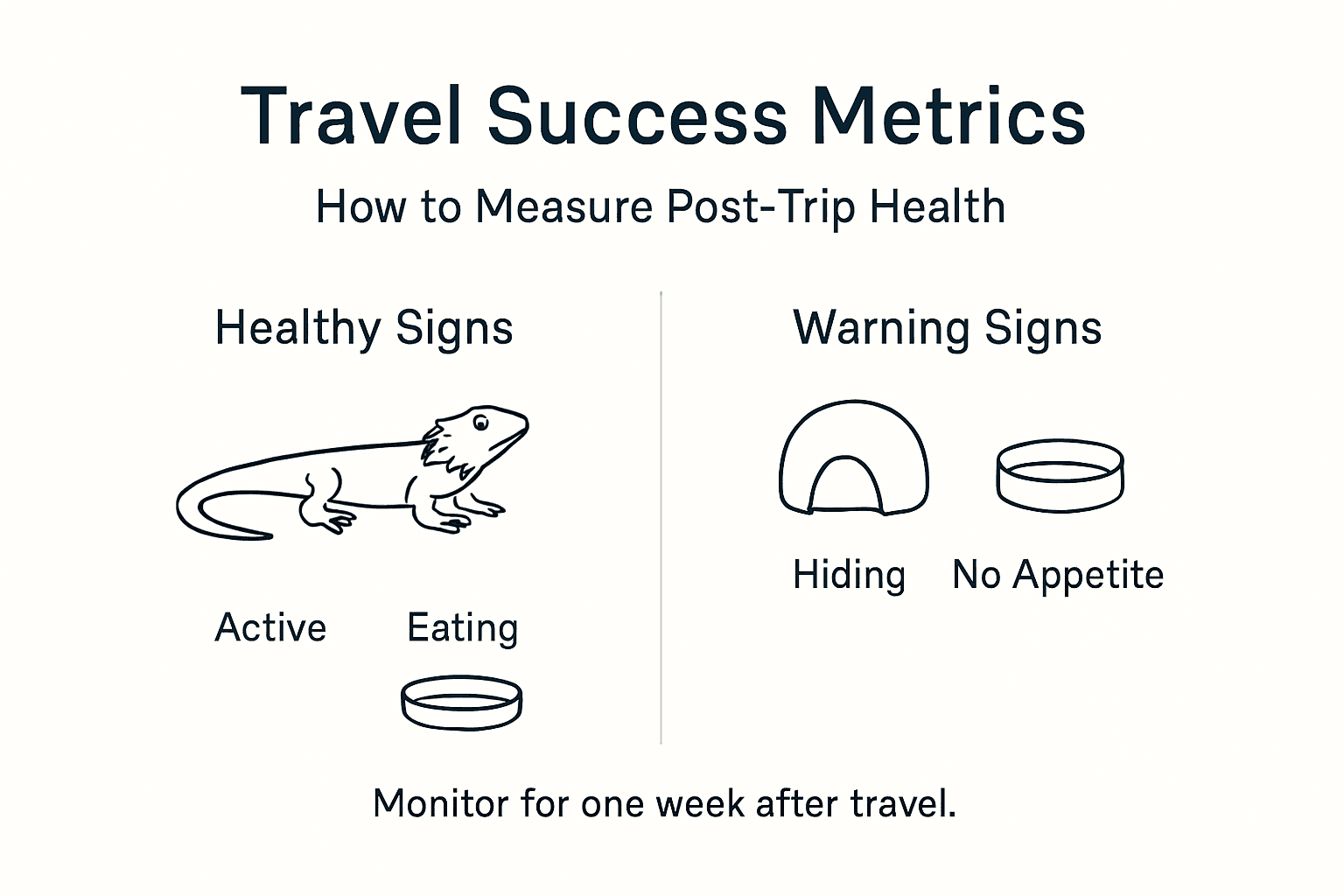
Behavioral indicators reveal stress levels your dragon experienced. A dragon that immediately explores its familiar habitat after arrival handled travel well. One that hides constantly or refuses to leave its warm spot for several days suffered significant stress requiring veterinary evaluation.
Travel Success Indicators:
| Metric | Successful Travel | Unsuccessful Travel |
|---|---|---|
| Appetite Return | Within 24 hours | After 48+ hours or not at all |
| Activity Level | Normal within 2-3 days | Lethargy persisting beyond 5 days |
| Hydration Status | Eyes bright, skin normal | Sunken eyes, wrinkled skin |
| Stress Behaviors | Minimal, resolved quickly | Persistent glass surfing, aggression |
| Bowel Movements | Resume within 48 hours | Absent beyond 72 hours |
| Respiratory Health | Clear breathing, no discharge | Wheezing, mucus, labored breathing |
Document your observations in a travel log for future reference. Note what worked well and what caused problems. Record temperature ranges you maintained, break frequency, hydration methods, and your dragon’s responses. This feedback loop helps you refine your approach for the next trip.
Improve future travel by analyzing what succeeded and what failed. If your dragon showed stress despite following protocols, consider whether acclimation time was sufficient or if carrier size needs adjustment. If temperature control struggled, invest in better heating equipment before your next journey.
Monitor your dragon’s health indicators closely for the week following travel. Some stress-related problems don’t appear immediately. Respiratory infections from temperature stress may take 3-5 days to show symptoms. Digestive issues from improper fasting might not cause visible problems until several days post-travel.
Explore More Expert Tips and Supplies at Go Bearded Dragon
You’ve learned the fundamentals of safe bearded dragon travel, but successful pet care extends far beyond transport. Go Bearded Dragon offers detailed guides covering every aspect of reptile ownership. Our comprehensive reptile companion resources provide expert-backed information on health, nutrition, habitat setup, and behavioral training.

Equip yourself with quality transportation gear designed specifically for bearded dragons that meets safety standards and simplifies travel preparation. Our guides help you select carriers, heating equipment, and monitoring tools that professional breeders trust.
Master humidity management techniques that keep your dragon healthy at home and during travel. Proper environmental control prevents respiratory infections, scale rot, and shedding problems that compromise your pet’s wellbeing. Take action now to ensure every journey with your bearded dragon succeeds.
FAQ
How long before travel should I acclimate my bearded dragon to its carrier?
Acclimate your bearded dragon to its travel carrier 3-5 days before your trip to reduce anxiety and build familiarity. Start with short 10-minute sessions and gradually increase to 30 minutes daily. This preparation helps your dragon associate the carrier with safety rather than stress.
What is the ideal temperature range to maintain inside the travel carrier?
Maintain carrier temperature between 75°F and 85°F to prevent hypothermia or heat stress. Bearded dragons risk fatal thermal shock when exposed to temperatures outside this range. Use portable digital thermometers to monitor conditions continuously and adjust heating or cooling measures immediately if readings drift.
Can I feed my bearded dragon on the day of travel?
Avoid feeding your bearded dragon 12-24 hours before travel to reduce digestive stress and motion sickness risk. Food sitting in the digestive tract during travel can cause dangerous impaction. Provide hydration instead and resume normal feeding after arrival once your pet appears calm and settled.
How often should I take breaks to check on my bearded dragon during travel?
Schedule breaks every 2-3 hours during long trips to check hydration, verify temperature readings, and assess stress levels. Use leash and harness during stops to allow safe exercise that reduces anxiety. Each break should last 10-15 minutes in a secure, temperature-controlled environment.