Bearded Dragon Third Eye: Why It Matters for Owners
The regular eyes of a bearded dragon get all the attention, but the third eye on top of their head plays a vital role in health and daily routines. For first-time reptile owners, understanding this hidden organ means learning why lighting is more than just decoration. This overview uncovers how the parietal eye helps regulate sleep, appetite, and stress, giving you the insight to improve your dragon’s well-being from the start.
Table of Contents
- Defining The Bearded Dragon Third Eye
- Location, Anatomy, And Misconceptions
- How The Third Eye Detects Light And Shadows
- Its Role In Regulating Behavior And Health
- Impacts On Pet Care And Common Mistakes
Key Takeaways
| Point | Details |
|---|---|
| Third Eye Function | The bearded dragon’s third eye monitors light intensity and regulates internal biological rhythms, influencing sleep and hormone production. |
| Lighting Importance | Proper UVB lighting is crucial for the third eye to function effectively, impacting the dragon’s overall health and behavior. |
| Common Mistakes | Inconsistent light cycles and insufficient UVB lighting can lead to stress and health issues in bearded dragons. |
| Observation and Adjustment | Monitor your dragon’s behavior for changes and adjust lighting to ensure a stable circadian rhythm for optimal well-being. |
Defining the Bearded Dragon Third Eye
Your bearded dragon has not one, not two, but three eyes. The third one sits on top of their head, hidden beneath a translucent scale that looks almost like a tiny window. Unlike the two eyes you see when your scaly pal gives you that adorable head tilt, this specialized parietal eye works entirely differently. It does not form images or help your dragon see their food or you. Instead, it operates behind the scenes like a biological dashboard monitoring environmental conditions.
The anatomy of the third eye is fascinating when you think about it. Inside that translucent scale sits a complete miniature visual system: a retina, lens, and photoreceptor cells that detect light. Yet despite having all these components, it cannot produce the detailed images your dragon’s regular eyes create. Think of it less like a camera and more like a light sensor that tells your dragon’s brain whether the environment is bright or dark.
What makes this organ truly special is its job in keeping your dragon healthy. The third eye communicates directly with the brain to regulate circadian rhythms, which are those natural internal clocks that tell your dragon when to wake, when to bask, and when to rest. It also influences hormone production, which affects everything from appetite to reproductive behavior. Beyond that, it helps your bearded dragon sense environmental changes that are vital for survival in their natural desert habitat.
Understanding this third eye matters for you as an owner because it explains why lighting is so crucial in your dragon’s enclosure. When something goes wrong with light exposure, your dragon’s third eye cannot do its job properly. This can ripple through their entire system, affecting sleep, digestion, and overall wellness. If you notice unusual behavior or health concerns related to your dragon’s eyes, you’ll want to review the guide on bearded dragon eye issues for more information.
Here’s a useful summary of how your bearded dragon’s three eyes differ in structure and function:
| Eye Type | Location | Main Function | Image Formation |
|---|---|---|---|
| Regular Eyes | Sides of the head | Visual perception, hunting | Yes |
| Third (Parietal) Eye | Top center of head | Senses light intensity | No |
| Third (Parietal) Eye | Top center of head | Regulates internal rhythms | No |
Pro tip: Ensure your bearded dragon receives 10 to 12 hours of UVB lighting daily, as this light penetrates the translucent scale covering the third eye and helps regulate their natural biological rhythms.
Location, Anatomy, and Misconceptions
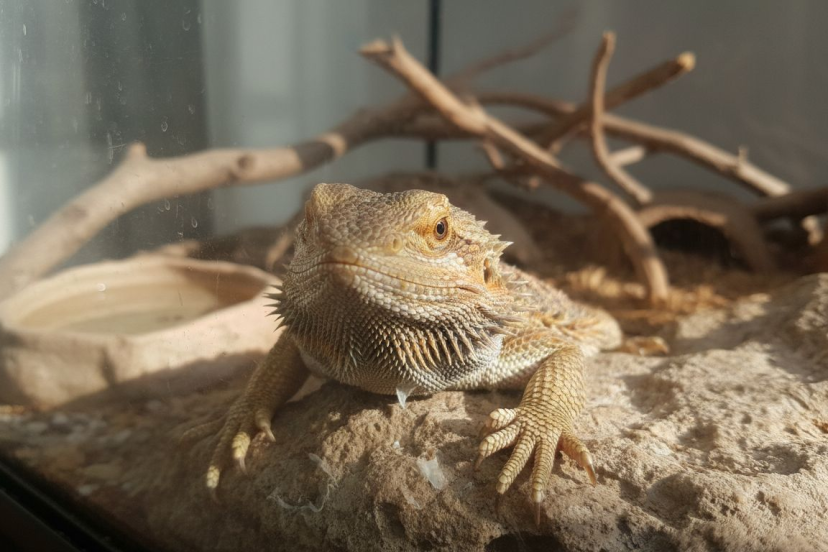
If you want to find your bearded dragon’s third eye, look at the top center of their head. You’ll spot a small raised circular scale that sits right between where their two regular eyes are. This spot is the home of the parietal eye, and once you know where to look, you’ll start noticing it every time your dragon basks under their heat lamp. It’s always there, quietly doing its job.
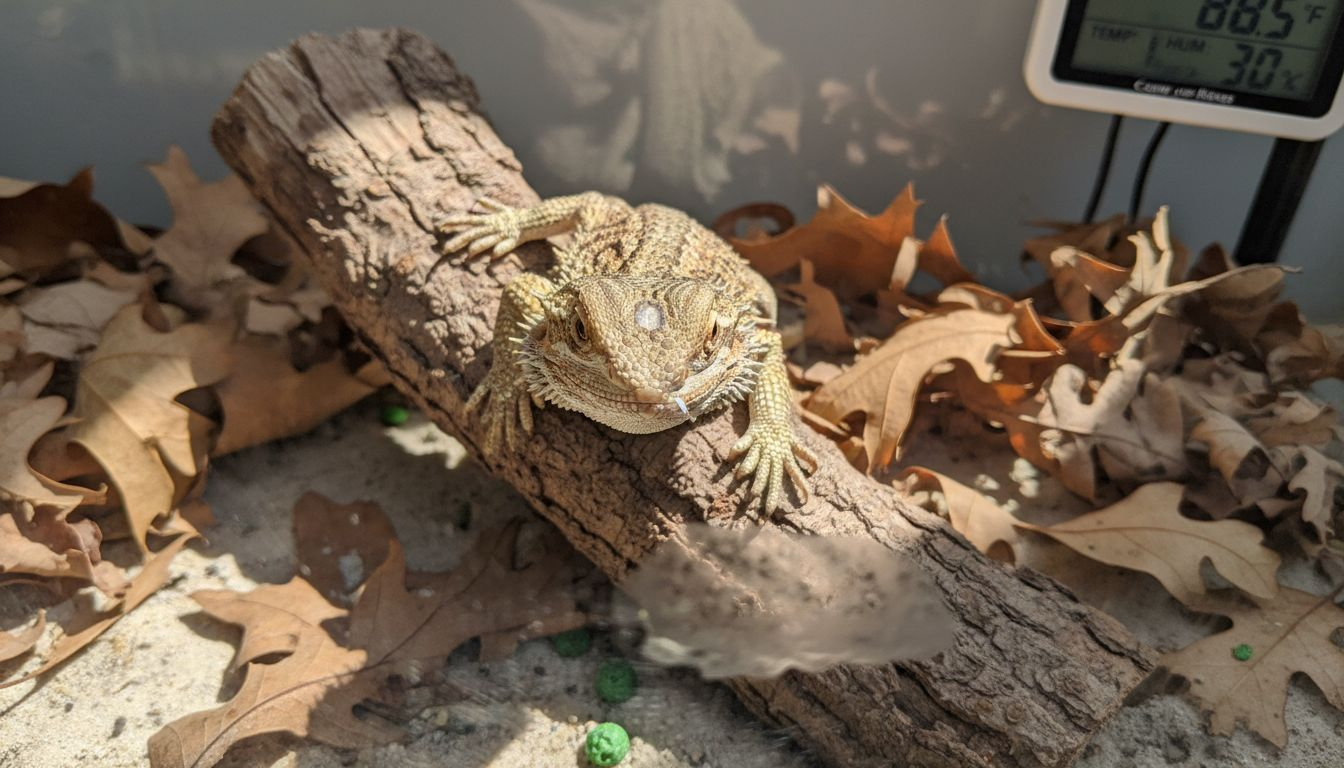
The anatomy is where things get interesting. The third eye contains a lens, retina, and photoreceptive pigments that sound like they belong to a regular eye. But here’s the key difference: it has no iris and cannot form visual images. Instead, think of it as a photosensitive sensor connected to the pineal gland rather than wired like your dragon’s other eyes. It only senses light intensity, not shapes, colors, or details.
Now let’s talk about the misconceptions, because there are plenty. Many dragon owners imagine the third eye has psychic powers or grants their pet some kind of enhanced vision. Some believe it functions like a normal eye and can see the world around them. Neither is true. The reality is far more practical and far less mystical. It exists to help your dragon understand light and dark cycles, which influences everything about their behavior and health.
Another common myth is that the third eye can get infected or needs special care like your dragon’s regular eyes. While it’s not impossible for issues to arise, the third eye is remarkably low maintenance. Problems there are typically signs of broader health concerns rather than localized infections. Understanding what the third eye actually does helps you stop worrying about things that aren’t real problems.
Pro tip: Observe your dragon’s third eye during basking sessions to confirm it appears healthy and translucent, but don’t stress about cleaning or treating it separately from your overall care routine.
How the Third Eye Detects Light and Shadows
Your bearded dragon’s third eye is essentially a motion detector for light. It does not need to see clear pictures or identify objects. Instead, it picks up on changes in brightness and shadows moving across that translucent scale on top of their head. When the light shifts or darkens, the photoreceptor cells inside spring into action and send signals straight to the brain.
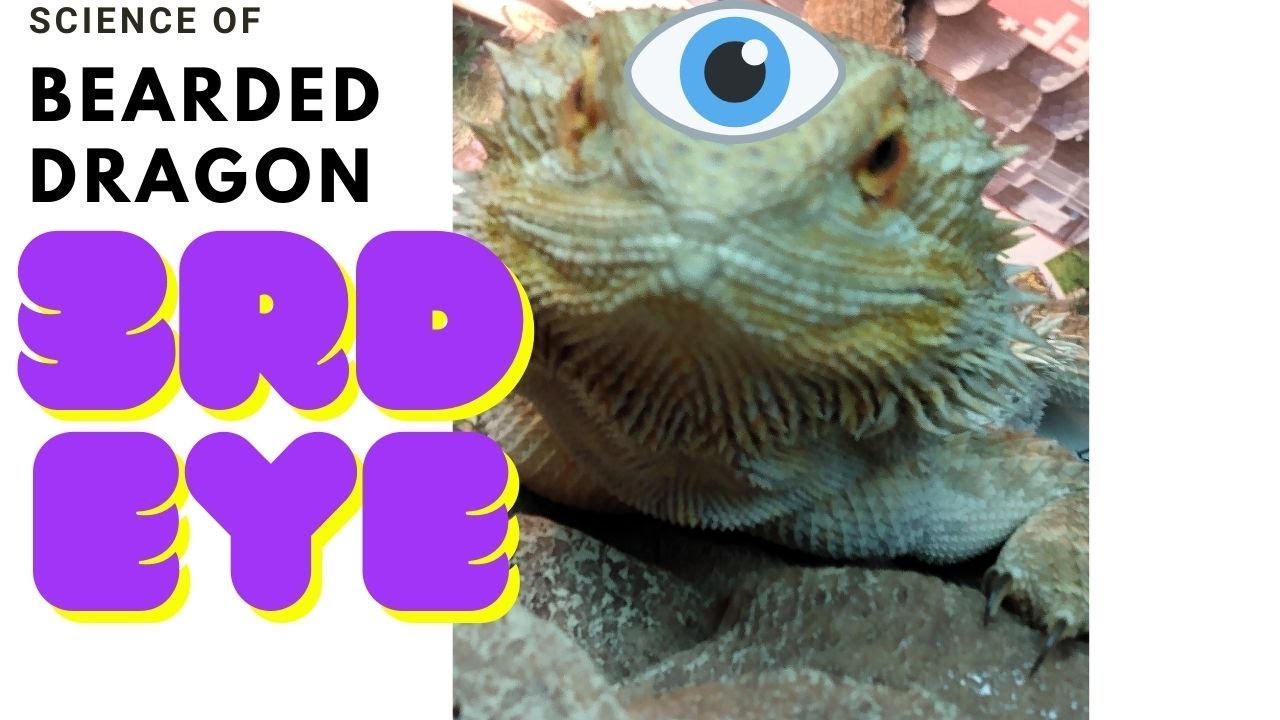
This light-sensing ability serves a practical survival function in the wild. The third eye functions like a built-in motion detector by noticing changes in light intensity and shadows, which alerts your dragon to potential predators or sudden environmental shifts. Imagine a shadow passing overhead in the desert. Your dragon’s regular eyes might be focused on food, but the third eye catches that movement and triggers an alarm. This split-second awareness could mean the difference between safety and danger in nature.
Beyond predator detection, the third eye helps your dragon navigate using the sun’s position. Desert reptiles rely on solar cues to find their way around, and the third eye contributes to that internal GPS system. It also plays a major role in setting your dragon’s internal clock by responding to day length variations. When daylight hours increase or decrease, the third eye detects these changes and signals the body to adjust hormone production and behavior accordingly.
This is why lighting consistency matters so much in captivity. Your dragon’s third eye is constantly monitoring light patterns. When you use inadequate UVB lighting or keep erratic light schedules, you’re essentially breaking that communication line between the third eye and the pineal gland. Your dragon cannot tell time properly, which throws off feeding schedules, sleep cycles, and reproductive readiness.
Pro tip: Use a timer on your enclosure lights to maintain consistent 10 to 12 hour light cycles daily, allowing your dragon’s third eye to establish stable circadian rhythms.
Its Role in Regulating Behavior and Health
The third eye is your bearded dragon’s internal clock keeper. When it detects light and shadow patterns, it sends information to the pineal gland, which produces melatonin and other hormones that control sleep, wakefulness, and appetite. This is not a minor detail. This is the foundation of your dragon’s entire daily rhythm. Without proper third eye function, nothing else works quite right.
Think about what happens when the third eye cannot do its job properly. Your dragon’s sleep becomes erratic. They might stay awake when they should be resting or sleep through prime basking hours. Their appetite suffers because hunger hormones get out of sync. Digestion slows down. Energy levels crash. Over time, these disruptions can lead to serious health complications that seem mysterious until you trace them back to inadequate lighting.
The third eye also influences reproductive behavior and seasonal awareness. In nature, bearded dragons respond to seasonal light changes that trigger breeding cycles and behavioral shifts. When your dragon lives under inconsistent lighting, the third eye cannot relay accurate seasonal information to the body. This can suppress or trigger reproductive behaviors at the wrong times, stressing your pet unnecessarily.
Beyond reproduction, the third eye supports mood and stress levels. A dragon with proper light cycles managed by a functional third eye tends to be calmer and more content. They bask more eagerly, eat with better appetite, and display typical friendly behaviors. Conversely, dragons living under poor lighting conditions often exhibit stress behaviors like aggression or lethargy. These are not personality quirks. They are direct responses to a broken internal clock.
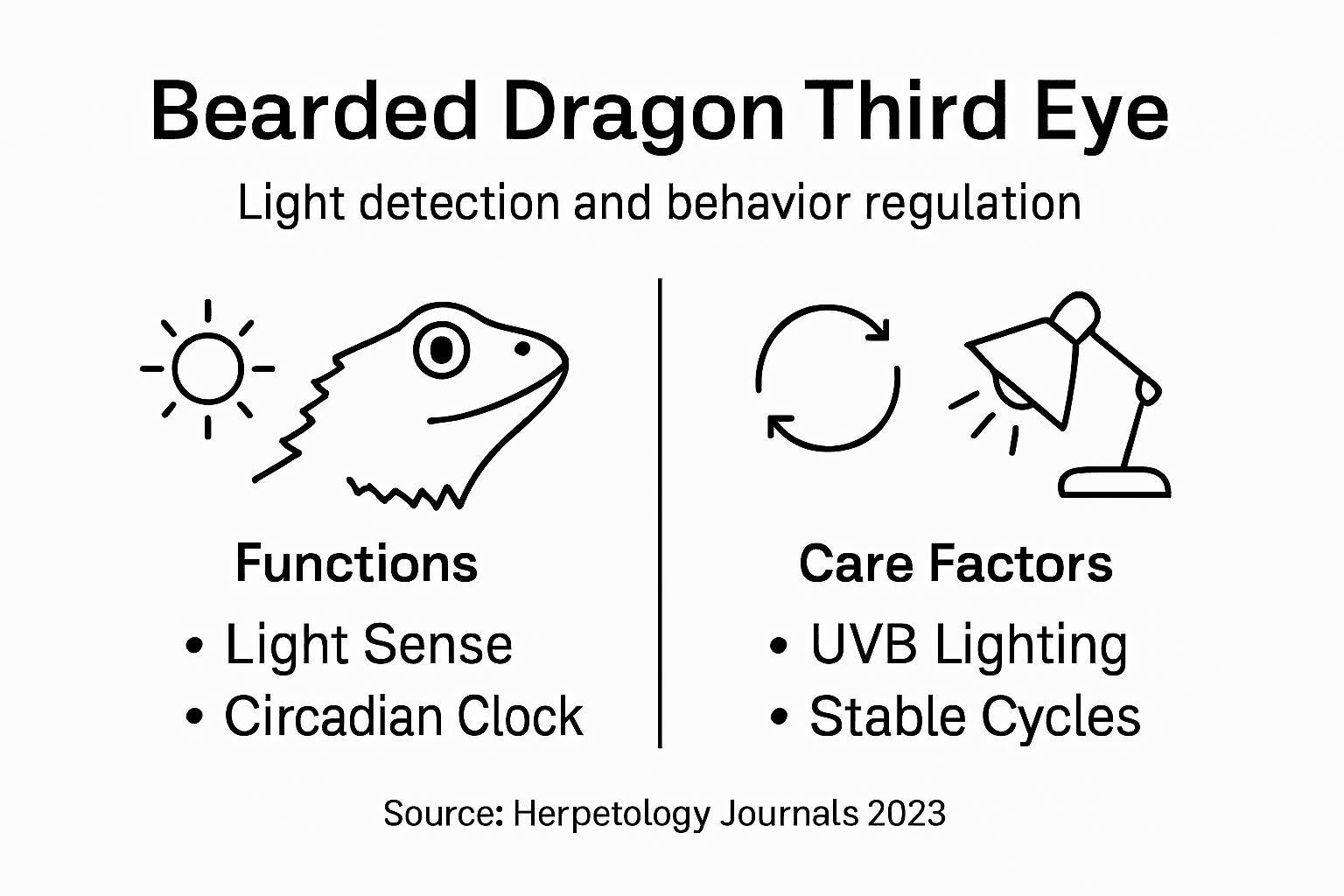
When bearded dragon eye issues arise, they sometimes trace back to third eye problems linked to broader systemic issues rather than localized eye damage. This underscores why proper enclosure lighting is preventative medicine, not optional luxury.
Pro tip: Monitor your bearded dragon’s basking frequency, appetite, and sleep patterns over two weeks to establish a baseline, then adjust lighting if you notice abnormal changes in any of these behaviors.
Impacts on Pet Care and Common Mistakes
When you set up a bearded dragon enclosure, the third eye should be front and center in your planning. Yet many owners overlook it entirely. They focus on temperature gradients and food bowls while lighting becomes an afterthought. This is the mistake that creates cascading health problems down the road. The third eye does not forgive poor lighting decisions.
One of the biggest mistakes is using inadequate UVB lighting or skipping it altogether. Your dragon’s third eye needs that UVB exposure to function properly and communicate with the pineal gland. Without it, the circadian rhythm falls apart. You might notice your dragon becomes sluggish, stops eating with interest, or develops behavioral issues that seem random until you realize the root cause was lighting all along.
Another common error is inconsistent light cycles. Your dragon needs a stable photoperiod, meaning the same light on and light off times every single day. If you turn lights on at 8 AM one day and 10 AM the next, your dragon’s third eye receives conflicting signals. This creates confusion in the body that manifests as stress, poor digestion, and weakened immunity.
Physical damage to the third eye area is less common but still worth avoiding. Do not attempt to clean or manipulate the translucent scale covering the third eye. Do not use harsh substrates that could scratch it. The third eye needs protection, not maintenance. Pet owners often overlook the importance of the third eye when setting up terrariums, resulting in incorrect light exposure that causes behavioral stress or disorientation.
The good news is that correcting these mistakes works quickly. Once you implement proper UVB lighting on a consistent schedule, your dragon’s third eye begins functioning as designed. Within weeks, you will notice improved appetite, better sleep patterns, and a calmer demeanor.
Review this comparison of common lighting mistakes and their effects on bearded dragon health:
| Mistake | Immediate Effect | Long-Term Impact |
|---|---|---|
| Insufficient UVB lighting | Poor hormone regulation | Weakened immunity |
| Inconsistent light cycle | Disrupted sleep and appetite | Chronic stress |
| Cleaning third eye scale | Risk of physical harm | Potential infection |
Pro tip: Install your enclosure lights on a programmable timer set for 12 hours on and 12 hours off, eliminating inconsistency and ensuring your dragon’s third eye receives the steady photoperiod it needs.
Protect Your Bearded Dragon’s Vital Third Eye With Expert Care
Your bearded dragon relies on its unique third eye to regulate essential behaviors like sleep, appetite, and stress levels. Improper UVB lighting or inconsistent light cycles can disrupt this natural rhythm and impact your pet’s overall health. If you want to ensure your dragon thrives with a balanced internal clock and proper hormone regulation, understanding the importance of this tiny but powerful organ is key.

Discover detailed care tips, lighting solutions, and health guides specifically designed for your bearded dragon’s unique needs at gobeardeddragon.com. Whether you want to improve basking habits, address bearded dragon eye issues, or create a habitat that supports healthy circadian rhythms go now to unlock practical advice and trusted resources. Take control of your dragon’s health today and see the difference that proper third eye care can make.
Frequently Asked Questions
What is the purpose of a bearded dragon’s third eye?
The third eye, or parietal eye, mainly senses light intensity and helps regulate circadian rhythms, hormone production, and behavioral patterns such as sleep and appetite.
How does the third eye affect a bearded dragon’s health?
A properly functioning third eye ensures stable sleep patterns, hormone regulation, and overall wellness. Inadequate lighting can disrupt these functions, leading to issues like lethargy and poor appetite.
What are the common mistakes related to the care of a bearded dragon’s third eye?
Common mistakes include using insufficient UVB lighting, inconsistent light cycles, and attempting to clean the translucent scale covering the third eye. These errors can lead to health problems and behavioral stress.
How can I ensure my bearded dragon receives the right light exposure for its third eye?
Maintain a consistent photoperiod by using a programmable timer set for 10 to 12 hours of UVB lighting daily. This supports the third eye’s ability to regulate internal biological rhythms effectively.
Recommended
- Top Bearded Dragon Enclosure Kits – Expert Comparison 2025
- Go BeardedDragon-For Everything You Need To Know About Bearded Dragon Care
- Complete Guide to Bearded Dragon Eye Issues