Bearded Dragon Temperature Setup for a Healthy Habitat
Most first-time bearded dragon owners are surprised to learn that even a few degrees off in their pet’s habitat can impact their health. Creating a precise thermal environment is not just a preference—it is a lifeline for your scaly companion. With so much conflicting advice online, it is easy to feel unsure where to start. This guide breaks down the must-know steps to help you set up the safest and most comfortable heating system for your bearded dragon, no matter where you live.
Table of Contents
- Step 1: Choose the Right Heating Equipment
- Step 2: Position and Install Thermometers
- Step 3: Set Up Basking and Cool Zones
- Step 4: Adjust and Calibrate Heat Sources
- Step 5: Verify and Maintain Temperature Levels
Quick Summary
| Major Takeaway | Explanation |
|---|---|
| 1. Use a Heat Lamp for Basking | Position a heat lamp to create a basking zone at 95-105°F, essential for your bearded dragon’s temperature regulation. |
| 2. Create Temperature Gradients | Establish warm basking and cool zones (75-85°F) to allow your dragon to regulate its body temperature effectively. |
| 3. Monitor Temperatures Regularly | Use multiple thermometers to track temperatures daily, ensuring the basking and cooler zones remain within the proper range. |
| 4. Adjust Heating Sources Carefully | Regularly adjust and calibrate heat sources to maintain optimal temperatures, preventing overheating and thermal burns. |
| 5. Clean and Maintain Equipment | Routine cleaning of heating devices enhances efficiency and ensures consistent temperature regulation in the habitat. |
Step 1: Choose the Right Heating Equipment
Creating the perfect temperature habitat for your scaly pal requires selecting the right heating equipment. Your bearded dragon is essentially a tiny mood ring with scales that depends entirely on external heat sources to regulate its body temperature. Understanding how to choose and set up proper heating is absolutely critical for your reptile’s health and happiness.
Start by selecting a combination of heating tools that will create a temperature gradient in your dragon’s enclosure. You’ll want a heat lamp for basking zones that provides direct warmth, typically achieving temperatures between 95 to 105 degrees Fahrenheit. Ceramic heat emitters become your best friend for maintaining consistent background warmth without producing light, which helps simulate natural day and night cycles. Under-tank heaters can supplement heat, but should never be your primary heating source.
Positioning is key when setting up your heating equipment. Place your primary heat source on one end of the enclosure to create a natural temperature gradient. This allows your bearded dragon to move between warmer and cooler areas, mimicking their natural behavior in the wild. Always use a reliable digital thermometer to monitor temperatures and ensure your little dinosaur descendant has the perfect thermal environment.
Pro Tip: Invest in a high-quality thermostat to prevent overheating and protect your bearded dragon from potential thermal burns.
Here’s a quick comparison of popular heating equipment for bearded dragon enclosures:
| Heating Equipment Type | Produces Light | Optimal Use Location | Pros |
|---|---|---|---|
| Heat Lamp | Yes | Basking zone | Provides direct, focused heat |
| Ceramic Heat Emitter | No | Background area | Maintains night warmth safely |
| Under Tank Heater | No | Under the enclosure base | Supplements overall warmth |
Step 2: Position and Install Thermometers
Mastering the art of temperature monitoring is crucial for creating a safe and comfortable home for your bearded dragon. Installing thermometers strategically will help you become a temperature tracking ninja and ensure your scaly friend stays perfectly comfortable in their habitat.
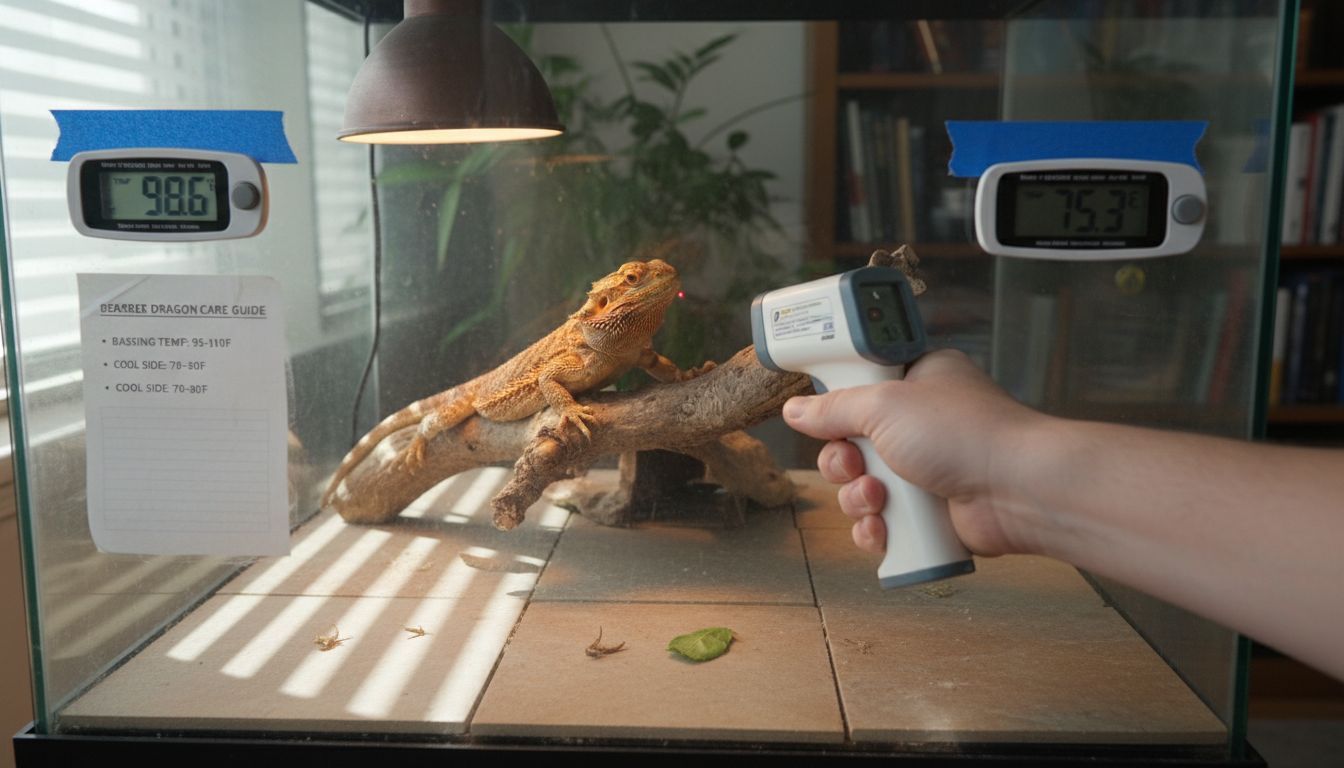
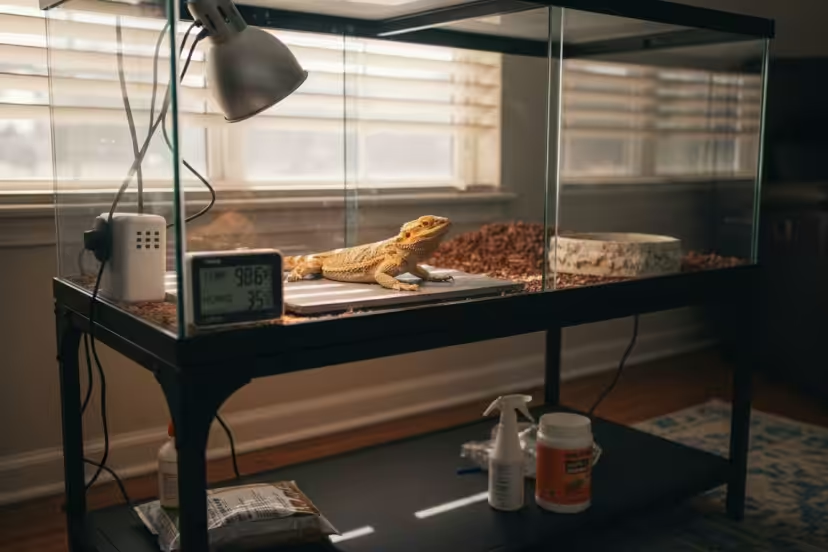
Start by investing in multiple digital thermometers to capture an accurate picture of your enclosure’s temperature gradient. Use thermometers at different levels to reflect exactly what your dragon experiences. Place one digital thermometer directly on the basking surface to monitor the hot spot temperatures, which should range between 95 to 105 degrees Fahrenheit. Another thermometer should be positioned on the cooler side of the enclosure to track the ambient temperature, ideally between 75 to 85 degrees.
For the most precise measurements, consider using an infrared thermometer that allows you to quickly check surface temperatures across different zones. Stick your thermometers at the same height where your bearded dragon typically sits to get the most accurate reading of their thermal experience. This approach transforms your enclosure into a perfectly calibrated temperature paradise for your little reptilian companion.
Pro Tip: Attach your thermometers using removable adhesive strips to make repositioning and cleaning easier without damaging your enclosure.
Step 3: Set Up Basking and Cool Zones
Creating the perfect temperature landscape for your bearded dragon is like designing a tiny thermal resort with distinct climate zones. Your scaly friend needs a carefully crafted environment that allows them to move between warm and cool areas just like they would in their natural habitat.
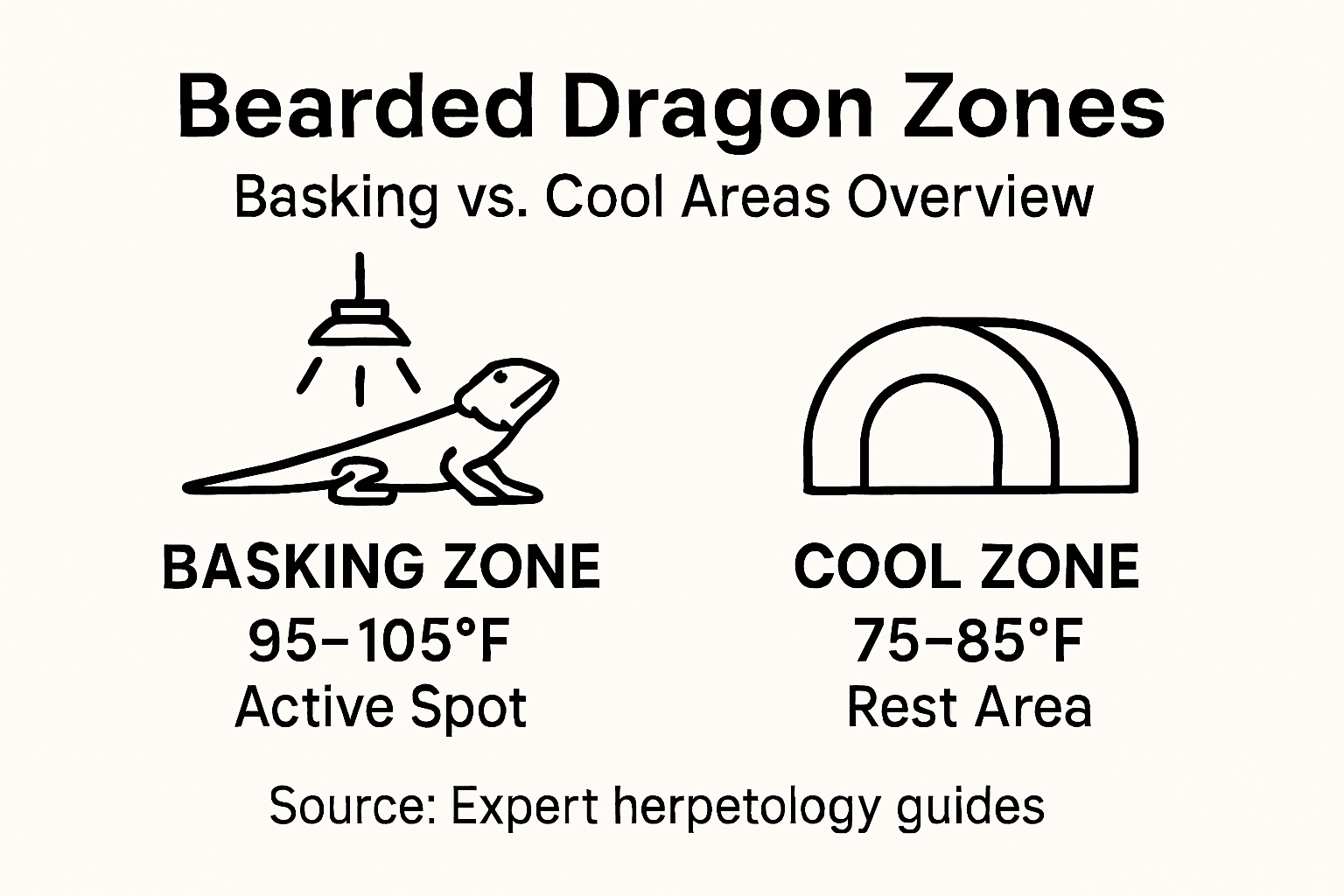
Temperature zones are critical for dragon health and should be strategically designed. Position your heat lamp on one side of the enclosure to create a basking area between 95 to 105 degrees Fahrenheit. This hot zone is where your bearded dragon will soak up warmth and essential UVB rays. On the opposite end, establish a cooler zone ranging from 75 to 85 degrees Fahrenheit. This allows your reptilian companion to regulate their body temperature by moving between these areas whenever they feel too warm or need to cool down.
Think of your enclosure as a miniature thermal playground. The basking zone should include a sturdy branch or rock where your dragon can directly absorb heat, positioned directly under the heat lamp. The cooler zone should offer shaded areas and hiding spots that provide a comfortable retreat. This temperature gradient is not just about comfort; it is a fundamental requirement for your bearded dragon’s digestion, metabolism, and overall well-being.
Pro Tip: Use a piece of slate or ceramic tile in the basking zone to help retain and radiate heat evenly for your dragon.
Use this reference table to understand ideal temperature zones for different parts of your bearded dragon’s habitat:
| Zone | Temperature Range (°F) | Zone Function |
|---|---|---|
| Basking Zone | 95–105 | Digestive health, basking |
| Cool Zone | 75–85 | Rest, thermal regulation |
| Ambient Background | 75–85 | General comfort |
Step 4: Adjust and Calibrate Heat Sources
Mastering the art of heat management is like becoming a temperature wizard for your bearded dragon. Getting the heat sources just right requires precision technique and careful observation to create the perfect thermal environment.
Strategic heating equipment placement is crucial for your dragon’s comfort and health. Start by adjusting your heat lamp’s height to achieve the ideal basking temperature between 95 to 105 degrees Fahrenheit. If the temperature is too low, lower the lamp slightly. If it is too high, raise the lamp or reduce its wattage. Always use a reliable digital thermometer to verify the exact surface temperature where your dragon will be lounging. Avoid using heat rocks, which can cause dangerous burns, and instead focus on overhead heating sources that mimic natural sunlight.
Think of yourself as a thermal engineer for your scaly companion. Use a thermostat to automate temperature control and prevent unexpected fluctuations. This device will help you maintain consistent heat levels throughout the day and night. Regularly check and recalibrate your heating equipment to ensure your bearded dragon has a stable and comfortable thermal environment. Remember that small adjustments can make a big difference in your dragon’s overall health and happiness.
Pro Tip: Invest in a digital infrared thermometer for precise and instant temperature readings across different zones of your enclosure.
Step 5: Verify and Maintain Temperature Levels
Welcome to the final stage of becoming a temperature guardian for your bearded dragon. Maintaining consistent, accurate temperatures is like being a thermal ninja who keeps your scaly friend perfectly comfortable.
Regular temperature monitoring is crucial for your dragon’s health. Create a daily routine of checking temperatures in both the basking and cool zones using multiple thermometers. Your basking area should consistently range between 95 to 105 degrees Fahrenheit, while the cool zone should maintain temperatures between 75 to 85 degrees. Use your digital and infrared thermometers to take readings at different times of the day to catch any unexpected fluctuations. Clean your heating equipment regularly to ensure efficient heat distribution and prevent dust buildup that might interfere with temperature regulation.
Think of temperature maintenance as a continuous dance of adjustment. Your thermostat is your primary tool for keeping temperatures stable. Check your digital thermometers’ calibration monthly and replace their batteries to ensure accurate readings. Watch your bearded dragon’s behavior as an additional temperature indicator. If they are spending too much time in one zone or seem uncomfortable, it might be time to make subtle adjustments to your heating setup.
Pro Tip: Create a temperature log to track daily variations and identify patterns in your enclosure’s thermal environment.
Master Your Bearded Dragon’s Habitat Temperature With Expert Guidance
Keeping your bearded dragon comfortable and healthy means mastering the art of temperature setup. The challenge lies in creating a carefully balanced thermal environment with proper heat sources and temperature monitoring. If you want to avoid common pitfalls like overheating or thermal burns and provide a habitat that supports your dragon’s digestion and overall well-being, understanding concepts like basking zones, heat lamps, and digital thermometers is essential.

Discover reliable tips and detailed care guides to perfectly set up your bearded dragon’s heat zones and monitor temperatures effectively at gobeardeddragon.com. From selecting the right heating equipment to adjusting heat sources and maintaining temperature logs, our site provides the knowledge you need to build the ideal habitat. Don’t wait until your scaly friend shows signs of discomfort. Take action now and explore practical solutions and expert advice on Bearded Dragon Temperature Setup to create a safe, happy home today.
Frequently Asked Questions
How do I choose the right heating equipment for my bearded dragon’s habitat?
To choose the right heating equipment, select a combination of a heat lamp, ceramic heat emitter, and under-tank heater. Create a temperature gradient by placing the heat lamp on one end of the enclosure and the under-tank heater beneath it to ensure your bearded dragon can move between warm and cool areas.
What temperatures should I aim for in my bearded dragon’s basking and cool zones?
In the basking zone, aim for temperatures between 95 to 105 degrees Fahrenheit, while the cool zone should stay around 75 to 85 degrees Fahrenheit. Use reliable thermometers to monitor these temperatures throughout the day.
How should I position thermometers in my bearded dragon’s enclosure?
Position thermometers at different heights to reflect where your bearded dragon typically rests. Place one thermometer directly on the basking surface and another in the cooler zone to accurately track the temperature gradient.
What maintenance steps should I take to ensure proper temperature levels in my bearded dragon’s habitat?
Regularly check and calibrate your heating equipment to maintain accurate temperatures. Create a routine of daily temperature monitoring and cleaning heating devices to prevent dust buildup that could affect heat distribution.
How can I adjust heat sources if the temperatures are too high or too low?
Adjust your heat lamp’s height to achieve the desired basking temperature; raise it if it’s too hot and lower it if it’s too cool. Verify the surface temperature frequently using a digital thermometer to ensure your bearded dragon is comfortable and healthy.
Why is creating a temperature gradient important for my bearded dragon?
A temperature gradient allows your bearded dragon to naturally regulate their body temperature by moving between different zones. This is essential for their digestion, metabolism, and overall health, helping them thrive in their habitat.