Bearded Dragon Impaction: Causes, Signs and Prevention
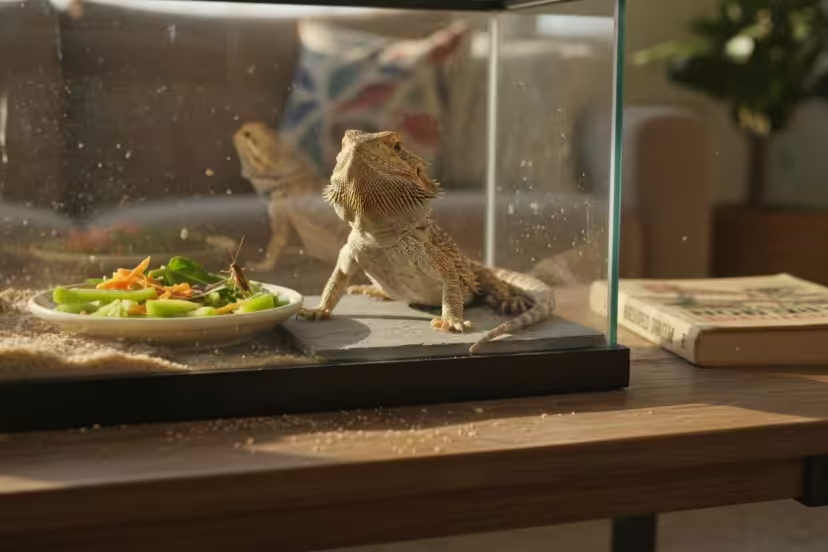
Impaction is a blockage in a bearded dragon’s gut. It happens when the dragon swallows something it cannot pass, such as loose substrate, oversized insects or hard objects, and it is more likely when the enclosure is too cold or the dragon is dehydrated. Signs include no droppings for longer than normal, a swollen or hard belly, straining, lethargy and, in severe cases, weak or dragging back legs. A dragon with these signs needs a reptile vet. You prevent impaction with a solid floor, correct heat, insects no larger than the space between the eyes, and access to water.
Table of Contents
- What Is Bearded Dragon Impaction?
- Causes and Risk Factors
- Symptoms and Warning Signs
- Treatment and Vet Care
- Prevention
- Common Mistakes and Myths
🦎 Want all the essentials on one printable page?
The Complete Bearded Dragon Care Plan puts daily routines, feeding charts, safe vs. toxic foods and vet red flags into one 16-page PDF for $7.99.
See the Care Plan →Key Takeaways
| Point | Details |
|---|---|
| What it is | A blockage of the gut by material the dragon cannot digest or pass. |
| Main causes | Loose substrate, oversized or hard insects, low temperatures and dehydration. |
| Warning signs | No droppings, swollen belly, straining, lethargy, weak back legs. |
| What to do | See a reptile vet. Do not try to treat a suspected blockage with oils or laxatives at home. |
What Is Bearded Dragon Impaction?
Impaction means that food or foreign material has packed together in the stomach or intestines and stops moving. Waste builds up behind the blockage. A large blockage can press on the spinal nerves, so some impacted dragons drag their back legs.
Young dragons face a higher risk because their gut is narrow and they eat a lot of insects. Adults can also become impacted, in particular on loose substrate or in a cold enclosure.
Causes and Risk Factors
Rescue groups such as Small Breed Rescue list substrate as a leading risk. The main causes are:
| Cause | Why it matters | Prevention |
|---|---|---|
| Loose substrate | Sand, calcium sand, walnut shell, gravel and wood chips get swallowed during feeding | Use tile, paper towels or non-adhesive shelf liner |
| Oversized insects | Large pieces cannot pass a narrow gut | Feed insects no larger than the space between the eyes |
| Hard-shelled insects | Mealworm and superworm shells are hard for young dragons to digest | Use crickets, dubia roaches or black soldier fly larvae for babies |
| Low temperatures | Digestion slows when the dragon cannot warm up | Basking surface 95 to 105°F (35 to 41°C) for adults, 105 to 110°F (40 to 43°C) for babies |
| Dehydration | Droppings dry out and become hard to pass | Fresh water every day, greens with high water content, baths when needed |
| Low calcium or weak UVB | Weak muscles, including the gut wall, move food at a slower pace | Linear T5 UVB tube and calcium supplements |
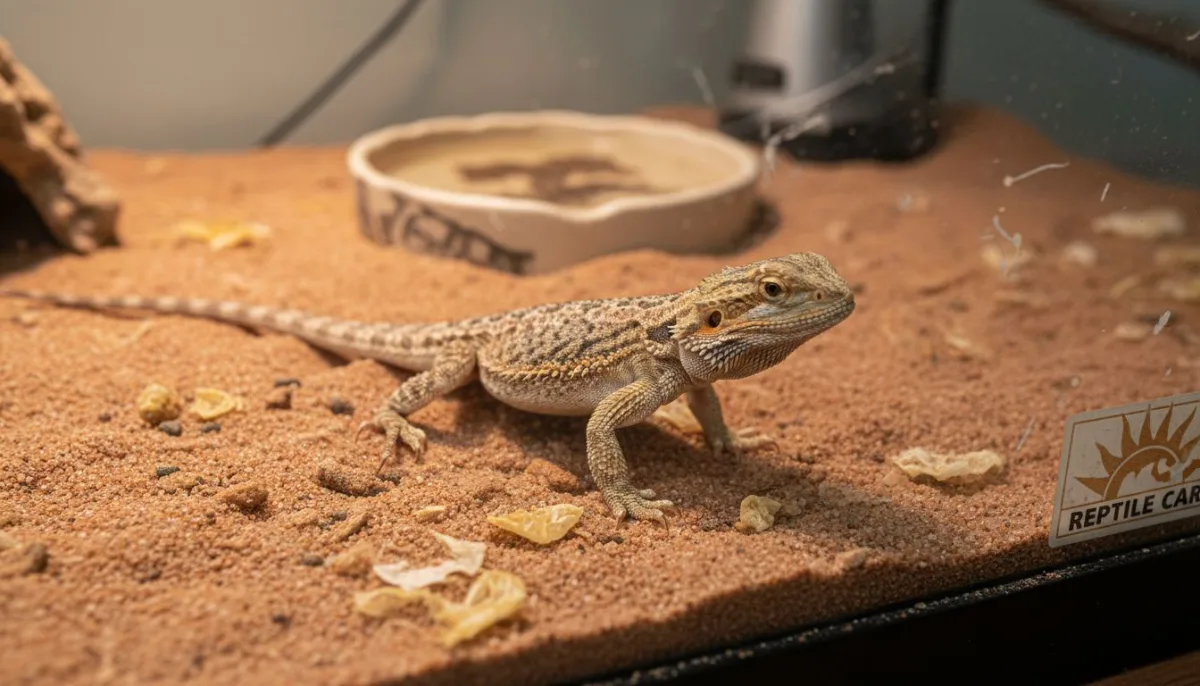
A dragon that licks or eats substrate on purpose may lack minerals or be hungry. Check the diet and the supplement schedule. Our guide on why bearded dragons eat sand covers this behavior.
Symptoms and Warning Signs
- no droppings for longer than normal for your dragon (babies poop most days, adults every few days)
- loss of appetite
- a swollen, firm or bluish-looking belly
- straining without passing anything
- lethargy and more time on the cool side
- weak, shaky or dragging back legs
- regurgitating food
| Sign | What to do |
|---|---|
| No droppings for a few days, otherwise normal | Check temperatures, offer a lukewarm bath, watch your dragon for changes |
| Swollen or hard belly, straining, no appetite | See a reptile vet soon |
| Weak or dragging back legs, regurgitation | Emergency: see a reptile vet the same day |
Treatment and Vet Care
A reptile vet examines your dragon and takes X-rays to find the blockage and see what it consists of. Treatment depends on the size and type:
- Mild cases: fluids, warm baths, a correct basking temperature and sometimes a vet-prescribed laxative or enema.
- Moderate cases: repeated fluid treatment, assisted feeding of a liquid recovery diet and follow-up X-rays.
- Severe cases: surgery to remove the blockage.
Pain relief and supportive care help the dragon recover. Do not give mineral oil, olive oil or human laxatives without your vet’s advice. Oil can enter the lungs, and a laxative cannot move sand or gravel.
What you can do while you arrange a vet visit
- Check that the basking spot reaches the right temperature.
- Offer a shallow lukewarm bath for 10 to 15 minutes, under supervision. Water no deeper than your dragon’s shoulders.
- Stop feeding insects until the vet has seen your dragon.
- Remove loose substrate and switch to paper towels.
Prevention
The Hudson Valley Reptile Rescue care guide covers the same basics:
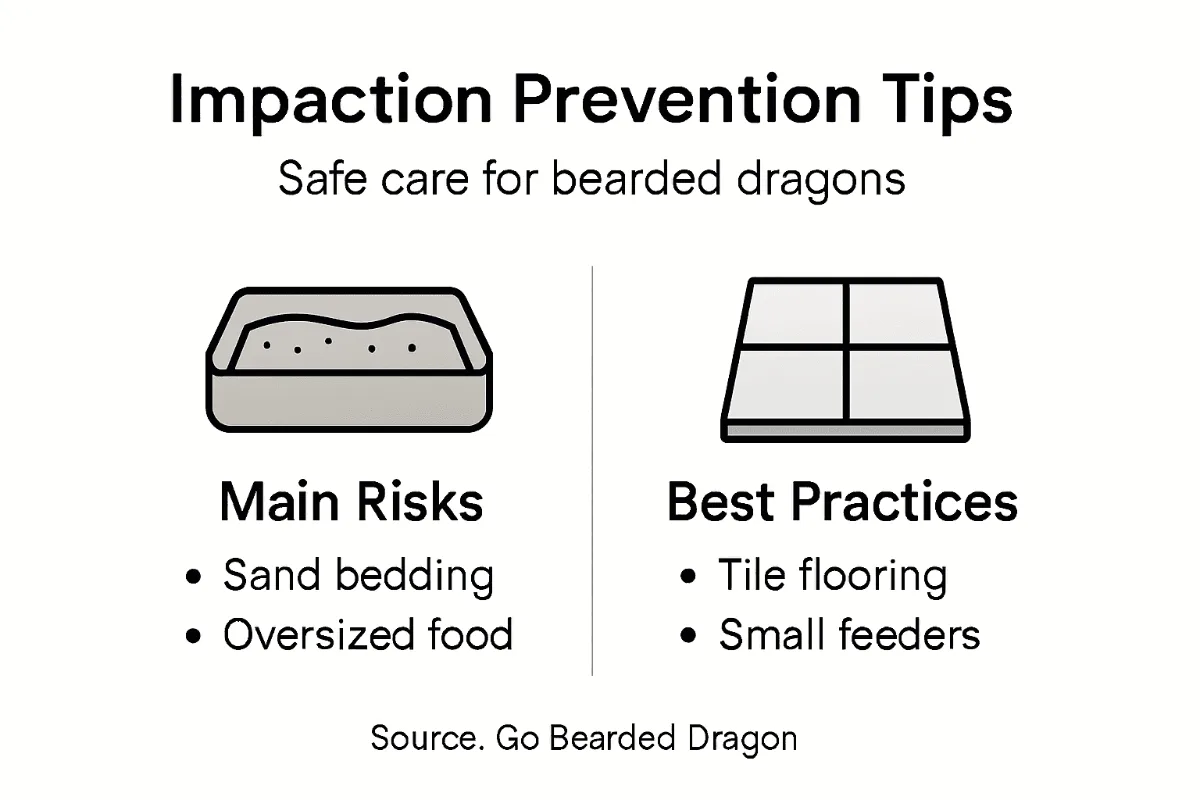
- Use a solid floor such as slate tiles or ceramic tiles, or paper towels.
- Keep the basking spot and cool side at the right temperatures.
- Feed insects no larger than the space between the eyes, and skip mealworms and superworms for babies.
- Offer fresh water every day and greens with every meal.
- Use a linear T5 UVB tube and dust insects with calcium.
- Feed insects with tongs or in a smooth dish so your dragon does not grab substrate with its food.
- Weigh your dragon on a regular schedule and note when it poops.
Common Mistakes and Myths
- “Calcium sand is safe because it dissolves.” It does not dissolve in the gut fast enough, and it clumps when wet. Avoid it.
- “Natural-looking substrate is better because wild dragons live on sand.” Wild dragons live on packed soil and rock, and they move over large areas. A small enclosure concentrates loose particles near the food.
- “A bigger insect means fewer feedings.” Oversized insects are a direct cause of impaction in young dragons.
- “Impaction always shows fast.” A slow blockage can build over weeks. Track droppings and weight.
Related Guides
Read our guides to basking temperatures, the feeding guide and hydration for the husbandry basics that prevent impaction.

Frequently Asked Questions
What is bearded dragon impaction?
A blockage in the gut caused by material the dragon cannot digest or pass, such as loose substrate or oversized insects.
What are the primary causes of bearded dragon impaction?
Loose substrate, insects that are too large or have hard shells, low temperatures, dehydration and weak UVB or low calcium.
How can I prevent impaction in my bearded dragon?
Use tile or paper towels as the floor, keep the basking spot hot enough, feed insects no larger than the space between the eyes and offer fresh water every day.
What are the symptoms of impaction in bearded dragons?
No droppings, loss of appetite, a swollen or firm belly, straining, lethargy and, in severe cases, weak or dragging back legs. See a reptile vet if you notice these signs.
Recommended
- Bearded Dragon Escape Prevention Guide
- How to Handle a Bearded Dragon Safely
- Bearded Dragon Eye Issues

Love your beardie? Wear it proudly.
Dragon Whisperer T-Shirt – from $15.83. Our own bearded dragon designs, printed on demand. Every order supports these free care guides.
View this design → Browse all gifts