Bearded Dragon Health Checklist: Weekly Checks and Warning Signs
A healthy bearded dragon has clear, bright eyes, a full tail base, firm droppings with a white urate, a steady appetite and a daily rhythm of basking, hunting and resting. Use this checklist once a week and you will spot most health problems while they are still easy to treat. Reptiles hide illness well, so small changes matter.
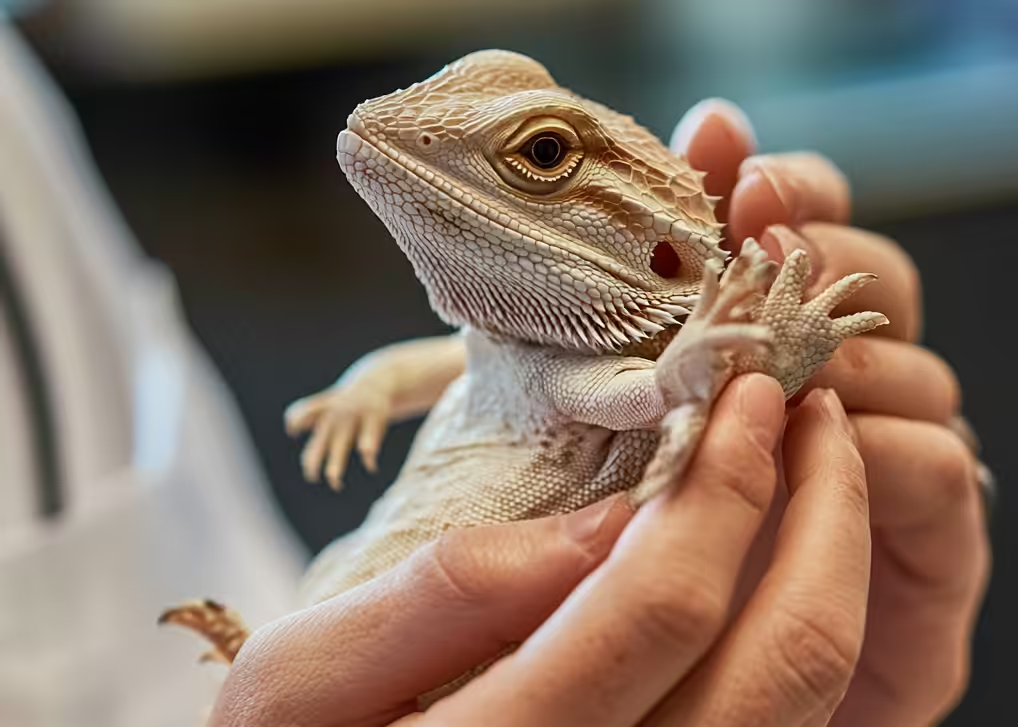
Weekly Health Checklist
| Check | Healthy | Warning sign |
|---|---|---|
| Eyes | Open, clear, alert | Sunken, cloudy, swollen or closed during the day |
| Breathing | Quiet, mouth closed except when gaping to cool off | Wheezing, clicking, bubbles at the nose or mouth |
| Body and tail | Firm body, tail base full and rounded | Visible hip bones, thin tail base, swollen limbs |
| Jaw and legs | Firm jaw, straight legs, steady walk | Soft or rubbery jaw, bowed legs, tremors |
| Skin | Even color, shed comes off in pieces | Yellow or brown crusts, sores, stuck shed on toes or tail tip |
| Mouth | Pink gums, no swelling | Cheesy white material, swelling, bleeding |
| Droppings | Formed brown stool with a white urate | Runny stool, blood, worms, orange or chalky urate, no poop for over a week |
| Appetite | Eats insects and greens on schedule | Refuses food for more than a few days outside of brumation |
| Weight | Stable in adults, rising in juveniles | Loss of more than 10 percent |
🦎 Want all the essentials on one printable page?
The Complete Bearded Dragon Care Plan puts daily routines, feeding charts, safe vs. toxic foods and vet red flags into one 16-page PDF for $7.99.
See the Care Plan →Health Basics
Bearded dragons are hardy, but they can run into health problems when their setup or diet is wrong. Most illnesses in pet dragons trace back to four things: heat, UVB light, diet and hygiene. Your dragon needs a hot basking spot to digest food, UVB to absorb calcium, a diet that matches its age, and a clean enclosure.
Watch your dragon’s behavior, appetite and appearance every day. Once you know what normal looks like, a change stands out.
What Normal Behavior Looks Like
A healthy dragon is curious and alert. It basks in the morning, explores, hunts its food and settles down in the evening. Head bobbing, arm waving and a puffed beard are all part of normal bearded dragon behavior.
Take a closer look when your dragon stops basking, stays in one corner all day or loses interest in food. A dragon that avoids the basking spot may be sick, impacted or developing metabolic bone disease. Check your temperatures first, then call a vet if the setup is right.
Signs of Illness
Call a reptile vet if you see any of these:
- sunken or cloudy eyes
- open-mouth breathing, wheezing or bubbles when the dragon is not basking
- weakness, tremors or a soft jaw
- no appetite or weight loss
- runny or bloody droppings, or droppings with a strong rotten smell
- sores, crusts or discolored patches on the skin
A sick dragon may also hide, refuse to bask or become defensive. Dehydration, infection and parasites cause many of these signs. Reptiles hide illness for a long time and decline fast once symptoms show, so do not wait.
Common Health Problems
Respiratory infections
Low temperatures and high humidity set up respiratory infections. Your dragon wheezes, clicks, breathes with its mouth open or has bubbles around the nose. A vet needs to treat this, in most cases with antibiotics. Keep the basking spot warm and the humidity around 30 to 40 percent.
Metabolic bone disease (MBD)
MBD develops when your dragon lacks calcium or UVB. The bones turn soft, the jaw becomes rubbery and the legs bend. Tremors and fractures follow. A linear UVB tube and calcium-dusted insects prevent it.
Parasites and coccidia
Internal parasites cause runny stool, weight loss and a poor appetite. A fecal test at your vet finds them. Test new dragons and repeat once a year.
Mouth rot and scale rot
Bacteria cause mouth rot (swollen, discolored gums) and scale rot (blistered or dark scales on the belly). Both start with injuries, dirty or damp conditions. Keep the enclosure clean and dry and see a vet at the first sign.
Yellow fungus disease
Yellow fungus disease, caused by the fungus Nannizziopsis, starts as yellow or brown crusty patches that spread and go deep into the skin. It spreads to other reptiles and can be fatal. Separate an affected dragon from other reptiles and get it to a vet for antifungal treatment.
Diet and Nutrition
Young dragons need a lot of insects. For adults, greens make up the main diet, with insects a few times a week. Our feeding guide lists amounts by age.
Feed gut-loaded crickets, dubia roaches or black soldier fly larvae, and dust them with calcium powder. Mealworms and waxworms are fatty, so treat them as occasional extras. Never feed avocado, rhubarb or fireflies, which are toxic. Collard greens, mustard greens, dandelion greens and squash make good staples.
Hydration and Bathing
Many bearded dragons ignore a still water bowl, so dehydration can sneak up on you. Watch for wrinkled skin, sunken eyes, thick orange urates and lethargy.
Give your dragon a lukewarm bath (about 85 to 92°F) one to three times a week, with water no deeper than its shoulders. Many dragons drink during the bath, and the soak loosens shed skin. Keep a shallow water dish in the enclosure and change the water every day. Misting the greens adds a little extra moisture. Read more in our bathing guide.
Habitat and Environment
Enclosure size
A baby dragon can start in a 40-gallon tank for a few months. Adults need an enclosure of at least 120 gallons (4 x 2 x 2 feet). Add rocks, branches and a hide to support natural behavior.
Temperature gradient
Keep a basking surface of about 100 to 110°F (38 to 43°C) and a cool side of 75 to 85°F (24 to 29°C). Check both with a digital thermometer and run the basking lamp on a thermostat or timer. A dragon without the right heat digests its food at a crawl and gets sick more often.
Humidity and UVB
Keep humidity around 30 to 40 percent. High humidity promotes respiratory infections, and very dry air can make shedding harder. Run a linear T5 UVB tube for 10 to 12 hours a day so your dragon can make vitamin D3 and absorb calcium.
Substrate and cleaning
Avoid loose calcium sand and wood chips, which can cause impaction if swallowed. Tile, paper towels or a packed soil and sand mix work well. Remove poop and leftover food every day, wipe surfaces each week and deep-clean once a month.
Shedding and Skin Care
Dragons shed in patches. Stuck shed on the toes, tail tip or spikes can cut off blood flow and cause tissue to die. Help with warm baths and a rough rock or branch to rub against. Do not peel skin that is not ready to come off. If shed keeps sticking, check humidity, hydration and parasites. Stuck shed on the tail can lead to tail rot, which needs a vet.
Weight and Body Condition
A healthy dragon has a firm body, a full tail base and fat pads on the head that are present but not bulging. Hip bones and spine should not stick out.
Weigh your dragon once a month on a kitchen scale and write the number down. Sudden weight loss points to parasites, illness or a setup problem. An overweight adult needs fewer insects, more greens and more room to move. Obesity leads to fatty liver disease.
Egg-Laying in Females
Females can lay infertile eggs without a male. Before laying, a female often has a swollen belly, eats less and digs all over the enclosure. Give her a laying box with damp sand and soil deep enough to dig a tunnel.
A female that strains, stops eating or turns weak without laying may be egg bound (dystocia). This is an emergency. Take her to a vet the same day. Good calcium intake and hydration lower the risk.
Vet Care
Book an exam with a reptile vet once a year, even when your dragon seems healthy. Go sooner for abnormal stools, wheezing, a soft jaw or loss of appetite.
- Fecal tests find parasites.
- Blood work shows infections, organ problems and deficiencies.
- X-rays show impaction, eggs, fractures and bone density.
Handling and Stress
Handle your dragon in a calm way and support its whole body. Rough or long handling causes stress and weakens the immune system. Watch for a black beard, hissing, gaping when it is not hot, or constant hiding. Keep sessions short with babies and juveniles.
Brumation
Brumation is a winter slowdown. Your adult dragon may sleep for days or weeks and eat little. Before brumation, have a vet check for parasites and illness, because a sick dragon can look the same as a brumating one. Weigh your dragon every two weeks. A loss of more than 10 percent means you should wake it and see a vet.
Senior and End-of-Life Care
Older dragons slow down, eat less and may develop cloudy eyes or stiff joints. Make the enclosure easier to use with lower branches and a reachable basking spot. If your dragon is suffering, talk with your vet about pain relief and end-of-life options.
Frequently Asked Questions
How often should I take my bearded dragon to the vet?
Once a year for a check-up with a fecal test, and right away for wheezing, a soft jaw, no appetite or abnormal stools.
Why is my bearded dragon’s beard black?
A black beard signals stress, territorial display, cold or discomfort. Check temperatures, reflections and handling first. A beard that stays black for days with other symptoms needs a vet.
Can bearded dragons get colds or flu?
They do not catch human colds, but they get respiratory infections from low temperatures and high humidity. Wheezing and bubbles at the nose need a vet.
How do I know if my bearded dragon is dehydrated?
Look for wrinkled skin, sunken eyes, thick orange urates and low energy. Lukewarm baths, a clean water dish and misted greens help.
How long does a healthy bearded dragon live?
With good care, a pet bearded dragon lives 10 to 15 years.

Love your beardie? Wear it proudly.
Dragon Whisperer T-Shirt – from $15.83. Our own bearded dragon designs, printed on demand. Every order supports these free care guides.
View this design → Browse all gifts