Why Bearded Dragons Dig: Complete Behavior Guide
Over half of reptile owners report confusion when their bearded dragons start digging unexpectedly. This common yet often misunderstood behavior is more than just an odd quirk. Digging is a key signal that reveals what your scaly companion may need or feel in its environment. Learning what sparks this action helps you respond better, supports your pet’s health, and leads to a more confident bond with your bearded dragon.
Table of Contents
- Defining Digging Behavior In Bearded Dragons
- Natural Instincts And Wild Digging Patterns
- Common Triggers For Digging In Captivity
- Health, Environmental, And Enrichment Factors
- Preventing Problems And Owner Mistakes
Key Takeaways
| Point | Details |
|---|---|
| Digging as Communication | Bearded dragons use digging to communicate their physical and emotional states, including temperature regulation and stress. |
| Natural Instincts | Digging behaviors stem from evolutionary adaptations essential for survival in the wild, such as temperature control and protection from predators. |
| Captive Triggers | In captivity, inadequate temperature gradients and environmental changes can lead to excessive digging, underscoring the need for proper habitat management. |
| Preventive Care | Regular monitoring and proactive habitat adjustments are crucial for preventing stress-related digging and ensuring overall well-being. |
Defining Digging Behavior In Bearded Dragons
Bearded dragons are fascinating reptiles with complex behavioral patterns, and digging is one of their most intriguing natural actions. Digging behaviors represent more than just random movements – they are sophisticated communication methods that reveal critical information about your scaly companion’s physical and emotional state.
These reptilian mood rings use digging as a multifaceted means of communication. Thermoregulation stands out as a primary motivation, with bearded dragons seeking optimal temperature zones within their habitat. When their current environment feels too warm, they’ll instinctively dig to uncover cooler ground underneath. This behavior mimics their natural desert survival strategies, where underground areas provide refuge from intense heat.
Beyond temperature management, digging can signal several critical psychological and physiological needs. Female bearded dragons preparing to lay eggs will exhibit focused, determined digging patterns in substrate areas. Male and female dragons might also dig when stressed, seeking a sense of security or expressing restlessness. Understanding these behavioral nuances helps owners create more responsive and comfortable environments that minimize anxiety and promote natural reptilian behaviors.
Recognizing the context of your bearded dragon’s digging is crucial. Different digging intensities and locations within their habitat can indicate varying emotional states – from mild curiosity to significant environmental discomfort. Careful observation and understanding of these subtle communication signals will help you become a more attentive and responsive reptile companion.
Natural Instincts And Wild Digging Patterns
Wild bearded dragons are survival experts, with digging among their most critical adaptive behaviors. Central bearded dragons inhabiting arid desert landscapes have developed sophisticated underground strategies that allow them to thrive in challenging environments. Their digging isn’t just a random action – it’s a precise survival mechanism deeply rooted in evolutionary adaptation.
In their natural habitats, temperature regulation becomes paramount. Wild bearded dragons dig intricate burrows that provide critical protection from extreme desert temperatures. These underground sanctuaries offer multiple survival advantages: shielding them from scorching midday heat, protecting against predatory threats, and maintaining a stable body temperature. The depth and complexity of these burrows vary depending on environmental conditions, demonstrating their remarkable ecological intelligence.
The digging instincts of bearded dragons reveal a nuanced relationship with their ecosystem. Female dragons, in particular, use digging as a reproductive strategy – creating carefully constructed nesting sites that offer optimal protection for their eggs. Male dragons also participate in these complex behavioral patterns, using underground spaces as strategic shelter points that minimize exposure to potential predators. Their ability to quickly assess and modify their environment represents an extraordinary survival skill developed over thousands of years of desert adaptation.
Understanding these wild digging behaviors provides crucial insights into captive bearded dragon care. By recognizing that digging is more than just a random activity, but a deeply ingrained survival mechanism, owners can create habitat environments that honor these instincts. Providing appropriate substrate depth, temperature gradients, and secure digging areas allows these remarkable reptiles to express their innate behaviors, promoting both physical and psychological well-being.
Common Triggers For Digging In Captivity
In captivity, bearded dragons retain their complex behavioral instincts, with digging serving as a multifaceted communication tool. Captive environments can trigger specific digging behaviors that reflect their innate survival mechanisms. Understanding these triggers is crucial for providing optimal care and ensuring your scaly companion feels secure and comfortable.
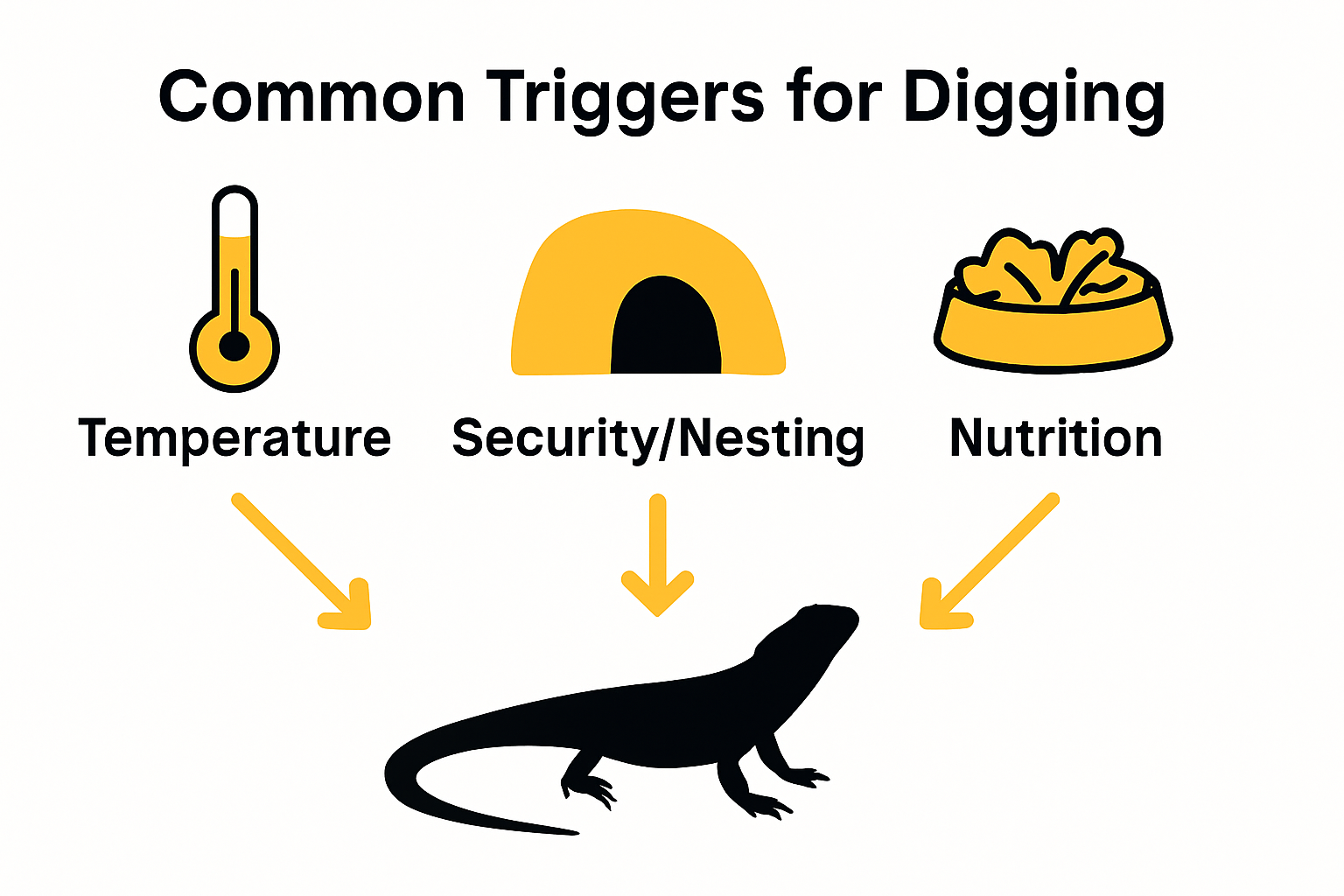
Temperature regulation remains the primary motivation for digging in captive settings. When habitat temperature gradients are inadequate, bearded dragons will actively seek cooler or warmer zones by digging into the substrate. This behavior mirrors their wild survival strategies, where underground areas provide thermal refuge. Inconsistent heat lamp placement, improper substrate depth, or lack of temperature variation can prompt frequent digging as your dragon attempts to find its ideal thermal comfort zone.

Psychological factors also play a significant role in captive digging behaviors. Stress, territorial instincts, and reproductive urges can trigger intense digging patterns. Female bearded dragons may exhibit focused digging when preparing to lay eggs, even in the absence of a mate. Male dragons might dig to establish territory or respond to environmental changes that make them feel anxious. Factors such as recent habitat modifications, the introduction of new tank mates, or changes in routine can amplify these instinctual digging responses.
Recognizing and addressing these triggers requires careful observation and proactive habitat management. Providing a naturalistic environment with appropriate temperature gradients, varied substrate depths, and minimal stress factors can significantly reduce excessive digging. By understanding that digging is a complex form of communication rather than a random behavior, owners can create living spaces that respect and support their bearded dragon’s instincts.
Health, Environmental, And Enrichment Factors
Proper husbandry practices are fundamental to understanding and managing bearded dragon digging behaviors. These reptilian companions require a carefully balanced environment that supports their physical and psychological well-being. Health, environmental conditions, and mental stimulation are intricately connected and directly influence the frequency and intensity of digging patterns.
Habitat design plays a critical role in mitigating excessive digging. A well-constructed terrarium should provide multiple environmental zones that allow natural behavior to be expressed. This includes creating temperature gradients with designated basking areas, cooler retreat spaces, and substrate depths that enable comfortable digging. Inadequate habitat configuration can trigger stress-related digging as your bearded dragon attempts to create a more suitable living environment. Proper substrate selection – such as fine sand or specialized reptile bedding – becomes crucial in supporting their natural burrowing instincts while preventing potential health risks.
Nutritional status and overall health significantly impact digging behaviors. Bearded dragons experiencing metabolic imbalances, nutritional deficiencies, or underlying health conditions may exhibit increased digging as a compensatory mechanism. Reproductive females, in particular, require specialized care during egg-laying periods, when digging becomes more pronounced. Regular veterinary check-ups, balanced diet planning, and monitoring of calcium and vitamin levels can help minimize stress-induced digging and promote overall reptilian wellness.
Environmental enrichment is a powerful tool for managing digging behaviors. Introducing varied terrain features, strategically placed hiding spots, and interactive elements can provide mental stimulation that reduces compulsive digging. Owners can create engaging habitats by incorporating different substrate textures, rocky formations, and carefully placed decorative elements that mimic natural desert environments. By understanding digging as a complex communication method rather than a problematic behavior, reptile enthusiasts can transform their bearded dragon’s living space into a dynamic, enriching ecosystem that supports their intrinsic behavioral needs.
Preventing Problems And Owner Mistakes
Proactive monitoring of bearded dragon behavior is essential to prevent potential health and environmental issues associated with excessive digging. Many owner mistakes stem from misunderstanding the complex communication signals these reptiles use through their digging patterns. Recognizing the subtle nuances between normal exploratory behavior and stress-induced digging can significantly improve your pet’s overall well-being.
Temperature management represents the most common area where owners inadvertently trigger problematic digging behaviors. Inconsistent heat gradients can prompt your bearded dragon to frantically seek thermal comfort by digging, which signals a fundamental failure in habitat design. Owners should invest in high-quality digital thermometers to create precise temperature zones – with basking areas reaching 95-105°F and cooler regions around 80-85°F. Incorrect placement of heat lamps, use of inappropriate wattage, or failure to provide gradient zones can transform the terrarium from a haven into a stressful environment that compels constant digging.
Substrate selection and habitat enrichment are critical areas where inexperienced owners often make significant mistakes. Using inappropriate materials, such as loose-particle substrates, can increase impaction risk, while overly compact surfaces may prevent natural digging instincts. Owners should carefully balance substrate depth and composition to provide safe digging opportunities without creating health hazards. Reproductive female bearded dragons require special attention, as their digging behaviors intensify during egg-laying periods. Providing a designated nesting area with appropriate depth and moisture levels can help manage these natural reproductive behaviors.
Preventing stress-related digging ultimately requires a holistic approach to bearded dragon care. This means creating a stable environment with minimal disruptions, maintaining consistent feeding schedules, and avoiding sudden changes that might trigger anxiety. Regular veterinary check-ups, attentive observation, and a willingness to adapt your habitat design can transform potentially problematic digging behaviors into healthy, natural expressions of your bearded dragon’s complex reptilian personality.
Understand Digging to Create the Perfect Home for Your Bearded Dragon
Digging is more than just a quirky habit. It is your bearded dragon’s way to communicate needs like temperature comfort, stress levels, or reproductive urges. If you want to reduce anxiety-driven digging and help your pet thrive naturally, you must address the root causes, such as proper thermoregulation, safe substrate choices, and mental enrichment. At gobeardeddragon.com, we offer expert advice and detailed guides to help you create a habitat that honors these vital instincts.

Discover practical tips on habitat maintenance and temperature management to prevent common owner mistakes. Learn how to enhance your dragon’s environment with the right substrate and interactive elements. Don’t let excessive digging signal discomfort or health issues. Visit our website now and take confident steps to support your dragon’s wellbeing with trusted care strategies and products designed just for you and your scaly friend.
Frequently Asked Questions
Why does my bearded dragon dig?
Bearded dragons dig primarily for thermoregulation, seeking cooler or warmer areas in their habitat, and they may also dig due to stress, territorial behavior, or reproductive instincts.
What can I do to reduce excessive digging in my bearded dragon?
To minimize excessive digging, ensure proper temperature gradients, provide suitable substrate depth, and create a stable environment with minimal stressors. Engaging habitat design can also help.
How does digging relate to a bearded dragon’s health?
Excessive digging can indicate an underlying health issue. Nutritional imbalances, stress, or improper habitat conditions can prompt increased digging behavior, so regular veterinary check-ups are important.
What substrate is best for allowing natural digging behavior?
Fine sand or specialized reptile bedding is ideal for allowing natural digging while preventing health hazards like impaction. Ensuring the substrate is safe and offers adequate depth is key.