Third Eye in Reptiles: Impact on Bearded Dragon Care
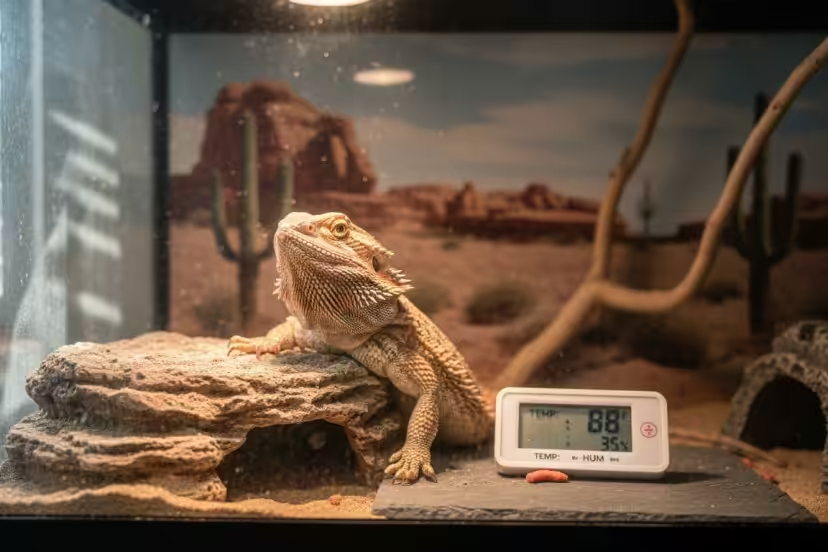
Many bearded dragon owners feel surprised when they first notice a faint, scale-covered spot on the top of their reptile’s head. Curiosity about this unusual feature often leads to confusion about its true function and care. The reality is that the third eye, or parietal eye, is a specialized organ crucial for light sensing, not extra vision or mystical powers. Learning the facts behind this unique structure helps you avoid common mistakes and better support your dragon’s health.
Table of Contents
- Third Eye Definition And Common Myths
- Key Features Of Reptile Third Eye
- Third Eye Function In Bearded Dragons
- Health Impacts And Behavioral Changes
- Practical Care Tips And Mistakes To Avoid
Key Takeaways
| Point | Details |
|---|---|
| Understanding the Third Eye | The third eye, or parietal eye, is a light-detecting organ in bearded dragons that regulates biological rhythms, rather than providing additional visual information. |
| Importance of Lighting | Proper UVB lighting is crucial for the third eye’s functionality, impacting the bearded dragon’s health and behavior significantly. |
| Common Care Mistakes | Avoid blocking the third eye and ensure consistent lighting and temperature to prevent stress and maintain optimal health. |
| Behavioral Monitoring | Be attentive to behavioral changes in your bearded dragon, as they can indicate issues with the third eye’s function and overall well-being. |
Third eye definition and common myths
The third eye, also known as the parietal eye, is a unique photosensitive organ found in reptiles that often sparks curiosity and misconception. Unlike traditional eyes, this specialized structure sits on the top of a bearded dragon’s head and serves a surprisingly different purpose than most people imagine.
Understanding the parietal eye requires dispelling some common myths. Reptile researchers have clarified that this organ is not a mystical sensor or additional vision mechanism, but a sophisticated light-detecting mechanism with specific biological functions.
Key characteristics of the third eye include:
- Located beneath the skin on the dorsal midline of the head
- Contains a basic lens and retinal structure
- Directly connected to the pineal gland
- Serves photoreceptive, not visual, purposes
Biological insights reveal that the primary role of the parietal eye is regulating biological rhythms and hormone production. It acts like a light-sensing mechanism that helps bearded dragons understand environmental changes, particularly related to temperature and daylight cycles.
Common myths about the third eye often exaggerate its capabilities. Many people mistakenly believe that:
- It provides additional visual information
- It has supernatural or mystical properties
- It functions similarly to standard eyes
In reality, the parietal eye is a specialized adaptation that helps reptiles maintain physiological balance by detecting light intensity and environmental changes. Think of it more like a biological light meter than an extra eye.
Pro tip: When caring for your bearded dragon, recognize that the third eye is sensitive and should not be touched or disturbed during regular handling.
Key features of reptile third eye
The reptilian third eye is a fascinating biological adaptation that goes far beyond its simple appearance. Embryonic research reveals that this unique organ develops early in an embryo’s growth, emerging from the dorsal diencephalon with sophisticated structural components.
Anatomically, the third eye is remarkably complex. Its key structural features include:
- A lens similar to standard eyes
- A cornea-like protective layer
- Retina-like photoreceptor cells
- A transparent scale covering the organ
- Direct neural connection to the pineal gland
Detailed scientific studies demonstrate that this organ is fundamentally different from lateral eyes. Its primary function is not visual perception but light intensity detection, which plays a crucial role in regulating biological rhythms like temperature and circadian cycles.
The genetic complexity of the third eye is equally intriguing. It expresses genes such as Pax6, which are traditionally associated with eye development. This genetic signature underscores its evolutionary significance as a sophisticated sensory mechanism adapted specifically for reptilian survival.
Unlike standard eyes, the third eye does not form images. Instead, it acts as a biological light meter, helping reptiles understand environmental changes with remarkable precision. Its location on the top of the head allows for unobstructed light detection, providing crucial environmental information without requiring head movement.
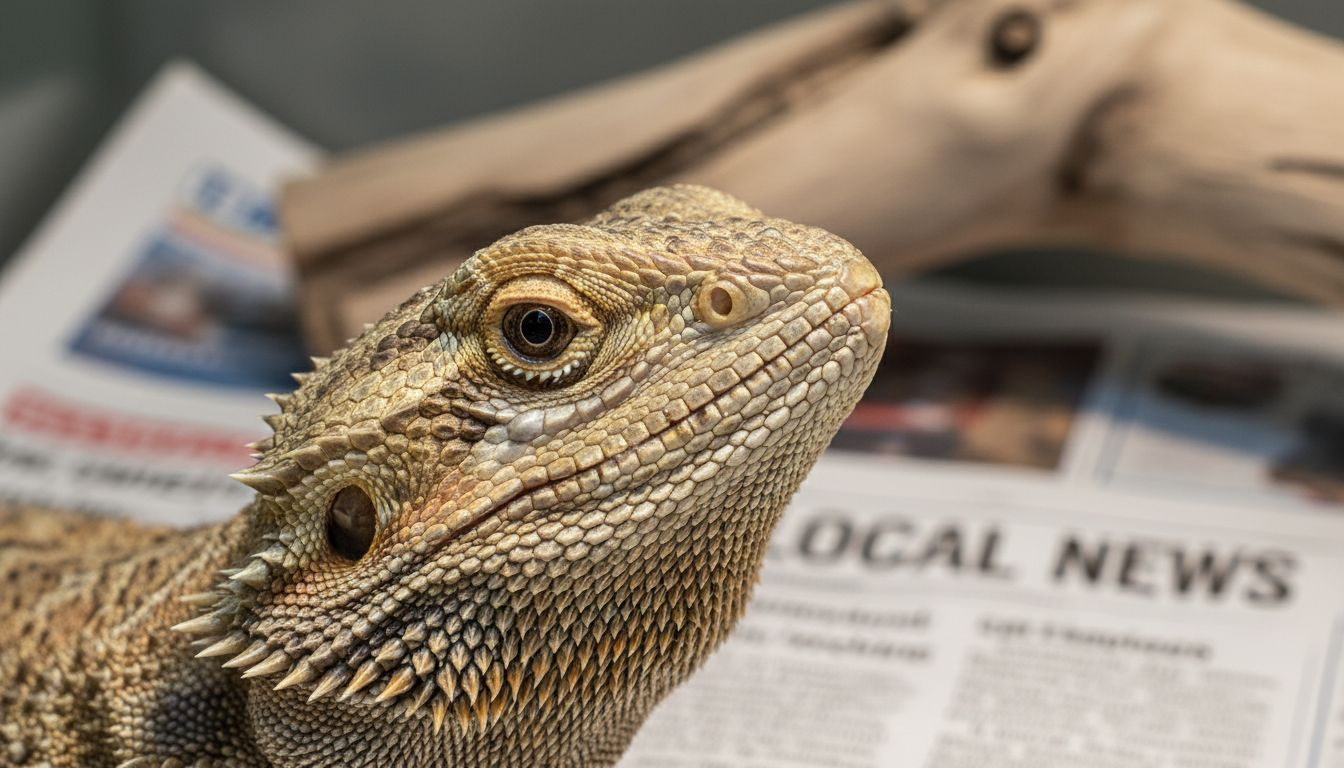
Here’s a summary of how the reptilian third eye differs from standard eyes:
| Characteristic | Third Eye (Parietal Eye) | Standard Eyes |
|---|---|---|
| Location | Top of head, midline | Sides of head |
| Function | Detects light intensity | Forms visual images |
| Connection | Linked to pineal gland | Linked to optic nerves |
| Protective Structure | Transparent scale | Eyelids and cornea |
| Environmental Role | Regulates rhythms and hormones | Enables visual navigation |
This overview highlights key structural and functional distinctions.
Pro tip: When observing your bearded dragon, pay attention to how subtle light changes might trigger behavioral responses through their third eye’s unique sensory capabilities.
Third eye function in bearded dragons
Bearded dragons possess a remarkable biological adaptation that sets them apart from many other creatures: the third eye, which plays a crucial role in their environmental perception and survival. Extensive research demonstrates that this unique sensory organ significantly influences their behavior and physiological responses.
The primary functions of the third eye in bearded dragons include:
- Regulating circadian rhythms
- Monitoring light intensity
- Supporting thermoregulation
- Influencing behavioral patterns
- Detecting environmental changes
When the third eye is manipulated or blocked, bearded dragons exhibit notable behavioral modifications. These changes include alterations in:
- Basking duration
- Locomotion frequency
- Light exposure sensitivity
- Temperature regulation mechanisms
The third eye acts as a sophisticated biological sensor that goes beyond traditional visual perception. It provides critical environmental information that helps bearded dragons optimize their energy expenditure, maintain proper body temperature, and synchronize their internal biological processes with external light conditions.
Unlike standard eyes, this specialized organ does not create visual images. Instead, it functions more like a light-sensitive mechanism that communicates directly with the dragon’s brain, helping them make instantaneous decisions about movement, feeding, and temperature management.
Pro tip: When setting up your bearded dragon’s habitat, ensure consistent lighting conditions to support their natural third eye-mediated biological rhythms.
Health impacts and behavioral changes
Bearded dragon health is intrinsically linked to the functionality of their third eye, a sophisticated sensory mechanism that significantly influences their behavioral patterns and physiological responses. Reptile behavioral studies reveal profound changes when this unique organ is compromised.
Key health and behavioral impacts of third eye disruption include:
- Increased surface activity
- Diminished environmental threat response
- Altered thermal regulation mechanisms
- Extended exposure to sunlight
- Compromised stress management
The third eye plays a critical role in several important physiological processes:
- Modulating stress responses
- Regulating body temperature
- Managing light exposure
- Detecting potential environmental threats
When the third eye’s functionality is impaired, bearded dragons experience significant behavioral modifications. These changes can manifest as increased vulnerability to environmental stressors, reduced ability to efficiently manage body temperature, and potentially compromised survival mechanisms.
Interestingly, the third eye acts as a sophisticated biological early-warning system. It helps bearded dragons make rapid decisions about environmental interactions, essentially functioning as a non-visual sensory mechanism that supports their overall health and survival strategy.
Pro tip: Monitor your bearded dragon’s behavior closely and maintain consistent, stable lighting conditions to support their natural third eye-mediated biological processes.
Practical care tips and mistakes to avoid
Bearded dragon owners must understand the critical role of the third eye in their pet’s health and well-being. Specialized lighting research highlights the importance of creating an optimal environment that supports this unique sensory organ.
Common mistakes to avoid when caring for your bearded dragon’s third eye include:
- Blocking or covering the top of the head
- Using inconsistent or poor-quality lighting
- Exposing the dragon to excessive or insufficient UVB light
- Ignoring environmental light cycles
- Failing to maintain consistent temperature gradients
Key care tips for supporting third eye health involve:
- Providing high-quality UVB lighting
- Maintaining consistent day-night cycles
- Creating proper temperature gradients
- Avoiding direct physical contact with the third eye area
- Monitoring behavioral changes
Proper lighting setup is crucial for supporting the third eye’s biological functions. Bearded dragons require specific light spectrums and intensity to maintain their natural circadian rhythms and hormonal balance. This means investing in high-quality UVB lights that mimic natural sunlight conditions and provide the right wavelengths for optimal health.
The sensitive nature of the third eye demands careful environmental management. Sudden changes in lighting or temperature can disrupt your bearded dragon’s natural behavioral patterns, potentially leading to stress and health complications.
Here’s a quick reference for common third eye care mistakes and recommended actions:
| Mistake | Potential Impact | Recommended Action |
|---|---|---|
| Blocking third eye area | Disrupts light detection | Keep head area unobstructed |
| Poor-quality lighting | Alters circadian rhythm | Use reliable UVB sources |
| Ignoring light cycles | Stress and behavioral shifts | Maintain consistent lighting schedule |
| Inconsistent temperature | Impaired thermoregulation | Monitor temperature gradients |
These guidelines help prevent health issues related to the third eye.
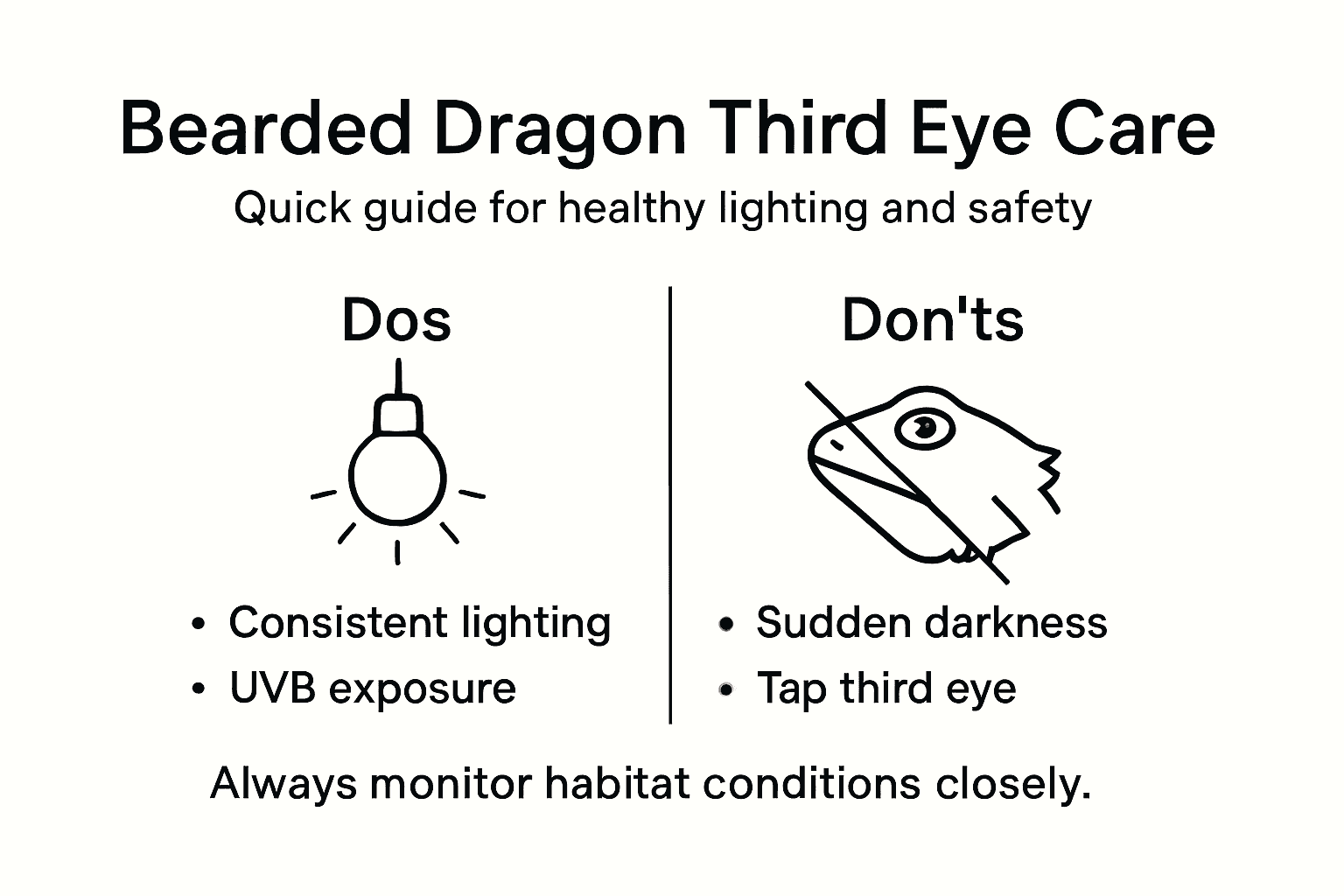
Pro tip: Invest in a quality digital thermometer and UVB meter to precisely monitor your bearded dragon’s habitat conditions and support their third eye’s natural functioning.
Support Your Bearded Dragon’s Unique Third Eye Needs
Understanding the critical role of the third eye in your bearded dragon’s health is essential for every pet owner. This specialized light-sensing organ influences their behavior, stress levels, and biological rhythms. If you want to avoid common mistakes like poor lighting or inconsistent temperature that disrupt your pet’s natural processes, it is vital to create an environment that respects this unique adaptation.

Explore comprehensive care guides and expert tips at Go Bearded Dragon to ensure your reptile thrives. Learn how to maintain proper lighting, temperature, and habitat conditions that support the third eye’s functions. Take control of your bearded dragon’s wellness now by visiting Bearded Dragon Care Guides and get insights on habitat maintenance and specialized lighting setups. Your pet’s health depends on the right environment don’t wait to give your dragon the best care possible.
Frequently Asked Questions
What is the purpose of the third eye in bearded dragons?
The third eye, or parietal eye, in bearded dragons primarily functions as a light-detecting mechanism. It helps regulate biological rhythms, hormone production, and thermoregulation by monitoring environmental changes such as temperature and light intensity.
How does the third eye affect the behavior of bearded dragons?
The third eye significantly influences bearded dragon behavior by providing critical information about light and temperature. Changes in its functionality can lead to altered basking duration, locomotion frequency, and overall stress response to environmental threats.
What mistakes should I avoid to protect my bearded dragon’s third eye?
Common mistakes include blocking or covering the top of the head, using inconsistent or low-quality lighting, and failing to maintain proper day-night cycles. Avoiding these can help ensure your bearded dragon’s third eye remains functional and healthy.
How do I set up the right lighting for my bearded dragon to support its third eye?
To support the third eye, provide high-quality UVB lighting that mimics natural sunlight. Ensure consistent day-night cycles and monitor the temperature gradient in the habitat to align with their natural biological rhythms.
Recommended
- Bearded Dragon Third Eye: Why It Matters for Owners
- Bearded Dragon 3rd Eye: Everything You Need to Know – Go BEARDED DRAGON
- Complete Guide to Bearded Dragon Eye Issues