Step by Step Bearded Dragon Cleaning for Healthy Pets
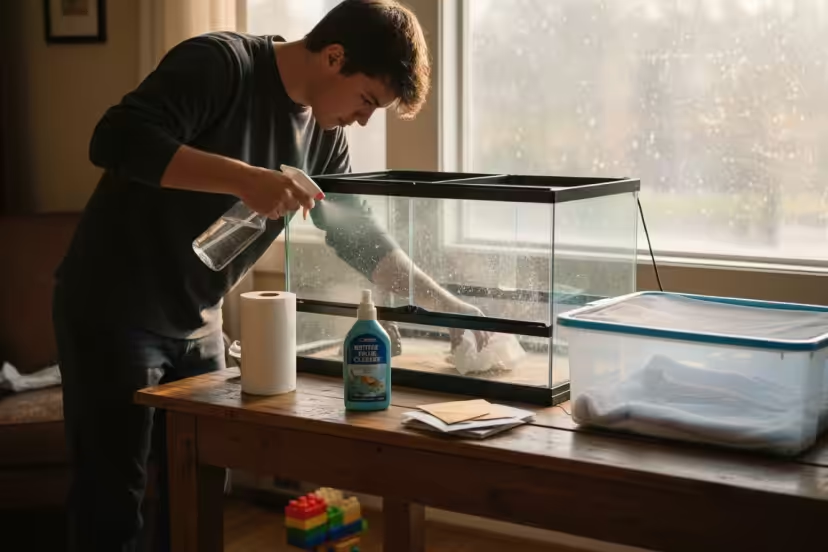
Cleaning a bearded dragon habitat goes beyond simple tidying, especially for any reptile lover. Studies show that more than 60 percent of pet reptile illnesses are linked to unsanitary enclosures. A spotless setup is crucial for your scaly companion’s health and happiness. You will find practical ways to gather supplies, protect yourself, and create a safe environment that supports your bearded dragon’s well-being.
Table of Contents
- Step 1: Gather Supplies for Safe Cleaning
- Step 2: Remove and Secure Your Bearded Dragon
- Step 3: Clean and Disinfect the Habitat Surfaces
- Step 4: Wash and Refresh All Accessories
- Step 5: Reassemble and Inspect the Clean Setup
- Step 6: Safely Return Your Bearded Dragon
Quick Summary
| Key Point | Explanation |
|---|---|
| 1. Gather dedicated cleaning supplies | Assemble protective gloves, microfiber towels, and pet-safe cleaning products to ensure a safe cleaning environment for your bearded dragon. |
| 2. Safely relocate your bearded dragon | Move your dragon to a secure, warm temporary space to minimize stress during the cleaning process of their habitat. |
| 3. Thoroughly clean and disinfect surfaces | Use reptile-safe soap and disinfectants to ensure all surfaces are free from bacteria and debris, prioritizing health and hygiene. |
| 4. Clean all habitat accessories | Scrub and sanitize every removable accessory, ensuring they are free from buildup and ready for your dragon’s return. |
| 5. Conduct a final inspection before reassembly | Check that everything is clean, dry, and properly positioned to create a safe and familiar environment for your bearded dragon. |
Step 1: Gather Supplies for Safe Cleaning
When it comes to keeping your scaly pal’s habitat squeaky clean, having the right cleaning arsenal makes all the difference. You want to create a quick and efficient cleaning setup that protects both you and your bearded dragon during the process.
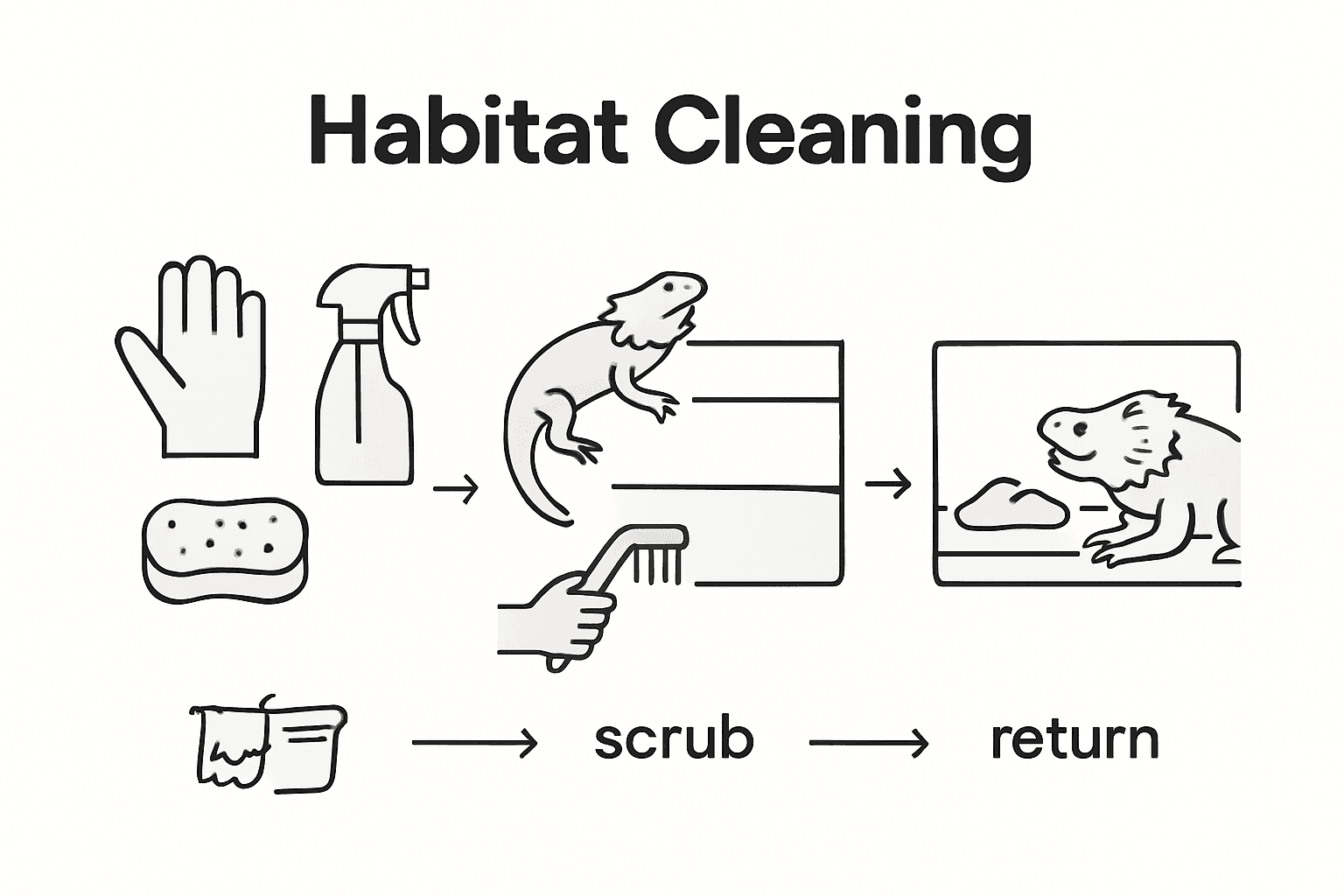
Start by assembling a dedicated cleaning kit specifically for your reptilian friend’s habitat. Your essential supplies will include protective cleaning materials recommended by reptile experts. Grab a pair of sturdy rubber gloves to protect your hands, some soft microfiber towels, multiple buckets for separating soapy and rinse water, and waste disposal bags. You will also want dish soap designed for pet environments, plus a specialized reptile-safe disinfectant.
Do not skimp on quality supplies here. Your bearded dragon’s health depends on thorough, careful cleaning techniques. Collect scrapers or soft brushes for removing stuck debris, and consider having separate cleaning tools exclusively for your dragon’s habitat to prevent cross-contamination.
Pro tip: Store your reptile cleaning supplies separately from household cleaning items in a clearly marked container to maintain hygiene standards and avoid accidentally using harsh chemicals near your scaly companion.
Here’s a summary comparing common cleaning tools and their recommended uses:
| Tool | Primary Purpose | Best for Cleaning |
|---|---|---|
| Rubber gloves | Protects hands from chemicals | All habitats and dirty tasks |
| Microfiber towels | Gentle wiping and drying | Glass, plastics, decorations |
| Scraper or soft brush | Removes stuck residue | Rocks, tough debris spots |
| Separate buckets | Segregates wash and rinse water | Reducing chemical cross-mixing |
| Waste disposal bags | Safe waste collection | Substrate, droppings, debris |
Step 2: Remove and Secure Your Bearded Dragon
Before diving into habitat cleaning, you need to relocate your scaly friend to a secure temporary home safely. This step is crucial for both your dragon’s comfort and the cleaning process.
When handling your bearded dragon, remember that gentle and proper support is key to building trust and preventing stress. Start by approaching your dragon calmly and slowly to avoid startling them. Use both hands to provide full-body support underneath their belly and legs, ensuring they feel stable and secure. Gently scoop them up with smooth, predictable movements.
Transfer your bearded dragon to a prepared temporary enclosure with familiar items like a soft towel or small hiding spot. This temporary space should be warm, draft-free, and located away from the cleaning area to minimize potential stress. Ensure the container has adequate ventilation and maintains a comfortable temperature, similar to that of their primary habitat.

Pro tip: Keep a soft towel or lightweight blanket nearby during handling to provide additional comfort and help your bearded dragon feel more secure during the transfer process.
Step 3: Clean and Disinfect the Habitat Surfaces
Now that your bearded dragon is safely relocated, it is time to thoroughly clean and disinfect their habitat. This step is crucial for preventing potential health issues and maintaining a hygienic environment for your scaly companion.
Start by removing all substrate, decorations, and removable items from the enclosure. Use your designated cleaning supplies to scrub each surface methodically. Your goal is to remove all visible debris, droppings, and potential bacterial buildup. Use warm water and a reptile-safe soap, working from top to bottom to ensure no area is missed. Pay special attention to corners, crevices, and places around feeding spots where grime tends to accumulate.
After the initial cleaning, apply a reptile-specific disinfectant and carefully follow the product instructions. Some disinfectants require dilution or specific contact times to eliminate harmful bacteria effectively. Rinse thoroughly with clean water to remove any chemical residue that could harm your bearded dragon. Allow all surfaces to air dry completely before reassembling the habitat to prevent moisture buildup that could lead to mold or bacterial growth.
Pro tip: Use separate cleaning tools for your bearded dragon’s habitat to prevent cross-contamination, and always wash your hands thoroughly before and after the cleaning process.
Step 4: Wash and Refresh All Accessories
With the habitat surfaces clean, it is time to give your bearded dragon accessories the royal treatment. This step ensures every item your scaly friend interacts with remains clean, safe, and free from potential bacterial growth.
Carefully gather all removable habitat accessories, such as rocks, branches, hiding spots, food and water dishes, and decorative elements. Start by inspecting each item for signs of wear, damage, or excessive buildup. Use warm water and a reptile-safe soap to thoroughly scrub each accessory, paying special attention to textured surfaces and crevices where bacteria can hide. For porous items like wooden branches or cork bark, you might need a soft brush to remove stubborn debris without damaging the material.
After washing, rinse all accessories completely with clean water to remove any soap residue. Some items, like ceramic dishes or smooth rocks, can be briefly soaked in a diluted reptile-specific disinfectant for additional sanitization. Allow everything to air-dry completely in a clean, well-ventilated area before returning it to the habitat. This drying process helps prevent mold and ensures no moisture remains that could compromise your bearded dragon’s health environment.
Pro tip: Consider having backup accessories so you can rotate and thoroughly clean items without disrupting your bearded dragon’s habitat stability.
Step 5: Reassemble and Inspect the Clean Setup
With everything cleaned, it is time to reconstruct your bearded dragon’s habitat carefully. This final step ensures your scaly friend returns to a pristine, safe, and comfortable environment that supports their health and happiness.
Begin by strategically replacing each cleaned accessory, paying close attention to their original positioning. Recreate the habitat’s familiar layout to minimize stress for your bearded dragon. Spread substrate evenly, ensuring proper depth and texture. Check each item for any remaining dirt or potential damage that might have been missed during the initial cleaning process. Verify that rocks, branches, and hiding spots are securely positioned to prevent possible collapse or instability that could startle or harm your reptilian companion.
Before returning your bearded dragon to their refreshed habitat, do a final comprehensive inspection. Confirm that temperature gradients are correctly maintained, lighting is properly positioned, and all surfaces are completely dry. Double-check that no cleaning residue remains and that the overall environment looks inviting and safe. Test the temperature in different areas to ensure your dragon will have appropriate warm and cool zones for thermoregulation.
Pro tip: Take a quick photo of the reassembled habitat to use as a reference for future cleaning sessions and to help you maintain a consistent setup that your bearded dragon finds comfortable.
Step 6: Safely Return Your Bearded Dragon
With the habitat sparkling clean and perfectly prepared, it is time to reunite your scaly companion with their refreshed living space. This delicate process requires patience, gentleness, and a calm approach to minimize stress and help your bearded dragon feel secure.
Regular handling helps your bearded dragon become familiar with its environment and surroundings. Approach your dragon slowly and speak in a soft, reassuring tone. Gently support their body with both hands, keeping them close to your chest to provide a sense of security. Carefully lower them into their clean habitat, allowing them to explore at their own pace. Watch how they interact with their newly cleaned space, observing their initial movements and comfort level.
Take a moment to ensure the temperature and lighting are perfect. Your bearded dragon should feel immediately comfortable and at ease. If they seem hesitant, offer a favorite treat near their preferred basking spot to help them feel welcome. Watch for signs of relaxation, such as settling into a warm area or exploring their restored accessories with curiosity.
Pro tip: Keep initial interaction minimal after returning your bearded dragon to allow them to readjust to their habitat without additional stress.
This reference table highlights signs your bearded dragon is comfortable vs. stressed during cleaning:
| Behavior | Comfort Indicator | Stress Indicator |
|---|---|---|
| Body posture | Relaxed, limbs resting, calm | Flattened, rapid movements |
| Coloration | Normal, vibrant hues | Darkened beard, pale coloring |
| Movement after cleaning | Exploratory, basking begins | Hiding, avoiding accessories |
| Eating response | Accepts treats or food | Refuses to eat, won’t approach |
Keep Your Bearded Dragon Healthy with Expert Care and Quality Gear
Maintaining a sparkling clean habitat is critical to your bearded dragon’s health and comfort. As you learned in the step-by-step cleaning guide, protecting your scaly friend from harmful bacteria and stress requires the right supplies and careful handling. At gobeardeddragon.com, we understand the challenge of balancing thorough cleaning with your bearded dragon’s well-being. That is why we provide trusted advice, detailed care guides, and high-quality products to support your pet’s environment and lifestyle.

Explore our comprehensive resources to master habitat maintenance and feeding routines that keep your dragon thriving. Visit gobeardeddragon.com now to access expert tips on safe cleaning techniques and shop for dedicated reptile-safe supplies. Don’t wait until your dragon is uncomfortable or unwell. Please take the next step to create a clean, safe, and enriching home today by visiting our site and discovering everything you need for confident bearded dragon care.
Frequently Asked Questions
How often should I clean my bearded dragon’s habitat?
Cleaning your bearded dragon’s habitat should be done at least once a week, with spot cleaning daily to remove droppings and uneaten food. Develop a consistent cleaning schedule to maintain a healthy environment for your pet and ensure cleanliness and hygiene.
What supplies do I need for cleaning my bearded dragon’s habitat?
Gather essential supplies, including rubber gloves, microfiber towels, buckets for washing and rinsing, waste disposal bags, reptile-safe dish soap, and disinfectant. Create a dedicated cleaning kit to streamline the process and ensure your bearded dragon’s safety.
How do I properly remove my bearded dragon for cleaning?
To safely remove your bearded dragon, approach them calmly and use both hands to support their body. Transfer them to a secure temporary enclosure that is warm and free from drafts, allowing for a smooth transition during the cleaning process.
What is the best way to disinfect bearded dragon accessories?
Clean accessories with warm water and reptile-safe soap, scrubbing to remove debris, then rinse thoroughly. For additional sanitization, soak ceramic dishes in a diluted reptile disinfectant for a few minutes, then air-dry completely.
How can I ensure my bearded dragon is comfortable after cleaning?
After cleaning, wait for your bearded dragon to explore their habitat at their own pace. Offer a favorite treat near their basking spot to encourage them to feel welcome and observe their behavior for signs of comfort or stress after they’re returned to their home.
Should I have backup accessories for my bearded dragon?
Yes, having backup accessories is recommended for easy rotation during cleaning. This allows you to thoroughly clean items without disrupting your bearded dragon’s habitat, ensuring consistency and comfort in their environment.