Reptile Parasites: Impact on Bearded Dragon Health
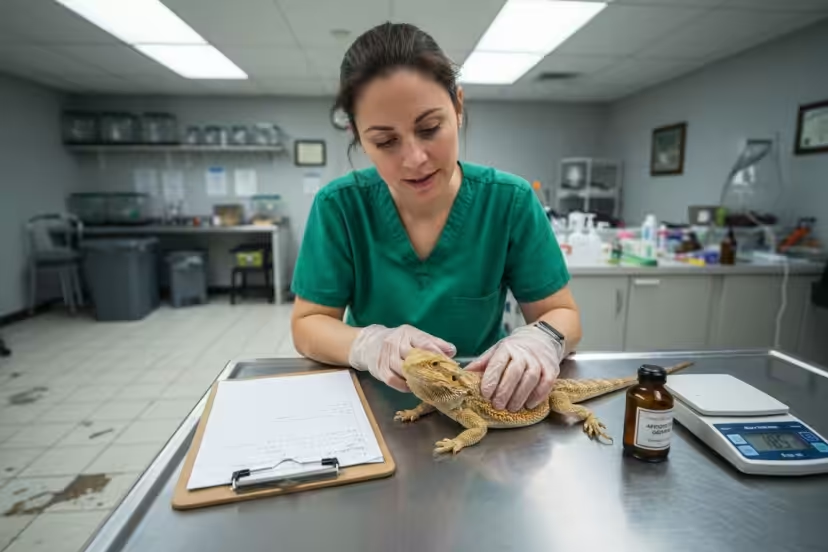
Finding mysterious changes in your bearded dragon’s behavior can spark real concern and confusion for new reptile owners. These subtle shifts often trace back to the hidden world of reptile parasites, which are more than just tiny nuisances—they can seriously affect both health and comfort. Understanding the types of parasites, common misconceptions, and effective treatment strategies empowers you to confidently protect your pet, while debunking myths and preventing unnecessary risks.
Table of Contents
- Defining Reptile Parasites And Common Myths
- Types Of Parasites Affecting Bearded Dragons
- How Parasites Infect And Harm Reptiles
- Recognizing Symptoms And Risks For Your Pet
- Treatment Options And Prevention Tips
Key Takeaways
| Point | Details |
|---|---|
| Understanding Parasites | Reptile parasites are complex organisms that can significantly impact the health of bearded dragons, necessitating proactive monitoring. |
| Common Myths | Dispelling myths about parasites is crucial; not all are immediately harmful, and visual inspections alone are insufficient for detection. |
| Symptoms and Detection | Owners must be vigilant for behavioral changes and physical signs that indicate potential parasitic infections. |
| Prevention and Treatment | A multi-faceted approach, including medical intervention and habitat hygiene, is essential for effective parasite management. |
Defining Reptile Parasites and Common Myths
Reptile parasites are complex microorganisms that inhabit and exploit living bearded dragons as their host environment, creating intricate biological relationships that can significantly impact overall reptilian health. Zoonotic parasite diversity encompasses multiple categories of organisms, including helminths, arthropods, and protozoans, each presenting unique challenges for reptile owners.
These microscopic invaders are not simply random organisms but sophisticated biological entities with specialized survival mechanisms. Contrary to popular misconceptions, reptile parasites are not just inconvenient passengers but potential serious health disruptors that can compromise a bearded dragon’s immune system and overall wellness. Understanding their complex nature requires dispelling several prevalent myths:
- Myth 1: All parasites are immediately harmful
- Myth 2: Parasites only affect unhealthy reptiles
- Myth 3: Visual inspection is sufficient for parasite detection
- Myth 4: Home remedies can effectively eliminate all parasitic infections
Parasitic infections represent a nuanced ecological interaction where the parasite’s survival depends on maintaining a delicate balance with its host. Unlike simplistic assumptions, these organisms have evolved sophisticated strategies for transmission and survival, making them formidable challenges in reptile healthcare.
Pro tip: Schedule regular veterinary check-ups and fecal tests to proactively monitor your bearded dragon’s parasite status and catch potential infections early.
Types of Parasites Affecting Bearded Dragons
Bearded dragons can host multiple types of parasites, creating complex health challenges for reptile owners. Parasitic infections in reptiles encompass two primary categories: external (ectoparasites) and internal (endoparasites) organisms that can significantly impact a bearded dragon’s overall wellness.
Ectoparasites represent external organisms that inhabit the dragon’s skin, scales, and external body surfaces. These troublesome invaders include:
- Mites: Tiny arachnids that attach to skin and cause intense irritation
- Ticks: Blood-sucking parasites that can transmit dangerous diseases
- Skin Lice: Microscopic insects that create persistent skin inflammation
Endoparasites are internal organisms that inhabit the digestive tract, bloodstream, and other physiological systems. These complex parasites include:
- Intestinal Worms: Helminths that consume nutrients and damage intestinal lining
- Protozoan Organisms: Single-celled parasites like Blastocystis that disrupt digestive function
- Blood Parasites: Microscopic organisms that can compromise immune system performance
Bearded dragons in captivity are particularly susceptible to parasitic infections due to controlled environments that can inadvertently facilitate parasite transmission.
Pro tip: Collect fresh fecal samples for professional microscopic examination every six months to detect potential parasitic infections before they become serious health risks.
Here’s a useful summary of common parasite types and their typical effects on bearded dragons:
| Parasite Type | Area Affected | Typical Impact |
|---|---|---|
| Mites | Skin, scales | Irritation and discomfort |
| Ticks | Bloodstream, skin | Disease transmission, weakness |
| Intestinal Worms | Digestive tract | Poor nutrient absorption |
| Protozoa | Intestines | Digestive disruptions |
| Blood Parasites | Circulation system | Reduced immune function |
| Skin Lice | Skin | Persistent inflammation |
How Parasites Infect and Harm Reptiles
Parasitic infection mechanisms reveal a complex and sophisticated process of host invasion that can dramatically compromise a bearded dragon’s health. Parasites employ multiple sophisticated strategies to enter and exploit their reptilian hosts, ranging from direct contact transmission to intricate environmental pathways.
The primary transmission routes for parasitic infections include:
- Direct Contact: Skin-to-skin or scale-to-scale transmission between reptiles
- Environmental Contamination: Infection through contaminated substrate, food, or water sources
- Vector Transmission: Spread through intermediate carriers like insects or mites
- Vertical Transmission: Passing from parent reptile to offspring
Physiological Harm Mechanisms demonstrate the insidious nature of these microscopic invaders. Parasites can cause damage through multiple devastating strategies:
- Nutrient Depletion: Consuming host’s essential nutrients
- Tissue Damage: Creating microscopic wounds in internal organs
Reptilian immune systems can be dramatically weakened by sustained parasitic infections, reducing overall host resilience and making further infections more likely.
Parasites do not merely exist within a host – they actively manipulate physiological systems, potentially altering behavior and metabolic processes to ensure their own survival. Some parasites can even modify host immune responses, creating environments more conducive to their continued existence.

Pro tip: Quarantine new reptiles and perform comprehensive parasitological screenings before introducing them to existing reptile habitats to prevent potential infection spread.
Recognizing Symptoms and Risks for Your Pet
Parasitic symptoms in reptiles range from subtle behavioral changes to dramatic health deterioration. Bearded dragon owners must develop keen observational skills to detect early warning signs that might indicate a potential parasitic invasion.
Behavioral Warning Signs that suggest a potential parasitic infection include:
- Lethargy: Unusual decreased activity levels
- Reduced Appetite: Sudden disinterest in food
- Excessive Soaking: Abnormal water behavior
- Frequent Scratching: Persistent skin irritation
- Weight Loss: Unexpected decline in body mass
Physical Manifestations of parasitic infections can be even more telling:
- Skin Lesions: Unusual bumps or discoloration
- Dysecdysis: Irregular or incomplete shedding patterns
- Visible Parasites: Mites or ticks on skin surface
- Swollen Abdomen: Potential internal parasite indicators
Parasitic infections can rapidly compromise your bearded dragon’s immune system, making early detection crucial for preventing long-term health complications.
Some parasites create complex interactions with their host’s physiological systems, potentially altering metabolic processes and immune responses. These microscopic invaders can cause significant damage even before obvious symptoms emerge, underscoring the importance of regular veterinary screenings and proactive monitoring.
Pro tip: Maintain a detailed health journal documenting your bearded dragon’s daily behavior, eating habits, and physical condition to help identify subtle changes indicating potential parasitic infections.
Treatment Options and Prevention Tips
Reptile parasite treatment protocols require a comprehensive and multifaceted approach that combines targeted medical interventions with proactive prevention strategies. Successful management demands precise veterinary guidance and meticulous attention to both treatment and environmental control.
Medical Treatment Options for bearded dragon parasites include:
- Antiparasitic Medications: Prescription drugs targeting specific parasite types
- Topical Treatments: Sprays and solutions for external parasites
- Systemic Interventions: Injectable or oral medications for comprehensive treatment
- Supportive Care: Nutritional supplements to boost immune function
Prevention Strategies are equally critical in managing parasitic risks:
- Quarantine Procedures: Isolating new reptiles before introduction
- Regular Health Screenings: Routine veterinary examinations
- Habitat Hygiene: Consistent cleaning and substrate replacement
- Controlled Environment: Maintaining optimal temperature and humidity
- Limited Wild Exposure: Preventing contact with potential parasite vectors
Professional veterinary supervision is essential to prevent medication toxicity and develop targeted treatment plans specific to your bearded dragon’s unique health needs.
Successful parasite management requires a holistic approach that combines medical intervention, environmental control, and consistent monitoring. Each bearded dragon presents unique challenges, making personalized treatment plans crucial for long-term health and wellness.
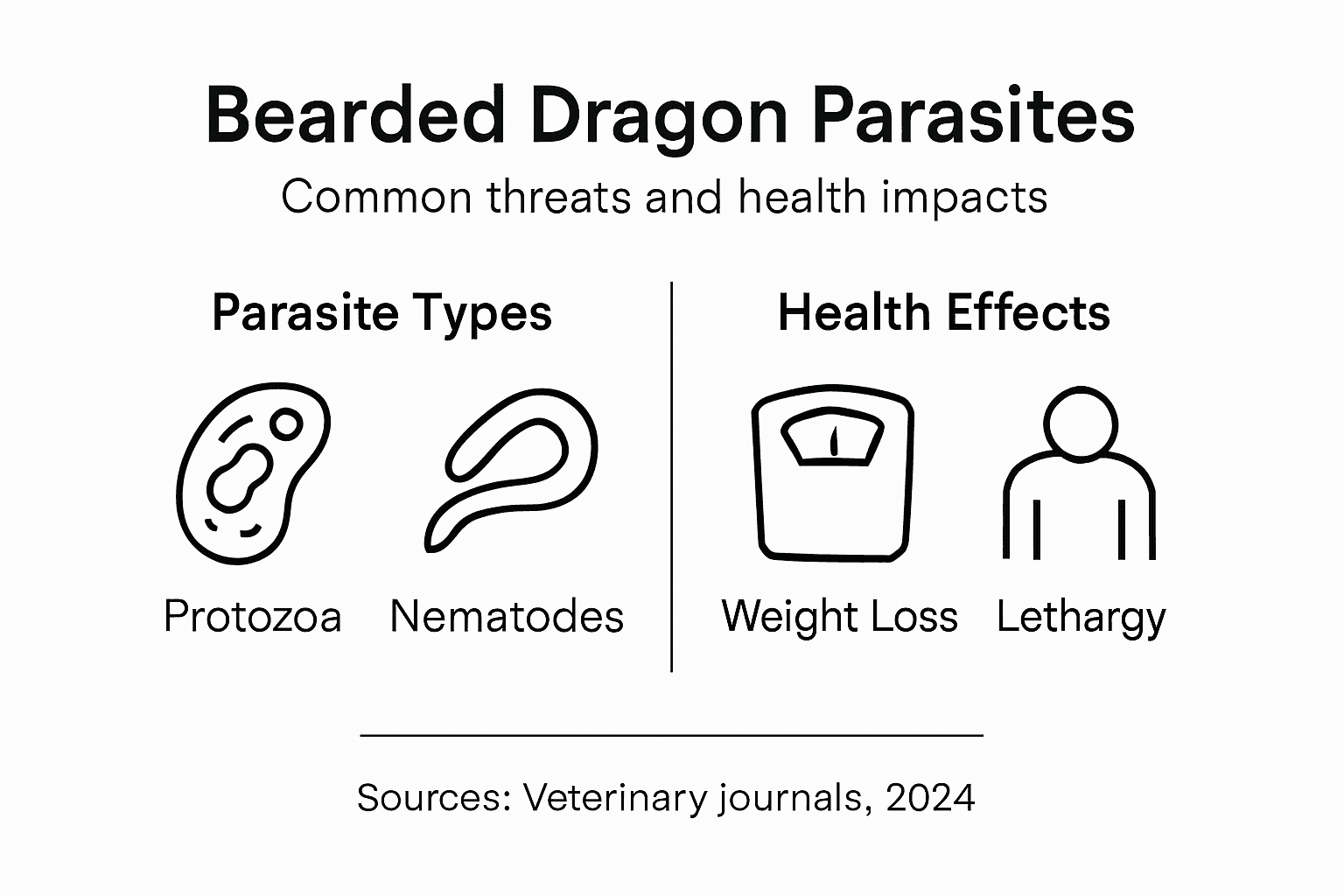
Pro tip: Maintain a detailed health log documenting treatments, observations, and veterinary recommendations to create a comprehensive health management strategy for your bearded dragon.
For quick reference, here’s a comparison of prevention and treatment strategies for reptile parasites:
| Approach | Purpose | Key Benefit |
|---|---|---|
| Quarantine procedures | Prevent infection spread | Safeguards other pets |
| Regular screenings | Early infection detection | Enables fast response |
| Habitat hygiene | Remove parasite sources | Reduces outbreak risk |
| Medical treatments | Eliminate existing parasites | Restores health |
| Supportive care | Boost immune system | Promotes recovery |
Protect Your Bearded Dragon from Parasites With Trusted Care Resources
Dealing with reptile parasites can be overwhelming and worrying. These tiny invaders cause serious health issues like nutrient depletion, skin irritation, and weakened immune defenses that can quickly affect your bearded dragon’s well-being. If you want to confidently recognize symptoms, understand treatment options, and master prevention techniques such as quarantine and habitat hygiene, you need clear, reliable guidance tailored to your pet’s unique needs. This challenge requires more than guesswork. It demands expert advice and carefully curated resources.

Explore comprehensive health guides, habitat cleaning tips, and detailed care advice at gobeardeddragon.com to keep your pet safe from parasites and other common risks. Visit our health checklists and care guides for practical steps to detect early signs and implement effective treatments right away. Act now to protect your beloved bearded dragon—because early action and informed care make all the difference in overcoming parasitic threats.
Frequently Asked Questions
What are the common types of parasites that affect bearded dragons?
Bearded dragons can host external parasites like mites, ticks, and skin lice, as well as internal parasites such as intestinal worms, protozoa, and blood parasites. Each type can significantly impact their health and well-being.
How can I tell if my bearded dragon has a parasitic infection?
Signs of parasitic infections may include lethargy, reduced appetite, excessive soaking, frequent scratching, weight loss, skin lesions, irregular shedding, and visible parasites. Early detection is crucial for effective treatment.
What treatment options are available for parasites in bearded dragons?
Treatment options include antiparasitic medications, topical treatments for external parasites, systemic interventions such as oral or injectable medications, and supportive care to enhance overall health and immune function.
How can I prevent parasitic infections in my bearded dragon?
Prevention strategies include quarantining new reptiles before introduction, conducting regular health screenings, maintaining habitat hygiene, controlling the environment, and minimizing exposure to potential parasite vectors.
Recommended
- Bearded Dragon Parasites- Go BEARDED DRAGON
- Complete Guide to Bearded Dragon Eye Issues
- 胡须龙寄生虫解析:健康危害与护理要点 – Go BEARDED DRAGON