Bearded Dragon Lighting Setup Guide for Safe Habitats
Finding the right lighting for your bearded dragon does not have to be complicated or expensive. Many new owners struggle with the details of UVB and heat bulbs, yet providing a reliable lighting routine is key to your pet’s well-being. With the right mix of quality UVB and heat sources, you can create a comfortable environment that supports your bearded dragon’s health from day one.
Table of Contents
- Step 1: Choose Suitable UVB And Heat Bulbs
- Step 2: Position Lighting Fixtures For Full Coverage
- Step 3: Set Timers For Day And Night Cycles
- Step 4: Test Temperature And UVB Output
- Step 5: Monitor And Adjust As Needed
Quick Summary
| Key Point | Explanation |
|---|---|
| 1. Use 10-12% UVB bulbs for health | High-quality UVB bulbs are essential for Vitamin D3 synthesis and calcium absorption in bearded dragons, ensuring their overall bone health. |
| 2. Establish distinct temperature zones | Create a hot basking spot (95-105°F), a warm area (80-90°F), and a cool retreat (75-80°F) for your bearded dragon to thermoregulate effectively. |
| 3. Set timers for day/night cycles | Use timers to provide 12-14 hours of light and 10-12 hours of darkness daily, maintaining your bearded dragon’s natural circadian rhythm. |
| 4. Regularly monitor temperature and UVB | Consistently check basking and ambient temperatures, along with UVB output, to ensure a safe and healthy habitat for your pet. |
| 5. Adapt habitat based on behavior changes | Observe your bearded dragon’s behavior and adjust habitat conditions accordingly to ensure they are comfortable and healthy. |
Step 1: Choose suitable UVB and heat bulbs
Picking the right lighting setup is crucial for your bearded dragon’s health and happiness. The perfect combination of UVB and heat bulbs will help your scaly friend thrive in their habitat by mimicking their natural desert environment.
When selecting UVB bulbs, focus on getting a high-quality reptile UVB lighting that provides 10-12% UVB output. These specialized bulbs help your bearded dragon synthesize vitamin D3, which is essential for calcium absorption and overall bone health. Look for linear fluorescent or compact fluorescent bulbs specifically designed for desert reptiles.
- Choose UVB bulbs rated between 10-12%
- Replace UVB bulbs every 6-12 months
- Position UVB bulb 12-18 inches from basking spot
- Select bulbs from reputable reptile lighting brands
For heat bulbs, you will need two different types: a basking lamp for daytime warmth and a ceramic heat emitter for nighttime temperature maintenance. The basking lamp should create a hot spot around 95-105 degrees Fahrenheit, allowing your bearded dragon to regulate their body temperature. Ceramic heat emitters provide consistent warmth without producing light, which is perfect for maintaining habitat temperatures after dark.
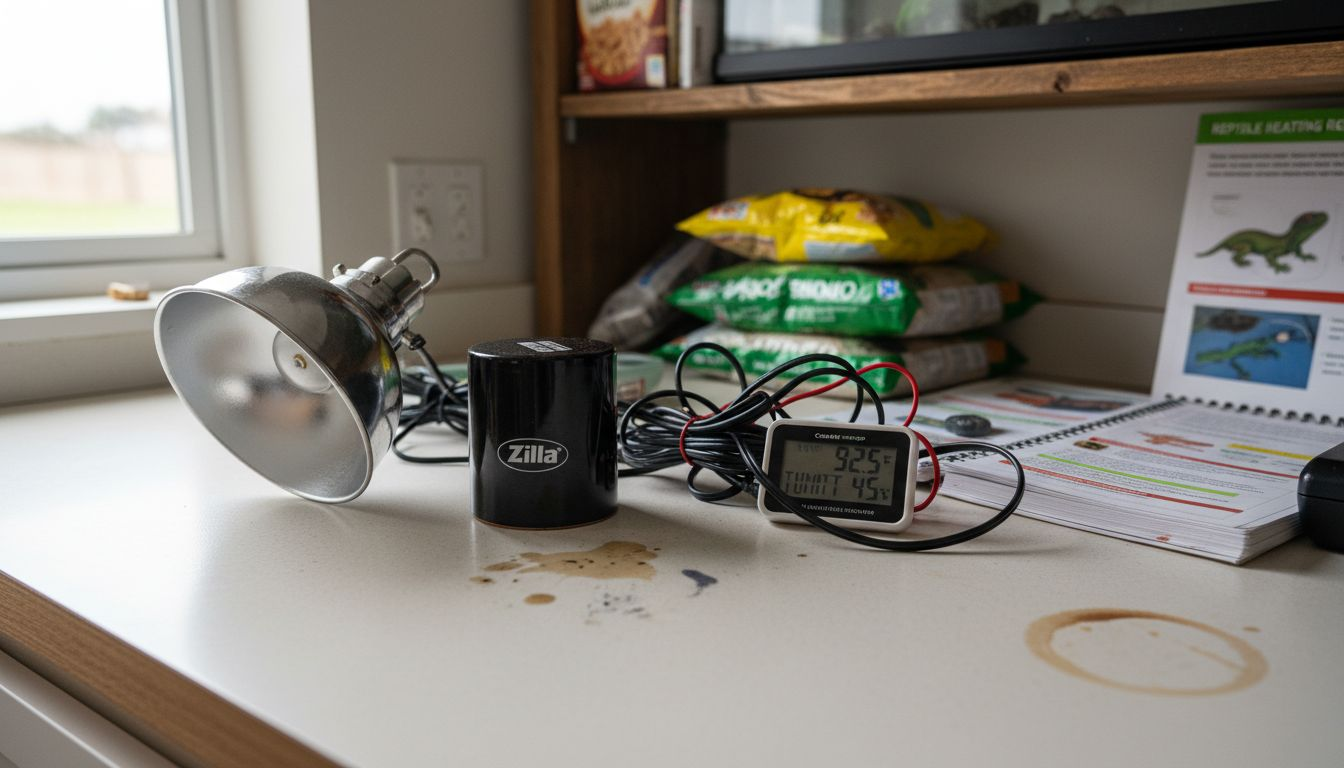
Pro tip: Always use a digital thermometer with probe to accurately monitor your habitat’s temperature zones and ensure your bearded dragon has proper thermal gradients.
Here’s a quick overview of recommended lighting and heat equipment for bearded dragon habitats:
| Equipment Type | Primary Function | Typical Placement | Key Benefit |
|---|---|---|---|
| Linear UVB Bulb | Provides UVB radiation | 12-18″ above basking area | Essential for Vitamin D3 uptake |
| Basking Lamp | Generates daytime heat | Directly above basking spot | Allows thermoregulation |
| Ceramic Heat Emitter | Supplies nighttime warmth | Mounted outside enclosure | Maintains temp after dark |
| Digital Thermometer | Monitors temperature gradients | Multiple zones in habitat | Ensures precise temp control |
| UVB Meter | Tests UVB radiation output | Near basking/perch areas | Confirms effective UVB exposure |
Step 2: Position lighting fixtures for full coverage
Creating the ideal lighting environment for your bearded dragon requires strategically placing your UVB and heat lamps to ensure full habitat coverage. Your goal is to mimic their natural desert habitat while providing multiple temperature zones that allow your reptilian friend to self-regulate their body temperature.
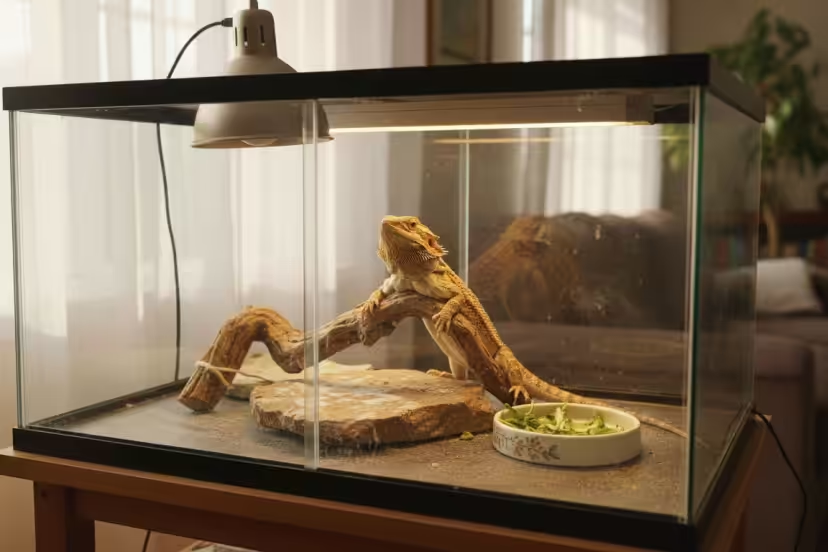
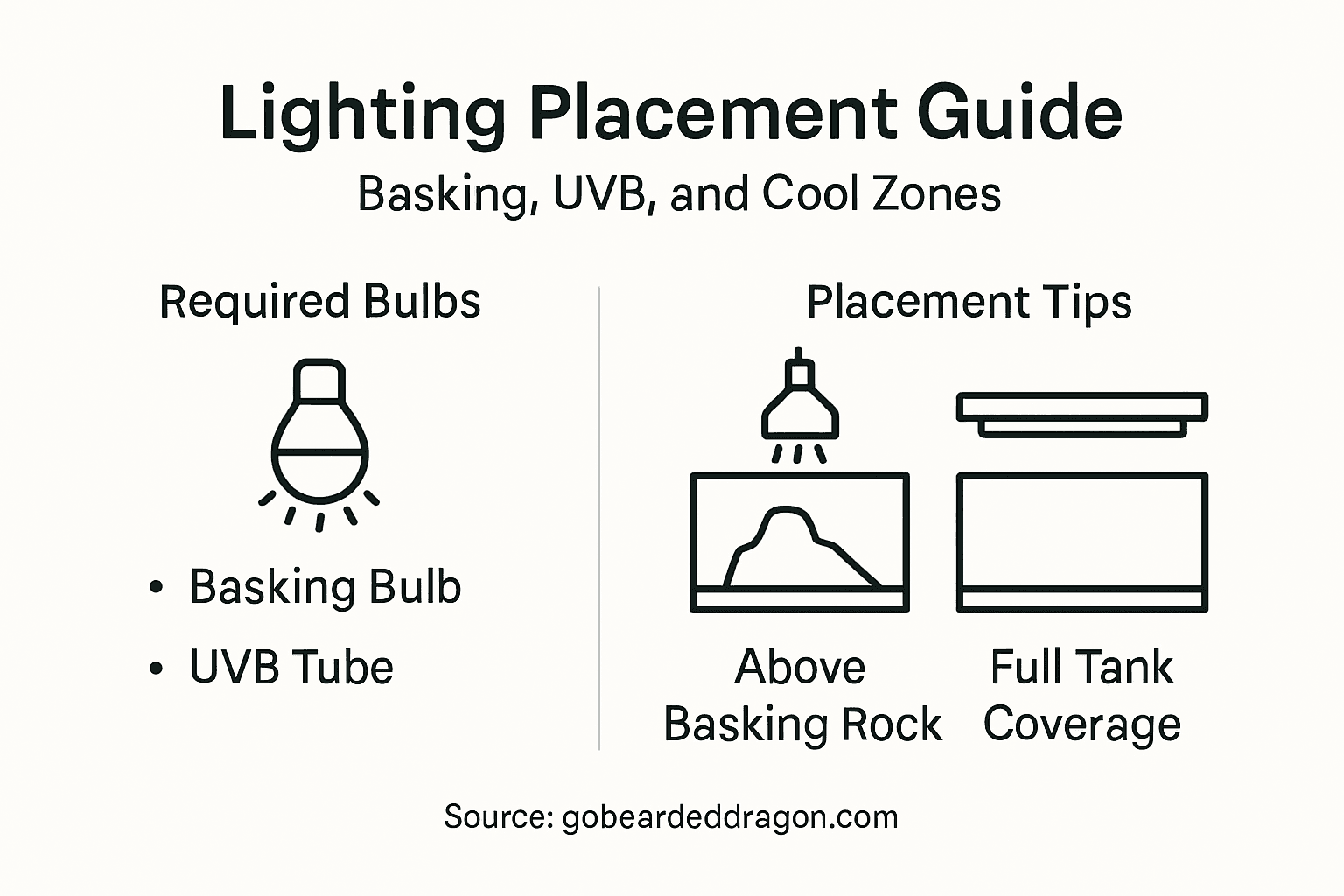
Positioning your reptile habitat lighting involves careful measurement and thoughtful arrangement. Place your UVB bulb parallel to the basking area, mounted 12-18 inches above the primary perching spot. This ensures your bearded dragon receives optimal ultraviolet exposure while preventing potential eye strain or skin damage from being too close to the bulb.
- Mount UVB bulb parallel to basking area
- Keep 12-18 inches distance from primary perch
- Create a temperature gradient from warm to cool
- Ensure no direct bulb contact with dragon or enclosure materials
Design your habitat with distinct temperature zones: a hot basking area around 95-105 degrees Fahrenheit, a warm zone around 80-90 degrees, and a cool retreat between 75-80 degrees. This allows your bearded dragon to move freely and regulate their body temperature by moving between these areas throughout the day.
Strategic lighting placement is more than aesthetics – it’s about creating a microhabitat that supports your bearded dragon’s physiological needs.
Pro tip: Use adjustable lamp fixtures and digital thermometers to fine-tune your habitat’s temperature zones and ensure optimal comfort for your scaly companion.
Step 3: Set timers for day and night cycles
Establishing a consistent lighting schedule is crucial for your bearded dragon’s health and well-being. These desert dwellers thrive on predictable day and night cycles that mimic their natural habitat, helping regulate their metabolism, behavior, and overall physiological rhythms.
Using automatic light timers can transform your habitat management, ensuring your scaly friend experiences a stable and natural environment. Program your timers to provide 12-14 hours of light during the day, followed by 10-12 hours of complete darkness, which supports your bearded dragon’s natural circadian rhythm.
- Set UVB lamp timer for 12-14 hours daily
- Use separate timers for heat and UVB sources
- Create gradual light transitions
- Maintain consistent daily schedules
When configuring your timers, consider using digital programmable outlets that allow precise scheduling. Some advanced models even simulate sunrise and sunset by gradually increasing or decreasing light intensity, which more closely replicates natural environmental conditions.
Consistent lighting cycles are not just a convenience – they are a critical component of your bearded dragon’s health and emotional well-being.
Pro tip: Invest in a timer with battery backup to prevent disruptions during power outages and maintain your dragon’s established routine.
Step 4: Test temperature and UVB output
Ensuring your bearded dragon’s habitat has precise lighting and temperature conditions is like being a reptilian meteorologist. Your goal is to create a microclimate that mimics their natural desert environment, which requires careful and consistent monitoring of both temperature gradients and ultraviolet radiation.
To accurately assess your habitat conditions, you’ll need two critical tools: a digital thermometer with probe and a UVB measurement device. These instruments will help you verify that your lighting setup provides the perfect balance of warmth and ultraviolet exposure for your scaly friend.
- Check basking spot temperature (95-105°F)
- Measure warm zone temperature (80-90°F)
- Verify cool zone temperature (75-80°F)
- Test UVB output with specialized meter
Position your digital thermometer probes at different habitat levels to create a comprehensive temperature map. The basking spot should consistently hit 100°F, while the cooler areas provide a retreat when your bearded dragon needs to regulate its body temperature. For UVB measurement, use a specialized meter that can detect the exact ultraviolet output, ensuring your bulbs are providing the necessary 10-12% UVB radiation.
Precision in habitat monitoring isn’t just technical – it’s an expression of love for your reptilian companion.
Pro tip: Replace your UVB bulbs every six to twelve months, even if they appear functional, as their ultraviolet output diminishes over time.
Step 5: Monitor and adjust as needed
Creating the perfect habitat for your bearded dragon is an ongoing process that requires consistent attention and subtle adjustments. Think of yourself as a habitat curator, continuously fine-tuning the environment to ensure your scaly companion remains healthy and comfortable.
Regular monitoring involves more than occasional glances – you’ll want to use reptile habitat tracking techniques to understand your bearded dragon’s specific needs. Observe your dragon’s behavior closely, as they will provide subtle cues about their comfort level through their positioning, activity, and overall demeanor.
- Check temperature zones weekly
- Watch for behavioral changes
- Inspect lighting equipment monthly
- Evaluate habitat conditions seasonally
Pay special attention to physical signs of stress or discomfort. If your bearded dragon is constantly seeking cooler or warmer areas, spending unusual amounts of time under or away from lights, or showing changes in appetite or activity levels, these might indicate that your current habitat setup needs refinement.
Use this reference to understand possible reasons for bearded dragon behavioral changes:
| Observed Behavior | Possible Environmental Cause | Suggested Adjustment |
|---|---|---|
| Hiding often | Too cool or drafty in habitat | Raise basking area temp |
| Excessive basking | Cage is overall too cold | Check and adjust heat lamp |
| Avoiding lights | Too hot or lights placed too close | Raise/lighten lamp distance |
| Decreased appetite | Improper day/night cycle | Review light timer schedule |
| Lethargic or inactive | Insufficient UVB exposure | Test/replace UVB bulb |
Your bearded dragon’s behavior is a living, breathing feedback system – learn to read its subtle language.
Pro tip: Keep a detailed habitat journal to track temperature changes, lighting adjustments, and your dragon’s responses, helping you create a personalized environmental strategy.
Create the Perfect Lighting Setup for Your Bearded Dragon Today
Setting up the right UVB and heat lighting is essential for your bearded dragon’s health and happiness. If you struggle with choosing or positioning the right bulbs or need help maintaining stable temperature zones, you are not alone. Many owners face challenges in creating safe, effective habitats that mimic natural desert environments. Achieving optimal UVB exposure, consistent heat gradients, and reliable day and night cycles can feel overwhelming, but are critical for your dragon’s well-being.

Explore expert guides and practical tips at gobeardeddragon.com to master your reptile habitat lighting setup. Discover how to select the best UVB bulbs, position your lamps for full coverage, and maintain precise temperature monitoring with trusted advice. Start building a customized lighting environment that supports your bearded dragon’s needs now. Visit this comprehensive lighting guide and unlock the resources that make safe, healthy care straightforward and stress-free.
Frequently Asked Questions
What type of UVB bulb should I use for my bearded dragon?
To ensure your bearded dragon’s health, choose a UVB bulb that provides 10-12% UVB output. Select high-quality reptile UVB lighting designed for desert reptiles, and install it 12-18 inches above the basking area for optimal exposure.
How often should I replace my bearded dragon’s UVB bulb?
You should replace your UVB bulb every 6-12 months, even if it still seems to work. Perform this replacement regularly to maintain adequate UVB output for vitamin D3 synthesis and your dragon’s calcium absorption.
How can I create a proper temperature gradient in my bearded dragon’s habitat?
Establish distinct temperature zones by positioning a basking lamp for daytime warmth (95-105°F) and a cool area (75-80°F) for comfort. Place your basking lamp directly above the basking spot and adjust the distance until you reach the desired temperature.
How do I set a timer for my bearded dragon’s lighting?
Set your UVB lamp timer for 12-14 hours of light during the day and 10-12 hours of darkness at night to mimic natural cycles. Use separate timers for heat and UVB sources to create smooth transitions and maintain a consistent schedule.
What tools do I need to monitor my bearded dragon’s habitat conditions?
To monitor temperature and UVB output, use a digital thermometer with a probe and a UVB meter. Regularly check the basking spot temperature, warm zone, and cool retreat to ensure a balanced environment for your bearded dragon.
How can I tell if my bearded dragon is comfortable in its habitat?
Observe your bearded dragon’s behavior to check for comfort. If they frequently bask, are active, and seeking different temperature zones, they are likely comfortable. Adjust the habitat if you notice signs of stress, such as hiding or lethargy.
Recommended
- Best Heating Equipment for Bearded Dragon Enclosures – Go BEARDED DRAGON
- How to Set Up Bearded Dragon Habitat Naturally