Humidity for Bearded Dragons: The Right Range and How to Control It
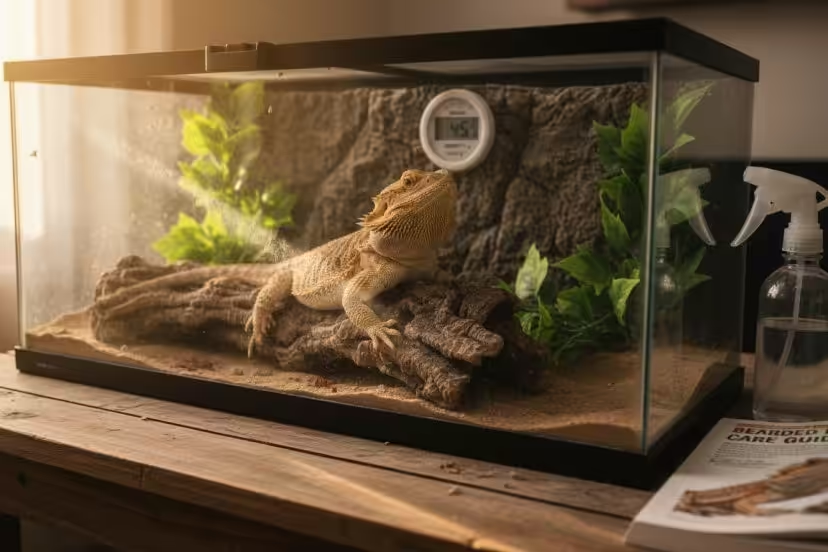
Bearded dragons need dry air. Keep the humidity in the enclosure between 30 and 40 percent, measured with a digital hygrometer in the middle of the tank. Short rises to 50 percent after a bath or misting do no harm. Humidity that stays above about 60 percent, in particular with poor airflow, sets up respiratory infections and skin problems.
Table of Contents
- Humidity Needs for Bearded Dragons Explained
- The Right Humidity Range
- Health Risks from Wrong Humidity
- How to Measure and Control Humidity
- Common Humidity Mistakes
🦎 Want all the essentials on one printable page?
The Complete Bearded Dragon Care Plan puts daily routines, feeding charts, safe vs. toxic foods and vet red flags into one 16-page PDF for $7.99.
See the Care Plan →Key Takeaways
| Point | Details |
|---|---|
| Target range | 30 to 40 percent most of the time. Brief rises after misting or a bath are fine. |
| Measure it | Use a digital hygrometer. Analog dials are often off by 10 percent or more. |
| Airflow matters | Good ventilation keeps damp air from sitting in the enclosure, which matters more than the exact number. |
| Hydration is separate | Your dragon gets water from greens, baths and a water dish, not from humid air. |
Humidity Needs for Bearded Dragons Explained
Bearded dragons come from the dry woodlands, scrub and semi-desert of inland Australia. Their skin and lungs are built for dry air. A tropical setup with dense plants, a large water bowl under the heat lamp and daily misting creates the wrong climate.
Too much humidity, combined with stale air, lets bacteria and fungi grow and leads to respiratory infections and skin disease. Very dry air causes fewer problems on its own. Shedding trouble and dehydration in most cases come from too little drinking water and too few baths, not from the air.
To manage humidity:
- monitor it with a digital hygrometer
- use a substrate that dries out between waterings
- ventilate the enclosure through a mesh top or side vents
- keep the water dish small and on the cool side
- mist greens or your dragon’s face instead of the whole tank
The Right Humidity Range
Most care references give 30 to 40 percent as the target for bearded dragons. The NC State veterinary hospital care sheet also recommends a low, dry range.
| Reading | What it means | What to do |
|---|---|---|
| Below 20% | Very dry, common in heated homes in winter | Offer baths and misted greens, check shedding |
| 30 to 40% | Target range | Keep doing what you are doing |
| 40 to 50% | Acceptable for short periods | Check ventilation, let substrate dry |
| Above 60% for days | Too damp | Improve airflow, remove wet substrate, move the water dish |
If you live in a humid climate, your room humidity may sit at 60 percent in summer. Good airflow and a dry, hot basking spot matter more there than chasing an exact number.
If your tank has a solid top, add mesh vents or a ventilated lid.
Health Risks from Wrong Humidity
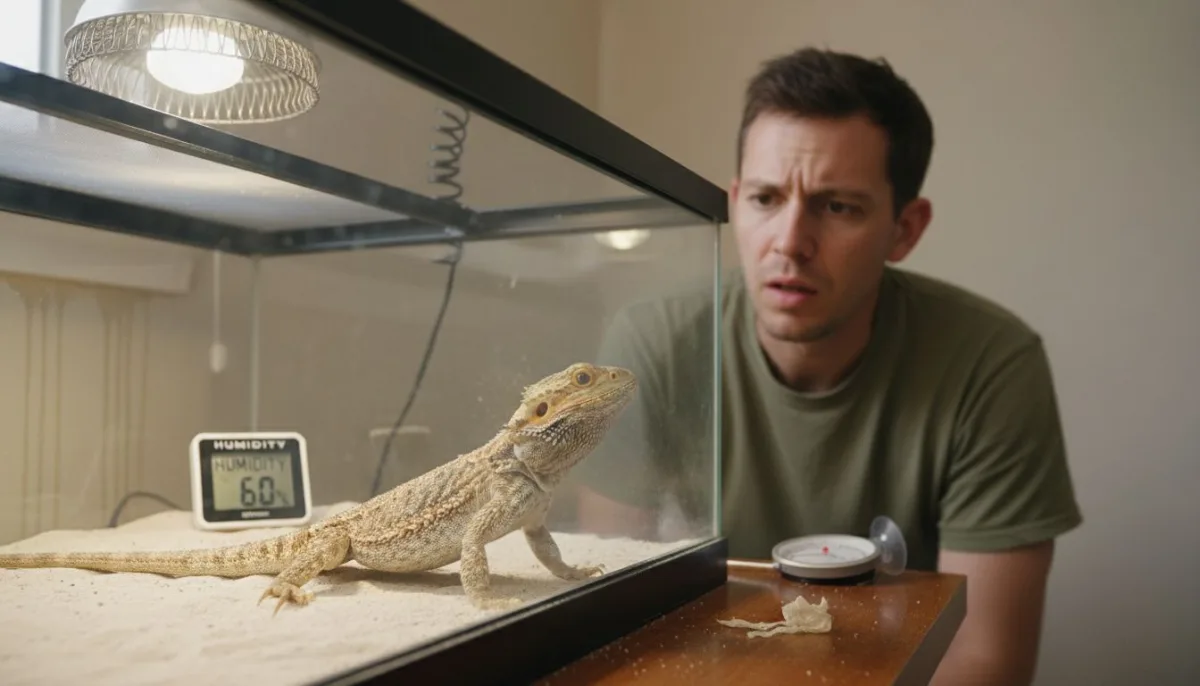
Humidity too high, in particular with poor ventilation, can lead to:
- respiratory infections, with wheezing, clicking and bubbles at the nose
- bacterial and fungal skin infections, including scale rot on the belly
- mold in the substrate and on decor
Air that is very dry combined with poor hydration can lead to:
- stuck shed on the toes and tail tip
- dehydration, with wrinkled skin, sunken eyes and thick orange urates
If your dragon wheezes or breathes with its mouth open when it is not basking, take it to a reptile vet. Fixing the humidity alone does not cure an existing infection.
How to Measure and Control Humidity
A digital hygrometer gives you a real number. Place the probe in the middle of the enclosure at dragon height. A second probe on the cool side shows you the range across the tank.
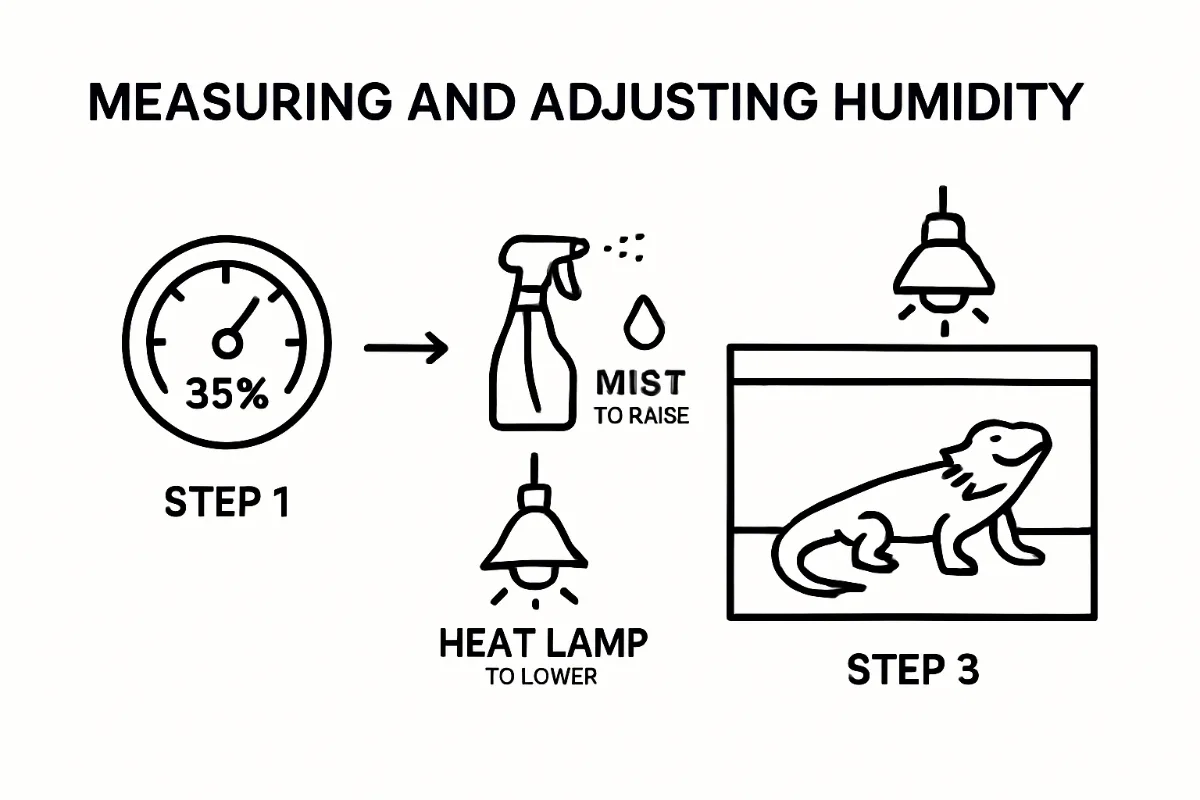
To lower humidity:
- open more ventilation or replace a glass lid with mesh
- move the water dish to the cool side and use a smaller one
- let a soil substrate dry out on top, and remove any wet spots
- stop misting the whole enclosure
- run a dehumidifier in the room if your house is humid
To raise humidity a little in very dry homes:
- mist the greens before serving
- offer a lukewarm bath once or twice a week
- add a humid hide with damp moss on the cool side during shedding
Common Humidity Mistakes
- Misting the whole tank every day. This raises humidity and does little for hydration. Mist the greens or your dragon’s snout instead.
- A large water bowl under the basking lamp. The heat evaporates the water and turns the enclosure humid.
- Wet substrate. Moss, wet soil or damp paper towels across the floor hold moisture. A bioactive soil mix is fine as long as the top layer dries out.
- No ventilation. Solid tops and closed vents trap moist air.
- Analog dial gauges. They drift and often read 10 to 20 percent off.
- Tropical humidifiers or foggers. These are built for rainforest species, not bearded dragons.
Frequently Asked Questions
What is the ideal humidity range for bearded dragons?
Keep the enclosure between 30 and 40 percent. Short rises after a bath or misting are fine, but humidity should not stay above about 60 percent.
How can I measure the humidity in my bearded dragon’s terrarium?
Use a digital hygrometer with the probe in the middle of the enclosure at dragon height. A second probe on the cool side shows the range across the tank.
What are the risks of having too high humidity for bearded dragons?
High humidity with poor airflow leads to respiratory infections, scale rot and fungal skin infections. Wheezing or bubbles at the nose need a vet.
How can I keep the right humidity level in my bearded dragon’s habitat?
Ventilate the enclosure, keep a small water dish on the cool side, let the substrate dry out and mist food instead of the whole tank. Check the reading with a digital hygrometer.

Love your beardie? Wear it proudly.
Be a Bearded Dragon Scented Candle – from $21.47. Our own bearded dragon designs, printed on demand. Every order supports these free care guides.
View this design → Browse all gifts