Tail Rot in Bearded Dragons: Causes, Signs and Treatment

Tail rot is tissue death in a bearded dragon’s tail, most often caused by a bacterial infection after an injury, or by poor blood flow from stuck shed, a bite or a burn. It starts at the tip as a dark, dry or swollen area and can move up the tail toward the body. It does not heal on its own. A reptile vet treats it with cleaning, antibiotics and, in advanced cases, amputation. Good husbandry, one dragon per enclosure and careful shed checks prevent most cases.
Table of Contents
- What Tail Rot Is and Why It Happens
- Signs and Progression
- Prevention
- Treatment and When to See a Vet
- Related Guides
🦎 Want all the essentials on one printable page?
The Complete Bearded Dragon Care Plan puts daily routines, feeding charts, safe vs. toxic foods and vet red flags into one 16-page PDF for $7.99.
See the Care Plan →Key takeaways
| Point | Details |
|---|---|
| Cause | Bacteria such as Aeromonas or Pseudomonas entering through an injury, or loss of blood flow from stuck shed, a bite or a burn. |
| Signs | A dark or black tail tip, swelling, a dry or shriveled look, a bad smell, and a dark area that spreads. |
| Treatment | Vet care with cleaning and antibiotics. Advanced cases need amputation. |
| Prevention | One dragon per enclosure, safe heat sources, clean housing, correct heat and UVB, and help with stuck shed. |
What Tail Rot Is and Why It Happens
Tail rot is dry or wet necrosis of the tail. Bearded dragons cannot drop and regrow their tails like some lizards, so lost tissue stays lost. Common triggers:
- Bites from another dragon. Bearded dragons should live alone.
- Burns from a heat lamp the dragon can touch, a heat rock or a heat mat.
- Stuck shed on the tail tip, which tightens and cuts off blood flow.
- Crush injuries from heavy decor, doors or careless handling.
- Weak immunity from low temperatures, weak UVB, poor diet or dirty housing.
The same types of bacteria cause mouth rot. They are present in most enclosures and take hold when skin is damaged and the immune system is weak.
Signs and Progression
Sources such as Learning and Yearning list the same signs:
- darkening at the tail tip, turning brown or black
- a dry, shriveled or hard tip, or a soft, swollen and moist area
- a clear line between dark and healthy tissue that moves up the tail
- a bad smell
- stuck shed on the affected area
- in later stages, lethargy and a poor appetite
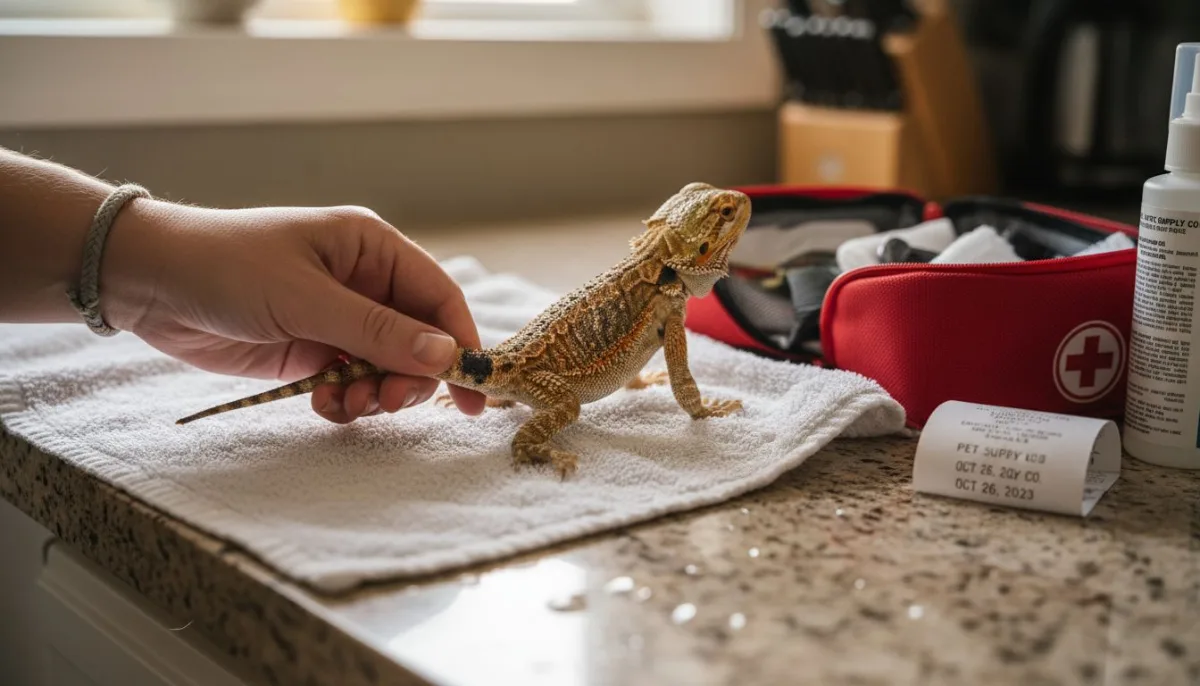
Tail rot or normal color change?
Skin before a shed looks dull and grey over large areas and goes back to normal after the shed. Some morphs also have dark tail bands. Tail rot is different: it starts at the tip, stays dark after shedding, feels different from healthy tissue and spreads over time. A weekly photo of the tail under the same light helps you spot changes.
Prevention
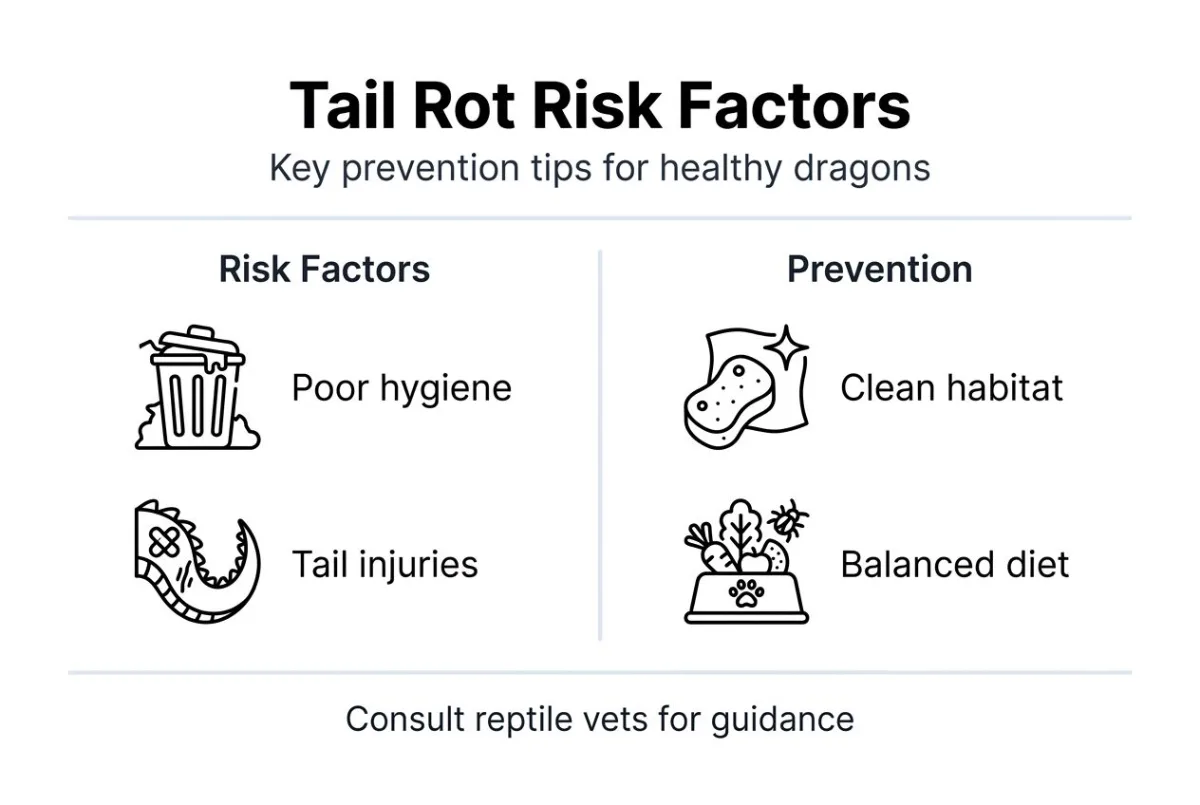
- House each dragon alone. Tail and toe bites are common when dragons share an enclosure.
- Make heat sources safe. Use a lamp guard or mount bulbs outside the reach of your dragon. Skip heat rocks.
- Check every shed. If shed stays stuck on the tail tip, offer a lukewarm bath and let it loosen. Never pull it off. Our shedding guide explains how.
- Keep the enclosure clean. Remove droppings and leftover food every day and deep-clean once a month.
- Get heat and UVB right. Basking surface 95 to 105°F (35 to 41°C) for adults, cool side 75 to 85°F (24 to 29°C), and a linear T5 UVB tube replaced every 12 months (T8 tubes every 6 months).
- Feed a balanced diet with gut-loaded insects dusted with calcium, and keep humidity at about 30 to 40 percent so sheds come off well.
- Check decor and doors for spots where a tail could get caught or crushed.
Treatment and When to See a Vet
Book a visit with a reptile vet within a day or two of noticing a dark or swollen tail tip, and sooner if it spreads, smells or your dragon seems unwell.
What the vet does
- examines the tail and may take an X-ray to check the bone
- cleans the area and may take a sample to find the right antibiotic
- prescribes a topical treatment, systemic antibiotics or both
- amputates the affected part under anesthesia if the tissue is dead or the infection is spreading
The MSD Veterinary Manual covers traumatic injuries in reptiles in more depth. Bearded dragons adapt well to a shorter tail.
At home during treatment
- give medicine and clean the wound the way your vet shows you
- use paper towels as the floor and change them every day
- keep the basking spot at the right temperature to support healing
- do not use human creams, peroxide or home remedies unless your vet approves them
| Stage | Typical treatment |
|---|---|
| Early, small dark tip | Cleaning, topical treatment, fix the cause |
| Spreading or infected | Systemic antibiotics, often with cleaning |
| Dead tissue or spread toward the body | Amputation under anesthesia plus antibiotics |
Healing time depends on the stage and on how well the cause is fixed. Your vet will tell you when to come back for checks.
Related Guides

Read our guides on habitat setup, vitamin supplements and reptile companions.
Frequently asked questions
Why does tail rot occur in bearded dragons?
It follows an injury or a loss of blood flow to the tail, such as a bite, a burn, a crush injury or stuck shed. Bacteria then infect the damaged tissue, in particular when the dragon lives in a cold or dirty enclosure.
Can tail rot heal without veterinary treatment?
No. Dead tissue does not recover, and an infection can spread toward the body. See a reptile vet.
How soon should I take my dragon to the vet if I spot symptoms?
Within a day or two, and the same day if the dark area spreads, smells or your dragon stops eating. Early treatment can often save more of the tail.
What home care steps help prevent tail rot?
Keep each dragon alone, guard heat lamps, help stuck shed come off with baths, clean the enclosure every day, keep the right temperatures and replace a T5 UVB tube every 12 months.
Is tail amputation common with tail rot?
It is the usual treatment once tissue has died. Early vet care can limit how much of the tail needs to go.
Want a complete plan for a healthy bearded dragon? Get the Bearded Dragon Care Plan, a PDF guide covering nutrition, habitat, lighting and health.

Love your beardie? Wear it proudly.
Bearded Dragon Spirit Animal Tote Bag – from $18.48. Our own bearded dragon designs, printed on demand. Every order supports these free care guides.
View this design → Browse all gifts