Bearded Dragon Enclosure Basics: Size, Setup and Costs
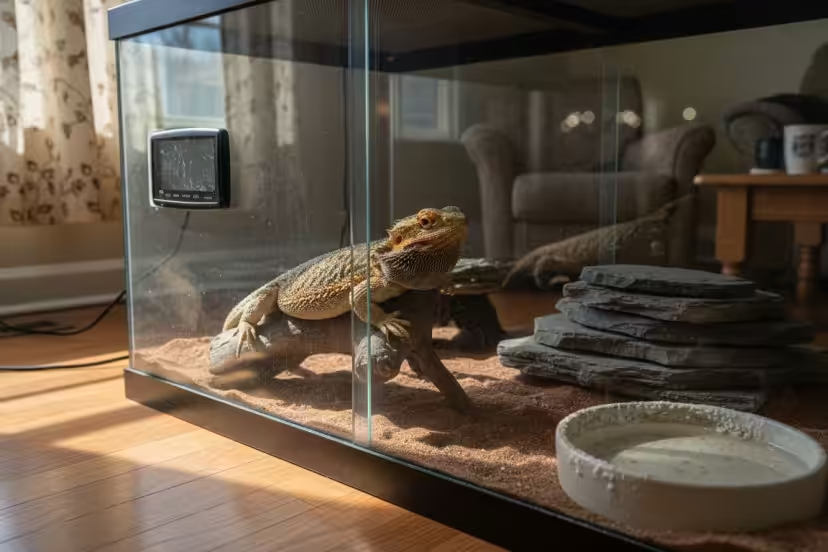
An adult bearded dragon needs an enclosure of at least 4 x 2 x 2 feet (120 x 60 x 60 cm, about 120 gallons), a basking spot of 100 to 108°F (38 to 42°C), a cool side in the high 70s to mid 80s °F, a linear UVB tube and a safe floor covering. Get those five things right and most other choices come down to taste and budget.
Table of Contents
- What a Bearded Dragon Enclosure Needs
- Indoor vs Outdoor Enclosures Compared
- Key Features and Material Options
- Essential Equipment and Setup Process
- Costs, Maintenance and Common Pitfalls
- Enclosure Setup Checklist
🦎 Want all the essentials on one printable page?
The Complete Bearded Dragon Care Plan puts daily routines, feeding charts, safe vs. toxic foods and vet red flags into one 16-page PDF for $7.99.
See the Care Plan →Key Takeaways
| Point | Details |
|---|---|
| Size | 4 x 2 x 2 feet (120 gallons) is the minimum for an adult. Bigger gives your dragon more room to move and a better temperature gradient. |
| Indoor vs outdoor | Indoor setups give you full control of heat and light. Outdoor pens add real sunlight but need shade, shelter and protection from predators. |
| Material | PVC enclosures hold heat best. Glass is cheaper and easy to find. Wood looks good but needs sealing. |
| Common mistakes | Loose sand, coil UVB bulbs and tanks that are too small cause most health problems. |
What a Bearded Dragon Enclosure Needs
Your dragon’s enclosure has to replace the open, sunny scrubland it would live in. That means heat from above, strong light, a cooler retreat, and space to walk, climb and dig. Reviews of popular enclosures show the range of options on the market.
Front-opening enclosures work better than top-opening tanks. Your dragon sees you coming at eye level instead of a hand dropping from above, which looks like a predator. Glass tanks with a mesh top are the most common starter option, and they work if they are large enough.
Older guides list 40 or 75 gallons as enough for an adult. Current care references, including the Hudson Valley Reptile Rescue care guide, recommend 4 x 2 x 2 feet as the minimum. A juvenile can start in a smaller tank, but you will upgrade within months, so buying the adult size first saves money.
Pro tip: Measure the spot in your home before you order. A 4-foot enclosure plus lamps and fixtures needs about 5 feet of wall space and a sturdy stand.
Indoor vs Outdoor Enclosures Compared
Indoor enclosures let you control temperature, light and humidity all year. Glass, PVC or plastic enclosures with a basking lamp, a UVB tube and a timer give your dragon the same day every day, which suits most homes and climates.
Outdoor enclosures give your dragon natural sunlight, the best UV source there is. They also bring risks: overheating, cold nights, rain, and predators such as cats, dogs and birds. An outdoor pen needs a mesh roof, a shaded area, a shelter your dragon can retreat into, and a lock. Use it on warm days while you are home, and bring your dragon inside overnight unless your nights stay above 65°F (18°C).
Pro tip: Start with short outdoor sessions of 20 to 30 minutes and stay close. Watch for gaping and dark coloring, which signal heat stress.
| Aspect | Indoor enclosure | Outdoor enclosure |
|---|---|---|
| Climate control | Full control with lamps and timers | Depends on the weather |
| UV source | UVB tube | Natural sunlight |
| Predator protection | Built in | Needs mesh roof and locks |
| Best use | Full-time home | Supervised extra time on warm days |
Key Features and Material Options
Each enclosure material has trade-offs:
- Glass terrariums: affordable and easy to see into. Glass lets heat escape, so you may need a stronger basking bulb in a cool room.
- PVC and plastic enclosures: hold heat well, weigh less and ship flat. They cost more, but they keep the temperature gradient stable.
- Wooden enclosures: insulate well and look like furniture. Seal the inside so moisture and waste do not soak into the wood.
Whatever you choose, check for good ventilation, a lock and doors that close without gaps. Dragons push at corners and can squeeze through openings you would not expect.
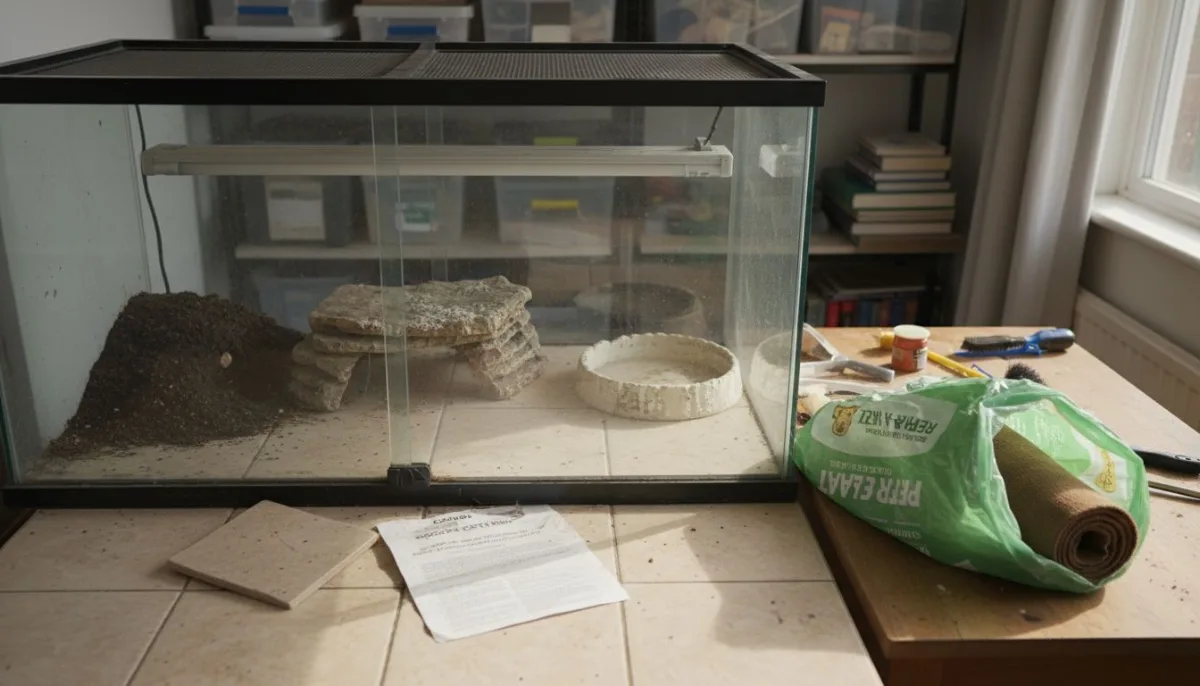
Inside the enclosure, set up a basking zone under the heat lamp, a linear UVB tube on the same side, and a cooler end with a hide. For the floor, choose between paper towels (cheap, easy to clean), ceramic tiles (durable, help file the nails) and a soil and sand mix for a naturalistic or bioactive setup. A bioactive tank needs tank cycling before your dragon moves in, and every setup needs at least two hides (what a hide is and where to place it).
Pro tip: Put one probe of a digital thermometer at the basking spot and one on the cool side. Read both every day for the first two weeks, then once a week.
Essential Equipment and Setup Process
The Reptiles and Research care guide lists the same core equipment most keepers use:
- Basking lamp: a halogen flood or reptile basking bulb that creates a surface of 100 to 108°F (38 to 42°C). Ceramic heat emitters and radiant heat panels add warmth without light, which helps on cold nights or in large enclosures.
- UVB: a T5 high-output tube across half the enclosure, 10 to 12 hours a day.
- Thermometers: a digital thermometer with two probes and, if you can, an infrared temperature gun.
- Timer: one plug timer for heat and UVB so the day length stays the same.
- Furniture: branches for climbing, a hide on the cool side and a stable basking platform.
Set up in this order:
- Place the empty 4 x 2 x 2 enclosure where it will stay.
- Add the floor covering and furniture.
- Mount the basking lamp and UVB tube on the same end.
- Run the lights for two or three days and record temperatures at the basking spot and on the cool side.
- Adjust the platform height or bulb wattage until the numbers match.
- Move your dragon in.
Pro tip: Test the full setup before your dragon arrives. A new home is stressful enough without a basking spot that is 15 degrees off.
Costs, Maintenance and Common Pitfalls
A complete setup costs more than the dragon. This Australian husbandry manual for bearded dragons gives a full list of what a keeper needs. Typical US prices:
- Enclosure: $200 to $600 for a 4 x 2 x 2
- Heat lamp and fixture: $50 to $150
- T5 UVB tube and fixture: $60 to $120
- Floor covering: $20 to $50
- Thermometers: $25 to $75
- Branches, hides and decor: $50 to $150
Plan for running costs as well: a new UVB tube every 12 months (T5) or 6 months (T8), replacement bulbs for the basking lamp, food, and a yearly vet visit.
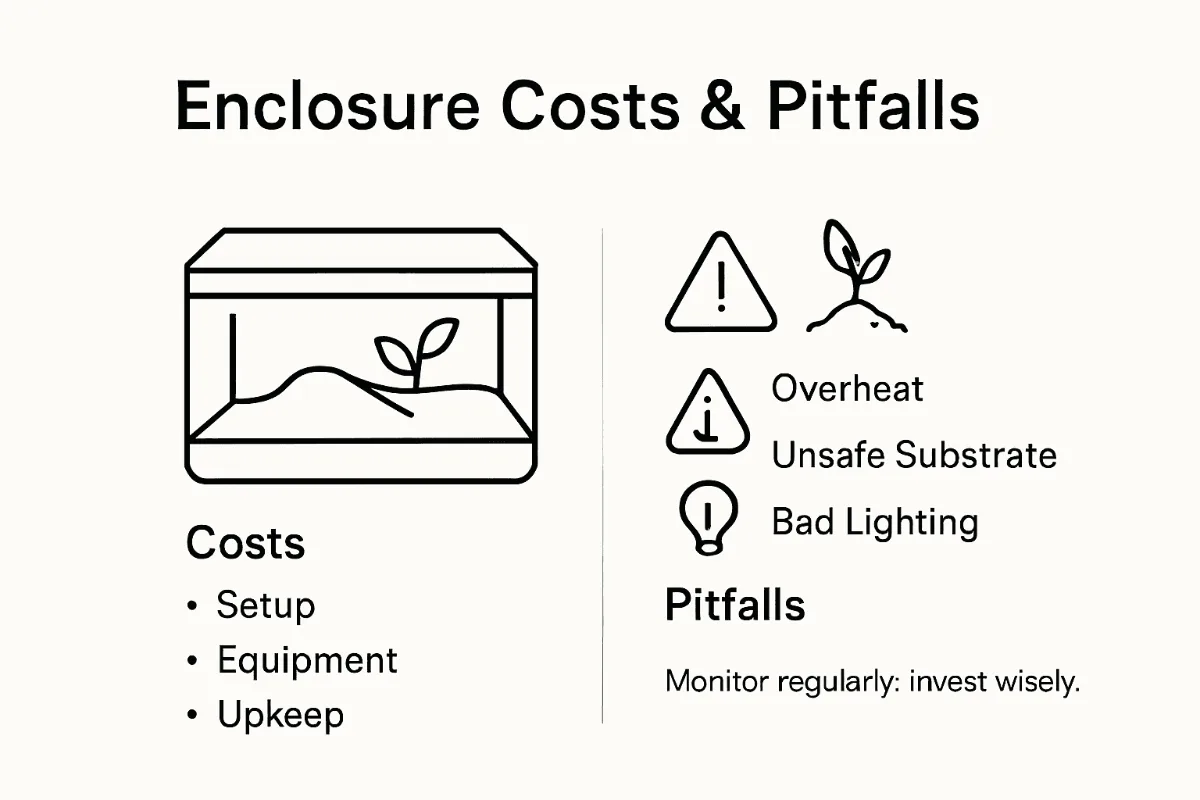
The setup mistakes that cause the most vet visits are loose calcium sand, a missing temperature gradient, weak or old UVB and an enclosure that is too small. Keep up with maintenance: remove poop and leftover food every day, clean bowls each week, and deep-clean the enclosure once a month.
| Mistake | Possible consequence | Prevention |
|---|---|---|
| Loose calcium sand | Impaction | Use tiles, paper towels or a soil and sand mix |
| Weak or old UVB | Metabolic bone disease | T5 tube, replaced every 12 months |
| Enclosure too small | Stress, poor gradient, glass surfing | 4 x 2 x 2 feet minimum for adults |
| No temperature gradient | Poor digestion, illness | Digital thermometer with two probes |
Pro tip: Put bulb replacement dates in your phone calendar the day you install them.
Enclosure Setup Checklist
- Enclosure of at least 4 x 2 x 2 feet, front opening, with a lock.
- Basking surface of 100 to 108°F (38 to 42°C) for adults.
- Cool side of about 76 to 86°F (24 to 30°C) with a hide.
- T5 HO UVB tube on the basking side, 10 to 12 hours a day on a timer.
- Safe floor covering, no loose calcium sand.
- Branches and a stable basking platform within reach of the lamp but not touching it.
Ready to buy? Compare options in our guides to glass terrariums, PVC enclosures and wooden enclosures, or see complete enclosure kits compared.
Frequently Asked Questions
What size enclosure do adult bearded dragons need?
An adult needs at least 4 x 2 x 2 feet (120 x 60 x 60 cm), about 120 gallons. Larger enclosures give a better temperature gradient and more room to explore.
What are the key features to include in a bearded dragon enclosure?
You need a basking lamp and platform, a linear UVB tube, a cool side with a hide, a safe floor covering, good ventilation and a door that locks.
Should I choose an indoor or outdoor enclosure for my bearded dragon?
Use an indoor enclosure as your dragon’s main home. An outdoor pen with shade, a mesh roof and a shelter works for supervised time on warm days.
What materials are best for a bearded dragon enclosure?
PVC holds heat best and weighs little. Glass costs less and is easy to find but loses more heat. Sealed wood insulates well and looks like furniture.

Love your beardie? Wear it proudly.
My Bearded Dragon Is My Spirit Animal Tee – from $18.45. Our own bearded dragon designs, printed on demand. Every order supports these free care guides.
View this design → Browse all gifts