Bearded Dragon Feeding Guide: What, How Much and How Often

Feed a baby bearded dragon small insects two to three times a day plus a dish of chopped greens, and feed an adult a fresh salad every day with insects two to three times a week. Insects make up about 70 to 80 percent of a baby’s diet and about 20 percent of an adult’s. Dust insects with calcium, gut-load them before feeding and keep fruit as a rare treat. The steps below cover each part.
Table of Contents
- Step 1: Choose Foods by Age
- Step 2: Prepare Fresh, Safe Meals
- Step 3: Feed the Right Amounts
- Step 4: Add Calcium and Vitamins
- Step 5: Track Health and Adjust
🦎 Want all the essentials on one printable page?
The Complete Bearded Dragon Care Plan puts daily routines, feeding charts, safe vs. toxic foods and vet red flags into one 16-page PDF for $7.99.
See the Care Plan →Quick Summary
| Step | What to do |
|---|---|
| 1. Match food to age | Babies: about 70 to 80 percent insects. Adults: about 80 percent greens and vegetables, about 20 percent insects. |
| 2. Serve fresh food | Chop greens fresh each day and remove leftovers and loose insects. |
| 3. Feed the right amount | Babies: insects 2 to 3 times a day. Adults: greens daily, insects 2 to 3 times a week. |
| 4. Supplement | Plain calcium on most insect meals, calcium with D3 and a multivitamin on a set schedule. |
| 5. Track health | Weigh your dragon on a regular schedule and watch appetite, energy and droppings. |
Step 1: Choose Foods by Age
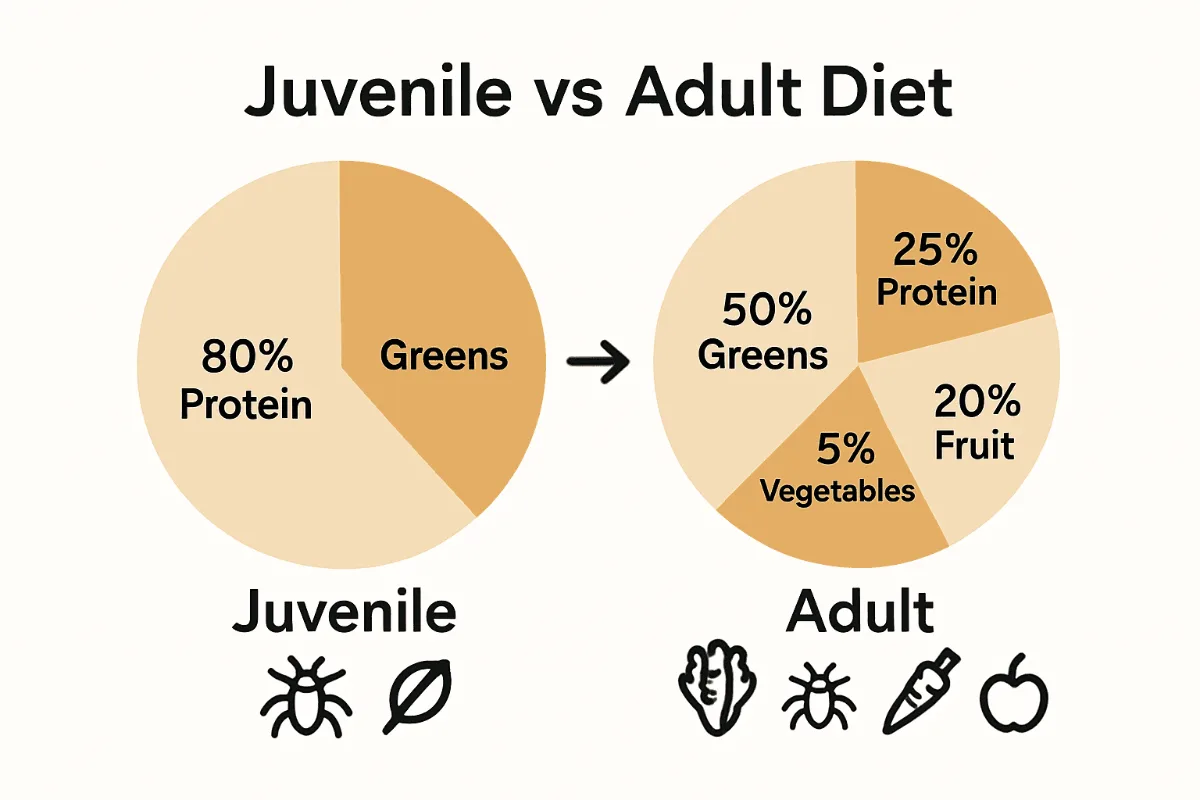
Bearded dragons are omnivores. PetMD describes a diet of live insects and plants that changes as the dragon grows. Young dragons need protein to grow. Adults need fiber and fewer calories.
| Age | Insects | Greens and vegetables | Insect meals |
|---|---|---|---|
| 0 to 6 months | About 70 to 80% | About 20 to 30% | 2 to 3 times a day |
| 6 to 12 months | About 50% | About 50% | Once a day |
| 12 to 18 months | Falling toward 20% | Rising toward 80% | Every other day |
| Adult (18 months+) | About 20% | About 80% | 2 to 3 times a week |
Staple insects: crickets, dubia roaches and black soldier fly larvae. Treats for adults: hornworms, silkworms, and now and then superworms or waxworms, which are high in fat. Skip mealworms and superworms for babies, since their hard shells are harder to digest. Never feed fireflies, which are toxic, or wild-caught insects, which can carry parasites and pesticides.
Staple greens: collard greens, mustard greens, turnip greens, dandelion greens and endive. Vegetables for variety: butternut squash, acorn squash, bell pepper and green beans. Rotate several of each so your dragon gets a wide range of nutrients. Our multivitamin pick fills small gaps but does not replace variety.
Step 2: Prepare Fresh, Safe Meals
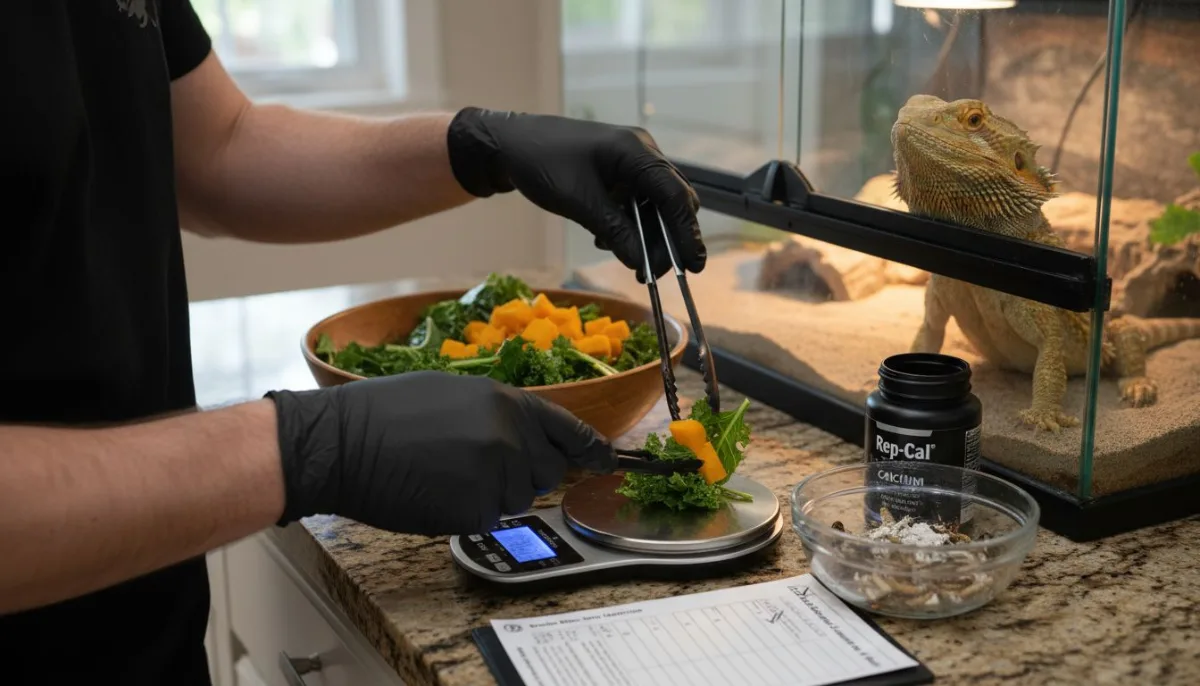
The RSPCA stresses food hygiene. Wash all produce, chop it fresh each day and remove uneaten food before it spoils.
NC State Veterinary Hospital recommends chopping vegetables into small pieces. Cut every piece, greens and insects alike, no larger than the space between your dragon’s eyes.
Limit or avoid:
- spinach, beet greens and Swiss chard as staples, since their oxalates bind calcium
- iceberg lettuce, which has almost no nutrients
- kale and other cabbage-family greens in large amounts
- avocado and rhubarb, which are toxic
- fruit more than once or twice a week for adults
Gut-load insects for at least 24 hours before feeding with fresh greens, vegetables or a commercial gut-load diet. A well-fed insect passes those nutrients on to your dragon.
Step 3: Feed the Right Amounts
Babies and juveniles: offer as many insects as your dragon eats in 10 to 15 minutes, two to three times a day for babies and once a day from about 6 months. Put a small dish of greens in the enclosure every day, even if your baby ignores it at first.
Adults: offer a salad every morning and insects two to three times a week. A typical adult insect meal is about 5 to 10 dubia roaches or a similar amount of other insects. Adults fed insects every day gain too much weight, which leads to fatty liver disease.
Remove loose crickets after each meal. Crickets left in the enclosure can bite a sleeping dragon.
Appetite changes with the seasons. Many adults eat less in autumn and winter and may enter brumation. Weight is a better guide than single meals.
Step 4: Add Calcium and Vitamins
Insects and many vegetables contain more phosphorus than calcium. Lafeber lists calcium supplements as a core part of bearded dragon care. See the calcium and multivitamin products we compared.
| Supplement | Babies and juveniles | Adults |
|---|---|---|
| Plain calcium powder (no D3) | Most insect meals | 2 to 3 insect meals a week |
| Calcium with D3 | 2 to 3 times a week | Once a week |
| Reptile multivitamin | 1 to 2 times a week | Once or twice a month |
These are common starting points. The right schedule depends on your UVB setup and the products you use, so follow the label and ask your vet. Too much vitamin D3 or vitamin A causes illness, so more is not better.
Step 5: Track Health and Adjust
The RSPCA recommends weighing your dragon on a regular schedule. Weigh babies once a week and adults once a month on a kitchen scale, and write the numbers down.
Watch for:
- weight loss or a thin tail base
- a fat belly and large fat pads on the head in an adult
- refusing food for more than a few days outside of brumation
- runny, bloody or very smelly droppings
- a soft jaw, tremors or shaky legs, which point to metabolic bone disease
NC State Veterinary Hospital recommends working with an exotic vet on a nutrition plan. Book a visit with a reptile vet if you see any of the signs above.
More Care Guides
Feeding is one part of keeping a bearded dragon healthy. Heat and UVB matter as much, because a dragon cannot digest food or use calcium without them. Read our guides to basking and UVB lighting, and browse more care guides at gobeardeddragon.com.

Frequently Asked Questions
How do I choose the right foods for my bearded dragon?
Match the food to your dragon’s age. Babies eat a diet based on insects such as small crickets, dubia roaches and black soldier fly larvae. Adults eat a diet based on greens such as collard, mustard and dandelion greens, with insects two to three times a week. Rotate insects and greens for variety.
How often should I feed my bearded dragon?
Babies get insects two to three times a day, juveniles once a day, and adults two to three times a week. Every age group gets fresh greens every day.
What are some safe vegetables for bearded dragons?
Collard greens, mustard greens, turnip greens, dandelion greens, endive, butternut squash, acorn squash, bell pepper and green beans. Avoid spinach as a staple, iceberg lettuce, avocado and rhubarb.
How can I supplement my bearded dragon’s diet?
Gut-load insects for 24 hours and dust them with plain calcium. Add calcium with D3 and a reptile multivitamin on a set schedule: more often for babies, less often for adults. Follow the label and your vet’s advice.
How can I monitor my bearded dragon’s health through their diet?
Weigh babies once a week and adults once a month, and track appetite, energy and droppings. A log shows trends before they become problems.
What should I do if my bearded dragon refuses to eat?
Check the basking temperature and the age of the UVB tube first, since cold dragons do not eat. Look for stress, shedding or signs of brumation. If your dragon refuses food for more than a few days and is losing weight, see a reptile vet. Our guide on why bearded dragons stop eating covers more causes.

Love your beardie? Wear it proudly.
I'm in Beardie Mode Tee – from $15.83. Our own bearded dragon designs, printed on demand. Every order supports these free care guides.
View this design → Browse all gifts